" We don't sell the wine without touching the vine "
| BUY MORE! SAVE MORE! | ||||||||||||||||||||
|
| Country: | France |
| Regions: | Burgundy Maconnais |
| Winery: | Croix Senaillet |
| Grape Type: | Chardonnay |
| Organic: | Yes |
| Vintage: | 2021 |
| Bottle Size: | 750 ml |
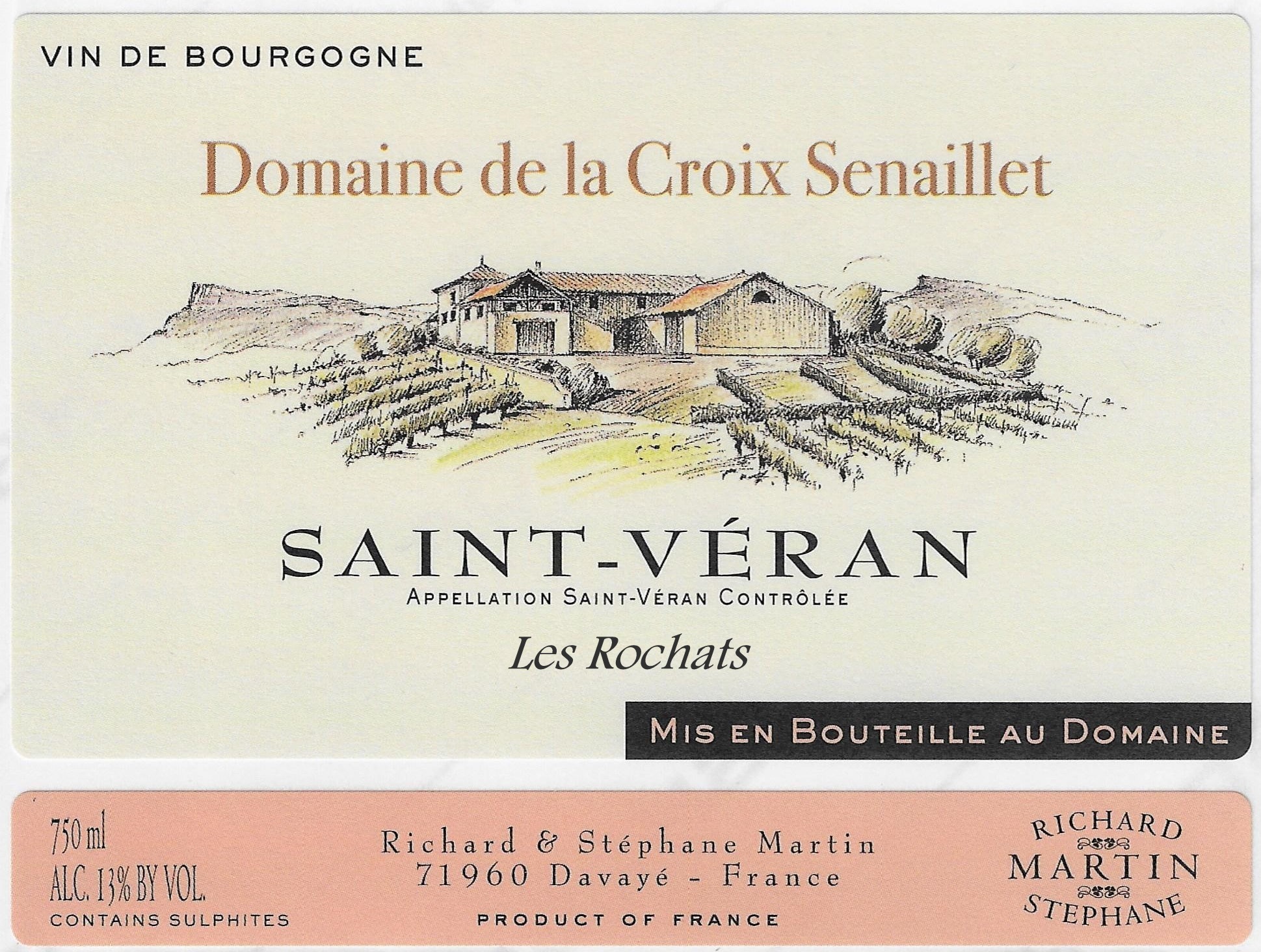
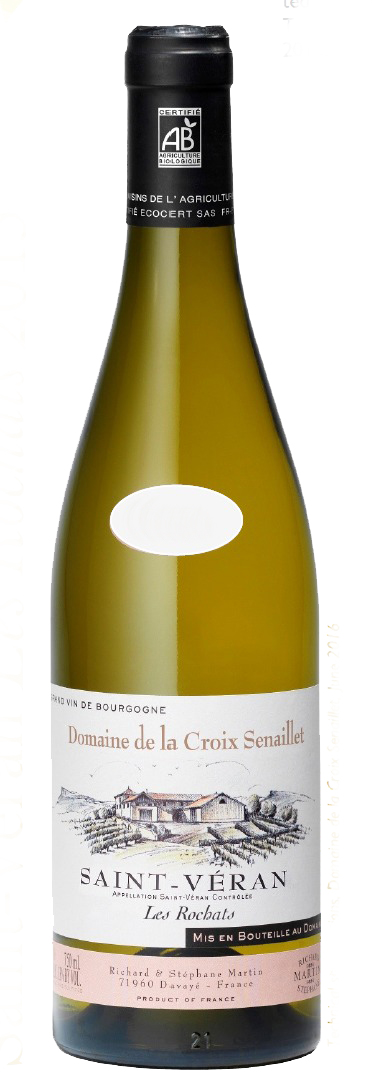
Croix Senaillet St. Veran Les Rochats is made from 100 percent Chardonnay.
This Saint Veran Les Rochats is produced from 50-year-old Chardonnay vines, grown organically on Jurassic-era limestone (Entroque limestone), covered by pebbles that act as a filtering soil. The parcel is southeast facing on half hills.
Clear golden color with light green reflections. The wine has a rich and complex bouquet with a wide array of aromas: pear, nougat, wild peach and kiwi. The mouth is rich and dense bringing freshness with a nice volume and finishing on a light exotic note.
Vineyard
Surface area : 1 Ha.
Soil : limestone soil from the Jurassic period, covered by pebbles acting like a filtering soil.
South-east facing parcel on half-hills.
Grape variety : organically-grown Chardonnay.
Plantation density : 8.500 vinestocks per ha.
Age of vines : 50 years.
Mâconnais style pruning quite short, with 10 to 12 buds.
Hand-harvesting at optimal maturity.
Destemming to avoid herbaceous taste.
Slow and gentle pneumatic pressuring guarantees purity of juice and extraction of the finest aromas.
Very slow alcoholic fermentation in stainless still tank.
Malolactic fermentation.
Aging in stainless steel tanks for 9 months with gentle stirring of fine lees.
Pairs well with shrimp risotto, sautéed veal with eggplant.
The Domaine de la Croix Senaillet Estate
This second generation old estate is located in the town of Davaye, in southern Burgundy. The winery was founded by Maurice Martin in 1969. His son Richard took it over in 1990 and was joined by his brother Stéphane in 1992. While Richard takes care of the vinification and the sales, Stephane is in charge of the vineyard. They sell 80% of their production in bottle and 20% to negociants. Currently, they export 40% of their wine outside of France.
"Domaine de la Croix Senaillet" takes its name from a cross that had been given by an ancient mayor of the village called Benoit Senaillet. The records show that the mayor donated the cross to Davaye in 1866 to replace the one that was destroyed in 1793 during the French Revolution. According to the common believes, the cross that was blessed in 1867 would protect the inhabitants of the village and everyone that would pass by.
The Domaine de la Croix Senaillet Vineyard
The vineyards are located on the south/southeastern slopes of the Solutre and Vergisson rocks. The estate spreads over 52 parcels in the town of Davayé and measures 22 hectares total (54.3 acres): 17 ha in St Veran, 5 ha in Macon, less than 1 hectare in Pouilly-Fuisse. The soil is both chalk and clay. The vines are 40 years old on average. In order to increase the quality of the grapes, Stephane has decided to use "culture raisonnee", which means that they watch carefully and daily the vineplant, checking for the sanitary level in the vineyard and use very small amount of pesticide and chemical products if necessary.
Saint Veran's AOC represents 696 hectares (1,726 acres) in total.
The total production for the AOC is around 42,775 hectoliters (474,089 twelve-bottle-case equivalent)
Croix Senaillet Saint Veran is made from 100 percent unoaked Chardonnay.
Fresh and fruity with floral, peach and citrus fruit aromas followed by mineral notes. Mineral, citrus and honey flavors. Rich and luscious palate with a long finish.
Produced from a selection of 40 parcels spread over 17 hectares. Some of the parcels include: Maillettes, Bergades, Poncétys, Terres noires, Pommards, Chênes, Surigny, Prâgnes, Bruyère, Chailloux, etc Average age of the vines is 45 years. The soil is made of clay and limestone. South, southeastern exposure - a few plateaux. Careful vinification. Minimal intervention in the vinification process. Modern equipment (pneumatic press, thermo-regulated tanks). Each parcel is harvested at full maturity. Destemming, slow press, slow fermentation, malolactic fermentation, aging on the lees.

All older vintage wines have been purchased from a single collectors cellar. Pictures can be requested before shipment.
Croix Senaillet Macon-Davaye is 100 percent Chardonnay.
Pale brilliant yellow color. Fresh nose of citrus fruits (lemon, grapefruit). Mineral and salty notes on the palate. Fresh, supple and harmonious in the mouth.
Produced from 7 different parcels of vines spread over 3.77 hectares, planted on clay and limestone based soils. Average age of the vine is 28 years. Careful vinification. Minimal intervention in the vinification process. Modern equipment (pneumatic press, thermo-regulated tanks). Each parcel is harvested at full maturity. Destemming, slow press, slow fermentation, malolactic fermentation, aging on the lees.
Excellent as an aperitif and pairs well with grilled fish and Asian food.
All older vintage wines have been purchased from a single collectors cellar. Pictures can be requested before shipment.
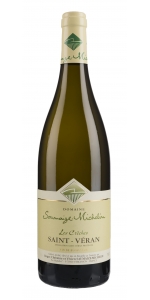
Saumaize Michelin St Veran Les Creches is 100 percent Chardonnay
The vines for Les Creches are situated in Davayé and planted on limestone based soils with a good amount of soft chalk. It is a blend from grapes from two different parcels; one 40 years old and the other over 60 years. The older vine brings subtlety and depth, and the younger vine bring minerality and freshness.
Elegant and fruity nose supported by a good minerality. Round, rich, fresh and well balanced. Luscious honey and citrus flavors with hints of butter and a delicious citrus finish.
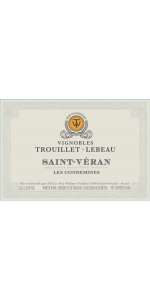
Trouillet Lebeau St. Veran Les Condemines is made from 100 percent Chardonnay.
The wine comes from 70-year-old vines that are ideally located on a south-facing slope in the village of Leynes, on a clay-limestone terroir. Aged 100% in Burgundy barrels, offering a fruity, powerful and charming wine. Beautiful expressive aromas of ripe yellow fruits. Rich, generous, full, crisp and well-balanced on the palate.
Schwarz The Schiller Shiraz is made from 100 percent Shiraz.
The Schiller Shiraz is a wine rich in both flavor and history. The 400 Shiraz vines planted by Carl August Otto Schiller in 1881 are something to be treasured. Earmarked for bulldozers in 2006, a last minute reprieve would see these Ancestor vines remain in the ground. The grapes are hand-picked from the sixth generation Schiller family vineyard at Hallett Valley in the Barossa. Jason first made this wine in 2008, and since then it has been his flagship wine.
Opens quickly to luxe fruits, black plum & fruits of the forest, building in layers of toasty smoked bacon, tobacco leaf and Mediterranean herbs with nuances of spice and earthy tones. A luxurious palate of old vine fruits, savory overtones and fine slippery tannins. A long harmonious finish.
Review:
Brize Ambre Coteaux du Layon is made from 100% Chenin Blanc.
Coteaux du Layon is a prestigious sweet wine appellation in the Loire Valley, producing luscious dessert wines from late-harvested Chenin Blanc grapes. The 'Ambre' (Amber) cuvée takes its name from the beautiful amber-gold color that develops as the wine ages.
This sweet wine offers rich aromas of honey, apricot, candied fruits, and quince. On the palate, it is generous and well-balanced, with concentrated sweetness offset by bright acidity that keeps the wine fresh and elegant.
Pair with foie gras, blue cheese, fruit tarts, or enjoy as a dessert on its own.