
" We don't sell the wine without touching the vine "

| Country: | France |
| Region: | Loire |
| Winery: | Rouet |
| Grape Type: | Cabernet Franc |
| Organic: | Yes |
| Vintage: | 2009 |
| Bottle Size: | 750 ml |
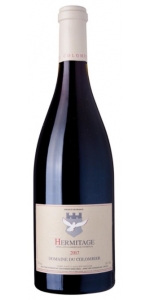
Domaine du Colombier Hermitage Rouge is made from 100 percent Syrah.
Perfect with beef ribs, grilled meats and cheese.
Manually harvested with destemmed grapes and fermented for about 2 to 3 weeks in temperature controlled vats, with an ageing period of 12 months, 65% in oak barrels and 35% in concrete tanks.
Review:
Brought up in 30% new demi-muids, with the balance in used barrels, the 2017 Hermitage is beautifully pure and layered, with smoking good notes of crème de cassis, white flowers, crushed rocks, and violets. Deep, full-bodied, and concentrated on the palate, it has plenty of tannins and is going to need 5-7 years of bottle age. This is a sensational Hermitage from Colombier that will drink well for 25+ years.
These wines are made by the talented Florent Viale and shine for their purity as well as character. While the winemaking here is traditional, with the wines destemmed and brought up mostly in used demi-muids, the purity of fruit can give the impression that wines are more modern styled than they are. They will all benefit from short-term cellaring.
-Jeb Dunnuck 96+ Points
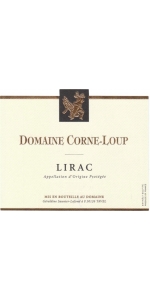
Corne Loup Lirac Rouge is made from 50% Grenache, 40% Syrah and 10% Mourvedre
Dry - less than 4 grams/liter
Color: dark red ruby.
Aromas: red berries, truffles and spices.
Flavors: complex and rich. It shows red and black fruits, with an herbal spice type of aromas coming from the surrounding vegetation (Garrigue).
The average age of the vines is 40 years. (The oldest vines are 80 years old).
The soil is mainly sandy marl and small pebble stones.
Pairs with lamb, duck, turkey, red meat, game and cheese.
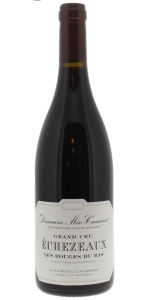
Échezeaux is loyal to its appellation through the finesse of its attack on the palate and its overall balance. But it's also a wine with pronounced acidity, which gives it freshness and structure and bestows upon it a sometimes austere finish.
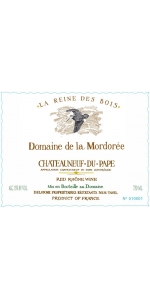
Mordoree Chateauneuf-du-Pape La Reine des Bois is made from 80% Grenache, 10% Mourvèdre, and the rest equal parts Syrah and Vaccarèse .
This premium cuvee - whose name means "Queen of the Woods" - is from 65-year-old vines, planted on Villafranchian-era terrasses. Yield is 30 hl/ha.
Deep ruby red; opaque. Aromas of red fruits change to wooden touches of leather, black truffles and coffee. Fat, concentrated and full flavored with a very long liquoriced and fruity finish.
Review:
The 2022 Châteauneuf du Pape Cuvée De La Reine Des Bois is based on 75% Grenache, 10% each Syrah and 10% Mourvèdre, and the rest Counoise and Vaccarèse. It's not massive yet just exudes class and elegance, with both red and black fruits that give way to more spice, peppery garrigue, and leather, with classic background licorice and black olive notes. Medium to full-bodied, beautifully balanced, and elegant, with silky tannins, this brilliant Châteauneuf du Pape will evolve for two decades.
Number 36 in Dunnuck's Top 100 and 97 Points
"Huge and powerful, but so fresh. This has great driving intensity, with even bigger, more structural tannins than the domaine’s other cuvée. A rampaging Châteauneuf that will take time to settle, and will always be wild. Long, vibrant and chiselled. An absolute beast. Mordorée has been massive but overripe in the past; it's still massive but with this vintage the ripeness is more controlled, and it has transformed into something extraordinary. Fermented and aged 80% in stainless steel, the rest in old barrels. - Matt WALLS"
- Decanter Magazine (September 17th 2023, Part of Châteauneuf-du-Pape 2022: Report and top-scoring wines), 98 pts
Mordoree Chateauneuf-du-Pape La Reine des Bois is made from Grenache 75 %, Mourvèdre 10%, Syrah 10 % , Counoise 3% & Vaccarese 2%.
This premium cuvee - whose name means "Queen of the Woods" - is from 65-year-old vines, planted on Villafranchian-era terrasses. Yield is 30 hl/ha.
Deep ruby red; opaque. Aromas of red fruits change to wooden touches of leather, black truffles and coffee. Fat, concentrated and full flavored with a very long liquoriced and fruity finish.
Pairs with red meats, sauce dishes, game animals (woodcock, wild boar) and semi mature cheeses.
Review:
"Huge and powerful, but so fresh. This has great driving intensity, with even bigger, more structural tannins than the domaine’s other cuvée. A rampaging Châteauneuf that will take time to settle, and will always be wild. Long, vibrant and chiselled. An absolute beast. Mordorée has been massive but overripe in the past; it's still massive but with this vintage the ripeness is more controlled, and it has transformed into something extraordinary. Fermented and aged 80% in stainless steel, the rest in old barrels. - Matt WALLS"
- Decanter Magazine (September 17th 2023, Part of Châteauneuf-du-Pape 2022: Report and top-scoring wines), 98 pts
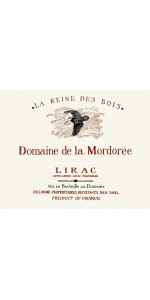
Mordoree Lirac Rouge Reine des Bois equal parts Grenache, Syrah and Mourvedre
Color : deep dark red, with blueish hints.
Aromas : highly fruity ( raspberry, billberry, blackberry ), floral (violet) and intense with a grilled touch ( coffee ).
Palate : melted and concentrated tannins, full bodied, very long fresh finish.
Ageing potential : 8 to 10 years
Grilled meats, sauce meats, game birds, game rabbits and semi-mature cheeses.
- James Suckling (June 2023), 91 pts
Domaine des Rouet Chinon Rouge is a medium bodied and silky wine filled with strawberries, red currants and cherries on the palate, and has an elegant finish.
Both light and dark meat pair incredibly well with this wine. Fish, cheese and stewed fruits such as strawberries, raspberries, or yellow peaches are a wonderful accompaniment to this well balanced wine.
The Rouet Estate
Jean-Francois Rouet is the owner of Domaine Rouet and represents the 7th generation to make wine in his family.
The Rouet Vineyard
The estate is 16 hectares (40 acres) and is planted to vines that average 30-35 years old. They produce 85% red wines and 15% rose, but no white wine currently. The chalky soil in this vineyard is seasoned with alluvial sand. This siliceous component gives the wine a distinctive note of raspberries or cherries, depending upon its age. The domaine uses Seguin-Moreau oak barrels, Allier oak, and keeps the barrels for 4 years. No chemical products are used in the production of their wines.
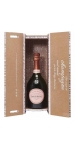
Laurent-Perrier Cuvee Rose Petal Jacket NV is made Pinot Noir from 10 crus in the Montagne de Reims
After the “Signature”, “Constellation”, “Safari”, “Butterfly” and “Bamboo” robes, Laurent‑Perrier unveils “Petals”. A robe of light where Dalhia or Strelitzia petals are subtly woven in iridescent Pop colours. A harmony of colours in shades of red and pink with highlights of orange or blue, recalling all of the fresh, crisp nuances of the red and black fruit palette of this great rosé champagne.
Laurent‑Perrier has been designing a reusable metal case with its clasp since 2017, to enhance the quality of the wine, matching the generously shaped Cuvée Rosé bottle.
The Cuvée Rosé from Laurent-Perrier is the most recognized rosé champagne in the world. The house uses its proprietary maceration technique and the wine is crafted for a fragrance and not mixed for a color. Held in an elegant bottle inspired by King Henri IV, it has been widely acknowledged for its consistent high quality for more than 40 years, and it is the benchmark for rosé champagne around the world.
Laurent-Perrier Cuvée Rosé is truly remarkable for its highly expressive bouquet, stemming from very careful preservation of fresh fruit aromas during the wine making. Made with 100% Pinot Noir from 10 different "crus " (or villages), from the North and South areas of the Montagne de Reims, as well as the famous village of Bouzy. Grapes from carefully selected plots are meticulously sorted and de-stemmed before going into the vats, and the controlled maceration helps with the color extraction and the development of the full aromatic richness of the Pinot Noir.
Intensely fruity flavors, clean and slightly sharp, the wine opens to the sensation of freshly picked red berries: strawberries, Morello cherries, black currants and raspberries. The finish is supple and rounded.
Its aromatic depth makes it ideal for pairing with marinated raw fish, grilled prawns, exotic dishes, Parma ham and red fruit desserts. Those who are more daring will try it with Asian or Indian cuisine.
Review:
Generosity no less than grace defines this 100% Pinot Noir from ten different crus primarily in the Montagne de Reims. Slightly coppery salmon-pink in the glass, it displays a radiant nose of ripe red berries that pop against glimmers of spiced biscotti and roasted cashew. On a broad palate of pure silk, raspberry and black cherry are underlined by blood-orange rind and crushed rock before a long, almost voluptuous finish that's slightly savory with dried mint.
-Tasting Panel 97 Points
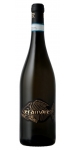
Rinaldi Eramare Piemonte Cortese is made from 90% Cortese and 10% Sauvignon Blanc.
The Cortese grapes are coming from the Estate's vineyard located at the best exposures between Ricaldone and Maranzana at about 220 meters above sea level.
A salty and tasty white wine (90% cortese 10% sauvignon) fresh simple and juicy.
After the alcoholic fermentation the wine refines on his yeast for 4 months just to have a better color and taste.
A lot of minerality and note of grapefruit.
Ideal for an aperitif, or with seafood appetizers, fish first courses, grilled fish, vegetable pies, mixed Piedmontese appetizers, omelettes.



