
" We don't sell the wine without touching the vine "
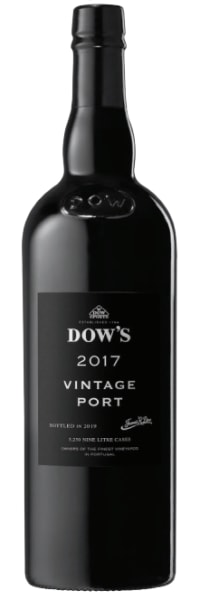
| Country: | Portugal |
| Region: | Douro |
| Winery: | Dow's |
| Grape Type: | Port Blend |
| Organic: | Yes |
| Vintage: | 2017 |
| Bottle Size: | 750 ml |

Dow's is one of the historic houses of the Symington family and a benchmark name in Vintage Port, known for a drier, more structured style built around its Quinta do Bomfim and Quinta da Senhora da Ribeira vineyards. The 2024 is a classically declared vintage — precise, firm and built to age for decades.
Review:
Precise, with a pretty, grainy texture and incisive character. Medium- to full-bodied, long and dimensional. The grainy texture turns saline. Very stimulating to taste. A blend of 38% touriga franca, 34% old vines, 17% touriga nacional and 11% sousao. Drink or hold.
James Suckling 98 Points

Duorum was founded in the Douro Superior by two of Portugal's most celebrated winemakers — João Portugal Ramos and José Maria Soares Franco, the long-time hand behind Barca Velha. Their Vintage Port is a field blend from old, often centenarian vines and is declared only in the finest years. Powerful and built for the long haul, it is a classic expression of the Douro's greatest sites.
Review:
The 2017 Vintage Port, the first declared vintage here since the 2011, is a field blend from centenarian vines. It is equal parts Touriga Nacional and Touriga Franca with 20% Tinta Roriz. This is round and luscious on opening. With some air, it becomes a very different wine, showing its class and its muscle. It shows far more power and pop as it airs out, becoming very persistent. It's always most notable, though, for the rich fruit and velvety texture. It should steadily improve for the next ten to 15 years and age effortlessly for some time after that.
Wine Advocate (Mark Squires) 95 Points

Romariz Vintage Port is made from Touriga Nacional, Touriga Franca, Tinto Cão, Tinta Roriz, Tinta Barroca
Deep inky purple color. Intricate nose with aromas of blackberries and logan berries, subtle hints of amber and spring blossom and delicate spice. A tight, well-formed palate with an abundance of dark berry fruit, rich chocolate and liquorice, culminating in a long finish. Firm, closely woven tannins that give the wine great structure and body. An elegant finely constituted Vintage Port which will drink beautifully now or age quietly in the cellar.
A vintage port is made from blended grapes, all from the same vintage year. Vintage ports are historically only declared every 3 out of 10 years. Romariz vintage ports age for up to two years in oak, then go unfiltered into the bottle for further aging.

Flowering in the Duoro occurred in the last 10 days of May. The weather conditions provided for a perfect flowering season. The Romariz Vintage Port 2003 yielded wines of great color and supple tannins, with a vintage stamp being evident in most wines. Production: 8,000 cases. "Another bright and fruity young Vintage Port with plum, grape and blackberry aromas with just a hint of stems. Serious nose here. Full-bodied, with soft, round tannins and a long, caressing finish. A beauty."
- J.S., Wine Spectator, 89-91 pts
"Bright dark ruby. Deep, perfumed aromas of cassis, licorice, violet and minerals. Lush and high-toned in the mouth but with very good vinosity and spine. Lovely fruit-driven flavors of black cherry, blackberry and dark chocolate. Little sign of the roasted side of 2003. Not hugely concentrated but suave, supple, minerally and sweet. Finishes with ripe tannins and very good spicy persistence. A very good showing. Accessible already but balanced for medium-term aging."
- Stephen Tanzer's International Wine Cellar, 89 pts

Review:
-James Suckling 100 Points

William and John Graham founded their Port house in 1820, and for more than two centuries the name has stood among the greatest in the Douro. Since 1970 the firm has been owned and run by the Symington family, who farm their own quintas — Quinta dos Malvedos chief among them — and personally make every Graham's wine.
A Graham's Vintage Port is drawn from the oldest vines on the steepest terraces and released only when the year merits it. The 2024 shows the classic Graham's signature: a deep, opaque core of black fruit and violets, framed by ripe tannin and the house's hallmark seam of sweetness that carries through a long, structured finish.
Built to reward the cellar, it will drink beautifully for decades. 750ml.
Review:
-Luis Gutiérrez (Robert Parker) 97 Points
-Neal Martin (Vinous) 97 Points
-James Suckling 95 Points
The 2017 was a very different year to 2016 in terms of the viticultural conditions and it was interesting to watch the progression of the wine and scrutinize its quality as it developed over its first two winters. Whereas 2016 had a very mild winter and exceptionally hot summer, this was compensated by abundant winter and spring rainfall. Conversely, 2017 was warm and drythroughout, although summer temperatures were closer to average, whichproved to be a very significant factor allowing for complete, balancedripening.
It is rare to see such tremendous depth and intensity in color as this winedisplays. The freshness of the floral aromas is very attractive with adominance of rockrose, a flower that grows wild around the hills of Senhorada Ribeira. On the palate, it is exceptionally full-bodied, rich andpowerful with black fruit coming to the fore. Gorgeous, ripe fruit isbalanced by the fine tannin structure. On the finish, it is typically Dow,austere and somewhat drier than many other ports. The intense fruit flavors linger long on the palate.
Dow’s Vintage Ports are only produced in years of exceptional quality and represent only a very small part of the total company’s production in that year. On average only two or three times every ten years are the weather conditions sufficiently good to allow for the making of Dow’s Vintage Port.
Throughout the 19th and 20th centuries, Dow’s Vintage Ports have been landmark wines in virtually every great year, consistently setting the standards amongst all Port houses. Vintage Ports such as the remarkable Dow 1896, the 1927, 1945, 1955, 1963, 1966, 1970, 1980 and the Dow 1994 are all legends in the history of this great wine. These Ports are still magnificent today, even when 50 or over 100 years old. Few wines can claim this quality and this pedigree.
Dow's Vintage Ports are drawn from the companies' finest vineyards; Quinta do Bomfim and Quinta de Senhora da Ribeira. Each property contributes to the Dow’s unique and distinctive style. When young, Dow’s Vintage Ports are purple-black, austere, complex and intensely concentrated, full-bodied and balanced with very fine peppery tannins.
Over the centuries, the Dow winemakers have evolved a style that suits the house’s key vineyards; fermentations are a little longer, resulting in a drier Port Wine that has become the hallmark of Dow’s. Abundant fruit flavours with hints of ripe blackberries, give elegance and poise to Dow’s. The nose is deep and powerful with strong overtones of violets when young, these mature into fine cinnamon and rose-tea aromas with age. The very high percentage of Touriga Franca and Touriga Nacional planted on the vineyards result in the powerful structure and aging potential of Dow’s Vintage Ports
Dow’s Ports avoid an over-rich style and requires a very high degree of skill in wine making and great experience in selecting the finest wines of each year and each vineyard. These wines are aged in seasoned oak casks for some 18 months and are bottled without any filtration or fining whatsoever.
Dow Vintage Ports can be enjoyed when vibrant and young or they can be allowed to age for many years in bottle into a soft and delicate wine of velvet-like elegance.
In the 1920’s, the celebrated Oxford Professor George Saintsbury underlined Dow’s outstanding reputation when he wrote in his famous ‘Notes on a Cellarbook’ (first published in 1920), “There is no shipper’s wine that I have found better than the best of Dow’s 1878 and 1890 especially.”
James Suckling, one of today’s leading authorities on Vintage Port was equally impressed by another legendary wine - the Dow’s 1896 - “The ancient {1896} Port still had an amazing ruby colour with a garnet edge, and it smelled of raisins, black pepper and berries. It was full-bodied, with masses of fruit intertwined with layers of velvety tannins. It was superb.” In 1998, when this wine was 102 years old, he awarded this Port an exceptional 98 points.
Review:
Based on fruit from the predominantly south-facing Quinta do Bomfim in the Cima Corgo and Quinta Senhora da Ribeira in the Douro Superior, with Touriga Nacional and Touriga Franca making up 80% of the blend. This is opaque and closed in but powerfully ripe with underlying pure berry fruit. It's seemingly quite introverted compared to some of its peers at this stage, but it's still full, rich and opulent on the palate. It also shows the latent power of the vintage, made as it is in a slightly drier style (3.4 Baumé), with lovely minty fruit and full, ripe sinewy tannins all the way through the finish. Long and lithe, and very fine.
-Decanter 97 Points
A dense, thickly textured version, dripping with warm salted licorice, tar and açaí paste notes, while plum and blueberry pâte de fruit, chai spice and chocolate elements fill in behind. Lots of brambly grip flows underneath. Shows a very sappy feel on the finish. Best from 2035 through 2055. 5,250 cases made, 1,092 cases imported
-Wine Spectator 96 Points
This is a dry while also floral wine, perfumed and enticing with its juicy acidity. At the same time, the structure is very present, showing power and dark black fruits. The balance is coming together with the rich fruits and tannins melding into one. Drink from 2028. ROGER VOSS
-Wine Enthusiast 96 Points
Deep dark ruby garnet, opaque core, violet reflections, delicate brightening of the edges. Black wildberry jam underlaid with delicate herbs and spices, tobacco nuances, hints of blueberry jam and elderberries, schisty notes. Powerful, full-bodied, sweetness present, carrying tannins, dark nougat in the finish, very good length, an imperious style, built for a long life.
Falstaff 98 Points
For over two centuries the name of DOW has been associated with the finest Port from the vineyards of the Upper Douro Valley. Throughout the 20th Century and into the 21st, the Symington family has built on the legacy of the preceding Silva and Dow families. Generations of Symington winemakers have worked at the Dow’s vineyards: Quinta do Bomfim and Quinta da Senhora da Ribeira, creating from them Dow’s superbly concentrated wines that are intense and tannic when young, maturing towards a superlative racy elegance with age and scented with violet and mint aromas. Dow’s attractive and distinctive drier finish is the recognisable hallmark of the wines from this great Port house.
The story of Dow’s is unusual amongst all the great Port houses. It began in 1798 when Bruno da Silva, a Portuguese merchant from Oporto, made a journey which was the opposite to that of the first British merchants. Bruno set up in London from where he imported wine from his native country. He married an Englishwoman and was rapidly assimilated into London society where his business acumen led to a fine reputation for his wines. But the outbreak of the Napoleonic wars put his business in jeopardy. Undaunted, Bruno da Silva applied for ‘letters of marque’ (Royal Assent to equip a merchant ship with guns) to secure safe passage of his Port from Oporto to Bristol and to London. His became the first and only Port company to transport its precious cargo of casks of fine Ports under its own armed protection across the treacherous Bay of Biscay, a strong dissuasion to attack during a period when less audacious companies saw their sales dwindle away.
The Port shipping business was continued by Bruno’s son, John da Silva who in 1862 brought into partnership Frederick William Cosens. Together with John’s son, Edward, they became the active partners in Silva & Cosens. Edward da Silva inherited his grandfather’s business ability and the company continued to prosper. Edward became a highly respected figure in the London wine trade and was one of the founders of the Wine Trade Benevolent Society, the leading charity which survives to this day as the principal British wine trade organisation. Edward da Silva was to be the Benevolent’s chairman and then, from 1892, its president for many years.
With the continuing expansion of the firm, Edward da Silva and Frederick Cosens were joined by George Acheson Warre, whose well known family had been involved in the Port trade since its earliest years. ‘GAW’ joined as partner in 1868 and became its driving force in Portugal.
In 1877, Silva & Cosens merged with another leading Port company, Dow & Co, who’s senior partner was James Ramsay Dow, who had made a name for himself in 1856 with the publication of his important treatise, ‘An Inquiry into the Vine Fungus with Suggestions as to a Remedy.’ The Oidium fungus was at the time devastating the Douro’s vineyards.
Although smaller than Silva & Cosens, Dow & Co had become a very highly regarded Port producer with a particularly fine reputation for its Vintage Ports and when the two companies merged, it was decided to adopt DOW’S as the brand name.
The financial astuteness of Edward da Silva, the driving force of winemaker George Warre and the long experience and tasting expertise of James R. Dow were to consolidate Dow’s reputation as one of the leading names in the Port trade.
The celebrated Oxford Professor George Saintsbury underlined Dow’s unique standing when he wrote in his famous ‘Notes on a Cellarbook’ (first published in 1920), “There is no shipper’s wine that I have found better than the best of Dow’s 1878 and 1890 especially.” James Suckling of The Wine Spectator, one of today’s leading authorities on Vintage Port was equally impressed by another legendary wine when tasted over a hundred years after it was made - the Dow’s 1896 - also made during the management of Messrs Silva, Warre and Dow: “The ancient {1896} Port still had an amazing ruby colour with a garnet edge, and it smelled of raisins, black pepper and berries. It was full-bodied, with masses of fruit intertwined with layers of velvety tannins. It was superb.”

'Ma Belle-Fille' was named by Sir Peter as a warm tribute to Emily Michael, his "Daughter-in-Law", and mother of the third generation of the family. Planted at the highest elevation on the estate, the marine influence on Ma Belle-Fille vineyard is greater, resulting in cooler daily temperatures in the summer and autumn months. Situated above the summer fog ceiling and exposed to the southeast, the vineyard receives the very first rays of sunshine each morning and remains sunny all day long. This full exposure, combined with cooler temperatures, causes the fruit to mature earlier than the rest of our estate.
Vintage Notes
The combination of a wet winter with significant rains in December through March and cool weather delayed budbreak nearly a month. Flowering and fruit set were also pushed back and the weather during the later flowering was favorable resulting in decent fruit set and slightly above average yields for the Chardonnay vineyards—a marked improvement over the record-low yielding 2022 vintage. The growing season was temperate without major heat spikes allowing the berries to hold onto their acidity which carried through into the wines. Harvest was almost a month later than normal with the last Belle Cote block coming in on November 2nd.
At the highest elevation on the estate, the marine influence on Ma Belle-Fille is far p>
Beautifully perfumed with layers of honeysuckle, jasmine and dried orange peel accented by apricot, vanilla cream and spring flower notes, the 2023 ‘Ma Belle-Fille’ delivers with a rich, creamy entry and generous, structured mid-palate showing great drive and intensity with a long, mouth-watering finish. A truly special wine from an extraordinary vintage.
Review:
So delicious and drinkable from the first whiff to the lingering finish. An uber-chardonnay that packs in all the richness of fruit and smooth spiciness of oak fermentation, with vibrant acidity and a silky texture. Well balanced in a cool, ideal vintage and a great candidate for aging longer term. Drinkable now and best from 2030.
James Suckling 99 Points

The 2024 Far Niente Winery Estate Bottled Chardonnay is a white wine from California known for its buttery and complex style, made from Chardonnay grapes grown in the Coombsville region. It features notes of citrus, melon, and pear, with a silky texture and a long, elegant finish that is complemented by hints of spice from oak aging.
Review:
-James Suckling 93 Points

Floral notes leap out of the glass of the 100% Estate-grown Chardonnay 2022, with notes of jasmine, gardenia and lemon blossom. The contribution of low-yielding CH548 blocks seem to impress their character on the late vintage. The palate is round and fresh, entering with green apple and creamy lemon, which develop into chamomile and sea salt, with a round-textured, long finish of floral and saline notes.
The Estate Chardonnay will be an excellent accompaniment to rich and subtle dishes such as halibut with chanterelle sauce, plank smoked copper river xalmon with dill mayonnaise, Lobster Newberg, Quenelles de Brochet avec sauce a l’Armoricain, black cod with shellfish sauce. It is equally delightful with more casual dining options featuring béchamel sauces or cheese-rich dishes, such as a fondue, pasticcio or even lasagna.
Revieww:
The medium yellow/straw-colored 2022 Chardonnay Estate has a forward feel in the glass, with a great nose offering notes of bright flinty reduction, green apples, lime zest, and white flowers. Medium-bodied and long on the palate, it has persistent drive, with a pure savory feel and a graceful saline finish with a note of lime pith. It will drink well over the next 10 years.
-Jeb Dunnuck 94 Points

Argot Bastard Tongue Pinot Noir is made from 100 percent Sonoma Pinot Noir.
Inheriting an unbroken string of success, the “Bastard Tongue” arrives fully-formed and ready to impress. Always a blend from multiple Pinot Noir vineyards, this iteration of “BT” was selected from three distinct sites, each making their own unique contribution of Sonoma County terroir to the wine’s character.
Exploding forth on a tidal wave of high-toned, intense red and black fruits, this is a Pinot Noir that no stemware can contain. The palate’s profound depth is balanced by an inherent freshness, allowing the wine to crackle with brambly energy, while sustained by bass notes of underbrush, black tea, pie spice and baker’s chocolate. A formidable rendition of “Bastard Tongue”, and a deserving successor to its line.
Night harvested by hand throughout September, cluster and berry sorted by hand, de-stemmed, no crushing. 7-day cold soaks, followed by native fermentation in open-top bins. Average time on the skins, 14 days. Aging 20 months in French oak, 100% new. Never racked prior to bottling. Bottled unfined, unfiltered.
Very versatile for pairing. Goes well with grilled meat, vegetable, fish, poultry and cheese.
Review:
“The 2022 ‘Bastard Tongue’ Pinot Noir from Argot is utterly mind-blowing. It immediately draws you in with its seductive aromatic of fresh black raspberries, wild strawberries and even a touch of blueberry all woven together with sweet spices, cinnamon, crushed violets and earthy undertones. On the palate, the wine is both rich and graceful, with a lively acidity that elevates the sweet red fruit notes of red currant and black raspberries. Fine, polished tannins provide a round, silky texture that leads into a supple finish that lingers with sweet berries and sweet spices.”

Belle Glos Clark and Telephone Vineyard Pinot Noir is made from 100 percent Pinot Noir.
The Clark & Telephone Vineyard was established in 1972 and planted with “own root” Martini clone vines. Located just 13 miles from the ocean and situated on a west-facing slope, this vineyard experiences weather patterns that pull from west to east to bring cool fog and coastal breezes inland until August when Santa Ana winds begin.
We harvested early in the morning so the fruit would arrive at the winery while the grapes were still cool to preserve their vineyard-fresh flavors. After destemming (but not crushing) the berries, we cold-soaked the must for 14 days to soften the skins and allow for ideal extraction. During fermentation in a combination of closed and open-top stainless steel fermenters, we used both punch-down and pump-over techniques to extract color and phenolics. We aged the wine in 100% French oak (60% new) for up to 12 months. After the wine underwent malolactic fermentation, we racked it twice before bottling.
Deep ruby red in color with lush aromas of ripe cherry, nutmeg, dark chocolate and holiday baking spices. Bold and complex flavors of black plum, crushed raspberry and blueberry pie linger on the palate. The texture is rich and lively, and leads into a warm and structured finish.

Laurent-Perrier Cuvee Rose NV is made Pinot Noir from 10 crus in the Montagne de Reims
The Cuvée Rosé from Laurent-Perrier is the most recognized rosé champagne in the world. The house uses its proprietary maceration technique and the wine is crafted for a fragrance and not mixed for a color. Held in an elegant bottle inspired by King Henri IV, it has been widely acknowledged for its consistent high quality for more than 40 years, and it is the benchmark for rosé champagne around the world.
Laurent-Perrier Cuvée Rosé is truly remarkable for its highly expressive bouquet, stemming from very careful preservation of fresh fruit aromas during the wine making. Made with 100% Pinot Noir from 10 different "crus " (or villages), from the North and South areas of the Montagne de Reims, as well as the famous village of Bouzy. Grapes from carefully selected plots are meticulously sorted and de-stemmed before going into the vats, and the controlled maceration helps with the color extraction and the development of the full aromatic richness of the Pinot Noir.
Intensely fruity flavors, clean and slightly sharp, the wine opens to the sensation of freshly picked red berries: strawberries, Morello cherries, black currants and raspberries. The finish is supple and rounded.
Its aromatic depth makes it ideal for pairing with marinated raw fish, grilled prawns, exotic dishes, Parma ham and red fruit desserts. Those who are more daring will try it with Asian or Indian cuisine.
Review:
-Tasting Panel 97 Points

Tenuta di Nozzole La Forra Chianti Classico Riserva is made from 100% Sangiovese.
Located north of the village of Greve in the heart of the Chianti Classico region, the Nozzole estate covers a striking, rugged, mountainous area of about 1,000 acres at 984 feet in elevation. In order to obtain concentration and complexity in the wine, yields are kept low. The grapes are hand harvested, destemmed and crushed. Fermentation is initiated on the skins in temperature-controlled stainless steel tanks, followed by a maceration period to draw out color and tannins. The wine is racked into stainless steel tanks for malolactic fermentation before aging in oak vats and in bottle before release. The wine is bottled on the estate.
The 2020 vintage was characterized by a basically cold period between April and May and by a generally warm and dry climate until July. The initial slight delay of the vegetative cycle has been recovered since the summer. The sudden increase in temperatures, especially for the later varieties where the fruit set had not yet ended, has favored a production characterized by sparse and light bunches. The stable and sunny climate of the months of August and September allowed the grapes to complete ripening in optimal conditions.
Review:
Attractive on the nose with cherries, red berries, dried herbs and baking spices. It’s medium-bodied with fine tannins. Harmonious and poised with a refined character. Weightless and agile. Polished and succulent finish.
-Wine Enthusiast 93 Points

Davila M100 White Blend Rias Baixas 2022 is made from Albariño, Caíño Blanco and Loureiro.
Adegas Valmiñor farms the O Rosal valley at the Atlantic edge of Rías Baixas, and the Davila range is where the winery showcases the native grapes of that corner of Galicia. The M100 is an O Rosal blend built around Albariño, rounded out with Caíño Blanco and Loureiro from the estate's older parcels.
The Albariño is cold-macerated and barrel-fermented in large French oak, aged three months on its lees with bâtonnage, then blended with the Caíño Blanco and Loureiro and given further time in tank. It is a richer, more structured Rías Baixas white — ripe orchard fruit and subtle spice over a firm mineral spine, deep and expressive on the palate.
Pairs beautifully with richer seafood, white meats, and creamy dishes.



