
" We don't sell the wine without touching the vine "
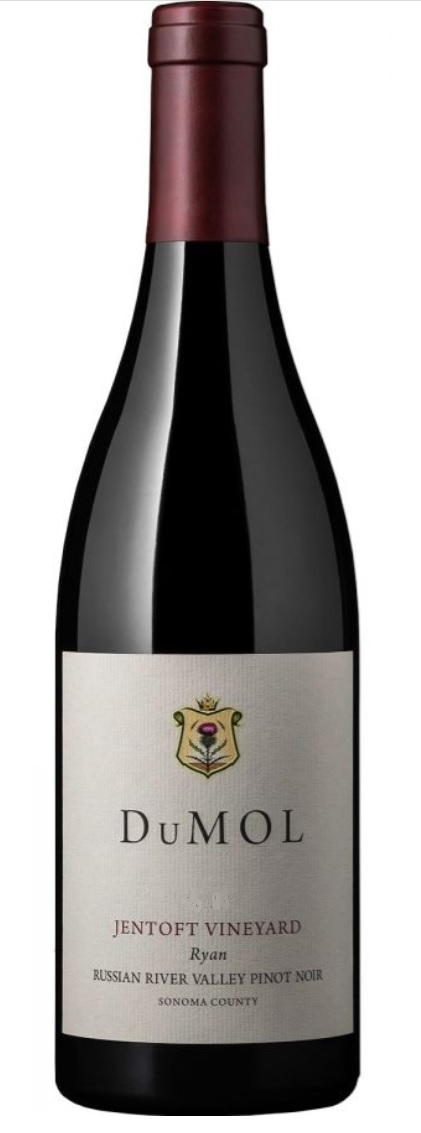
| Country: | United States |
| Region: | California (Sonoma County) |
| Winery: | DuMol |
| Grape Type: | Pinot Noir |
| Vintage: | 2021 |
| Bottle Size: | 750 ml |

Our DuMOL Estate Vineyard is our original high-density vine planting from 2004. It’s organically farmed without irrigation – these vines work hard each season. We make a strict selection for this bottling, one of our flagship wines, so that only three acres of its nine total comprise this bottling; the balance forms the core of Highland Divide. This is the best of the best. The high vine density and exclusively Calera Selection produce a wine with a significant level of both tannin and acidity. This structure is buffered by a deep core of fruit extract, the product of the ripe grape skins themselves, and the essence of the wine. Each vintage can age for many years, and it gradually deepens into a woodsy, truffley, and enveloping wine with grand scale complexity while never relinquishing its inherent brightness.
The wine’s aromas and flavors are akin to black cherry, boysenberry, hibiscus, anise, moss, and juniper. The palate is simultaneously bright yet dark, with mineral drive, violet floral lift, and bay laurel freshness. Tannins and acidity fuse to lengthen these flavors, and the wine finishes with dried herbs and orange zest lift. Great aging potential. Drink between 2025 and 2034 and decant for an hour in its youth to hasten the development.
Review:
-The Wine Independent 97 Points

Ancien Pinot Noir is 100% Pinot Noir.
The Mink Vineyard is located next door to the winery, in the Coombsville Viticultural Area of Napa Valley. Open to the same morning fogs and afternoon breezes that cool Carneros to the west, Coombsville is consistently one of the coolest pockets in Napa. Mink sits inside a small “bowl”, allowing cooler air to settle during the evenings, and making Mink’s mesoclimate a couple degrees cooler, even, than the surrounding hills. But the real secret to Mink’s explosive flavors, smooth, mouth-coating minerality, comes from the soil. Underneath is a layer of compressed volcanic ash, called tufa. The tufa drains the topsoil, storing moisture in its porous structure. The vines are able, with some work, to grow roots into the tufa layer, accessing moisture during the long, dry growing season.
The Mink Pinot Noir exhibits bright and refreshing notes of pomegranate, cherry, and fresh herbs. It gradually opens to deeper and darker berry fruit, blueberry and plum. This vintage is on the more structured side of the spectrum and will continue to evolve over time. Its enchanting mouthwatering minerality invite sip after sip together with bite after bite. A lively wine at release but it will continue to improve over the next 4 - 7 years and can age well beyond a decade as shown by its 20+ year track record.
Review:
"Ripe in flavor and luxurious in texture, this wine is difficult to put down. It is saturated in black cherry, black currant and black fig while staying light on the palate. It's a wonderful indulgence to enjoy by itself or with a roast pheasant or duck breast. — Jim GORDON"
- Wine Enthusiast (April 1st 2024), 95 pts
-Joe Czerwinski (Robert Parker) 92 Points

Argot Pinot Noir Kanzler Vineyard is made from 100 percent Kanzler.
Pinot Noir finds its nirvana tucked away in the Goldridge soils and rolling topography of the cool and foggy Sebastopol Hills. Kanzler is one of Sonoma’s undisputed Grand Cru sites. This terroir produces deeply fruited wines with dazzling spice-box complexities, wonderful acidity and undeniable focus and freshness. A masterclass in Pinot Noir.
Review:
-Wine Palate 95 Points

Gap's Crown Vineyard has become one of the most iconic Pinot noir vineyards in the Sonoma Coast. It was originally developed by Premier Pacific Vineyards between 2002 and 2005 and later purchased by Price Family Vineyards in 2013. In 2007, Sojourn Cellars became one of the best to make a vineyard-designate wine from Gap's Crown. Our clone 115 block, planted in 2005 on 3309 root stock at 800 feet elevation, has been the foundation for Sojourn since we began making Pinot noir from this vineyard. Our clone 828 block was planted in 2002 on 420A root stock, and two clone 667 blocks round out the blend, both planted in 2004 on 3309 root stock. This hillside vineyard is situated on the western slope of Sonoma Mountain and is cooled by the persistent wind and fog of the Petaluma Gap.
WINEMAKER NOTES: The 2021 growing season offered optimal conditions in the Sonoma Coast to harvest grapes of exceptional quality. The air remained clear with no res in Sonoma and pandemic lock downs ended. Our spirits were lifted and the grape harvest and wine quality benefited. . Brief heat waves in August and September ripened the grapes to ideal maturity as the weather stayed dry until major rains arrived October 22, after our grapes were harvested. Yields were lower than average in 2021, with small berries and loose clusters creating wines of increased depth and concentration. In 2021 we blended destemmed clone 115 and clone 667, while fermenting all the clone 828 100% whole-cluster. The resulting wine, our 15th vintage of Pinot noir from Gap’s Crown Vineyard, offers complex layers of elegant fruit flavors with a bold strength at its core.
Review:
-International Wine Report 97 Points

Zena Crown Vineyard The Sum Pinot Noir is made from 100 percent Pinot Noir.
Massed from multiple vineyard blocks and clones, this wine has a timeless beauty that can be inherently understood by innate human nature. Wines of this stature, much like great art, reflect the complex and compelling relationship between humanity and Earth. Expressing Autumn, S (The Sum) leads with Gala
apple, Japanese plum, gun powder, dirt, and garlic power on the nose, with barely ripe cherry on the finish. 60% whole-cluster fermentation bolsters the wine, sustaining the tannic imprint and tension that uncoils like a rattlesnake strike on the finish.
Review:
-Jeb Dunnuck 95 Points

Holocene Memorialis Pinot Noir is made from 100 percent Pinot Noir.
Holocene Pinot Noir Memorialis is a blend of 777, Pommard and 115 clones from MonksGate vineyard in the Yamhill-Carlton AVA, and it saw about 20% new French oak for 16 months prior to bottling. It is always the lighter and more feminine of the two Holocene wines, with red fruits, white flowers, dried herbs, mushroom and forest floor aromatics, bright acidity and a lithe texture, long finish.
By now, everyone knows that the Willamette Valley is an amazing place to grow Pinot Noir. When I relocated from Napa Valley to partner up with Force Majeure Vineyards, I knew I also wanted to start a project where I could focus attention on a varietal and growing region that I loved. Part of the excitement of being in the Pacific Northwest is the ability to have access to so many amazing vineyards and so much diversity, along with the opportunity to push boundaries and try new things – something that is becoming increasingly difficult in other growing regions.
We partner up with a few very small, diverse and amazing vineyards in the Willamette Valley, sourcing fruit from these dry-farmed sites that emphasize low yields, sustainable practices and produce outstanding fruit.
The wines are crafted in the same way I have been making wine since I was carrying it out at Bryant Family Vineyard in the Napa Valley — utilizing very low-impact, non-industrial techniques, native yeasts, little extraction and little new oak, and never filtering or fining. This allows a real sense of place to show through in the wines that is often dimmed when too much manipulation is undertaken.
Our first vintage was 2015, and was released in early 2017. As production is currently extremely small, the best way to get the wines into your hands is to join our mailing list at the “Mailing List” link above to receive an allocation when we have a release. We release wines once per year, and they will be sold on a first come, first served basis, shipped straight to your door.
Review:
-Jeb Dunnuck 95 Points
When we consider the potential of a piece of land to grow world-class wine, we immerse ourselves in the physical characteristics of soil type, depth, texture and drainage, slope aspect, sun exposure, et cetera—myriad complex details. On site potential alone, Jentoft likely sits at the top of our entire vineyard portfolio.
The site’s coastal marine soils are remarkably shallow with underlying sandstone bedrock poking through the topsoil. Lean, “boney” soils generally yield low-vigor vines and powerful wines, and that’s what we have here. The potential is incredible, and now that these vines are mature, we’re seeing the promise realized.
-Winery Notes:
Our first vintage of Ryan Pinot Noir was 2002 and it featured Dutton-Widdoes Vineyard at its core. This vineyard is one of the earliest plantings in Green Valley – 1984. At that time the vineyards were wide spaced, planted without irrigation and grown on a trellis that shaded the fruit. Now, all these years later we have hardy, experienced vines that have pretty much seen everything, and in these days of climatic extremes, these deep-rooted vines can tolerate drought and heat without issue. The fruit is uniquely characterful – wild berries, rich umami/truffle notes, underbrushy/woodsy complexity. When we layer in some bright coastal Jentoft fruit, the blend comes alive and infuses every corner of your palate. I’ve always loved that first 2002 Ryan bottling and this new vintage takes me back to our earlier DuMOL days. A wine for reflection.
The aromatics highlight the essence of our coastal Green Valley environment: wild berries, thyme, spearmint, truffle and freshly tilled soil. The wine is poised, vibrant and dynamic with a dark fruit pastille core then cherry, licorice, and briary notes. Concentrated and deep but always bright and quite tight knit with drawn out length and fresh focusing acidity on a spicy finish. Drink between late-2023 and 2032.
Review:
The 2021 Pinot Noir Ryan has a medium ruby color and autumnal scents of truffle and forest floor, cinnamon and Earl Grey tea leaves complementing a core of wild berry fruit. (In 2021, the wine comes from the Dutton-Jentoft and Widdoes vineyards rather than 100% from Jentoft as in previous vintages.) The medium-bodied palate is supple and detailed with a concentrated core of mineral-driven fruit. It has a silky texture, energetic acidity and a long, layered finish. This is so delicious and very easy to drink!
-Wine Advocate 97 Points
Founded in 1996, DuMOL is a vineyard focused producer of cool-climate Pinot Noir and Chardonnay from distinctive vineyards in the extreme southwestern part of the Russian River Valley. We also grow and craft small-lot Syrah, Cabernet Sauvignon, and Viognier from exceptional vineyard sites in Sonoma and Napa, expanding upon twenty-five years of winegrowing experience.
Through precise attention to detail in the vineyards and vintage-specific winegrowing and winemaking, we aim to create wines that highlight the purity of place. Our small team is dedicated to our portfolio of Estate, leased, and grower-partner vineyards. DuMOL wines are released through limited allocations to our consumer mailing list and select restaurants worldwide.

Alejandro Bulgheroni Lithology Cabernet Sauvignon is made from 100 percent Cabernet Sauvignon.
We only produced a scant 50 cases of this wine this year, far too small an amount considering how great it turned out. There’s that typical saturated to the rim deep purple color, with intense cassis, herb, and milk chocolate, bricks and forest floor, black plum pudding aromas. In the mouth, there’s a great balance, with notable oak and vanilla notes intertwined with dense black fruits. It’s an opulent and plush style, yet finishes with sweet grippy tannins.
Review:
-Jeb Dunnuck 100 Points

Delas Freres Cote Rotie La Landonne Rouge is made from 100 percent Syrah.
This very ancient region dates back to the Roman Era and is located on the right bank of the Rhône. It is said that during the Middle Ages, “The Seigneur de Maugiron” gave a hillside to each of his two daughters - one was brunette and the other fair - thus, were born the names of “Côte Brune” and “Côte Blonde.” Wines from the Côte Blonde tend to be more delicate and lighter in character than the fuller wines of the Côte Brune. Together, they make a wine of style and substance. This cuvée is a vineyard plot selection. The grapes come exclusively from a plot within the named slope of “La Landonne.”
This cuvée‘s first vintage was 1997. The wine is only made in the very best years. Its highly limited production never exceeds 2,500 bottles per year.
The steep, terraced hillsides along the river produce wines that are among the "biggest" reds of France. The Delas Côte-Rôtie is primarily Syrah with an addition of up to 10 to 20% of Viognier grapes in the crop. The soils of the northern part of the Côte Brune vineyard consists of extremely steep, terraced slopes of ferruginous mica schists which are covered with schist sand (arzel). The Côte Blonde has a varied geology with gneiss and granite predominating at the most southern side of the appellation. The area has dry, hot summers with regular rainfalls during other seasons. The grapes for the “La Landonne” cuvée are picked by hand at maximum maturity. Fermentation takes place in traditional open-topped concrete tanks, following three days of pre-fermentation cold maceration. Before fermentation, the maceration process continues under controlled temperatures of 82°F to 86°F. Daily cap pushing down and pumping over are carried out for about 10 days with total vatting time of up to 20 days. The wine is aged for 14 to 16 months in new or one year old oak casks. The barrels are topped up regularly.
Food Pairing: This wine pairs wonderfully with fine meats, roasted beef, water games, truffles and spicy stews. The bottle should be opened 1 to 3 hours before drinking. This wine needs at least 3 years cellaring before it can open up its complexity. In such case it is strongly recommended to decant before serving.
Tasting Notes: The wine‘s deep color is underscored by plummy hues. A complex nose shows deep, fruity aromas with hints of licorice and roasted coffee. Endowed with a dense and silky tannic structure, this is a full, fleshy wine that provides an ample and generous palate. Its lasting finish speaks of considerable ageing potential.
Reviews:
This is dark and still a bit reticent, with a cast iron cloak around the core of dark currant, plum and blackberry paste flavors, showing lots of sweet bay leaf, anise and singed apple wood notes in the background. There's serious grip through the finish. For the cellar.
-Wine Spectator 96 Points
Very open, spicy and fresh on the nose, you could almost open this now. Struck flint notes assist in teasing out notes of leaf tea, tobacco, rosemary and rose. Very full-bodied, generous but powerful on the palate, tense and mineral. Mouthcoating ripe, sweet tannin and robust amounts of sweet baking spices, along with more tobacco and black fruit on the palate. Has depth, length, power and impressive balance despite the high alcohol. Drink from now into 2022, or from 2031 to 2040. Lieu-dit La Landonne, from the Brune side (mica schist bedrock). Matured in new and one-year-old barrels for 14 months.
-Decanter 96 Points
The 2019 Côte Rôtie La Landonne comes from one of the greatest sites for Syrah in the world, the La Landonne lieu-dit located close to the center of the appellation, on the Côte Brune side. It reveals a deeper purple hue (it's slightly more opaque than the Seigneur de Maugiron) and offers a brilliant nose of ripe cassis, black raspberries, scorched earth, smoked herbs, and seared meat. Full-bodied and powerful on the palate, this is a deep, spicy, concentrated Côte Rôtie with a plush, layered mouthfeel, sweet tannins, beautiful balance, and a great, great finish. This puppy brings the fruit, opulence, and texture of the vintage yet still has a classic Côte Rôtie character.
-Jeb Dunnuck 96 Points
Fresh aromatic layers of mint sit atop crushed red cherries and wild strawberries, with light clove and thyme on the nose. The palate is rich and enticing with black cherries, plums, rhubarb, pomegranate seeds, black olives and freshly picked rosemary leaves. Tremendous texture, structure, and refreshing acidity carry this wine to a robust finish of orange zest and black tea leaves. Maisons Marques & Domaines USA.
- Wine Enthusiast 96 Points
Tasting Notes
The w/div>
Food Pairing
This /div>
"Immediately this has the darkness and aromatic austerity of La Landonne. Very full-bodied, expansive on the palate with mouthcoating flavour and tannin but not heavy. This is seriously tannic, but it's not tough. Great character, great power and perfect balance. Alcohol is just a little raised, but this is a blockbuster. Around 3,000 bottles made. Fermented in open-top concrete tanks for 20 days, then matured in new and one-year-old barrels for 14 months."
-Decanter World Wine Awards 97 Points

Argot Cabernet Sauvignon 1555 Oakville is made from 100% Cabernet Sauvignon.
Hailing from the historic Bonny’s Vineyard in the heart of Oakville. Cabernet Sauvignon vines thrive in the gravel rich soils here adjacent to the Napa River riverbed. Roots plumb deep into the valley floor, while vine canopies harvest Napa Valley’s plethora of summer sunshine. These conditions conspire to deliver unerringly perfect Cabernet Sauvignon grapes.
Pouring a deep opaque red-violet, 1555’s Cabernet personality leaps from the glass balancing opulent fruit, damp earth, chilling minerality and an alluring spice note that keeps pulling us back for more. Exquisitely ripe tannins provide a refined, velvety structure, delivering the deep and seductively rich palate. The pedigree displayed in the glass is undeniable.
Review:
-Lisa Perrotti-Brown (Robert Parker) 95 Points
-Jeb Dunnuck 93 Points

Luis Canas Rioja Hiru 3 Racimos is 100% Tempranillo
60 years old vines
Alcohol: 14,5º
Total acidity: 6,0 gr/l
Volatile acidity: 0,50 gr/l
PH: 3,47
Free SO2: 25 mg/l
Reducing sugars: 1,8 gr/l
This wine is a response to our quest to find the perfect wine, one that combines structure, complexity and balance. It is the result of a careful selection of grapes not from the vines but from the appropriate clusters, those that naturally produce three or less clusters and which are 60 or more years of age. Vines situated on slopes and terraces of limestone and clay soil, well exposed to the sun. These grapes are harvested in small boxes at the very best moment, then inspected on the selection table and vinified in small groups at a controlled temperature. After alcoholic fermentation they are macerated to extract their full potential. The resulting most is then settled in new French and American oak barrels to undergo malolactic fermentation. This second fermentation ensures the wine gains in complexity and aromatic intensity, it also stabilises its colour.
Fully ripened and concentrated fruit aromas with balsamic and spicy mineral nuances, notes of blackberry and blueberry preserve wrapped in creamy oak, caramel and milky coffee tones. The palate is concentrated, unctuous in the centre, balanced, sweet, with fine tannins. Very long finish, expressive, clearly marked with the character of the soil.
Hiru 3 racimos is a complex wine and so is its pairing with food. We must consider two options, either drink it in light sips so that the wine itself is the star of the feast, or serve with solid dishes that can match its vigour. An Iberian pork loin with roasted peppers, steak with mushrooms and plums, wild boar stew or pheasant in port are dishes that blend incredibly with this characterful wine.

Among the tapestry of historic vineyards in Napa Valley, there are a few standout names, but even fewer sites, if any, involve the rare combination of legendary wine, romance, and a touch of mystery. Bonny’s Vineyard is such a place. This four-acre vineyard in the Oakville District is both a special piece of land and a unique part of Napa history. It was planted in 1974 by Justin Meyer, the winemaker and co-founder of Silver Oak Cellars, as a gift to his wife, Bonny. Ideally situated in a gravelly spot adjacent to Conn Creek on the valley floor, Bonny’s Vineyard was responsible for a memorable string of Silver Oak vintages over the course of two decades.
Justin Meyer stopped producing the Bonny's Vineyard designate after the 1991 vintage. After replanting in 1999, the family has again decided to make a single vineyard bottling. True to the orignal, this is 100% Cabernet Sauvignon aged in 100% American oak barrels for almost 3 full years. The nose exhibits dark fruit aromas of cherry and plum mingling with cedar and cardamom and a hint of eucalyptus. The palate is the heart of this wine, with concentrated fruit on the entry and luscious, silky tannins filling the mouth with an almost endless finish.
As distinct and impressive a terroir as we farm in the Napa Valley. The rocky, gravel-rich soils contribute a distinct sauvage/mineral character, creating a stunning complexity to play off of Cabernet’s natural robust and fruit-driven personality from Oakville. In 2021 Argot added a new vineyard block to our holdings at Bonny’s. Deeper gravel and the famously low-yielding Disney clone conspire towards awesome complexity, and a deeply mysterious, brooding personality. A wholly different Cabernet from its 2021 siblings that you will not want to miss. Only 150 cases produced.
Review:
-Jeb Dunnuck 96 Points
-Joe Czerwinski (Robert Parker) 94 Points

A dramatic, ridgetop landscape — rising 1500 feet above Lake Hennessey, staring west over Pritchard Hill — persistently influenced by a push/pull draw between The Valley’s floor and Lake Berryessa. This wild, untamed, eastern frontier of Napa Valley, produces singular, terroir-driven wines of captivating beauty, power and lift. An unseasonably wet and cool springtime produced significant shatter at Sage Ridge in 2019, reducing our yields by 50%, leading to a particularly flamboyant edition of this wine.
An incomparable expression of Cabernet Sauvignon — massively pure red fruit character, delivered on a ribbon of ultra-suave tannins and gorgeously seductive high tones. The palate never relents its come-hither posture. Aromatically, puts forth an intriguing botanical complexity that is unmistakably site-specific. As our experience with this one-of-a-kind terroir deepens, we remain endlessly excited for the potential of these unique ridgetop vineyards. Get your hands on a bottle and pull the cork…a wine built for immense near-term gratification.
Review:
-Jeb Dunnuck 95 Points
-Lisa Perrotti-Brown (Robert Parker) 95 Points
-75x150.jpg "Philippe Milan Bourgogne Blanc 2022")
Philippe Milan Bourgogne Blanc is made from 100% Chardonnay
The wine is produced from vines planted in the commune of Chassey le Camp at high elevation, which brings freshness to this Chardonnay. Ripe fruit is nicely balanced with delicate notes of oak and a hint of citrus on the finish. Full flavored and complex.

William and John Graham founded their Port house in 1820, and for more than two centuries the name has stood among the greatest in the Douro. Since 1970 the firm has been owned and run by the Symington family, who farm their own quintas — Quinta dos Malvedos chief among them — and personally make every Graham's wine.
A Graham's Vintage Port is drawn from the oldest vines on the steepest terraces and released only when the year merits it. The 2024 shows the classic Graham's signature: a deep, opaque core of black fruit and violets, framed by ripe tannin and the house's hallmark seam of sweetness that carries through a long, structured finish.
Built to reward the cellar, it will drink beautifully for decades. 750ml.
Review:
-Luis Gutiérrez (Robert Parker) 97 Points
-Neal Martin (Vinous) 97 Points
-James Suckling 95 Points



