
" We don't sell the wine without touching the vine "
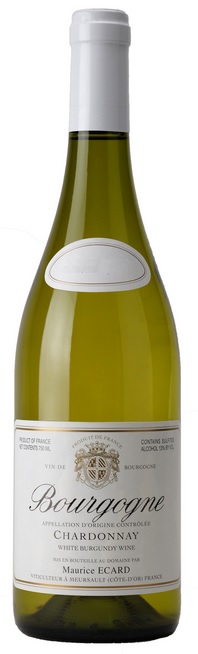
| Country: | France |
| Region: | Burgundy |
| Winery: | Maurice Ecard |
| Grape Type: | Chardonnay |
| Organic: | Yes |
| Vintage: | 2015 |
| Bottle Size: | 750 ml |
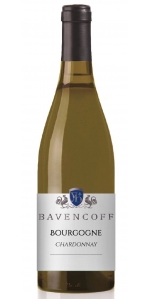
Bavencoff Bourgogne Blanc is made from 100 percent Chardonnay.
This Bourgogne Chardonnay is fresh and bright. The aromas are expressive with Honeysuckle, Broom and Mushroom. A nice balance between the acidity and the fruitiness, complementing the minerality. It will drink well during its youth but will gain some extra aromatic complexity after a few month in the cellar.
Very pleasant as an aperitif. Our Bourgogne Chardonnay also goes very well with cold meats, fish, grilled and marinated vegetables as well as goat cheese.
Wine was slightly filtered before bottling.
100% Malolactic fermentation done.
Aged 14 months. 80%of the wine was aged in Stainless steel tanks with 20% was aged in French Oak barriques (228 liter barrels).
Review:
Wine Enthusiast (April 2025), 90 pts
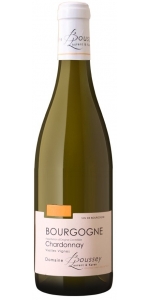
Boussey Bourgogne Blanc Cote d'Or Vieilles Vignes is made from 100 percent Chardonnay.
The grapes for Bourgogne Blanc Chardonnay Vieilles Vignes are grown on a parcel located within the city of Meursault.
The wine displays a refreshing nose of lime, citrus fruits, flint, honey and a touch of dried fruit. The palate is full of flavors, with honeysuckle, citrus and some salinity with an excellent balance between acidity and roundness.
Pair with cheese, seafood, nems, Spanish tapas and apple tart.
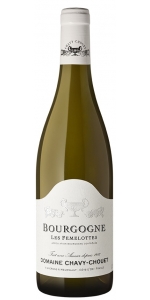
Chavy-Chouet Bourgogne Blanc Femelottes is made form 100 percent Chardonnay.
This is a charming, rich, focused and delightful white. Medium-bodied with a smooth texture, the wine has a fresh backbone of acidity, clean apple and citrus flavors, and an excellent balance. A most refreshing quaff and one that is great value. A delicate, expressive wine of exceptional quality.
The grapes from this wine are grown from the Puligny-Montrachet area. (either outside of the AOC limit or with younger vines).
The grapes from this wine are grown from the Puligny-Montrachet area. (either outside of the AOC limit or with younger vines).
Aged 10 months in oak barrels (10% new, the rest in 2-3 year old barrels).
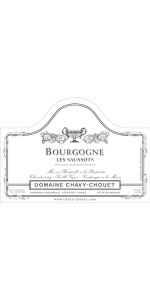
Chavy-Chouet Bourgogne Blanc Les Saussots is made from 100 percent Chardonnay. A medium yellow straw color in the glass. On the nose, you will find layers aromas of cured lemon and hints of coconut and mango. On the palate, the juice has clean flavor, fresh acidity, and excellent balance. Vanilla notes follow through to the slightly creamy finish.
The grapes from this wines are grown from the Meursault area. (either outside of the AOC limit or with younger vines).
Seafood, fish, salad or by itself as an aperitif.
Drink this one now or over the next 3 to 4 years.
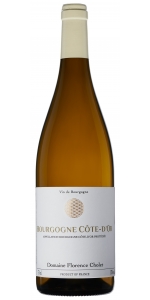
Florence Cholet Bourgogne Blanc Cote d'Or is made from 100 percent Chardonnay.
Full, well-balanced and round. Persistent, with beautiful minerality due to the wine terroir.
Filet of Sole as well as chicken with crawfish is creamy sauce (Poularde aux Ecrevisses).
Vineyards are located in the commune of Puligny Montrachet and Meursault.
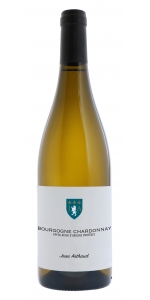
Jean Arthaud Bourgogne Blanc is made from 100 percent Chardonnay.
The AOC Bourgogne Chardonnay extends over the departments of Yonne, Côte d'Or and Saône et Loire. Bourgogne Chardonnay is a regional AOC, which means that the wines can be produced in all of the Burgundy region. This AOC represents half of the local production and covers almost 2,000 hectares of area with strict criteria of vinification and elaboration, offering wines of high quality (yields/terroirs/production methods and local know-how). The ideal location of the vineyards provide the best terroir for Chardonnay and give the wines of Burgundy a unique identity.
Jean Arthaud Bourgogne Blanc offers citrus and peach aromas with hints of floral notes. On the palate, the wine is supple and round, with well balanced freshness and generous length.
Intricate and characteristic bouquet of flower and fruit aromas (refreshing citrus fruit, soft pear, crisp apple). An elegantly rich, fruity wine with a hint of nuttiness.
6 months in Oak
The vines are 35 years of age on average. The mainly clay soil is light and stony. The wine's alcoholic fermentation takes place in stainless steel vats after which the wine goes through its malolactic fermentation in oak barrels.
Lightly chilled, it will accompany all fish and shellfish dishes which are not too highly spiced. It will also enhance all white meat dishes as well as making an excellent before dinner apéritif.
The Maurice Ecard Estate
The Domaine dates back to before 1789 and produces some of the best Premiers Crus in Savigny. Owner Maurice Ecard, who is now retired, was considered by many experts to be the father of the appellation.
His wines are now produced by Vincent Sauvestere. Vincent's paternal family has been firmly established in Meursault since the 18th Century. His father and grandfather were both "Maitres de Chais" for one of the most prestigious Wine Houses in the heart of Meursault. Vincent's father, Roger, created his own company in the early fifties with the acquisition of a Wine Merchant founded in 1891. He also had his own vines, inherited from his mother. In 1988, Roger handed over the running of the company to Vincent. When Vincent, born in Nuits Saint Georges in 1961, took control of the Domaine, it consisted of only 6 hectares (14.81 acres) of vines. Today the Domaine covers 40 hectares (98.77 acres) from Chablis to Meursault. In addition, Vincent has acquired other viticultural Domaines in Chablis, the Côte Chalonnaise and recently in the Rhone Valley.
The Domaine is proud to possess two Grand Cru wines, Corton Charlemagne & Corton Marechaudes, as well as twelve Premiers Cru wines. Through his family's traditional winemaking skills, passed down from generation to generation, and his years of oenological studies, Vincent now advocates:
- Expression of the unique terroir characteristics from each individual vineyard by using traditional winemaking methods.
- Well structured and easy drinking Burgundies :
- Pleasing to the eye
- Soft and supple flavors
- Lingering aftertaste with excellent ageing attributes.
Vincent's constant aim is quality and respect for all wines.
The Maurice Ecard Vineyard
Th domaine is cultivated through organic methods and produces wines that purely and distinctly reflect the terroir. The Premiers Crus include: "Narbantons", "Jarrons", "Serpentieres", "Peuillets" and "Les Clous". The yields are never over 35 hl/ha. The vines are pruned and, when fully mature, harvested by manual selection. Vinification involves 75 to 100% destemming, a classic fermentation, pigeage, racking of the gross lees, 15-18 months in oak (15% new from Damy).
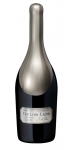
Belle Glos' first wine under the newly minted West Sonoma Coast AVA and a cellared release, this majestic vineyard brings plum with a slight burnt edge in the glass and boasts aromas of freshly tilled land, a rich oak forest in Autumn, and Crème de Cassis. Once on the palate, the acidity sparks a fire of smoked caramel and cinnamon spiked cranberry sauce. The silky-smooth texture gives way to a long and balanced finish that leaves your senses wanting more.
Review:
Located in the westernmost section of Sonoma County, this rugged, elevated, marine-influenced sub-AVA is the newest in the region. This almost nine-year-old wine immediately delivers a memorable experience through its perfume of jasmine, gardenia, and tangelo; on the palate, notes of brown-sugared cherry join a parade of orange peel and crushed stone. Grainy yet juicy strawberry weaves into vanilla and cedar as white pepper keeps the palate primed for more flavor.
-Tasting Panel 97 Points
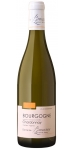
Boussey Bourgogne Blanc Cote d'Or Vieilles Vignes is made from 100 percent Chardonnay.
The grapes for Bourgogne Blanc Chardonnay Vieilles Vignes are grown on a parcel located within the city of Meursault.
The wine displays a refreshing nose of lime, citrus fruits, flint, honey and a touch of dried fruit. The palate is full of flavors, with honeysuckle, citrus and some salinity with an excellent balance between acidity and roundness.
Pair with cheese, seafood, nems, Spanish tapas and apple tart.



