
" We don't sell the wine without touching the vine "
| BUY MORE! SAVE MORE! | ||||||||||||||||||||
|
| Country: | France |
| Region: | Burgundy |
| Winery: | Jean Arthaud Vins et Liqueurs |
| Grape Type: | Chardonnay |
| Vintage: | 2022 |
| Bottle Size: | 750 ml |
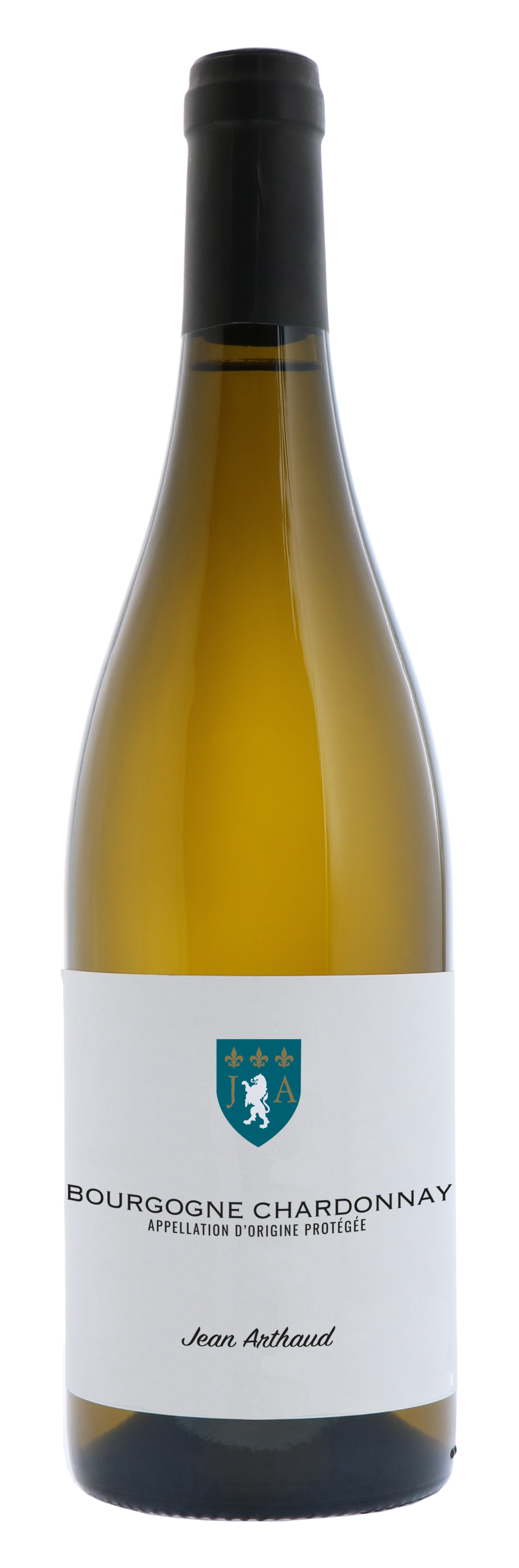
Jean Arthaud Bourgogne Blanc is made from 100 percent Chardonnay.
The AOC Bourgogne Chardonnay extends over the departments of Yonne, Côte d'Or and Saône et Loire. Bourgogne Chardonnay is a regional AOC, which means that the wines can be produced in all of the Burgundy region. This AOC represents half of the local production and covers almost 2,000 hectares of area with strict criteria of vinification and elaboration, offering wines of high quality (yields/terroirs/production methods and local know-how). The ideal location of the vineyards provide the best terroir for Chardonnay and give the wines of Burgundy a unique identity.
Jean Arthaud Bourgogne Blanc offers citrus and peach aromas with hints of floral notes. On the palate, the wine is supple and round, with well balanced freshness and generous length.
Jean Arthaud liqueurs are produced in Southern Burgundy’s Charnay-Les-Macon, between the Beaujolais Crus and Pouilly Fuissé. Nearly a century old, the winery & distillery was founded in 1928 by Henri Claudius Trenel (the third generation of Trenels is involved today). Their top quality Beaujolais Crus, Mâconnais wine and Bourgogne fruit liqueurs have garnered a respected reputation throughout France and abroad. Their style is guided by 3 principles: exceptional fruit concentrations, long macerations & limited sugar dosage. The Jean Arthaud liqueurs are both Bourgogne IGP (Indication Géographique Protégée), meaning they can only be produced in Burgundy with fruits grown in Burgundy.

Begude Bandol Rouge is made from 90% Mourvèdre, 10% Grenache.
Eye: dark ruby colored
Nose: Intense, aromatic, fresh and elegant
Mouth: Structured on black fruits flavors, lightly woody , tanins are strong an firm in their early days (<5years) Good acidity give freshness backbone and great fruit/alcoholic balance . Delicate final on spices.
Opening: Decant 4-6 hours before serving
Soil: Clay-limestone Culture: Organic without pesticides nor chemicals additives Yield: 20 hectoliters/hectare Harvest: Manual in small cases Winemaking: Double sorting, 100% destemming, skin contact, with daily sticking in order to optimize color and aromatic extraction Alcoholic fermentation 15 days followed by malo lactic fermentation. Aging: 18 months in oak cask Bottling:
Grilled lamb, meat cooked with sauce, southern French cuisine and tasty dishes (tajines, couscous, paellas).
Review:
"Inviting spicy oak, malt and blackberry cream scents. Powerfully structured tannins, spicy liquorice and clove flavours as well as bramble fruit; very long finish. Its best years are far into the future. Terrific stuff."
- Decanter World Wine Awards 2020, 97 pts & Platinum Medal

Bastgen Blauschiefer Riesling is 100 percent Riesling.
Bright, clean, fresh and zesty. Grapefruit like flavors. Fruity aromas and a nice minerality, typical of the Riesling grape grown on blue slate soil. Round, rich and a very long finish.
They meticulously tend 4.5 ha (11.11 acres) of which 80% is Riesling. The soil is made of slate. Their vineyards are located in Kesten and Brauneberg, on a steep terrace, and planted to 50-year old vines. Fortunately for Bastgen, they own part of the famous Brauneberger Juffer Sonnenuhr. The vines produce very small, ripe berries that are very tasty.
Review:
"Very enticing nose of ripe pear with some white peach and floral aromas! All the elegance and delicacy we expect from high-quality Mosel riesling, but this light-bodied and dry beauty is only an entry-level wine! Long, refreshing and delicate finish. This will be a bargain in all the markets it reaches. From organically grown grapes. Drink now. Screw cap. "
- James Sucking (November 2023), 92 pts

Jean Arthaud Bourgogne Blanc is made from 100% Chardonnay.
Located in the south of the Mâconnais region, the Pouilly Fuissé AOP covers four communes Its patchwork of Climats produces white wines that are well suited to fine cuisine. Our Pouilly Fuissé comes from vines nestling between the Roche de Solutré and the Roche de Vergisson. It combines the firm crispness created by the limestone soils with the smoothness derived from the more clay rich soils to produce a well rounded wine.
Fruity aromas of peaches, lemons and Granny Smith apples interwoven with lighter notes of jasmine and acacia Mineral and buttery overtones subtly round off the bouquet.
Jean Arthaud Bourgogne Blanc is made from 100% Chardonnay.

Jean-Michel Sorbe Quincy Blanc is made from 100 percent Sauvingon Blanc.
The first nose is expressive and opens up to notes of acacia, citrus (lemon, grapefruit). Full on the palate with lovely freshness. This wine boasts nice balance and good length.
The vines are 15 to 20 years old and are located on the left bank of the Cher River, southwest of Quincy. This vineyard enjoys good exposure to the sun and overlies hillocks composed of sandy alluvial deposits and gravel dating back to the Quaternary Period. Each terroir is managed with minimal intervention in an environmentally friendly approach. Vinification: Slow pressing. Fermentation took place under controlled temperatures (18°C).The wine was aged on fine lees for a minimum of 4 months. It was filtered only once before being bottled.
Pair with crustaceans, asparagus, or goat's cheeses.
After pouring, allow the wine to breathe for a few moments in the glass before enjoying so that it may fully release all of its aromas.

Jean-Michel Sorbe Reuilly Blanc is made from 100 percent Sauvignon Blanc.
The first nose is expressive and opens up to notes of acacia, citrus (lemon, grapefruit). Full on the palate with lovely freshness. This wine boasts nice balance and good length.
The vines are 15 to 20 years old and are located on the left bank of the Cher River, southwest of Quincy. This vineyard enjoys good exposure to the sun and overlies hillocks composed of sandy alluvial deposits and gravel dating back to the Quaternary Period. Each terroir is managed with minimal intervention in an environmentally friendly approach. Vinification: Slow pressing. Fermentation took place under controlled temperatures (18°C).The wine was aged on fine lees for a minimum of 4 months. It was filtered only once before being bottled.
Pair with crustaceans, asparagus, or goat's cheeses.
After pouring, allow the wine to breathe for a few moments in the glass before enjoying so that it may fully release all of its aromas.

Bavencoff Bourgogne Blanc is made from 100 percent Chardonnay.
This Bourgogne Chardonnay is fresh and bright. The aromas are expressive with Honeysuckle, Broom and Mushroom. A nice balance between the acidity and the fruitiness, complementing the minerality. It will drink well during its youth but will gain some extra aromatic complexity after a few month in the cellar.
Very pleasant as an aperitif. Our Bourgogne Chardonnay also goes very well with cold meats, fish, grilled and marinated vegetables as well as goat cheese.
Wine was slightly filtered before bottling.
100% Malolactic fermentation done.
Aged 14 months. 80%of the wine was aged in Stainless steel tanks with 20% was aged in French Oak barriques (228 liter barrels).
Review:
Wine Enthusiast (April 2025), 90 pts

Boussey Bourgogne Blanc Cote d'Or Vieilles Vignes is made from 100 percent Chardonnay.
The grapes for Bourgogne Blanc Chardonnay Vieilles Vignes are grown on a parcel located within the city of Meursault.
The wine displays a refreshing nose of lime, citrus fruits, flint, honey and a touch of dried fruit. The palate is full of flavors, with honeysuckle, citrus and some salinity with an excellent balance between acidity and roundness.
Pair with cheese, seafood, nems, Spanish tapas and apple tart.

Aiurri Salas Rioja is made from 80% Tempranillo and 20% Field Blend
Aroma: Very expressive on the nose, with good complexity, red fruit and fresh black fruit, spices and wild herbs. Flavor: Combination of freshness and complexity. Pleasant tannins, lots of fruit, long finish with great persistence. Color: Black Cherry with a Violet rim.
Review:
"A peppery Rioja that shows the graciano and monastrell touch to the field blend. Menthol, basil leaves, laurel, blackberries and a lot of spices. Tense and powdery tannins on the fine-boned, full-bodied palate. Drink or hold. - Zekun Shuai (Senior Editor)"
- James SUCKLING (September 11th 2024), 94 pts

Collier Creek Front Coach Chardonnay is made from 100 percent Chardonnay.
Nestled in the heart of the Lodi Appellation, where farmland ran as far as the eye could see, Collier Creek is a place that reminds us of simpler times. A first class wine for the price of coach, this stainless steel fermented Chardonnay is driven by notes of pear and citrus, rolling out with a dry, refreshing finish.
RS: 3.75 g/L
TA: 6.2 g/L
Pair with grilled chicken, goat cheese, fish tacos w/ citrus slaw.



