
" We don't sell the wine without touching the vine "
| BUY MORE! SAVE MORE! | ||||||||||||||||||||
|
| Country: | Spain |
| Region: | Canary Islands |
| Winery: | El Grifo |
| Grape Type: | Listan Negro |
| Organic: | Yes |
| Vintage: | 2021 |
| Bottle Size: | 750 ml |
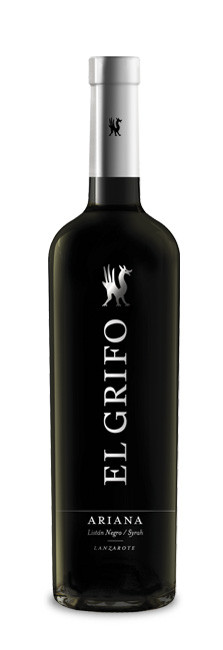
Red wine made with a blend of the Listán Negro and Syrah grape varieties. Listán Negro brings an Atlantic character that’s fresh and lively while Syrah, grown on our family vineyards, provides the necessary structure for ageing in barrels. Limited production of 17,940 bottles.
Both varietals are made separately and a blending of the two is done prior to malolactic fermentation. This second fermentation takes place in 500-litre French oak barrels with different toast levels in order to increase the complexity and balance between the fruit and the wood. This wine is then aged for six months. It’s then bottle aged for six months, adding roundness and smoothness.
Appearance: Deep burgundy color with medium intensity, clear and bright.
Aroma: Complex thanks to the blending of varietals and its ageing in oak barrels. Notes of red fruits (blackcurrant or raspberry), toasted hints of toffee or caramel, with a decidedly Atlantic character. The Listán Negro grape variety gives it balsamic notes (mint or eucalyptus), making it an even more complex wine.
Taste: Ariana is a fresh, well-balanced, long-lived wine with smooth, round tannins providing structure
The oldest winery in the Canary Islands and among the ten oldest in Spain. We maintain some vines from the 19th century that mature on the slope and are hand-picked, one by one. The fire, wind, and rock create extreme conditions from which wines with a marked character and personality are born, with which we discover the soul of a unique land and climate in the world.

El Grifo Lias Malvasia Volcanica is made from 100% Malvasia Volcanica.
Color: Straw yellow, with light golden hues. Clear and bright.
Aroma: Medium-high intensity of a wine in evolution. Fresh, citrus (orange peel) and tropical (passion fruit and mango) fruits. Flowers (orange blossom, jasmine, violets), fennel, and complex aromas such as silex or flint (phosphorus). Yeast autolysis is reminiscent of the aromas of baked goods and yeast. Bottle ageing brings out hints of dried fruits, honey and caramel.
Taste: Full-bodied, with a lengthy and unctuous texture, very strong natural acidity, citrus freshness, mineral notes and saltiness. Persistent finish.
Residual Sugar 0.5 g/L
Total Acidity 6.02 g/L
pH 3.36
Total SO2 91 mg/L
El Grifo Lias Malvasia Volcanica is made from 100% Malvasia Volcanica.
Color: Straw yellow, with light golden hues. Clear and bright.
Aroma: Medium-high intensity of a wine in evolution. Fresh, citrus (orange peel) and tropical (passion fruit and mango) fruits. Flowers (orange blossom, jasmine, violets), fennel, and complex aromas such as silex or flint (phosphorus). Yeast autolysis is reminiscent of the aromas of baked goods and yeast. Bottle ageing brings out hints of dried fruits, honey and caramel.
Taste: Full-bodied, with a lengthy and unctuous texture, very strong natural acidity, citrus freshness, mineral notes and saltiness. Persistent finish.
Residual Sugar 0.5 g/L
Total Acidity 6.02 g/L
pH 3.36
Total SO2 91 mg/L

Red wine made with a blend of the Listán Negro and Syrah grape varieties. Listán Negro brings an Atlantic character that’s fresh and lively while Syrah, grown on our family vineyards, provides the necessary structure for ageing in barrels. Limited production of 17,940 bottles.
Both varietals are made separately and a blending of the two is done prior to malolactic fermentation. This second fermentation takes place in 500-litre French oak barrels with different toast levels in order to increase the complexity and balance between the fruit and the wood. This wine is then aged for six months. It’s then bottle aged for six months, adding roundness and smoothness.
Appearance: Deep burgundy color with medium intensity, clear and bright.
Aroma: Complex thanks to the blending of varietals and its ageing in oak barrels. Notes of red fruits (blackcurrant or raspberry), toasted hints of toffee or caramel, with a decidedly Atlantic character. The Listán Negro grape variety gives it balsamic notes (mint or eucalyptus), making it an even more complex wine.
Taste: Ariana is a fresh, well-balanced, long-lived wine with smooth, round tannins providing structure
El Grifo Lias Malvasia Volcanica is made from 100% Malvasia Volcanica.
Color: Straw yellow, with light golden hues. Clear and bright.
Aroma: Medium-high intensity of a wine in evolution. Fresh, citrus (orange peel) and tropical (passion fruit and mango) fruits. Flowers (orange blossom, jasmine, violets), fennel, and complex aromas such as silex or flint (phosphorus). Yeast autolysis is reminiscent of the aromas of baked goods and yeast. Bottle ageing brings out hints of dried fruits, honey and caramel.
Taste: Full-bodied, with a lengthy and unctuous texture, very strong natural acidity, citrus freshness, mineral notes and saltiness. Persistent finish.
Residual Sugar 0.5 g/L
Total Acidity 6.02 g/L
pH 3.36
Total SO2 91 mg/L

Milsetentayseis 1076 Ribera del Duero Tinto is made with 95% Tempranillo and 5% other native varieties.
TASTING NOTES: A product of its unique landscape, extreme altitude and mineral-rich soil, 1076 Tinto is a bold wine with a distinct character designed to evolve over time. Its freshness and intensely fruity expression are representative of a modern style, moving away from excess, in search of the elegance, smoothness and balance found in the great wines of the world.
TERROIR: A recently restored vineyard situated at over 3,280 feet of altitude where ancestral vines over 100 years old grow harmoniously together with new, indigenous plantings in varied soil comprised of red clay, sand and mineral deposits of quartz, mica, and feldspar.
WINEMAKING: Hand-harvested from a selection of the best plots in the vineyard then separated into concrete, oak or stainless steel fermentation vats depending on the characteristics of the grape and the soil where it was grown. Its production is defined by the team´s constant vigilance throughout the process and their in-depth knowledge of the region, the soil and the native varieties that thrive there.
AGEING: Aged for 18 months in French oak of various sizes and according to the needs of each plot. Bottled in June 2020.
VINTAGE: The 2018 vintage began with abundant rainfall that lasted until late spring. Budding had already begun by the end of April, and as is usual in the Ribera del Duero, mid-May posed great risk of frost. Thankfully, consistent high winds in the area kept it at bay allowing the vineyards to remain unaffected. Spring extended into June with rain and cool temperatures, unusual for this time of year, while summer did not arrive until July bringing with it dry, hot conditions that allowed for the fruit to reach optimal ripeness. The harvest ran from October 5th-October 13th.
Pair with spit-Fire Roasted Suckling Pig.
Reviews:
"Inky violet. Potent aromas of cassis, cherry preserves, incense and potpourri, plus oak spice and mineral topnotes. Alluringly sweet and concentrated, with a spine of smoky minerality supporting intense flavors of dark berry liqueur, bitter chocolate, cola and candied lavender. Youthful, slow-building tannins add shape and grip to an impressively long, juicy finish that echoes the dark berry and floral notes. - Josh Raynolds."
- Vinous (February 2021), 95 pts
"The wine is deep cherry in color exhibiting complex, expressive aromas. Its minerality comes from the soil, the black fruit from the Tempranillo and the spice from a sometime in oak. The combination leads to a full body that finishes with great length.
- Guia Penin, 95 pts
"Very fine-tannined Duero with berry, chocolate and walnut character. Medium body. Solid core of fruit. Linear and very long. Polished and thought-provoking. Drinkable now, but better in 2023."
- James Suckling (November 2021), 94 pts

Pago de Carraovejas Ribera Del Duero is made from 92%, Cabernet Sauvignon 5% and Merlot 3%.
The Pago de Carraovejas Ribera del Duero vintage marks a turning point in the history of the winery. From now on, the Crianza and Reserva are unified in this wine that focuses on the terroir and character rather than the time of aging. Its renewed label reflects the three key elements of this red: origin, soul and emotion.
Pago de Carraovejas Ribera Del Duero is made with grapes grown in the Botijas River valley, and planted between 1988 and 2011. Our work over the last 30 years has been geared to handcrafted viniculture, that puts as much care as possible into the microclimate conditions and the details. We have placed particular attention on the maintenance of the soil by plant cover that already grows spontaneously. It allows us to develop the ecosystem of the valley, which we respect scrupulously, using organic fertilizer and sulfur as the sole basis of our viticulture.
Depending on which plot they come from and the time they enter the winery, the grapes may be deposited in cold chambers to prevent oxidation and preserve the aroma. We carry out a two-part selection: first on the vine, where we choose the bunches, and then on a belt in the winery, where we remove the grapes that do meet the necessary conditions. The grapes enter the winery and are transported with the assistance of gravity. The deposits are filled slowly and gently. Depending on the characteristics that we detected when tasting the grapes, we ferment them either in stainless steel deposits or French oak barrels. For years we have worked with our own yeast that has been isolated from the vines by our team. This work is also partly responsible for the Carraovejas character.
The wine was aged in barrels for around twelve months.
Review:
The eponymous 2021 Pago de Carraovejas comes from a cooler year when they consider the grapes had exceptional quality. The bottled wine is composed of Tinto Fino with 5% Cabernet Sauvignon and 3% Merlot with 15% alcohol but good freshness and integration of the oak after spending 12 months in 226- and 600-liter barrels. It's medium to full-bodied, with fine tannins, a juicy mouthfeel and a tasty finish. This is a more elegant Carraovejas. It was bottled in the spring of 2023.
-Wine Advocate 93+ Points

Bright and glossy ruby red in color. On the nose it reveals aromas of small fresh berries and a trace of sour cherry, melded with hints of blackberries and black cherries, followed by a hint of vanilla. A fragrant wine with satisfying intensity. On the palate it is warm, smooth and a medium-bodied with finely-balanced tannins. Dry and sinewy yet fresh with a persistent, aromatic finish.
It naturally accompanies dishes that are typical of Tuscan cuisine with its bold, authentic flavors, such as pasta and risottos made with mushrooms or truffles, pork, grilled meats and medium-matured cheeses.
Review:
Notes of ripe cherries, dried flowers and walnuts with hints of anisette and licorice. Medium- to full-bodied, compact and dense with creamy tannins and steady acidity. Weighty and structured. Drink or hold.
-James Suckling 91 Points

Pago de Carraovejas Cuesta Liebres is made from 100% Tinto Fino. The plot is located on a terraced hillside located at 900 m above sea level with slopes that range between inclines of 30% and 40%. Red cherry color with purple hues. Ripe fruit aromas, vanilla notes. Suave and unctuous in the mouth. A strong and noble character.
The harvest is carried out by hand using small crates and after passing through a refrigerated container it is transferred into tanks via gravity. The alcoholic and malolatic fermentation is carried out in small French “Haute Futaie” Oak casks with unique and original local yeasts and fermenting bacteria from the vineyard itself, to bring out the very best of the terroir, respecting the uniqueness of each and every vintage. Clarified with egg whites and bottled by gravity with natural cork stoppers.
Review:
"From the vineyard of the same name, the 2021 Cuesta De Las Liebres is a knockout, from a hillside vineyard of terraced vines. Aged 24 months in French oak, the first year in new, the second in second-use, all fine-grained, and bottled in June 2024, the tannins are well-integrated and dusty, nearly chalky. It’s truly a beautiful expression of variety, vintage, and site, reaching perfection in its fine-tuned, full-bodied layers of rich cassis, oak spice, and even a touch of garrigue. There’s lovely acidity throughout that brightens the palate, with beguiling notes of violet that never fade away. It’s a seamless, polished, gorgeous wine that will be hard to resist, though aging will continue to see it melt into one over the next 15-18 years. - Virginie BOONE"
- Jeb DUNNUCK (August 2025), 100 pts

It means with head, it is Galician word that means a way to do the things with calm and think every step to succeed. It was a word that the founder of the winery, Manolo Arnoya, always used (“do things with Sentidiño "). The label represents a seafaring boat associated with the fisherman who bravely goes out to work on the sea and has to work with “Sentidiño” to return home safely.
Refined, soft, fresh and intense wine. It presents a powerful aroma of stone fruits, such as peach and sweet pear and it presents a freshness so characteristic of lemon. It is a pleasure for the palate!
RS: 1,8 gr/L
TA: 6,8 g/L
Pairing: Fettuccine with pesto sauce, sushi.



