
" We don't sell the wine without touching the vine "
| BUY MORE! SAVE MORE! | ||||||||||||||||
|
| Country: | Italy |
| Region: | Tuscany |
| Winery: | Famiglia Cotarella |
| Grape Type: | Sangiovese |
| Organic: | Yes |
| Vintage: | 2020 |
| Bottle Size: | 750 ml |
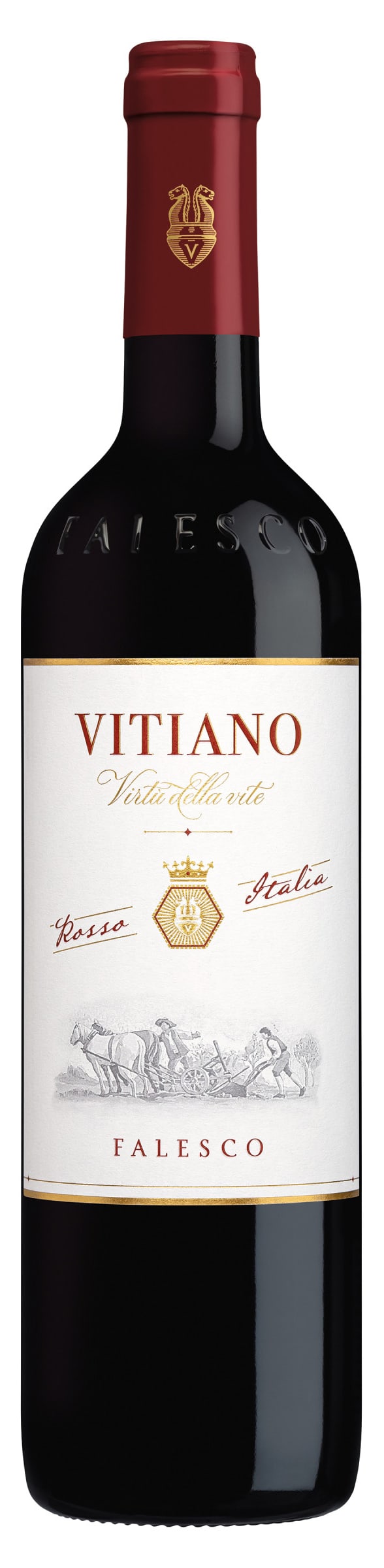
Famiglia Cotarella Falesco Vitiano Rosso Umbria is made from 34% Sangiovese, 33% Merlot, 33% Cabernet Sauvignon.
The wine has an intense red color with violet reflections. The aroma has fruity notes in great balance with the sweetness of the wood. The taste is strong, round, pleasant with a rich and harmonic finish.
Review:
James Suckling 92 Points
Le Macioche is a beautiful but small wine estate in the heart of the Montalcino winemaking zone. Of the estate’s six hectares, only three are planted to vineyards producing Brunello di Montalcino with another one hectare devoted to olive groves. Le Macioche derives its name from the Sienese Macioca or Strawberry Tree, which is the primary type of tree found in the woods surrounding the estate. After being purchased and renovated by a young couple in the 1980’s, Cantina Le Macioche became known throughout the area for producing a wine of considerable power, but with significantly more elegance than its immediate neighbors. It was this unique character that first drew the Cotarella family to follow the Brunello wines of Le Macioche. Then in 2017, shortly after leadership of Famiglia Cotarella was passed to next generation—Dominga, Marta, and Enrica—the opportunity for this dynamic Italian winemaking family to enter Montalcino arrived. Although this change represents an exciting new chapter for both the Cotarella family and Le Macioche, the traditions and character of both will serve as the basis for this next generation.
Le Macioche sits in the center of the Montalcino appellation, just about 5 minutes due southeast from Montalcino. Nestled in a prestigious neighborhood among such prominent addresses as San Polo and Fattoria dei Barbi, Le Macioche is unique in that its four sections of Brunello vineyard, spread over 7.5 acres, are all exposed to the Southwest. This, along with the elevation of roughly 1,400 feet above sea level, ensures both exceptional ripening and constant ventilation throughout each growing season. Such auspicious conditions have enabled Le Macioche to safely exercise organic farming practices with the 2018 vintage marking the estate’s full organic certification.
Le Macioche has always held a reputation for producing wines that display a degree of elegance and finesse. Winemaking at the estate is intended to provide this unique terroir the best possible opportunity to express itself clearly. Fermentations are carried out by yeasts indigenous to the property in temperature-controlled stainless-steel tanks. The wine is then transferred, according to tradition, into large casks of Slavonian oak where it undergoes the malolactic conversion and further refinement. The wine experiences a brief fining with Bentonite clay, but is always bottled unfiltered to preserve character. With the estate’s 2017 purchase by the Cotarella family, winemaking remains highly faithful to the estate’s past. Minor updates, like a pre-fermentation cold-soak, are intended to enhance the components of elegance for which the wine has always been known without altering its character.

Famiglia Cotarella Falesco Vitiano Rosso Umbria is made from 34% Sangiovese, 33% Merlot, 33% Cabernet Sauvignon.
The wine has an intense red color with violet reflections. The aroma has fruity notes in great balance with the sweetness of the wood. The taste is strong, round, pleasant with a rich and harmonic finish.
Review:
James Suckling 90 Points

Familia Zuccardi 'Finca Piedra Infinita' Gravascal is made from 100 Malbec.
WINE DATA:
Grape Composition: 100% Malbec
Appellation: Finca Piedra Infinita, IG Paraje Altamira,Valle de Uco, Mendoze
Vinification: Manually selected grapes, filling of tanks by gravity. Fermentation with native yeasts in concrete vessels without epoxy. Aging in concrete vessels. The 2020 was a very particular vintage, characterized by limited yields and a high speed of maturity, which made it one of the fastest and most challenging on record.
In the search for the purest expression of the identity of Finca Piedra Infinita vineyard, we reached this small plot of 0.73 hectares. Located on its north-east side, it shows the typical facet of Paraje Altamira soil, with large gravels and granite stones covered with calcareous material at a depth of 50 cm.
Altitude: 3,609 feet above sea level
Soil Type: Short alluvial soil covered with calcareous materials
Alcohol: 14% Total Acidity: 5.6g/l
TASTING NOTES:
Color: Bright ruby color
Aroma: Dark berries, black olive tapenade, and iron
Flavor: Rich on the palate, with firm tanins

Rinaldi Panta rei Monferrato Rosso is a blend of 50% Barbera and 50% Cabernet Sauvignon.
This wine is quite tasty, smooth, silky and powerful.
It is loaded with dried red fruit notes from the appassimento of the grapes and it also has a lot of spicy aromas and flavors from the oak ageing.
Grown on limestone soils.
The average age of the vines is 30 years old.
10% of the wine is appassimento. Appassimento is an Italian term for drying harvested grapes, traditionally on bamboo racks or straw mats, for a few weeks up to several months to concentrate the sugars and flavors. This process is used in making Amarone, Recioto and Sforzato.
This drying method is not traditional in Piemonte but is popular in other part of Italy like in the Veneto region.
Thanks to this new method the wine is rounder and softer, boasts beautiful notes of red dried fruits.
Pantarei is aged 14 months in French oak ((the wood is Allier, medium toast) barrels and 6 months in bottle before release.
Delicious with wild game, grilled meat and strong cheese.

Castellare di Castellina 'I Sodi di San Niccolo' Toscana IGT is a blend of Sangioveto (85%-90%) and Malvasia nera (15-10%)
Castellare’s top wine, ranked in the Wine Spectator Top 100 on multiple occasions and recognised with the prestigious Gambero Rosso’s Tre Bicchieri and Bidenda’s Cinque Grappoli ratings. The company takes great pride in demonstrating the greatness of the Sangioveto variety, paired with Malvasia Nera, achieving a worldwide position of sixth place.
Pairs well with cold cuts and meat rich in flavour, cheeses with a strong and aromatic taste, in particular, Pecorino Toscano and Parmigiano.
The masterpiece of Castellare, I Sodi di San Niccolo, has twice placed in the top 100 of Wine Spectator, and has been awarded “Three Glasses” by Il Gambero Rosso.
I Sodi di San Niccolo is produced solely with native varieties: 85-90% of Sangioveto and 10-15% of Malvasia Nera, I Sodi comes from the two best crus of the farm.
The word "I Sodi" was used by the Tuscan farmers to describe those grounds which had to be processed by hand, being too hard (in fact firm) or too steep to allow for the employment of the horses, unlike the "fields" that make the grounds more easily cultivable.
Reviews:
Clear ruby with a fine garnet sheen. Impressive nose, very finely drawn, aromas of juicy cherries, blood orange and dried thyme, some liquorice in the background. Polished and precise from the attack to the finish, finely-meshed, very well-integrated tannins, flows beautifully, finely worked out fruit, long finish.
-Falstaff 97 Points
Complex and deeply embedded aromas of ripe blackberries, spices and aromatic bark. Full-bodied and very firm for now, with impressive concentration of fruit and tannin. Very long, balanced finish. Great to taste now, but this is one for the cellar. Patience will be rewarded. Sangiovese and malvasia nera. This has always been a top Tuscan red. Best from 2027.
- James Suckling 96 Points
Super fragranced nose, patchouli, pot pourri, Turkish Delight, rose with caramelised red berries and a touch of smoke and incense - all quiet forward and expressive. The nose alone you could smell for hours such is its complexity and beguiling nature. Powerful and concentrated on the palate, this is broad and muscular, sinewy with depth and determination. Tannins are well integrated, really giving the support to the fruit and acidity, driving the flavours forward despite the clear weight and hold. Fragranced red berries continue on the palate with a touch of stone, graphite and matchstick. Rich and big on the mid palate, becoming more focussed towards the finish. Cleary well made with lots going on. Acidity is great, it's cool, clean, sleek and packed full of flavour. Almost too much, this is a big wine, so needs time, but has lots of appeal and mouthwatering freshness throughout. Released on the 9th March. Director and winemaker Alessandro Cellai.
- Decanter 96 Points

Bright and glossy ruby red in color. On the nose it reveals aromas of small fresh berries and a trace of sour cherry, melded with hints of blackberries and black cherries, followed by a hint of vanilla. A fragrant wine with satisfying intensity. On the palate it is warm, smooth and a medium-bodied with finely-balanced tannins. Dry and sinewy yet fresh with a persistent, aromatic finish.
It naturally accompanies dishes that are typical of Tuscan cuisine with its bold, authentic flavors, such as pasta and risottos made with mushrooms or truffles, pork, grilled meats and medium-matured cheeses.
Review:
Notes of ripe cherries, dried flowers and walnuts with hints of anisette and licorice. Medium- to full-bodied, compact and dense with creamy tannins and steady acidity. Weighty and structured. Drink or hold.
-James Suckling 91 Points

Codirosso Chianti is made from 90% Sangiovese, 7% Canaiolo, 3% Colorino.
Vinification: fermentation in stainless steel at controlled temperatures for 7 to 8 days with an additional 7 to 8 days on the skins. The juice is pumped over daily for 10 days at the beginning of the fermentation. The wine is then racked and goes through malolactic.
Ruby red color with purple reflections. Intense vinous bouquet with hints of violets and dark cherry fruit.The flavor is full of ripe fruit and a hint of spice. It is well balanced and dry. The finish is persistent and satisfying.
Food pairing: grilled, braised or roasted meats

Viejo Isaias Juana Cabernet Franc is made from 100 percent Cabernet Franc.
Cabernet Franc has an intense bright velvety red color. In the nose this wine reveals a complex expression marked by fresh berries followed by hints of floral aromas. It also displays some smoke and vanilla from the oak barrels. It is rich and balanced in the mouth with an elegant tannic structure and long fresh fruit end.
Vineyard information:
Location: Perdriel, Luján de Cuyo, on the highest area of the Mendoza river - Mendoza.
Altitude: 950m above sea level.
Soil: Stony, from Alluvial origins
Coming from our estate vineyards in Perdriel and Lujan de Cuyo.
Aged in 50% French and 50% American Oak barrels for 12 months. First and second use only.
Wine was slightly filtered before bottling.
Excellent when paired with red meats, pasta with spicy sauces, matured cheeses.
Review:
"Hints of plums and dark berries with some dried flowers, following through to a medium body with round tannins and a juicy finish. Bigger in nature. Drink or hold."
- James Suckling (March 2022), 92 pts

Copper Cane Wine & Spirits proudly introduces two new additions to its Belle Glos collection: Sparkling Blanc de Blanc and Sparkling Rosé. Crafted by fifth-generation winemaker Joe Wagner, these sparkling wines represent a bold expansion into the world of traditional method sparkling wines. The release marks a pivotal moment for Belle Glos, a brand known for its meticulous craftsmanship, as it explores the refined, celebratory nature of sparkling varietals.
Zero Dosage Sparkling Wines Reflect Terroir, Tradition, and Russian River Valley Purity
Rooted in the Russian River Valley’s unique microclimate, these wines are made in a zero-dosage style—meaning no added sugar after fermentation. This style highlights the vineyard’s terroir and natural acidity without relying on sweetness to balance the profile. Through traditional methods, including aging in French oak barrels, malolactic fermentation, and multi-vintage blending, Wagner crafts wines that exhibit purity, depth, and complexity, while maintaining a youthful brightness and firm minerality.
Review:
This clean and focused zero dosage Blanc de Blancs brings aromas of bright lemon, green apple, citrus blossom and grapefruit pith on the nose. The palate is dry, acidic and lively, with flavors of pithy lime, toasted hazelnut, green apple and lemon balm mingling across the finish. It's oyster time, people!
-Wine Enthusiast 93 Points



