" We don't sell the wine without touching the vine "
| Country: | Spain |
| Region: | La Mancha |
| Winery: | Castillo |
| Grape Type: | Tempranillo |
| Vintage: | 2019 |
| Bottle Size: | 750 ml |

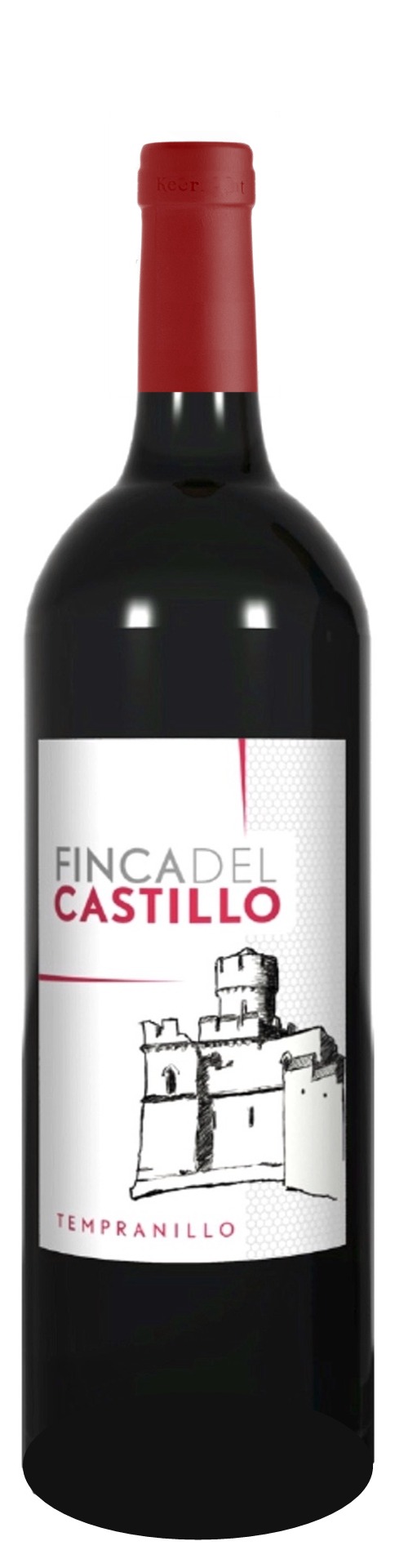
Finca del Castillo Tempranillo La Mancha is made from 30 year old vine Tempranillo (100%).
This pretty little red has a flavor reminiscent of good Cotes du Rhone. Medium bodied, flavorful; hints of raspberry and strawberry. Shows best with picnic fare and grilled meats. Perfect summer red.

Delas Freres Cote Rotie La Landonne Rouge is made from 100 percent Syrah.
This very ancient region dates back to the Roman Era and is located on the right bank of the Rhône. It is said that during the Middle Ages, “The Seigneur de Maugiron” gave a hillside to each of his two daughters - one was brunette and the other fair - thus, were born the names of “Côte Brune” and “Côte Blonde.” Wines from the Côte Blonde tend to be more delicate and lighter in character than the fuller wines of the Côte Brune. Together, they make a wine of style and substance. This cuvée is a vineyard plot selection. The grapes come exclusively from a plot within the named slope of “La Landonne.”
This cuvée‘s first vintage was 1997. The wine is only made in the very best years. Its highly limited production never exceeds 2,500 bottles per year.
The steep, terraced hillsides along the river produce wines that are among the "biggest" reds of France. The Delas Côte-Rôtie is primarily Syrah with an addition of up to 10 to 20% of Viognier grapes in the crop. The soils of the northern part of the Côte Brune vineyard consists of extremely steep, terraced slopes of ferruginous mica schists which are covered with schist sand (arzel). The Côte Blonde has a varied geology with gneiss and granite predominating at the most southern side of the appellation. The area has dry, hot summers with regular rainfalls during other seasons. The grapes for the “La Landonne” cuvée are picked by hand at maximum maturity. Fermentation takes place in traditional open-topped concrete tanks, following three days of pre-fermentation cold maceration. Before fermentation, the maceration process continues under controlled temperatures of 82°F to 86°F. Daily cap pushing down and pumping over are carried out for about 10 days with total vatting time of up to 20 days. The wine is aged for 14 to 16 months in new or one year old oak casks. The barrels are topped up regularly.
Food Pairing: This wine pairs wonderfully with fine meats, roasted beef, water games, truffles and spicy stews. The bottle should be opened 1 to 3 hours before drinking. This wine needs at least 3 years cellaring before it can open up its complexity. In such case it is strongly recommended to decant before serving.
Tasting Notes: The wine‘s deep color is underscored by plummy hues. A complex nose shows deep, fruity aromas with hints of licorice and roasted coffee. Endowed with a dense and silky tannic structure, this is a full, fleshy wine that provides an ample and generous palate. Its lasting finish speaks of considerable ageing potential.
Reviews:
This is dark and still a bit reticent, with a cast iron cloak around the core of dark currant, plum and blackberry paste flavors, showing lots of sweet bay leaf, anise and singed apple wood notes in the background. There's serious grip through the finish. For the cellar.
-Wine Spectator 96 Points
Very open, spicy and fresh on the nose, you could almost open this now. Struck flint notes assist in teasing out notes of leaf tea, tobacco, rosemary and rose. Very full-bodied, generous but powerful on the palate, tense and mineral. Mouthcoating ripe, sweet tannin and robust amounts of sweet baking spices, along with more tobacco and black fruit on the palate. Has depth, length, power and impressive balance despite the high alcohol. Drink from now into 2022, or from 2031 to 2040. Lieu-dit La Landonne, from the Brune side (mica schist bedrock). Matured in new and one-year-old barrels for 14 months.
-Decanter 96 Points
The 2019 Côte Rôtie La Landonne comes from one of the greatest sites for Syrah in the world, the La Landonne lieu-dit located close to the center of the appellation, on the Côte Brune side. It reveals a deeper purple hue (it's slightly more opaque than the Seigneur de Maugiron) and offers a brilliant nose of ripe cassis, black raspberries, scorched earth, smoked herbs, and seared meat. Full-bodied and powerful on the palate, this is a deep, spicy, concentrated Côte Rôtie with a plush, layered mouthfeel, sweet tannins, beautiful balance, and a great, great finish. This puppy brings the fruit, opulence, and texture of the vintage yet still has a classic Côte Rôtie character.
-Jeb Dunnuck 96 Points
Fresh aromatic layers of mint sit atop crushed red cherries and wild strawberries, with light clove and thyme on the nose. The palate is rich and enticing with black cherries, plums, rhubarb, pomegranate seeds, black olives and freshly picked rosemary leaves. Tremendous texture, structure, and refreshing acidity carry this wine to a robust finish of orange zest and black tea leaves. Maisons Marques & Domaines USA.
- Wine Enthusiast 96 Points
This very ancient region dates back to the Roman Era and is located on the right bank of the Rhône. It is said that during the Middle Ages, “The Seigneur de Maugiron” gave a hillside to each of his two daughters - one was brunette and the other fair - thus, were born the names of “Côte Brune” and “Côte Blonde.” Wines from the Côte Blonde tend to be more delicate and lighter in character than the fuller wines of the Côte Brune. Together, they make a wine of style and substance. This cuvée is a vineyard plot selection. The grapes come exclusively from a plot within the named slope of “La Landonne.”
This cuvée‘s first vintage was 1997. The wine is only made in the very best years. Its highly limited production never exceeds 2,500 bottles per year.
The steep, terraced hillsides along the river produce wines that are among the "biggest" reds of France. The Delas Côte-Rôtie is primarily Syrah with an addition of up to 10 to 20% of Viognier grapes in the crop. The soils of the northern part of the Côte Brune vineyard consists of extremely steep, terraced slopes of ferruginous mica schists which are covered with schist sand (arzel). The Côte Blonde has a varied geology with gneiss and granite predominating at the most southern side of the appellation. The area has dry, hot summers with regular rainfalls during other seasons. The grapes for the “La Landonne” cuvée are picked by hand at maximum maturity. Fermentation takes place in traditional open-topped concrete tanks, following three days of pre-fermentation cold maceration. Before fermentation, the maceration process continues under controlled temperatures of 82°F to 86°F. Daily cap pushing down and pumping over are carried out for about 10 days with total vatting time of up to 20 days. The wine is aged for 14 to 16 months in new or one year old oak casks. The barrels are topped up regularly.
Tasting Notes
The wine‘s deep color is underscored by plummy hues. A complex nose shows deep, fruity aromas with hints of licorice and roasted coffee. Endowed with a dense and silky tannic structure, this is a full, fleshy wine that provides an ample and generous palate. Its lasting finish speaks of considerable ageing potential.
Food Pairing
This wine pairs wonderfully with fine meats, roasted beef, water games, truffles and spicy stews. The bottle should be opened 1 to 3 hours before drinking. This wine needs at least 3 years cellaring before it can open up its complexity. In such case it is strongly recommended to decant before serving.
"Immediately this has the darkness and aromatic austerity of La Landonne. Very full-bodied, expansive on the palate with mouthcoating flavour and tannin but not heavy. This is seriously tannic, but it's not tough. Great character, great power and perfect balance. Alcohol is just a little raised, but this is a blockbuster. Around 3,000 bottles made. Fermented in open-top concrete tanks for 20 days, then matured in new and one-year-old barrels for 14 months."
-Decanter World Wine Awards 97 Points

Delas Hermitage Les Grandes Vignes Ligne de Crete is made from Syrah.
The nose discloses aromas of spice and leather intertwined with deep berry aromas (blackberry, redcurrant) and heady floral notes, liquorice and incense. Its richness, complexity and elegance are by no means a contradiction. The finest granite soils of the Hermitage hillside are to thank for this wine's incredible minerality and finesse. The wine is rich and dense on entry to the palate, where it shows an elegant, broad and flavorsome character. The ripe, smooth and well-integrated tannins contribute to the wine's powerful yet harmonious structure. The palate reveals the same aromas as those found on the nose with nuances of blueberry, raspberry, violet and bitter chocolate. Ligne de Crête is characterized by its exceptional structure, harmony and balance.
This remarkably smooth and elegant wine makes the perfect partner for a pigeon pie, beef tartare ravioli or a roast fillet of deviled duckling with cranberries. It also makes an excellent choice for woodcock, hare "à la Royale" or even a roast rack of lamb in a herb crust.
Review:
-Josh Raynolds (Vinous) 98 Points
-Wine Enthusiast 97 Points
-Vinous 97 Points
-Jeb Dunnuck 95 Points

Finca La Pared Cuvee Especial is made from Graciano & Syrah.
The Cuvee Especial is a Graciano and Syrah blend aged in oak barrels that produces a full-bodied, fresh wine of great complexity and long lasting finish.
Review:
-James Suckling 94 Points
-Wine Enthusiast 93 Points

Finca La Pared Syrah is made from 100 percent Syrah.
Finca La Pared Syrah shows an expressive nose of dark fruit aromas and a mineral character.
Intense, direct, playful. Balance of forces.
Review:
-Jeb Dunnuck 93 Points
-James Suckling 91 Points

Benjamin Romeo La Cueva del Contador is made from 91% Tempranillo, 9% Garnacha.
Named after the centuries-old caves or “cuevas” carved out of the hillside below the castle of San Vicente in Sonsierra north of the Ebro, this wine is composed of 91 percent Tempranillo and 9 percent Garnacha. The fruit is sourced from eight different plots that yield about 1.2 kg per vine. Fermentation begins after a three-day cold maceration and the wine is aged for nineteen months in 100 percent new French oak and bottled without fining or filtration.
The palate offers flavors of blackberry coulis, Damson plums, Rosemary and well-integrated tannins; this wine is well balanced and youthful with a long powerful finish. Both red and black fruit are pronounced in the nose, but there are also mineral and herbal notes of gravel and lavender.
Review:
-Wine Advocate 95 Points
Finca del Castillo Tempranillo La Mancha is made from 30 year old vine Tempranillo (100%).
This pretty little red has a flavor reminiscent of good Cotes du Rhone. Medium bodied, flavorful; hints of raspberry and strawberry. Shows best with picnic fare and grilled meats. Perfect summer red.
The Finca del Castillo Estate
Finca del Castillo means "The Castle's winery" in Spanish. The wine is made by Vinicola de Castilla in Manzanares (Ciudad Real) in an up to date, state of the art winemaking facility (30,000 sq meters/300,000 sq ft) with the capacity of producing 2 million liters and holding 8,000 barrels. Founded in 1976, it's a privately owned corporation (not a co-op). Since its inception, a DO La Mancha pioneer in fruit-driven young wines, barrel-aged reds and varietals. More than 600 international awards for their wines.
Production by type: 65% Red wine, 35% White and Sparkling.
Export sales represent 50% of the production. The winery exports to 22 countries.
Capacity is 20,000,000 liters, currently running at 12,000,000 liters of yearly production.
This Bodega likes to promote their Crianza wines.
The Finca del Castillo Vineyards
The winery and the vineyards are all located in the "La Mancha" DO. Tempranillo is the primary grape varietals and it represents 70% of the total production.
They grow the following 5 red grape varietals:
· Tempranillo
· Cabernet Sauvignon
· Merlot
· Petit Verdot
· Syrah
They also grow the following 6 differents types of White grape varietals:
· Verdejo
· Airén
· Macabeo
· Sauvignon Blanc
· Moscato
· Chardonnay.
The wines are all produced with grapes they only grow themselves. They own 50 hectares, and they currently rent another 550 hectares (long term leasing contract).

Daou Vineyards Patrimony Cabernet Sauvignon is made from 65% Cabernet Sauvignon, 35% Cabernet Franc.
Dark crimson hues shimmer in the glass. Concentrated aromas of plum, blackberry jam, blueberry, boysenberry and licorice are accentuated by hints of wildflowers, cedarwood, sage and wet stone. Bright tannins and mouthwatering acidity are balanced by sleek oak notes, all seamlessly interwoven into a symphony of blackberry, chocolate, pomegranate, tobacco and graphite. This full-bodied and flawlessly intricate wine will surprise you now with its elegance, and later with its longevity.
Review:
Dark-fruited and toasted aromas of wild blackberries, tobacco, seaweed and orange zest. The palate is full-bodied with finely integrated tannins and bright acidity. It shows notes of bramble berries, leather, graphite and roast meat. Wonderfully balanced and fresh. Drink or hold.
James Suckling 96 Points

Axis Point Cabernet Sauvignon Red Hills 2024 is made from Cabernet Sauvignon.
Axis Point is a value label from Navigator Wine Collection (formerly Precision Wine Company), the large California négociant house founded by Trevor Sheehan in 2010 and renamed Navigator in 2025. This bottling comes from Red Hills Lake County, a high-elevation AVA on red, iron- and obsidian-rich volcanic soils that has become one of California's go-to sources for well-priced, mountain-grown Cabernet Sauvignon.
Review:
-Tasting Panel Magazine 93 Points
-Wine Enthusiast 92 Points