
" We don't sell the wine without touching the vine "
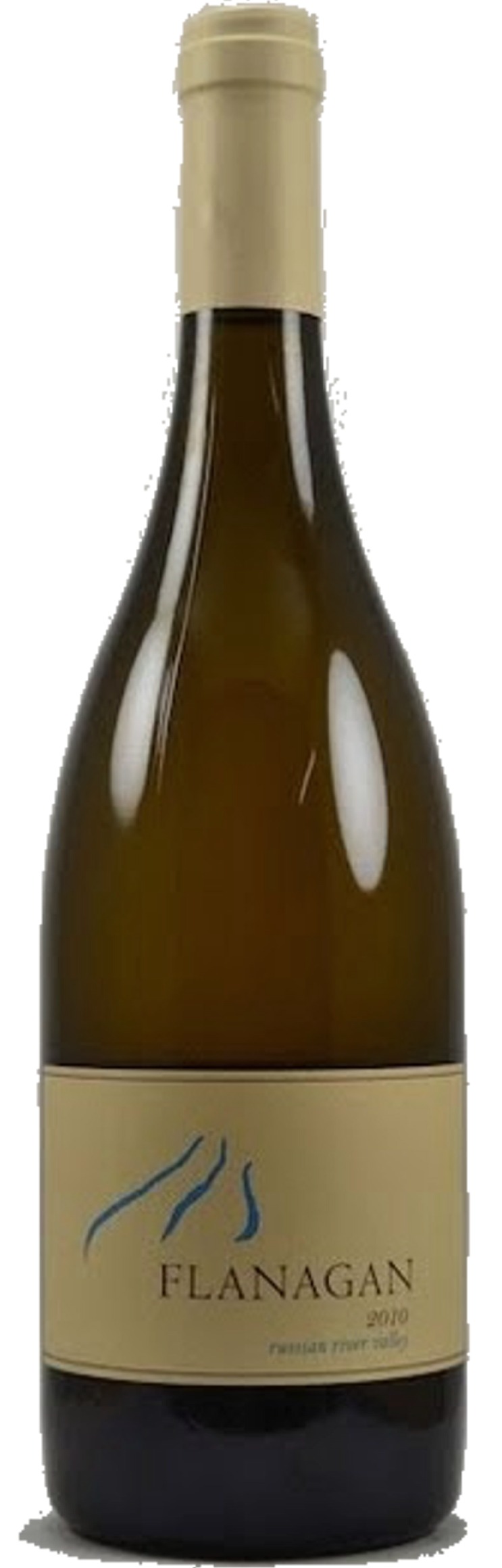
| Country: | United States |
| Regions: | California California (Sonoma County) |
| Winery: | Flanagan Winery |
| Grape Type: | Chardonnay |
| Organic: | Yes |
| Vintage: | 2014 |
| Bottle Size: | 750 ml |

Flanagan Russian River Chardonnay is made from 100 percent Chardonnay.
Grapes for this wine are sourced from several top Russian River Chardonnay sites including Platt Vineyard, Ritchie Vineyard and Bacigalupi Vineyard.
A typical day in Russian River begins with cool fog that fades by mid-morning as the warm sun transforms the vineyard into a warm, welcoming place buzzing with bees. In the late afternoon the ocean air sweeps in from the west cooling the vineyard down. Soils of clay and volcanic rock, carved into rolling hills by the Russian River, are the bass line to the melody played by the sun, wind and fog.
Flanagan Chardonnay RRV has an expressive nose that is typical of the Wente Clone of Chardonnay. The palate has an elegant mélange of stone fruit and ripe citrus flavors supported by understated barrel notes. The key to the wine is the bright acidity that ties everything together. This is a great example of what top Russian River Chardonnay sites can produce when wine making is focused on balance.

Jonive Chardonnay Russian River Valley is made from 100 percent Chardonnay.
2021 Jonive Russian River Estate Chardonnay: Harvested the night of September 20th with the two clones kept separate. The clone 95 was pressed into tank where it was chilled, settled and racked, then allowed to ferment naturally for 12 days when it then went to barrel. The primary and secondary fermentations lasted in barrel until April 20th, some seven months. The wine remained on its original lees until just prior to bottling. The clone 17/Robert Young chardonnay was pressed into tank and allowed to brown naturally before a natural fermentation occurred. This lasted for 15 days before going to barrel where it finished the last 12 days of primary fermentation and six weeks of secondary fermentation and it too rested on its original lees until just prior to bottling.
The wine has a typical straw color and complex aromas of lemongrass, nutmeg, Meyer lemon and a touch of passionfruit. It has an enveloping mouthfeel that is at once tart and linear as well as rich and expansive, a very unusual and beguiling combination of textures and mouthfeel. The browning of the clone 17 enables the wine to be rich, but at a lower alcohol (13.3%) and the clone 95 contributes beautifully fresh acidity. The pallet shows jasmine, honeydew melon, tarragon and lemongrass with a nice kiss of high-quality French oak. The extended lees contact gives the wine amazing length, energy and vitality.
353 cases produced
Harvested September 20th
14-month barrel aging in 67% new French oak barrels, 20% once used and 13% neutral
61% clone 17/Robert Young and 39% clone 95
13.3% alcohol
Bottled December 14th
Reviews:
A wildly elegant aromatic profile announces this Chardonnay from Jonive's estate vineyards, a combination of two separately fermented clones, 95 and clone 17, also known as Robert Young. The blend is beautiful and effusively aromatic. Lemon cream and white flowers mark the aromatic profile, and the palate, crafted with plenty of lees contact, shows a creamy texture of lemon and orange oils. Savoury notes of sorrel and lemongrass mark the lengthy finish. The new French oak kisses this wine just a touch with a note of Madagascar vanilla on the finish.
-Decanter 94 Points
This seamless, smooth and mouthfilling wine is packed with ripe fruit flavors and deftly accented with oak notes like vanilla, hazelnut and toast. It's rich in texture yet relatively light in body, encouraging flavors that mingle with a subtlety that asks for more sipping.
-Wine Enthusiast 94 Points

Paul Hobbs Chardonnay Russian River Valley is made from 100 percent Chardonnay.
Crafted with precision from six pedigreed sites comes a wine that beams with pale straw hue. The newest vintage brings wonderful aromatic intensity: candied lemon peel, white florals followed by crisp green apple. A creamy and viscous texture on the palate is buoyed by white nectarine and dried apricot that’s balanced with a vibrant acidity, bringing focus to the wine’s finish that lingers with hints of flinty mineral notes.
Review:
-Wine Enthusiast 95 Points
Paul Hobbs Chardonnay Russian River Valley is made from 100 percent Chardonnay.
Crafted with precision from six pedigreed sites comes a wine that beams with pale straw hue. The newest vintage brings wonderful aromatic intensity: candied lemon peel, white florals followed by crisp green apple. A creamy and viscous texture on the palate is buoyed by white nectarine and dried apricot that’s balanced with a vibrant acidity, bringing focus to the wine’s finish that lingers with hints of flinty mineral notes.
Review:

Flaunt Russian River Valley Sparkling Brut is made from 52% Chardonnay and 48% Pinot Noir.
This Brut is absolutely lovely. It is drier than the previous versions with only 1.5 grams of residual sugar. It is powerful and brisk with well integrated bubbles. There is an immediate hit of lemon zest with touches of nectarine and plum. Mid palate you notice the warm notes of brioche and a slight kick of white pepper on the finish.
This Russian River Valley Brut is a blend of wine from two vineyards in the Russian River Valley. It is approximately equal parts Pinot Noir and Chardonnay. These two grapes work wonderfully in Sonoma County’s maritime climate where the long, cool growing season allows for adequate ripeness of both Pinot Noir and Chardonnay while maintaining superb levels of natural acidity. Dianna Novy always loved the Russian River Valley for Pinot Noir and Chardonnay, first as still wines, and now as Sparkling Wine.
Review:
"This crisp Brut offers fresh aromas and flavors of ripe pear and apple with a leesy fresh bread note. It is mouth filling with fresh acidity and has a sense of refinement, finishing long and chalky. Try it with oysters. A blend of 52% Chardonnay and 48% Pinot Noir with 3 years en tirage."
- I-winereview.com (December 2022), 92 pts

River Road Ranch is a 115-acre jewel in the heart of the Russian River Valley AVA. Chardonnay vines thrive in well-drained soils, shrouded with fog cooled nights, ideal growing conditions. The grapes for this wine came from two blocks of twelve and fifteen-year-old vines, planted with clones #4, 95, and 2A-Wente.
Bottled poetry is the description of Trione Chardonnay. Burgundian in style of both nose and palate. Rich and inviting, this wine offers a complex mix of toasty baguette, warm melted brie; silky but with the structure demonstrating the aging potential. The wine is tasting great now but will be awesome for the next 5-7 years.
Textured, classic Russian River Chardonnay with pleasing counterbalance between ripeness and acidity,distinguishable by underlying minerality, quality oak.
The nose is a blend of pear fruit and caramel. On the palate, these notes continue and are balanced with a hint of Rangbur lime in the finish. The crisp acidity is a perfect balance to the richness of the wine. This is to my mind exactly what RRV CH can be when top sites are well farmed and winemaking is focused.
Eric Flanagan and his family live on the vineyard property the Chardonnay comes from.
Flanagan Winery:
Eric Flanagan is the founder and visionary behind the Flanagan wines and Flanagan brand.
Our journey into wine began with a love of wine and an appreciation of the places that create unique wines. In the early 1990’s, wine quality exploded higher in Sonoma and Napa. It was an exciting time to be a consumer of wines from Northern California and a great time to come and meet the vintners who were responsible for these inspiring new wines. We began in 1999 with the purchase of forty acres in Bennett Valley. In 2011, we acquired a small Russian River Valley vineyard, and, starting with the 2014 vintage, we have added vineyard designated wines from top vineyards in the Russian River Valley and the Sonoma Coast. Vineyard sources now include Ritchie Vineyard and Bacigalupi Vineyard for Chardonnay, and Sunchase and Sonoma Stage for Pinot Noir. In 2015, we will also add the iconic Platt Vineyard as a source for both Chardonnay and Pinot Noir. We believe that Platt may be the best vineyard in California for those varieties.
Sustainability at Flanagan:
There are a few marketing buzzwords that are prevelant in the wine industry right now that can be very confusing to the consumer. Terms like organic, biodynamic, sustainable... What exactly do those terms mean? To us, it's very simple. Sustainabliltiy means we farm our vineyards with long term mindset. We do everything we can to ensure that this land will be as healthy, or healthier than it was when we found it. We are in the process of having our vineyards certified as sustainable by the California Sustainable Winegrowers Alliance "CSWA".
Sonoma County is making a huge push to be the first farm community to be 100% certified sustainable. The CSWA program has 138 catagories for vineyard owners to self assess and then they support the process with an outside auditor. Sonoma County has hired a full time sustainablility coordinator and is making great progress towards our goal of have all of the vineyards in Sonoma County farmed sustainably.
Proprietor Eric Flanagan:
Eric came to the wine business from a love of wine. His family did not own a winery or a vineyard, and Eric did not grow up on a farm. Through his travels Eric became fascinated by how grapes of the same variety expressed themselves in different places. From New Zealand to Greece, Eric visited wine growing regions around the world, but in the late 90's he chose to create his vision in Sonoma. He started in 1999 with the purchase of 40 acres on the side of Bennett Mountain and expanded in 2011 with the purchase of their Russian River Valley site. Flanagan is now producing wines from several of the top vineyards in Sonoma County under their vineyard designate program. Flanagan is becoming known for making great wines from the best vineyards in Sonoma County.
Eric, Kit, and their 3 daughters (Riley, Lola, and Ruby) make their home at the Three Starrs Vineyard along with 3 dogs, 10 ducks, 4 Dwarf Nigerian goats, 2 geese, 1 donkey, and 1 mule (also named Ruby).
Winemaker Cabell Coursey:
Cabell joined Flanagan Vineyards as Winemaker in 2014. His obsession with winemaking began with a harvest in Burgundy while he was enjoying an undergraduate semester abroad. After finishing his B.S., Cabell spent a few vintages picking grapes and scrubbing floors in Burgundy, and then moved up to Oregon’s Willamette Valley. Following his time in Oregon, Cabell traveled to Christchurch, New Zealand, where earned degrees in Enology and Viticulture from Lincoln University. During his time in New Zealand Cabell focused on cool climate viticulture, which serves him very well in his current role at Flanagan. Cabell has also held winemaking positions at Alder Springs Vineyard, Dumol, and Kosta Browne.
Cabell’s approach to winemaking is to use his senses in conjunction with his knowledge in biology, chemistry, and farming.
Cabell describes his philosophy:
“Winemaking is the culmination of a vast number of decisions. Starting with the site, the farming practice, the response to weather conditions, the picking date, the tank and barrel programs, ferment protocols, and continuing through blending and bottling. It is the daily decisions, actions, and sometimes lack of action that unlocks a vineyard’s highest potential. This quest to reveal each vineyards unique personality, while dealing with the challenges inherent in farming, is what makes winemaking challenging, interesting, and highly rewarding. My goal is always the same, to deliver each vineyard’s best expression in each vintage and to make a wine where the last glass is better than the first.”
The vineyards represents 69 acres in total:
Graves vineyards is 13 acres, planted with Syrah (6 acres), Cabernet Sauvignon (4 acres) and Merlot (3 acres).
Platt vineyards is 34 acres, planted with Chardonnay (13 acres) and Pinot Noir (18 acres) and Riesling (1.4 acres)
and Gaps View is 22 acres, all planted with Pinot Noir.

Opulent floral top notes carry you into an opaque purple core, imparting aromas of black currants, dark red cherry coulis, cigar box, and allspice berries. Powerful yet soft tannins are balanced with a delightful freshness of acidity. The palate is silky with nuanced flavors of cassis, ripe blackberry, and Morello cherry. The long finish invites you to discover the wine’s evolving layers.
Review:
This is, as usual, a beauty, perhaps more so thanks to a great vintage. It is classically Napa Valley, and classically “house styled” by Aron Weinkauf, with black and blue fruit, supple, approachable tannin structure and great depth of aroma and flavor. That said, keep in mind that this isn’t the winery flagship offering. Even in this price range Lyndenhurst is always a solid value, and is so again – maybe even a little more than usual. Decant well if you crack into this in the near term, or age it for the long term. Contains 10.6% Merlot, 3.8% Petit Verdot, 3.5% Cabernet Franc and 2.9% Malbec. (Rich Cook)
- Wine Review Online 95 Points
A juicy red with black currants and balsamic. Bark and mushroom. Iodine, too. Medium body, creamy texture that tightens at the end. An energy and firmness in the finish.
-James Suckling 94 Points

Matthews Cabernet Sauvignon Columbia Valley is made from 76% Cabernet Sauvignon, 15%Merlot, 6% Cabernet Franc, 2% Petit Verdot, 1% Malbec.
The 2021 Columbia Valley Cabernet Sauvignon is deep ruby in the glass with purple hues. The rich bouquet of spiced black plum and cocoa nib are balanced with aromas of fresh earth and crushed flint. Intense and opulent flavors of ripe blackberry, cedar, mocha, and black currant coat the broad and balanced palate and the ripe tannin creates a perfect frame for the lush fruit expression. Cherry cordial and cola linger on the long, quenching finish.
Review:
Precise and expressive, with handsome flavors of blackberry, bay leaf and espresso that build richness and structure toward refined tannins.
-Wine Spectator 93 Points
The 2021 Cabernet Sauvignon Columbia Valley is spicy, showing off a gentle peppery tinge and dusty rose tones that give way to dried black cherries. This is wonderfully crisp and refined, with silky textures and depths of dark red fruit propelled by juicy acidity. It tapers off long and structured, yet the tannins are quite sweet. The 2021 finishes with a pleasant crunch and a lingering licorice tinge.
-Vinous 93 Points
The 2021 Cabernet Sauvignon is based on 76% Cabernet Sauvignon, 15% Merlot, 6% Cabernet Franc, 2% Petit Verdot, and 1% Malbec. A rocking wine offering ample red and black plum-like fruit, chocolate, tobacco, and subtle violet-like aromas and flavors, I t's full-bodied and has a terrific mid-palate, velvety tannins, and a great finish.
-Jeb Dunnuck 93 Points



