
" We don't sell the wine without touching the vine "
| BUY MORE! SAVE MORE! | ||||||||||||||||||||
|
| Country: | United States |
| Regions: | California California (Napa) |
| Winery: | Spottswoode |
| Grape Type: | Cabernet Sauvignon |
| Organic: | Yes |
| Vintage: | 2021 |
| Bottle Size: | 750 ml |
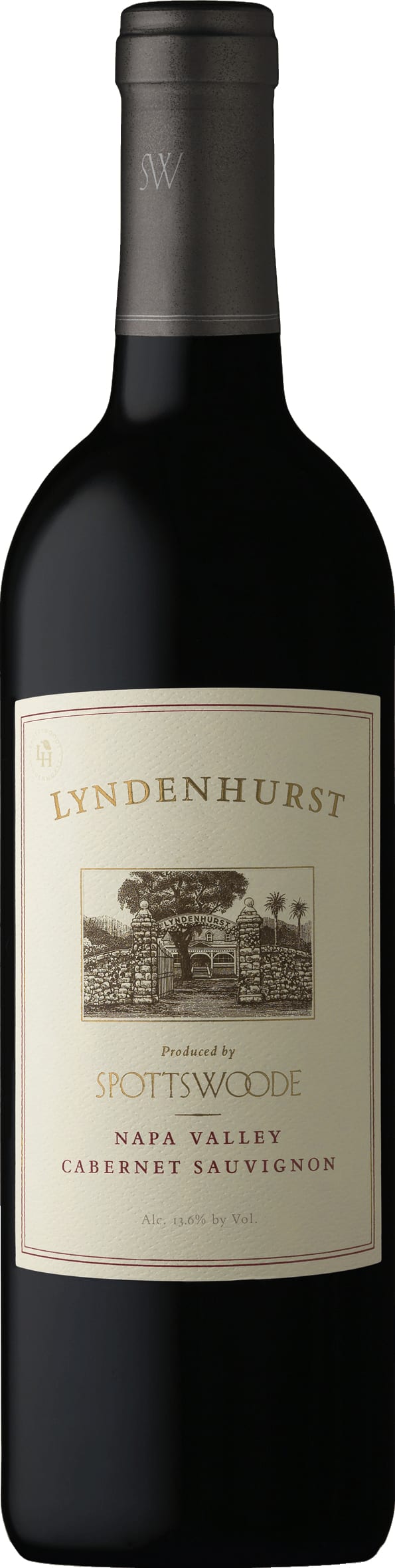
Opulent floral top notes carry you into an opaque purple core, imparting aromas of black currants, dark red cherry coulis, cigar box, and allspice berries. Powerful yet soft tannins are balanced with a delightful freshness of acidity. The palate is silky with nuanced flavors of cassis, ripe blackberry, and Morello cherry. The long finish invites you to discover the wine’s evolving layers.
Review:
This is, as usual, a beauty, perhaps more so thanks to a great vintage. It is classically Napa Valley, and classically “house styled” by Aron Weinkauf, with black and blue fruit, supple, approachable tannin structure and great depth of aroma and flavor. That said, keep in mind that this isn’t the winery flagship offering. Even in this price range Lyndenhurst is always a solid value, and is so again – maybe even a little more than usual. Decant well if you crack into this in the near term, or age it for the long term. Contains 10.6% Merlot, 3.8% Petit Verdot, 3.5% Cabernet Franc and 2.9% Malbec. (Rich Cook)
- Wine Review Online 95 Points
A juicy red with black currants and balsamic. Bark and mushroom. Iodine, too. Medium body, creamy texture that tightens at the end. An energy and firmness in the finish.
-James Suckling 94 Points
Established in 1882, Spottswoode Estate is distinguished by the pre-Prohibition Victorian home depicted on our wine label. Spottswoode was christened by Mrs. Albert Spotts in 1910 and later acquired by Mary and Jack Novak in 1972. Mary released Spottswoode’s first Cabernet Sauvignon in 1982, exactly one hundred years after the estate’s founding.
Today, Mary’s daughter Beth Weber Novak manages the winery, and daughter Lindy Novak serves as the winery’s Marketing Ambassador. Every year Spottswoode releases an Estate Cabernet Sauvignon and an Estate Sauvignon Blanc. In addition, Spottswoode produces a Napa Valley Cabernet Sauvignon called Lyndenhurst, a dual-appellation Spottswoode Sauvignon Blanc, and a limited-production Field Book Estate Red Wine. Committed to producing wines with integrity that faithfully reflect their grape origins, Spottswoode wines are especially known for their refined elegance, balance, and classic structure.

Mark your calendars for June! Caymus 50th Anniversary Napa Valley Cabernet Sauvignon 2022 is a testament to fifty years of exceptional winemaking by the dedicated, passionate, and family-owned Caymus Vineyards. Since 1972, they have remained a beacon of excellence in Napa Valley, staying true to their roots and producing unparalleled Cabernet Sauvignon. This limited edition wine is a celebration of their rich history, tradition, and relentless pursuit of quality across generations.

This signature wine contains only fruit farmed on Howell Mountain. The wine comes in a distinctive bottle that is hand dipped in red wax. 100% Cabernet Sauvignon. aged 32 months in 100% new French oak.
Vinous 97 Points

Dunn Vineyards Napa Valley Cabernet Sauvignon is made from 100 percent Cabernet.
This Napa Valley wine is a blend of their Howell Mountain fruit and a small quantity of valley floor fruit that they purchase. This valley floor fruit contributes to the wine’s earlier approachability and softer tannic structure.
Review:
I loved the 2019 Cabernet Sauvignon Napa Valley, which I think is a step up over the 2018, although both 2019s show a much more elegant profile. Ripe currants, plums, roasted herbs, violets, and incense notes all shine in this medium to full-bodied, ripe, supple, layered beauty, which has fine tannins and a gorgeous finish. Enjoy bottles any time over the coming 15 years.
-Jeb Dunnuck 94 Points

Young and present, this is an energetic and bold expression of violets, lavender, and cassis mixed with dark chocolate, cherry, plum, and graphite. A wine happy to be tucked away in the cellar, and it’s also expressing itself beautifully now.
Review:
Lovely fragrant blackberry and black cherry fruit, cassis, and rich tobacco spices with lovely fresh earth notes and a sweet kiss of new wood cedar. Incredibly concentrated dark berry fruit with fabulously angular tannins with smooth long beams with crisp edges. Purple florals, dried sagebrush, and chocolate shavings with lids of graphite and deep iron-like mineral character. And a finish of dark saturated fruit that goes and goes for days. There are purple floras too. Polished and bright, with vivacious acidity and freshness evident from the sip to the finish. Wow, this wine.
-Decanter 98-100 Points

Quattro Theory Chardonnay Napa Valley is made from 100 percent Chardonnay.
VISION: Working with cool-climate fruit, Landon achieves a Napa Valley Chardonnay that is more traditional in style with balanced acidity, minimal oak and non-malolactic fermentation to highlight a full range of varietal fruit expression, taking inspiration from the coastal Chardonnays of Sonoma County.
VINEYARDS: The grapes for this Chardonnay are sourced from two vineyards: three blocks in our estate Vista Montone Vineyard located just east of Carneros, and Frasamani, a long-term grower partner vineyard located in the southernmost part of Carneros. These sites were selected for the variety of vineyard aspects (N, NE) and various vine age, soils and clones, which offer a complex palette of aromas, flavors and textures. The grapes are harvested by hand at night in small lots over a few weeks, picked when perfectly poised to achieve the vision for our wine style. GROWING SEASON: 2022 brought dry conditions given the persisting drought. Harvest started earlier given the warm temperatures with the fruit showcasing balanced acidity and freshness with remarkable flavors and textures. Even though yields were down, quality was excellent.
WINEMAKING: Our cellar is set up to handle each lot individually through the winemaking process, with every step intentionally designed to emphasize the natural aromatic and varietal character with minimal intervention. Each pick is whole-cluster pressed over two hours, with 23 check ins to ensure desired style— a gentle, yet labor-intensive program to help retain natural acidity and to isolate the exact desired press of juice. The juice is gently pumped to stainless-steel tanks then chilled to undergo cold stabulation for 5 days, keeping the light juice lees in suspension to enhance aromatics. The juice is then racked off the lees to each vessel and individually inoculated to begin a cold fermentation to completely dry, and then rests on the lees (yeast) for 6 months for a final build of body and flavors before the blend is assembled.
EXPERIENCE: With its expressive flavors and restrained oak presence, this Chardonnay offers the balance, structure and complexity to make it a perfect white wine option to go with food or enjoyed on its own. This wine’s range of fruit flavors includes crisp Asian pear, to stone fruit to tropical fruit. Suggested pairings include pan-seared scallops, butternut squash ravioli and mushroom and mozzarella pizza.
Review:
Bright, fresh green apples in the nose and tangy, appetizing lemon zest and kiwis on the palate give this lively wine a palate-cleansing expression that will be fantastic for pairing with fish, shellfish and poultry.
-Wine Enthusiast 93 Points

Force Majeure Epinette is made from 46% Merlot, 35% Cabernet Franc, 16% Cabernet Sauvignon, 3% Petit Verdot.
Epinette is Force Majeure's Right-bank Bordeaux-inspired blend, and was named after an avenue in Libourne (France) that leads to Pomerol and Saint-Émilion, the home of Merlot and Cabernet Franc. Epinette is also the name of a musical instrument akin to a piano, as well as a word for pine tree, which is a fitting nod to their home in Washington state.
The wine itself is a blend of primarily Merlot and Cabernet Franc, with smaller amounts of Cabernet Sauvignon and Petit Verdot, proportions of which change depending on the vintage. The Merlot and Cabernet Franc are grown in lower areas of the vineyard with deep, well-drained soils, much less rocky than the soils of our Rhone varietals.
Review:
"I loved the 2016 Epinette from barrel, and it certainly doesn't disappoint from bottle. Sporting a deep purple color as well as a huge bouquet of blackcurrants, black cherries, smoked earth, chocolate, and cedary spice, this flamboyant, powerful beauty hits the palate with loads of fruit, has sweet tannins, no hard edges, building tannins, and a huge finish. It's one seriously pleasure-bent effort that has another 10-15 years of prime drinking." - Jeb Dunnuck (April 2019), 96+ pts

Among the tapestry of historic vineyards in Napa Valley, there are a few standout names, but even fewer sites, if any, involve the rare combination of legendary wine, romance, and a touch of mystery. Bonny’s Vineyard is such a place. This four-acre vineyard in the Oakville District is both a special piece of land and a unique part of Napa history. It was planted in 1974 by Justin Meyer, the winemaker and co-founder of Silver Oak Cellars, as a gift to his wife, Bonny. Ideally situated in a gravelly spot adjacent to Conn Creek on the valley floor, Bonny’s Vineyard was responsible for a memorable string of Silver Oak vintages over the course of two decades.
Justin Meyer stopped producing the Bonny's Vineyard designate after the 1991 vintage. After replanting in 1999, the family has again decided to make a single vineyard bottling. True to the orignal, this is 100% Cabernet Sauvignon aged in 100% American oak barrels for almost 3 full years. The nose exhibits dark fruit aromas of cherry and plum mingling with cedar and cardamom and a hint of eucalyptus. The palate is the heart of this wine, with concentrated fruit on the entry and luscious, silky tannins filling the mouth with an almost endless finish.
As distinct and impressive a terroir as we farm in the Napa Valley. The rocky, gravel-rich soils contribute a distinct sauvage/mineral character, creating a stunning complexity to play off of Cabernet’s natural robust and fruit-driven personality from Oakville. In 2021 Argot added a new vineyard block to our holdings at Bonny’s. Deeper gravel and the famously low-yielding Disney clone conspire towards awesome complexity, and a deeply mysterious, brooding personality. A wholly different Cabernet from its 2021 siblings that you will not want to miss. Only 150 cases produced.
Review:
"Opaque purple-black colored, the 2021 Cabernet Sauvignon Bonny's Vineyard prances out with showy scents of Morello cherries, wild blueberries, and black raspberries, leading to a core of black currant jelly and violets. The full-on, full-bodied palate is densely laden with black and blue berry layers, framed by fine-grained tannins and well-knit freshness, finishing long and earthy."
- 97 Points, Lisa Perrotti Brown, The Wine Independent

Betz Untold Story Cabernet Sauvignon is made from 78% Cabernet Sauvignon, 15% Merlot, and 7% Petit Verdot.
Everyone has an "Untold Story" buried inside and waiting to be lived.
The concept was born from Betz's personal journey and that many “Untold Stories” are often shared around the dinner table over a meal and a bottle of wine. They believe in living life with no regrets, being all that you can be, and helping others to do the same.
Life should be lived with purpose - The Untold Story Cabernet Sauvignon is a wine with a purpose. It challenges us to be bold in the face of adversity and follow our dreams, despite the odds. It’s about making a difference!
Untold Story shows intensity the moment it hits the glass with a deeply colored purple core that’s almost opaque. The color speaks to the power of the aromatics: rich black fruits, dark blackberry, plum and cassis swirl about, picking up graphite and crushed herbs with air. The layered palate is hedonistically plush, but still balanced thanks to fresh acidity and a fine tannic backbone. The lengthy finish carries a delightful mix of fresh herbs, crushed berries and spice. In a word, this wine is yummy.
Review:
"What can be thought of as the second wine of Betz, the 2021 Cabernet Sauvignon The Untold Story is a smoking wine that readers should jump on. Blackcurrants, blueberries, tobacco, truffle, and spicy oak notes define its bouquet, and it's medium to full-bodied, with a seamless, elegant mouthfeel, good acidity, and fine tannins. It's almost too good and too serious at the price."
-Jeb Dunnuck 91-94 Points

Our 2021 Gaspare Vineyard Cabernet Sauvignon is made from our grapes grown on the BSEW Estate in the Gaspare Vineyard blocks. Our vineyard is located in the Oak Knoll District of Napa Valley, which is known for it’s moderate growing climate which encourages consistent ripening throughout the growing season. Our 2021 vintage exhibits aromas of blackberry, brown sugar and cedar. It has a dark fruit flavor finished by powerful but elegant.
Review:
The 2021 Gaspare Vineyard Cabernet Sauvignon has a deep garnet-purple color. The nose is a little trapped behind the oak at this youthful stage, allowing glimpses and blackcurrant jelly and juicy plums notes with hints of menthol and anise. Full-bodied, the palate similarly sports a good amount of oak, backed up by the seductive black fruits and approachable, grainy tannins, finishing with a spicy kick.
-Wine Independent 93 Point

Review:
“The medium-bodied palate is so tightly wound at this youthful stage, slowly revealing layer upon layer of fragrant black and red fruits with loads of mineral sparks, supported by beautifully fine-grained yet firm tannins and seamless acidity, finishing with epic length and a whole firework display of mineral and floral notes. This is gorgeous. ” Lisa Perrotti-Brown, The Wine Independent 100 Points

Clif Lede Cabernet Sauvignon Stags Leap is made from 82% Cabernet Sauvignon, 8% Merlot, 7% Cabernet Franc, 3% Petit Verdot.
Our Stags Leap District and Calistoga estate vineyards build the foundation of this wine with support from valued grower sites located in Oakville, Rutherford, and Howell Mountain. Composed of small batches from a variety of blocks of varying age, this wine represents a diverse range of carefully selected rootstocks and clones. Yields are maintained at sparse levels, with a focus on canopy management and vine balance. The resulting blend boasts a remarkable depth and complexity that is quintessential Napa Valley.
Grapes were picked in the darkness of the early morning hours. The freshly-harvested fruit immediately underwent rigorous selection by our three-tiered sorting process, which included our cutting-edge optical sorter. Whole berries were gently delivered by gravity to tank using our crane system, minimizing disruption of berry integrity. Cold soaks lasted approximately seven days, and fermentations were managed via a combination of délestage, pumpovers, and punchdowns. Extended maceration ranging from four to five weeks fine-tuned our tannin profiles, allowing us to perfect mouth feel and wine complexity. The wine was aged in French oak barrels, 48% of which were new, for twenty-one months.
Elegantly soft and lithe the 2021 coaxes the taster with warm dark chocolate and luscious black cherry aromas. More graphite, chocolate cake, crushed mulberries, and iron notes leap from the glass. The entry is filled with dark fruit flavors of cassis, blackberry, and blue berries and they’re all tinged with floral notes of jasmine and violets. The polished tannins along the finish feel Cashmere-like and beg the taster for another sip. – Christopher Tynan, Director of Winemaking
Review:
So silky and drinkable at the first sip, this well-concentrated wine feels tight and restrained with more tastes, holding its trove of black fruits, cedar, cinnamon and dark chocolate in a rich blanket of extra-fine tannins. Its complexity, layering and lingering finish are something special.
-Wine Enthusiast 94 Points

DAOU Vineyards Reserve Cabernet Sauvignon is made from 77% Cabernet Sauvignon, 23% Petit Verdot.
The 2021 DAOU Reserve Cabernet Sauvignon is emblematic of Paso Robles as a world-class region for Bordeaux-style wines. Intense purple-red hues foreshadow deep aromas of black fruit, pomegranate, tobacco, mocha, and bay leaf. Trailing notes of clove, nutmeg, and vanilla emerge as the wine opens up in the glass. Opulent textures expand across the palate with flavors of red fruit, blueberry, and chocolate-covered raspberry. The overall experience is fresh and rich, concluding with velvety tannins and impressive length.
Review:
The 2021 Cabernet Sauvignon Reserve is blended with 23% Petit Verdot, made entirely with free-run juice, and it will be matured for 16 months in 50% new French oak. Opaque ruby, it offers pure aromas of cassis, violet, grilled meats, desert sage and bell pepper. The full-bodied palate is powdery, energetic and detailed with a long, layered finish.
-Wine Advocate 94-96 Points

La Rioja Alta Gran Reserva 904 is made from 90% Tempranillo, 10% Graciano
The 2015 Gran Reserva 904 Tinto offers great aromatic complexity, with notes of wild strawberry, red cherry, plum, blackberry and cranberry combined with aromas of tobacco, brioche, ground coffee, caramel, cedar and cinnamon blossom. The alcohol and acidity are elegantly balanced on the palate and its polished, gentle tannins and freshness provide a smooth and refined mouthfeel. Fine, delicate and very long aftertaste, that will continue to be rounded with time in the bottle, making this new Gran Reserva 904 a wine with great cellaring potential.
Especially recommended with all kinds of meat and stews, seasoned fish and desserts with chocolate or red fruit toppings. Perfect as an after-dinner drink.
Review:
A perfumed nose of plums, mulberries, mushrooms, caramel, sweet tobacco and sweet spices. Full-bodied with velvety, fine tannins and lively acidity. Balanced and supple with a creamy texture. Delicate and precise with a long, polished finish.
- James Suckling 97 Points

Luis Canas Rioja Crianza is made from 95% Tempranillo and 5% Garnacha
A classic style Rioja from one of the regions most enduring family run wineries.. The hillside terraced vineyards are sheltered by the Sierra Cantabria Mountains to the north from harsh weather extremes. Small plot production is utilized in this region of infertile chalky clay soil to produce clusters of excellent quality. Almost 900 plots are needed to complete the approximately 400 hectares of estate-owned or cellar-controlled vineyards, some with vines more than 100 years in age.
Tasting notes
Made from 95% Tempranillo, 5% Garnacha of 30 years of age, the wine shows a ruby red color, a clean nose with nuances of balsamic, plum and cedar. The palate is smooth and velvety, complex and structured, with fruit, spice flavors with toasted oak. A pleasant finish with red fruits and hints of eucalyptus.
The harvest
This year in Rioja Alavesa the weather has been especially cold, the summer short and dry, and there has been plenty of rain in early September. This has produced wines with great aromatic notes, particularly those coming from high altitude areas, very fragrant and with great structure.
Winemaking and aging
Upon entering the bodega and passing the selection table, the grapes are de-stemmed and crushed before undergoing fermentation and then maceration in stainless steel tanks for a total of 8 days, obtaining better color extraction as well as much more complex wines, suitable for prolonged aging. The wine is clarified with vegetable gelatines and follows anicrobic filtration.
It is ideal to pair with meats; red meat, poultry, small game, oily fish, semi-cured cheeses, spicy dishes and hot dishes such as beans or potatoes Rioja style.
After its primary fermentation, the wine is placed in barrels where it undergoes malolactic fermentation and is aged for a minimum of 12 months. It is then bottled for at least another 12 months.
Review:
"Juicy Bing cherries, peppery herbs, leather, and cedarwood notes all emerge from the 2021 Rioja Crianza, a medium-bodied, concentrated, round, layered red that has supple tannins, beautiful fruit, and a great finish. This classic Rioja has tons to love."
- Jeb Dunnuck (Importer Highlight: Fran Kysela ; July 2024), 91 pts



