
" We don't sell the wine without touching the vine "
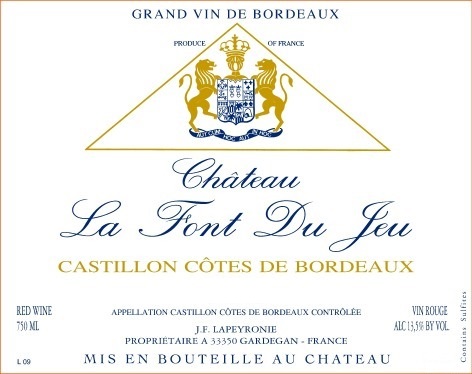
| Country: | France |
| Region: | Bordeaux |
| Winery: | Font du Jeu (Chateau) |
| Grape Types: | Cabernet Franc Cabernet Sauvignon Merlot |
| Organic: | Yes |
| Vintage: | 2010 |
| Bottle Size: | 750 ml |
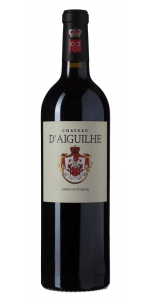
This wine reveals a complex and elegant bouquet that combines ripe fruit, leather and a fine woodiness. Round and warm on the attack, the palate is supported by solid tannins and a pleasant freshness in this harmonious and well textured wine.
The Merlot bring fruity notes and minerality from the clay-limestone terroir, enhanced by the incredibly expressive and spicy Cabernet Franc.
Review:
"A terrific effort from this large and immaculately maintained property on the clay-limestone slopes of the Côtes de Castillon, the 2019 d'Aiguilhe exhibits aromas of cherries and cassis mingled with notions of burning embers, licorice and warm spices. Medium to full-bodied, layered and concentrated, with lively acids, powdery tannins and a mineral finish, it's intelligently matured in tank and large-format oak as well as small barriques. - William Kelley"
- Robert Parker's Wine Advocate (April 2022), 92 pts
"The 2019 d'Aiguilhe has a really lovely bouquet of ample black cherry, mulberry and light floral scents, very pure and delineated. The palate is medium-bodied with cedar-infused red fruit. While not as exuberant as the aromatics, this is nicely detailed and quite poised on the finish. No, I still cannot pronounce its name, but this Castillon Côtes de Bordeaux is well worth seeking out. - Neal Martin"
- Antonio Galloni's Vinous (February 2022), 92 pts
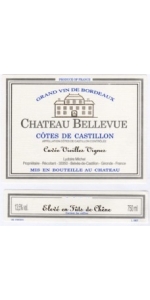
Bellevue Cotes de Bordeaux-Castillon Vieilles Vignes 2020 is 65% Merlot, 35% Cabernet Franc.
Average age of the vines is 40 years old.
The wine offers a rich and intense bouquet of blackcurrant, blackberry and strawberry.
It is smooth and full in the mouth with a velvety texture. Acidity combined with firm but well-integrated tannins are a fine supporting cast to the black fruit flavors at the end.
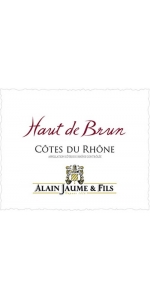
Alain Jaume Cotes Du Rhone Rouge Haut de Brun is made from 60% Grenache, 30% Syrah, 10% Cinsault
The colour is purple-tinged garnet.The aromatic range of the nose goes from fresh berries (wild raspberry, blackcurrant, blackberry) to spices.The palate is big and full-flavoured, with silky-smooth tannins and aromas of the fruit already mentioned. The finish introduces touches of liquorice and pepper. A Côtes du Rhône with great complexity for an every day drinking.
A classic Rhône to drink between 1 and 4 years. Best poured at 17°C.
Traditional wine making and ageing is performed in vats only. Bottling after 10-12 months.
Ideal throughout the meal, but particularly with poultry and other white meats, as well as mild cheeses.
Alain Jaume Cotes Du Rhone Rouge Haut de Brun is made from 60% Grenache, 30% Syrah, 10% Cinsault
The colour is purple-tinged garnet.The aromatic range of the nose goes from fresh berries (wild raspberry, blackcurrant, blackberry) to spices.The palate is big and full-flavoured, with silky-smooth tannins and aromas of the fruit already mentioned. The finish introduces touches of liquorice and pepper. A Côtes du Rhône with great complexity for an every day drinking.
A classic Rhône to drink between 1 and 4 years. Best poured at 17°C.
Traditional wine making and ageing is performed in vats only. Bottling after 10-12 months.
Ideal throughout the meal, but particularly with poultry and other white meats, as well as mild cheeses.
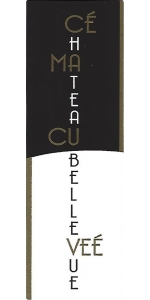
Bellevue Cotes de Bordeaux-Castillon Cé Ma Cuvée is made from 70% Merlot and 30% Cabernet Franc
The wine is made with 70% Merlot and 30% Cabernet Franc. Average age of the vines is 50 years old (everything is between 40 and 60 years old).
Cé Ma Cuvée is a tribute from Michel Lydoire to his 2 daughters:
Cé is for Céline. She is like the Merlot grape varietal. Pleasant and calm.
Ma is for Marina. She is like the Cabernet Franc grape varietal. Tough and with a lot of character.
The color is deep and inky.
The nose is spicy, fruity and oaky with some nice vanilla and coconut aromas.
The mouthfeel is complex, with ripe red and black fruit flavors. Some spiciness and integrated oak flavors.
The wine starts as the Vieilles vignes, but some wine is aged in 500-liter American Oak Barrels for 18 months.
They are using a mix of different toastiness for the barrels. Some high toast and some are medium toast.
This is a fun wine that can be enjoyed with any food, charbroil burgers, grilled vegetables, cheeses ... or even with dark chocolate desserts.
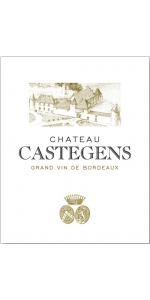
Chateau Castegens Cotes de Bordeaux Castillon is made from 80% Merlot, 18% Cabernet Franc and 2% Cabernet Sauvignon.
The wine boasts an intense, deep and lively red color. The nose offers black fruit, blackberry, cigar box, licorice, some delicate and integrated oak flavors as well. The mouth is full of fruit flavors, spice and fine toasty flavors. The structure is rich, but the tannins are well integrated already. The finish is long and a slight mintiness give the wine a great length and some purity.
Pairs great with meat and vegetables on the grill.
Font du Jeu Cotes de Castillon 2010 is made from 70% Merlot, 15% Cabernet Sauvignon, 15% Cabernet Franc.
The average yield is 40 hectoliters/hectare.
Traditional vinification in small tanks. Four week maceration. Aging in 2-3 year old oak barrels for 16 months. No fining, no filtration.
"La Font du Jeu" is an old French phrase. "Font" stands for "fontaine", meaning "fountain" and "jeu" means "play". The owners Helene and Frederic Lapeyronie believe that children used to come and play around a fountain near the vineyard.
The nose is filled with blackberry and blackcurrant fruits, licorice and vanillin. Medium-bodied with a solid texture of dark fruit, roasted coffee, and spice flavors. Long finish.
The Chateau Font du Jeu Estate
This current owners Helene and Frederic Lapeyronie represent the fourth generation of winemakers in the family. Frederic is the vineyard manager, Helene is the winemaker. She also teaches viticulture and enology in Saint Emilion.
The Chateau Font du Jeu Vineyard
The estate, which belonged to Frederic's family, is located on a 2.5 hectare vineyard (6.2 acres) in Côtes de Castillon AOC, on a slope situated at 86 meters above sea level, with southern sun exposure.
The soil is a mix of clay and limestone. The average age of the vines is 40 years old. The vineyard is planted to Merlot, Cabernet Sauvignon and Cabernet Franc.
They also have 2.5 hectares (6.2 acres) in Côtes de Francs AOC, on a slope situated at 77 meters above sea level. The soil is a mix of clay and limestone. The average age of the vines is 35 years old.
The vineyard is farmed using culture raisonée method, guyot double, disbudding, thinning out of the leaves, and fertilization. Manual harvest. Only the best grapes are selected. Production: 2,200 cases.
Corinne Perchaud Chablis is 100 percent Chardonnay.
A classic Chablis with aromas of ripe white fruits and a taste of rich minerals.
The Vineyards The plots are in Chablis located predominantly on the village of Fleys, but also on the common Chichée and Fontenay, their total area is 13 hectares. They are mostly north and north-west oriented. The ground floor is Kimmeridgian marl consisting clay and limestone. The oldest of of the vines is 35 years. Winemaking After a slight settling, the juice is put in stainless tanks to achieve its fermentation both alcoholic and malolactic. Ther is a long aging on lees to refine the flavors and develop complex flavors. If necessary, we make a collage of Bentonite to remove proteins and a passing cold which eliminates tartar crystals. Then we perform a tangential filtration method friendly to the wine. The wine is bottles between 14 and 21 months after the harvest.
Pairs well with Oysters or shellfish and Sole Meunière.
Produced with Nebbiolo grapes from one of the highest plots in the area, at over 500 meters above sea level.
This is an elegant Nebbiolo - fresh and fruity with simple tannins (thanks to the white calcareous soil) and good minerality.
No oak. Aged on the lees for 4 months in Stainless Steel Tan
Fresh, fruity, mineral.
Pierin Valetta is one of the ancestor of the Family and these wines are dedicated to him as we would like to thank him for giving us vineyards that reach up to 70 years old.
Made from 20 years old vines planted on Limestone soils.
No Oak. The wine was aged on the lees for 4 months in Stainless Steel Tanks.
Wine was slightly filtered before bottling.



