
" We don't sell the wine without touching the vine "

| Country: | France |
| Region: | Languedoc |
| Winery: | Chateau Fontane |
| Grape Type: | Chardonnay |
| Vintage: | 2013 |
| Bottle Size: | 750 ml |
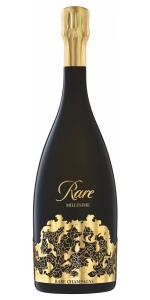
Piper-Heidsieck Rare Brut Champagne is made from 70% Chardonnay, 30% Pinot Noir.
The effervescence of Rare Millésime 2013 is tinged with an intensely bright, light golden color. The nose, at first subtle and clean, emerges in two stages combining tonicity and elegance. It all begins with the delicacy of white flowers, a hint of black tea and touches of citrus, kiwi and kumquat. Then, notes of lime blossom, green tea and fern give way to aromas of white fruits such as greengage plums. Touches of chestnut honey, sweet spices, vanilla and marzipan round off the wine's rich bouquet. The two facets of Rare Millésime 2013 are confirmed in the mouth: smooth and vibrant, indulgent and dynamic. After hints of meringue, whipped cream and marzipan, kumquat, blood orange and kiwi then provide a refreshing tonicity. On the finish, the comforting texture of Rare Millésime 2013 appears as an aromatic and smoky indulgence punctuated by a freshness and a subtle bitterness. Rare Champagne's iconic signature of tropic minerality is expressed differently in Rare Millésime 2013, extended by a plump and prolonged aftertaste.
Reviews:
Originally a part of the legendary Piper-Heidsieck Champagne house, Rare is moving their Champagne Millésime to a new brand and want it to stand alone. (Think Delamotte and Salon.) The 13th vintage for this cuvée, the 2013 Champagne Millésime is a blend is 70% Chardonnay with the rest Pinot Noir, with the majority of the blend coming from the Montagne de Reims Grand Cru and Premier Cru. A bright yellow hue, its aromatics are exquisite and well-balanced, with fresh notes of key lime, candied apple, fresh croissant dough, fresh pineapple, and honeysuckle. Medium to full-bodied, it fills the palate with a rounded and supple texture and a pillowy mousse. It’s long on the palate and has a silky personality as well as a long, pristine finish. It has fantastic balance of decadence and freshness, and I could drink this all day. It’s going to have a long drinking window. Drink 2024-2044 and beyond. Disgorged December 2022.
-Jeb Dunnuck 97 Points
Like a stallion out of the gate, this shows an initial explosion of power, in the form of mouthwatering flavors and fine texture, before quickly settling into an elegant gait. The racy acidity is seamlessly knit, buoying the lacy mousse and flavors of cassis, toasted brioche and tangerine, with accents of candied ginger, hazelnut and fleur de sel lingering on the long, creamy finish.
-Wine Spectator 97 Points
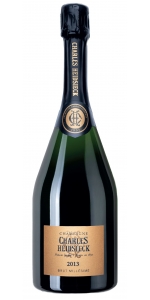
Charles Heidsieck Vintage Brut is made from 57% Pinot Noir, 43% Chardonnay.
A beautiful golden robe offers glints of green accentuated by a delicate, dynamic effervescence. The initial nose introduces intense toasted and smoky notes along with ripe fruit. When swirled in the glass, the nose takes on a heartier dimension with touches of apricot and vineyard peaches. The aromatic concentration, due to a heat wave of several weeks, is reminiscent of the summer sun. The attack is taut and decisive. the creamy texture, the crisp fruitiness and spiced notes of cinnamon, licorice and pepper are the hallmark of the House style.
Review:
Aged for eight years on the lees before disgorgement, the Champagne is deliciously toasty with acidity and fine dryness.
-Wine Enthusiast 96 Points
Disgorged in January of 2023, the 2013 Champagne Millésime Brut was the last vintage from the cellar master for Heidsieck prior to Cyril Brun. The 2013 Champagne Millésime Brut is a bright straw yellow color and is based on the crus of Les Mesnil, Avize, Averney, and Aÿ. It’s fresh with aromas of wet stones, fresh quince, and fresh jasmine flowers. It has a chalky and focused texture, with ripeness to balance it out, and a long, graceful finish. At this stage, it feels more forward with 57% Pinot Noir and the rest Chardonnay. A more mineral-tinged expression, it has a lot of charm and the promise of longevity over the coming two decades. Drink 2024-2044. It will be interesting to see how the Pinot shows itself over time. 8 grams per liter dosage.
-Jeb Dunnuck 95 Points
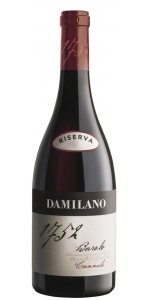
“1752” is the name of the Damilano Barolo Cannubi Riserva, in honor of the year in which the historic bottle was first marked “Cannubi”. It still exists today perfectly conserved by the Manzone family in Bra, close to Barolo. The bottle is clearly marked as being of “1752” vintage, indicating that Cannubi historically precedes Barolo.
About the Vineyard:
The Cannubi Cru is in found within one of the 6 core zones which comprise a UNESCO heritage site in Italy. A mixture of Tortonian and Helvetian calcareous marl gives the grapes intense aromas of cherry, plum and tobacco, rose and violet in sequence. Its low potassium and high calcium/magnesium content offer the wine a fine and polished touch. The vineyard is located at about 270 m. a.s.l. and has a south-east sun exposure. Barolo Riserva Cannubi 1752 It is a small plot of about 2 hectares of Nebbiolo vines, currently between 30 and 50 years of age.
Tasting Notes:
Garnet ruby red in color, the bouquet is intense and balanced, with notes of violet, red fruit, cherry and plum, spices, liquorice, cocoa, leather and tobacco. Dry, robust, full-bodied, very persistent, rich and velvety
Food Pairing:
This wine is excellent with typical piedmontes pasta (tajarin, ravioli); perfect with red meat, braised and roast meat, game and absolutely ideal with all types of cheeses.
Review:
The purity of this wine is pretty phenomenal with blackberries, strawberries, fresh flowers and licorice. Hints of tar. It’s full-bodied, yet composed and compact with ultra fine tannins and a long, flavorful finish. Very structured. Try after 2024.
-James Suckling 97 Points
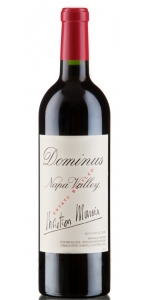
Dominus Napa Valley Red Blend is made from 88% Cabernet Sauvignon, 7% Cabernet Franc, 5% Petit Verdot.
The historic Napanook Vineyard, a 124-acre site west of Yountville, was planted in 1838. This vineyard was the source of fruit for some of the finest Napa Valley wines. Estate-bottled in the spirit of the Bordeaux châteaux, Dominus Estate is dry-farmed to allow natural stress and good concentration of fruit. Grape clusters are crop-thinned to allow sun and air to pass in between, helping to achieve full maturation and soften the tannins. Only 20% to 40% new French oak barrels are used in order to limit the extraction of oak notes. To express the unique terroir, the classic Bordeaux grape varietals of Cabernet Sauvignon, Merlot, Cabernet Franc and Petit Verdot are planted with different root stocks best suited for the varying soil composition of gravel, heavy clay and loam.
Reviews:
One of the legendary Dominus, the 2021 Cabernet Sauvignon is unquestionably in the same league as the 2018, 2016, 2015, 2013, 2010, and 1991, and to my mind, wine simply doesn't get any better. Sporting a dense purple hue as well as an incredible perfume of blackcurrants, crushed stone, cedar pencil, smoke tobacco, and baking spices, it s rich, full-bodied, and voluptuously textured, with ripe yet building tannins. It reminds me slightly of the 2010 (maybe the 2013), and I suspect it will have a similar evolution. Hide bottles for 7-8 years, and it will evolve gracefully for 30+ years. Hats off to the team of Christian Moueix and director Tod Mostero.
Jeb Dunnuck 100 Points
Dominus Napa Valley Red Blend is made from 88% Cabernet Sauvignon, 7% Cabernet Franc, 5% Petit Verdot.
The historic Napanook Vineyard, a 124-acre site west of Yountville, was planted in 1838. This vineyard was the source of fruit for some of the finest Napa Valley wines. Estate-bottled in the spirit of the Bordeaux châteaux, Dominus Estate is dry-farmed to allow natural stress and good concentration of fruit. Grape clusters are crop-thinned to allow sun and air to pass in between, helping to achieve full maturation and soften the tannins. Only 20% to 40% new French oak barrels are used in order to limit the extraction of oak notes. To express the unique terroir, the classic Bordeaux grape varietals of Cabernet Sauvignon, Merlot, Cabernet Franc and Petit Verdot are planted with different root stocks best suited for the varying soil composition of gravel, heavy clay and loam.
Reviews:
One of the legendary Dominus, the 2021 Cabernet Sauvignon is unquestionably in the same league as the 2018, 2016, 2015, 2013, 2010, and 1991, and to my mind, wine simply doesn't get any better. Sporting a dense purple hue as well as an incredible perfume of blackcurrants, crushed stone, cedar pencil, smoke tobacco, and baking spices, it s rich, full-bodied, and voluptuously textured, with ripe yet building tannins. It reminds me slightly of the 2010 (maybe the 2013), and I suspect it will have a similar evolution. Hide bottles for 7-8 years, and it will evolve gracefully for 30+ years. Hats off to the team of Christian Moueix and director Tod Mostero.
Jeb Dunnuck 100 Points
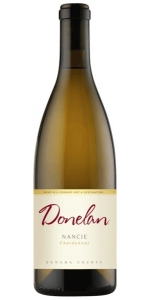
Named after Joe Donelan’s mother, the Nancie Chardonnay is our take on cool-climate, timeless Chardonnay. We love the way Nancie captures the classic qualities of Chardonnay while also exhibiting the unique traits of the unusual sites we source from. This Chardonnay is an emphasis on Old Vines, dry farming, and California heritage clones and selections. Every vintage embodies elegance and class, but no vintage is the same. The assemblage changes every year, so Nancie does not have a recipe. This wine lets us sit shotgun while the cool climate and the terroir do all the navigating, and they never steer us wrong. It is truly an inimitable wine made from a blend of incredible fruit we farm throughout Sonoma County, from the Coast to the Sonoma/Napa border.
On the nose, the Nancie Chardonnay opens with nutmeg, ginger snap, and chai spice leading to high-tone fruit like red apple skin, orange blossom, orchard fruit, and green pineapple. Judicious acidity makes this a great candidate for pairing with food. It’s very fresh on the palate, engaging, and invigorating, and it has quite a finish for Chardonnay. This is a stand-out wine among its peers, with one foot in California, and one foot in the old world.
Nutmeg, ginger snap, chai spice, orange blossom, and red apple skin on the nose. Salinity, minerality, and wonderful acidity on the palate.
Review:
"Named after proprietor Joe Donelan’s mother, the Nancie Chardonnay is crafted from a blend of exceptional vineyard sites across Sonoma. Key sources include Farina Vineyard on Sonoma Mountain, the 45-year-old vines at Lazy W Ranch in the Russian River Valley, along with fruit from Allen Family Ranch and Dehlinger–Garbro Ranch. Winemaker David Milner notes that sites offering mineral tension and naturally high acidity are essential to shaping the blend. The wine is aged for 10 months in 24% new oak. In 2023, the aromatics are superb, with a freshness factor that feels almost unparalleled. Citrus notes and hints of underripe pineapple mingle with ginger spice, flinty minerality and a distinct sea-salt character. Medium-bodied and beautifully precise, the palate is driven by crystalline acidity and candied citrus peel fruit dusted with saline nuance. Citrus, orchard and stone fruit notes build toward an incredibly long, lingering finish, touched by subtle toffee spice. Distinctly saline, complex and expressive, this is a Chardonnay of clarity, energy and sheer deliciousness. - Jonathan CRISTALDI"
Decanter, 96 points
Fontane Languedoc Chardonnay Blend 2013 is made from 85% Chardonnay, 15% Others
Fresh and lively, the wine shows some aromas of white fruit (Apricot, Apple and Peach) and it has some very well integrated aromas of vanilla from the Oak.
The finish is long and smooth. the acidity is well integrated and boost the fruit flavor.
The Chateau Fontane Estate
Encircled by a meander in the Vidourle river, a four kilometre drive from Sommières, the "Château de la Clotte" was built on the ruins of a roman villa. In 1432, according to historical documents, the castle belonged to Comte Pierre de Gange, but it was in XVIII century that Jean Mouton de la Clotte redesigned the property in the style we see it today.(The name of the cuvée "Mouton" is a tribute to him).
In 1792, when it caught fire, the castle was owned by Comte de Montlaur; his family kept the property until last century. In the nineties, Maryline and Philippe Pagès fell under its spell and purchased the domaine. Since that time they have been working to restore the castle to its former magnificence. . Everything is worked by gravity. The first vintage was 2000.
The Chateau Fontane Vineyard
Back in 1993, they planted 40 hectares. Over time, they realized some parcels were better than others and they made a selection keeping only 25 hectares under vines. The Domaine total acreage is 130 hectares.
It is mostly Clay and Limestone soil.
Lismore Pinot Noir is made from 100 percent Pinot Noir
Complex bouquet of crushed rose petals, wild jasmine and fresh French herbs followed by a palate full of cranberry, raspberry and a long savory finish.
The grapes were picked at optimal ripeness. 30% whole bunch fermented in large 5000 liter vats with gentle pump-overs twice a day. The process allowed for a long extraction period which lends to the fruit expression and structure of this wine. The free run wine was drained off and the fermented grapes were then pressed in a traditional wooden basket press. The wine was racked into 225, 300 and 500 liter barrels where malolactic fermentation took place and the wine was aged for 10 months. 35% new French oak was used.
Review:
"The 2018 Pinot Noir comes from Walker Bay and Kaaimansgat and includes 30% whole-bunch fruit, aged for 11 months in 25% new oak. The bouquet sports vivid red cherry and raspberry fruit that is exceptionally well defined and beautifully integrated with the oak. The palate is medium-bodied with supple tannins, well-judged acidity and a slightly fleshy texture. There is just the right amount of salinity here, and the finish is kept on a tight leash, allowing the detail and precision to be fully expressed. A slight sour edge on the finish keeps you coming back for another sip. Excellent and reassuringly classy. - Neal Martin" - Antonio Galloni's Vinous (November 2019), 92 pts
"Walker Bay and Elandskloof are the twin sources of 30% whole bunch-fermented Pinot from Sam O'Keefe. Juicy, floral and charming, it's a graceful, fruit forward style with some clove and tobacco spice and refreshing acidity. The finish is a little firmer than I remember. 2020-24"- Tim Atkin (South Africa 2020 Special Report), 92 pts
Weinkeller Erbach Riesling (liter) is 100 percent Riesling.
Round and refreshing wine with light touches of lemon and lime on the nose. Slightly sweet mouthfeel, with juicy and fruity flavors.



