" We don't sell the wine without touching the vine "
| Country: | Italy |
| Regions: | Campania Falanghina del Sannio |
| Winery: | Fortezza Societa Agricola |
| Grape Type: | Falanghina |
| Organic: | Yes |
| Vintage: | 2023 |
| Bottle Size: | 750 ml |

Fortezza Fiano DOC Sannio is made from 100% Fiano - 20 years old
No oak.
Straw yellow color with light green reflections. A rich bouquet of white flowers with mineral notes, freshnesss and elegance, good acidity and good body.
Southeastern exposure with an altitude of 250-350 meters above sea level.
Planting density: 3,500 vines per hectare on average.
Training system: espalier with Guyot pruning.
Manual harvest in small crates end of September.
Winemaking in white in stainless steel tanks at controlled temperature.
Pairs well with seafood, grilled tuna, white meats.
Review:
-James Suckling 90 Points

Fortezza Greco DOC Sannio is made from 100% Greco.
No oak. A gold color; complex aromas of ripe fruits, candied fruit and honey. Soft and well-structured.
Southeastern exposure with an altitude of 250-350 meters above sea level.
Planting density: 3,500 vines per hectare on average.
Training system: espalier with Guyot pruning.
Manual harvest in small crates at the end of September.
Winemaking in white in stainless steel tanks at controlled temperature.
Pairs well with fresh cheese, pasta with vegetables and vegetable soups.

Fortezza Veceta Chardonnay is made from 100 percent Chardonnay.
Even tough the name LA VECETA is not present on the label, it is the name of the lady that is present on the front label. The Veceta is the "Lady" that wakes up very early in the Morning to go to work in the vineyard before the sun get too hot to work. On the label she is depicted in the center bent over the ground.
Brilliant straw yellow. On the nose it expresses itself with hints of peach, tropical fruits and citrus fruits and notes of white flowers. In the mouth it is intense, full, tasty and balanced and the notes of red peach perceived on the nose give way to peach in syrup in the mouth.Very versatile and extremely pleasant wine.
Ideal for cheering up an aperitif but goes well with fish-based dishes, fresh cheeses, salads and summer menus. Ideal for cheering up an aperitif but goes well with fish-based dishes, fresh cheeses, salads and summer menus.

Arzuaga Ribera del Duero La Planta 2023 is 100% Tempranillo.
The wine has been crafted from grapes cultivated at La Planta estate, owned by Arzuaga Navarro’s family in Quintanilla de Onésimo, the heart of Ribera del Duero. The soil is clay-calcareous and the subsoil is pure limestone at one meter under the surface. The vineyard altitude is 911 meters above sea level. These specific conditions provide distinct features of the wine.
The wine boasts a deep violet red color. Clean and bright with a range of red fruits (raspberry and cherry) that dominate with a high aromatic intensity, joined by balsamic, cacao, coffee, and roasted tones. Fresh, elegant, easy, and balanced in the mouth with a lightly sweet, toasted, and pleasant aftertaste.
Pairs best with fried fish, sausage, and white meats such as roasted poultry.
Review:
The 2023 La Planta is 100% Tempranillo and was aged for six months in oak. Floral in character, it offers rosewood and candy, followed by candied cherry. Dry and slightly indulgent, with grippy tannins and a juicy core, the 2023 vintage brings extra charm and palate energy compared to 2022. - Joaquín HIDALGO"
- Antonio Galloni's Vinous (June 25th 2025), 90 pts

Pago de Carraovejas Ribera Del Duero is made from 90% Tempranillo, 6% Cabernet Sauvignon and 4% Merlot
The most honest interpretation of the Carraovejas Valley.
Body, structure and balance with a vibrant background. Delicacy, harmony and passion for detail are perceived in a wine that reflects the unique character of the valley in an outstanding way.
The 2022 vintage was characterized by cool winter months and extremely low rainfall, reaching limits that had not been observed for years. Due to the good rainfall of the previous year, the vines had good accumulated water reserves, which allowed the vineyard to have a good phenological cycle and normal development. Budding and flowering were perfectly developed in each of the varieties worked, and a homogeneous and balanced development of the plants was achieved. The summer was excessively hot, with several episodes of heat waves, which were mitigated by drip irrigation. Veraison, which was slower than in previous years, and ripening began in early August and the berries developed very uniformly. Harvest began on September 12 and ended on September 28.
Pago de Carraovejas 2022 is the most honest reflection of the valley to which it owes its name. An environment in which the vines climb the slopes to form a unique landscape. On the surface, its tertiary soil of limestone marl, clay and sandstone outcrops force the vines to self-regulate and give their best. Plots that converge in an orography marked by its unique mesoclimate. The vineyards are distributed from the middle zones to the moors that exceed 900 meters in altitude; from the gentle undulation that descends towards the stream, to the plots that exceed 30% slope. South- and north facing slopes, each with its own personality, create the profile of the Carraovejas Valley.
The grapes for Pago de Carraovejas 2022 were harvested by hand after an initial selection of bunches in the vineyard. Subsequently, in the winery, a double selection was made: first by cluster then by berry. Gravity must production allows maximum respect for the raw material. During the fermentation process, indigenous yeasts and lactic bacteria from our own estate were used. The wine was aged in French and American oak barrels for 12 months. The entire process was marked by precision and care in every detail. For greater protection, the wine contains sulfites. Finally it was clarified with natural egg white and bottle in spring of 2024.
Review:
"Newly bottled, the 2023 has years to go in bottle, 15 to 20 if not more. Tart, juicy red and black berry fruit drapes against rounded, expansive tannins and pronounced oak from its youthfulness. The full-bodied Tempranillo, Cabernet Sauvignon, and Merlot are destemmed and triple-selected from estate vines and then gravity flowed into stainless steel and oak vats. Large-format French and American oak come into play during the 12 months of aging. This is still a baby, but it’s already full of tremendous sophistication, delicacy, and seamless elegance. Hold it for 3-5 years and enjoy for another 25. - Virginie BOONE"-Jeb Dunnuck 95 Points
Pago de Carraovejas Ribera Del Duero is made from 92%, Cabernet Sauvignon 5% and Merlot 3%.
The Pago de Carraovejas Ribera del Duero vintage marks a turning point in the history of the winery. From now on, the Crianza and Reserva are unified in this wine that focuses on the terroir and character rather than the time of aging. Its renewed label reflects the three key elements of this red: origin, soul and emotion.
Pago de Carraovejas Ribera Del Duero is made with grapes grown in the Botijas River valley, and planted between 1988 and 2011. Our work over the last 30 years has been geared to handcrafted viniculture, that puts as much care as possible into the microclimate conditions and the details. We have placed particular attention on the maintenance of the soil by plant cover that already grows spontaneously. It allows us to develop the ecosystem of the valley, which we respect scrupulously, using organic fertilizer and sulfur as the sole basis of our viticulture.
Depending on which plot they come from and the time they enter the winery, the grapes may be deposited in cold chambers to prevent oxidation and preserve the aroma. We carry out a two-part selection: first on the vine, where we choose the bunches, and then on a belt in the winery, where we remove the grapes that do meet the necessary conditions. The grapes enter the winery and are transported with the assistance of gravity. The deposits are filled slowly and gently. Depending on the characteristics that we detected when tasting the grapes, we ferment them either in stainless steel deposits or French oak barrels. For years we have worked with our own yeast that has been isolated from the vines by our team. This work is also partly responsible for the Carraovejas character.
The wine was aged in barrels for around twelve months.
Review:
-Joaquín Hidalgo (Vinous) 95 Points
Freshly cut vanilla, dark cherries and ripe plums on the nose, with a touch of blue flowers. Medium to full body with firm, fine-grained tannins and a juicy, medium-long finish. Drink now or hold.
-James Suckling 92 Points
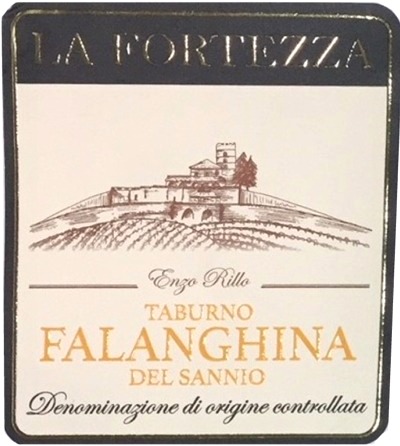
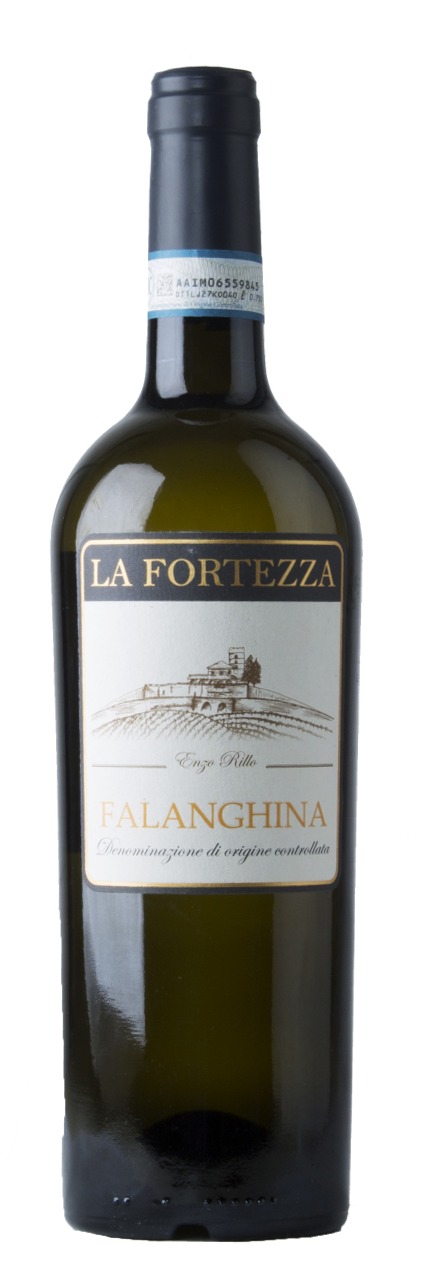
Fortezza Falanghina del Sannio Taburno is made from 100% Falanghina - 25 years old
No oak.
Straw yellow color with greenish reflections. Fresh and floral scents, citrus aromas, apple, pear and mineral notes. Round, smooth and juicy with high acidity, yet well balanced with rich flavors.
Southeastern exposure with an altitude of 300-450 meters above sea level.
Planting density: 3,500 vines per hectare on average.
Training system: espalier with Guyot pruning.
Manual harvest in small crates between the end of September and beginning of October.
Winemaking in white in stainless steel tanks at controlled temperature.
Pairs well with seafood, mozzarella cheese, risotto, white meats.
Review:
-Jeb Dunnuck 91 Points
La Fortezza is located in the heart of Sannio Benevento and spreads over a total of 20 hectares of vines. The winery is born from the great passion of the founder Enzo Rillo for his land. “La Fortezza” was built on the belief that making great wines starts in the vineyards and that the strength of the estate lies on the quality soil, sun exposure, altitude and care of the vineyards.
The project is based on the strong belief that producing a very good vintage is to express great love and strong passion for what they do, and to ensure the customers receive high quality wines with a stylish appeal.
Torrecuso, where La Fortezza is located, extends on the eastern side of the Regional Park of Taburno-Camposauro: the slopes are a continuous alternation of vineyards, woods and small fields, to which only in the last hours of the day the profile of Mount Taburno subtracts light and heat. Here the work of man - the diligent action of the peasant - has not ravaged, invaded nor defaced. A territory that is harsh yet generous, and that has decided to understand, deepen and know within the attachment we have for our land what the deepest meaning of the Samnite pride is: awareness and dimension of a freedom that once was only a desire to defend their land from the Roman armies, but that today is an attachment for what it represents and expresses in terms of culture, folklore and productions.
The province of Benevento has for centuries produced excellent grapes for excellent wines and represents about 40% of the vineyard area of the Campania Region. While they believe that "wine is made in the vineyard", their real strength actually consists of a mix of soil quality, sun exposure, altitude and care of the vineyard. Their vines Aglianico del Taburno are in such quantity that they permit them a careful selection in the vineyard for the different range of wines and guarantee the production of wines of the highest quality such as the Reserve, whose grapes come from a vineyard about seventy years of age.
Falanghina del Taburno benefits from a good sun exposure that brings an optimal result in terms of sugar content, aromas and acidity of the wine.
The cellar is located at the very heart of the vineyards. It is completely covered with stone and well-integrated into the surrounding landscape. It consists of two separate bodies. In the upper part is an enchanting place with a wonderful view towards the Apennines that separates Campania from Puglia. The underlying body opens over two medieval-style doors that are rigorously carved in solid wood, and it is home to the production activity - a perfect blend of tradition and modern technology. The barrel vaults are part of the aging room that is entirely covered with terracotta bricks and partly excavated in the tuff. This brings us back to the idea of the old "cellars" of the rural farmhouses - the places that were destined to conserve both wine and food. The processing room, the winemaking equipment, the bottling and labeling room, the steel tanks and the warehouse complete the cellar, with a potential production of about two million bottles.

Camus Graves Blanc is made from 50% Sauvignon Blanc and 50% Semillon.
A beautiful, brilliant color, this wine offers a great aromatic balance with complex and mineral notes, Offering white fruit (peach and pear), citrus (grapefruit and lemon), and a toasty finish with a delicate oak presence. The mouthfeel is rich and complex with a great minerality, freshness, structure, and a good length to the finish.
Pairs with poultry, fish, and shellfish.

Cave Carod Clairette de Die is made from 75% Muscat Petits Grains and 25% Clairette. Clairette de Die is produced with the ancestral dioise method.
The grapes are rapidly pressed after the harvest and then placed in vats at low temperatures (replicating the process used by the Voconces in ancient times who kept the jars in the icy waters of their local rivers). The half-fermented must is bottled and fermentation continues in the bottle, giving a naturally sparkling wine. Disgorging occurs at least six months after bottling, while the wine still contains sugar and has reached an alcohol content of 7 to 9 %.
This is a sparkling wine with very fine bubbles, light in alcohol (8°), and containing residual sugar (incomplete fermentation). Clairette de Die has been known since ancient times (dates back to 77 A.D.). Clairette brings delicacy and lightness to the wine whereas Muscat gives its typical sweet flavor. The wine displays intense aromas, a refreshing balance of fruit and acidity with peach, orange and white flowers flavors.
This is an ideal wine for all desserts and ice creams, and is very interesting with foie gras. It is especially suitable for daytime meetings and cocktail parties. A great breakfast wine!
Wine to be consumed young, to conserve the full fruity and floral flavors. To be stored flat in a cool room away from light.
GOLD MEDAL - Effervescents du Monde 2010
GOLD MEDAL - Concours General Agricole de Paris 2012
SILVER MEDAL - Concours General Agricole de Paris 2011

Baron Aime Cremant de Bourgogne Brut is made from 40% Chardonnay, 30% Pinot Noir, 30% Aligote.
Light yellow with bright reflections. The nose is fresh and lemony with subtle floral aromas, apple and citrus fruits. The mouth is fresh, delicate, tight and precise with fine bubbles that stimulate the palate nicely.
A delicious aperitif and a great match with shellfish.
Review:
Golden straw color. Aromas and flavors of brioche, green and yellow apple, dried pineapple, and lemon oil with a supple, vibrant, finely carbonated, dry medium body and a smooth, engaging, medium-long finish displaying impressions of croissant with salted butter and tart pear jam, white tea, and grapefruit peel with no oak flavor. A lovely and racy apéritif that will pair splendidly with a cheese and bread course."
- Beverage Testing Institute 93 pts - GOLD MEDAL - BEST BUY

Aalto P.S. Pagos Seleccionados Tinto is made from 100 percent Tempranillo.
Climatic conditions
The farming year began with a mild autumn and little precipitation. A very dry winter started with -9ºC reaching at the end higher temperatures than normal for that time of the year. Spring and summer characterized by little rain, only some rain showers in July and late August avoided the hydric stress of the vines. The vegetative cycle of the vine developed with big variations of temperatures, alternating warm and atypical low temperatures of 4ºC for mid-June. The ripening of the grapes happened under very good conditions and the harvest started on 24th September 2019.
100% Tinto Fino (Tempranillo) primarily from very old vines – 60 to 90 years old – from selected plots in La Horra and La Aguilera. The harvest was done by hand, in small boxes of 15 kilos that are thoroughly inspected, bunch by bunch, on the selection table.
Tasting notes
Review:
Color: dark cherry, Aroma: toasty, spicy, fine cocoa, black fruit, Mouth: tasty, toasty, fine bitterness, ripe tannins
Guia Penin 94 Points
"A red made exclusively from Tempranillo, from vineyards 60 to 90 years old, grown in the pagos of La Horra and La Aguilera, with 21 months of aging in new French oak barrels. Captivating in aroma and flavor, it shows ripe red and black fruit alongside floral, herbal and sweet-spice notes, which carry onto the palate, where its good acidity and firm, very fine-grained tannins lend support to the oak and balance to the whole. It has a full, very long finish, with reductive, earthy touches of cassis, blackberry, violet and licorice. It follows the house's powerful style, yet shows itself more fluid, tense and vertical. A fine example that concentration, opulence, precision and finesse can go hand in hand. Be patient with it in the glass or in the bottle, as it is still young and has everything it needs to get even better over the next 20 years. Alcohol 15%."
-Revista Adega 95 Points

Castelmaure Col des Vents Corbieres is made from 50% Carignan, 30% Grenache, 15% Syrah and 5% Cinsault.
"Col des Vents" means "windy mountain pass" — the vineyards sit at the foothills of the Pyrenees, where the wind blows hard and keeps the fruit clean and fresh. The original label reproduced a painting by Max Savy.
Brambly berry, cherry and raspberry meet spice and black pepper in this authentic French country red. Aromas of garrigue — rosemary, thyme and lavender — lend a minty, herbal freshness.