
" We don't sell the wine without touching the vine "
| Country: | Italy |
| Region: | Campania |
| Winery: | Fortezza Societa Agricola |
| Grape Type: | Fiano |
| Organic: | Yes |
| Vintage: | 2017 |
| Bottle Size: | 750 ml |

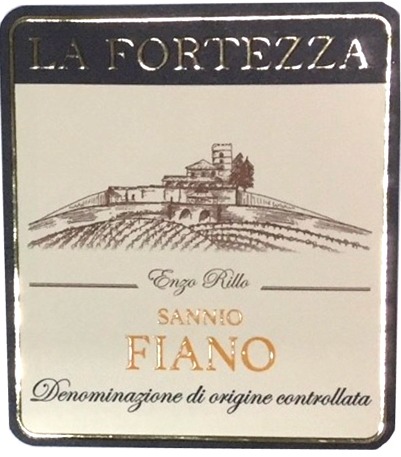
Fortezza Fiano DOC Sannio is made from 100% Fiano - 20 years old
No oak.
Straw yellow color with light green reflections. A rich bouquet of white flowers with mineral notes, freshnesss and elegance, good acidity and good body.
Southeastern exposure with an altitude of 250-350 meters above sea level.
Planting density: 3,500 vines per hectare on average.
Training system: espalier with Guyot pruning.
Manual harvest in small crates end of September.
Winemaking in white in stainless steel tanks at controlled temperature.
Pairs well with seafood, grilled tuna, white meats.
Review:
" Clean and fruity with aromas of chopped apples, sliced pears and white peaches. Medium-bodied with a juicy, simple and refreshing palate. Drink now.”
- James Suckling (August 2022), 90 pts

Fortezza Greco DOC Sannio is made from 100% Greco - 20 years old
No Oak
A gold color; complex aromas of ripe fruits, candied fruit, honey. Soft and well-structured.
Southeastern exposure with an altitude of 250-350 meters above sea level.
Planting density: 3,500 vines per hectare on average.
Training system: espalier with Guyot pruning.
Manual harvest in small crates end of September.
Winemaking in white in stainless steel tanks at controlled temperature.
Pairs well with fresh cheese, pasta with vegetables, vegetable soups.

Salvadori Chianti Riserva DOCG 2017 is made from Sangiovese 90% , Merlot 10

Fortezza Falanghina del Sannio Taburno is made from 100% Aglianico.
Grapes are from the Campania region. Aglianico is an amazing varietal than brings big body and big structure.
Ruby red color with aroma of wild berries, really soft at the palate, with pleasant notes of black cherry jam.
Pairs well with seafood, mozzarella cheese, risotto, white meats.
Review:
"The nose is primarily smoky, peppery and fiery, but a decadent drizzle of dark berries and dark chocolate creates balance. That enchanting blend of smoke, pepper and rich, sweet notes continues onto the unexpectedly comforting palate. — Danielle Callegari"
- Wine Enthusiast (December 2023, Best of Year issue), 92 pts

Fortezza Veceta Chardonnay is made from 100 percent Chardonnay.
Even tough the name LA VECETA is not present on the label, it is the name of the lady that is present on the front label. The Veceta is the "Lady" that wakes up very early in the Morning to go to work in the vineyard before the sun get too hot to work. On the label she is depicted in the center bent over the ground.
Brilliant straw yellow. On the nose it expresses itself with hints of peach, tropical fruits and citrus fruits and notes of white flowers. In the mouth it is intense, full, tasty and balanced and the notes of red peach perceived on the nose give way to peach in syrup in the mouth.Very versatile and extremely pleasant wine.
Ideal for cheering up an aperitif but goes well with fish-based dishes, fresh cheeses, salads and summer menus. Ideal for cheering up an aperitif but goes well with fish-based dishes, fresh cheeses, salads and summer menus.

Alain Jaume Rasteau Les Valats is made from 80% Grenache, 10% Syrah, 10% Mourvedre planted on clay and stones based soil.
Located in the northern part of the Vaucluse, the soils are mostly on slopes with limestone and rocks, at medium altitude (until 350 meters).
Grapes usually ripeness in late September. The soils are poor and the Mediterranean climate allows to produce concentrated and well balanced grapes. The place is well-known for producing wines with strong identity.
From the Cotes du Rhone Villages classification, RASTEAU has been upgraded to Cru level since the 2009 vintage.
The wine shows a deep red garnet color and a nose of fresh red berries. On the palate, the richness of the fruit and tannins harmonizes with the roundness of the wine. The finish is long, with spicy and mineral notes. Complete and authentic.
Review:
"A blend of 90% Grenache and 10% Syrah, the 2017 Rasteau Les Valats is a classic example of this terroir and offers a darker, smoky, earthy, and chocolaty vibe as well as a rich, mouthfilling style on the palate. Nicely balanced, with a fleshy, expansive mid-palate and great tannins, it’s total charmer to enjoy over the coming 7-8 years."
- Jeb Dunnuck (October 2020), 90 pts
"Very open red-fruit aromas and a rather cool, slightly minty personality make this a good introduction to this underrated Southern Rhone appellation. Good harmony and rather lively for its age at the clean finish. Drink now."
- James Suckling (February 2022), 90 pts
Fortezza Fiano DOC Sannio is made from 100% Fiano - 20 years old
No oak.
Straw yellow color with light green reflections. A rich bouquet of white flowers with mineral notes, freshnesss and elegance, good acidity and good body.
Southeastern exposure with an altitude of 250-350 meters above sea level.
Planting density: 3,500 vines per hectare on average.
Training system: espalier with Guyot pruning.
Manual harvest in small crates end of September.
Winemaking in white in stainless steel tanks at controlled temperature.
Pairs well with seafood, grilled tuna, white meats.
Review:
"Plenty of peach and fresh-pineapple character here to fill out the medium-full body. Fresh and quite long, in spite of the moderate acidity. Drink now."
- James Suckling (October 2018), 90 pts
La Fortezza is located in the heart of Sannio Benevento and spreads over a total of 20 hectares of vines. The winery is born from the great passion of the founder Enzo Rillo for his land. “La Fortezza” was built on the belief that making great wines starts in the vineyards and that the strength of the estate lies on the quality soil, sun exposure, altitude and care of the vineyards.
The project is based on the strong belief that producing a very good vintage is to express great love and strong passion for what they do, and to ensure the customers receive high quality wines with a stylish appeal.
Torrecuso, where La Fortezza is located, extends on the eastern side of the Regional Park of Taburno-Camposauro: the slopes are a continuous alternation of vineyards, woods and small fields, to which only in the last hours of the day the profile of Mount Taburno subtracts light and heat. Here the work of man - the diligent action of the peasant - has not ravaged, invaded nor defaced. A territory that is harsh yet generous, and that has decided to understand, deepen and know within the attachment we have for our land what the deepest meaning of the Samnite pride is: awareness and dimension of a freedom that once was only a desire to defend their land from the Roman armies, but that today is an attachment for what it represents and expresses in terms of culture, folklore and productions.
The province of Benevento has for centuries produced excellent grapes for excellent wines and represents about 40% of the vineyard area of the Campania Region. While they believe that "wine is made in the vineyard", their real strength actually consists of a mix of soil quality, sun exposure, altitude and care of the vineyard. Their vines Aglianico del Taburno are in such quantity that they permit them a careful selection in the vineyard for the different range of wines and guarantee the production of wines of the highest quality such as the Reserve, whose grapes come from a vineyard about seventy years of age.
Falanghina del Taburno benefits from a good sun exposure that brings an optimal result in terms of sugar content, aromas and acidity of the wine.
The cellar is located at the very heart of the vineyards. It is completely covered with stone and well-integrated into the surrounding landscape. It consists of two separate bodies. In the upper part is an enchanting place with a wonderful view towards the Apennines that separates Campania from Puglia. The underlying body opens over two medieval-style doors that are rigorously carved in solid wood, and it is home to the production activity - a perfect blend of tradition and modern technology. The barrel vaults are part of the aging room that is entirely covered with terracotta bricks and partly excavated in the tuff. This brings us back to the idea of the old "cellars" of the rural farmhouses - the places that were destined to conserve both wine and food. The processing room, the winemaking equipment, the bottling and labeling room, the steel tanks and the warehouse complete the cellar, with a potential production of about two million bottles.

All older vintage wines have been purchased from a single collectors cellar. Pictures can be requested before shipment.

Adelsheim Vineyard Chardonnay Staking Claim is made from 100% Chardonnay.
Review:
Grapefruit pith, flint, roasted almonds and toasted lemons here. It’s medium-bodied, flinty and gently toasty with bright acidity and a fresh, tight finish. Sustainable.
-James Suckling 92 Points



