
" We don't sell the wine without touching the vine "
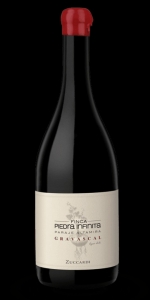
Familia Zuccardi 'Finca Piedra Infinita' Gravascal is made from 100 Malbec.
WINE DATA:
Grape Composition: 100% Malbec
Appellation: Finca Piedra Infinita, IG Paraje Altamira,Valle de Uco, Mendoze
Vinification: Manually selected grapes, filling of tanks by gravity. Fermentation with native yeasts in concrete vessels without epoxy. Aging in concrete vessels. The 2020 was a very particular vintage, characterized by limited yields and a high speed of maturity, which made it one of the fastest and most challenging on record.
In the search for the purest expression of the identity of Finca Piedra Infinita vineyard, we reached this small plot of 0.73 hectares. Located on its north-east side, it shows the typical facet of Paraje Altamira soil, with large gravels and granite stones covered with calcareous material at a depth of 50 cm.
Altitude: 3,609 feet above sea level
Soil Type: Short alluvial soil covered with calcareous materials
Alcohol: 14% Total Acidity: 5.6g/l
TASTING NOTES:
Color: Bright ruby color
Aroma: Dark berries, black olive tapenade, and iron
Flavor: Rich on the palate, with firm tanins
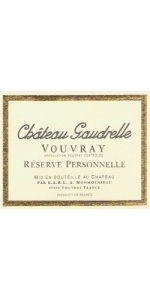
Chateau Gaudrelle Vouvray Reserve Personelle 2009 is 100 percent Chenin Blanc
Fine Chenin Blanc typicity, with aromas of ripe apples and honeyed notes. Rich, smooth, rounded palate with great structure and weight. Has the acidity to support ageing for 10 years.
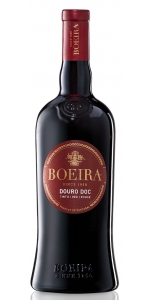
Boeira Douro Red is made from 35% Touriga Nacional, 35% Tinta Roriz and 30% Touriga Franca.
Deep ruby color with purple hints. Aromas of red and black fruits, toasty notes and dark chocolate. Smooth on the palate with good structure and excellent mouthfeel. Fresh, with well integrated tannins bringing elegance and a gastronomic profile to the wine. Very well balanced. Boeira Douro DOC Red from the Douro Valley is the result of a careful blend of different varieties from the Douro. After fermentation the wine was left in contact with its lees until bottling in order to develop complexity and richness.
Pair with pork roast stuffed with prunes and apricots, grilled meats, marinated leg of lamb, chicken curry, pasta with beef or pork ragout, vegetable timbale with roasted tomatoes and grilled almonds. A very “friendly” food wine.

All older vintage wines have been purchased from a single collectors cellar. Pictures can be requested before shipment.
All older vintage wines have been purchased from a single collectors cellar. Pictures can be requested before shipment.
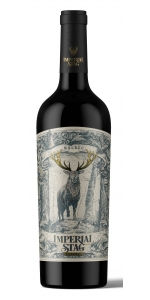
Imperial Stag Malbec is made from 100 percent Malbec.
Intense and bright ruby red color. Aromas of ripe fruit with spicy notes of eucalyptus and licorice. Vanilla and tobacco aromas contributed by the ageing in French oak barrels. Good volume on the palate, balanced, intense with great concentration, sweet flavors, with rotund tannins polished with elegance and sophistication.
Perfect companion for red and game meats, pasta, stews, rice and a variety of winter cuisine dishes.
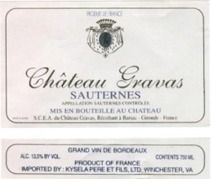
Gravas Sauternes 2009 is a blend of 95% Sémillon and 5% Sauvignon.
Powerful aromas, great finesse and a long lingering finish.
The Gravas Estate
Chateau Gravas was founded in 1789 and has been in the Bernard family for five generations. It is currently owned by Michel and Florence Bernard.
The name "Gravas" comes from "graves", a gravelly soil that perfectly suits the production of Sauternes wines.
The estate is superbly located in Barsac between Chateau Coutet, Chateau Climens and Chateau Doisy-Daene. The total production is 2,000 cases/year.
The Gravas Vineyard
There are 8 hectares (19.8 acres) of vineyard for the production of Sauternes. The soil is a mix of clay, sand and limestone. The 60 year-old vines are harvested by hand: the grapes are picked in successive passes. The wine is aged in both French and American oak barrels. There are 5 villages in Sauternes: Preignac, Barsac, Fargues, Beaumes and Sauternes.
A barrel fermented, old vines Verdejo made in a style different from what we typically see in this white varietal. It has a remarkable complexity, resulting in the smoothness and depth of a high-end white. Very suitable for cellaring.
Golden yellow color with greenish reflections. Complex, toasty aromas of nuts & dried fruit. Large, creamy, spicy, balanced and voluminous.
Rice with fish, cooked seafood, grilled seafood, baked white fish.
"The eponymous 2020 Ossian was produced with Verdejo grapes from old, organically farmed vines around the village of Nieva (Segovia), a zone where phylloxera didn't reach. They consider 2020 their finest vintage to date, with a big change from 2018 and when they have achieved a much better understanding of their vineyards. It has notes of pit fruit and sweet spices, with good weight on the palate, moderate alcohol (13.5%) and ripeness and good freshness and balance. It's serious and with potential to develop in bottle. 80,000 bottles produced. - Luis GUTIERREZ"
- Robert Parker's Wine Advocate (January 31st 2023), 94 pts
Siegel Hand-picked Selection Carmenere is made from 100 percent Carmenere.
The handpicked Reserva wines are born out of a strong desire to offer the very best expressions of terroir from El Crucero vineyard, located at 360 meters above sea level. These carefully handpicked grapes deliver superb varietal characteristics and exceptionally well-balanced fruit concentration. The manual harvest behind the handpicked Reserva Wines, a stage prior to a second triage, highlights Siegel's commitment to delivering uniquely hancrafted wines from Curico Valley.
The wine shows an intense violet - red color, aromas of black fruits, pepper and mild notes of violets. The tannins are soft, and notes of black fruits linger through the palate with long persistence.
Pair with pastas, spices foods.



