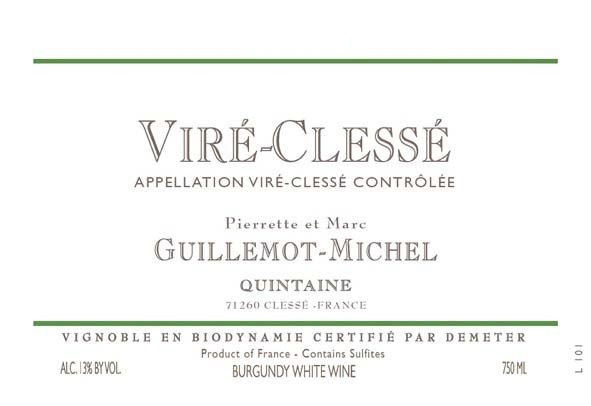
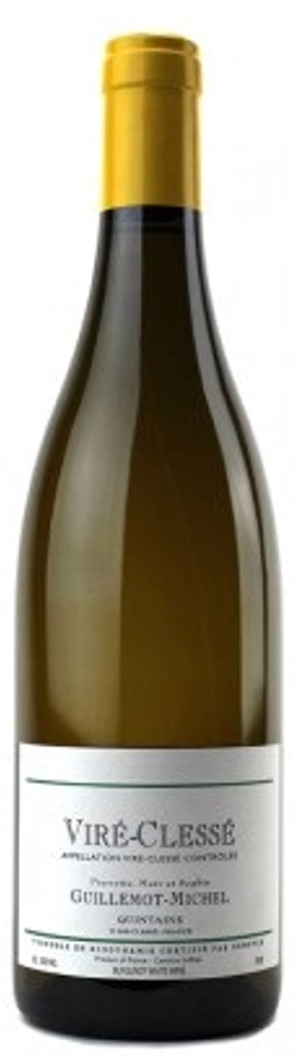
" We don't sell the wine without touching the vine "
| Country: | France |
| Regions: | Burgundy Maconnais |
| Winery: | Guillemot-Michel |
| Grape Type: | Chardonnay |
| Organic: | Yes |
| Vintage: | 2016 |
| Bottle Size: | 750 ml |

Guillemot-Michel Vire Clesse is made from 100 percent Chardonnay.
Beautifully expressive, with yellow fruits, orange blossom, smoke & flint. Thick and saline on entry, then seriously deep in the mid-palate, with suggestions of exotic fruits perfectly countered by strong minerality. This wine strikes a perfect balance between sweet and salty elements, and it shows vibrant acidity. It boasts a thickness that few other northern Mâconnais can match.
Enjoy with fish (such as sole meuniere), seafood, roasted chicken, goat cheese.
Review:
"The 2018 Viré-Clessé Quintaine is showing beautifully, wafting from the glass with a lovely bouquet of honeyed citrus fruit, fresh pastry and orange blossom. Medium to full-bodied, satiny and supple, it's elegantly textural and refined, with a fragrant core of fruit and a long, penetrating finish. Even though it will reward a bit of bottle age, it's slightly finer-boned than the more concentrated, muscular 2017, so I would opt to drink this immensely charming wine before its older sibling. – William Kelley"
- The Wine Advocate (Issue 249, June 30th 2020), 93 pts
Guillemot-Michel Vire Clesse is made from 100 percent Chardonnay.
Beautifully expressive, with yellow fruits, orange blossom, smoke & flint. Thick and saline on entry, then seriously deep in the mid-palate, with suggestions of exotic fruits perfectly countered by strong minerality. This wine strikes a perfect balance between sweet and salty elements, and it shows vibrant acidity. It boasts a thickness that few other northern Mâconnais can match.
Enjoy with fish (such as sole meuniere), seafood, roasted chicken, goat cheese.
Guillemot-Michel Vire-Clesse Charleston is made from 100 percent Chardonnay.
This cuvée is produced from hundred-year old vines that the great-grandfather planted after he returned from World War I. The family wanted to honor his memory and vinify these vines the same way he did, in old demi-muids.
Charleston is a deep and complex wine that gently express itself in the glass, offering juicy white fruit flavors and a lengthy finish.
Charleston is vinified and aged for one year in demi-muids of over 10 years old. During the following harvest, the wine is racked and placed in vats for another 6 months of aging before bottling.
Fish in white sauce, poultry in creamy sauce, hard cheeses.
Review:
"The 2019 Viré-Clessé Charleston is brilliant, opening in the glass with notes of buttered citrus fruit, pear, beeswax and vanilla pod. Full-bodied, layered and textural, with huge concentration, lively acids and a seamless, multidimensional profile, it's long and penetrating. It's one of the very best wines I've ever tasted from the domaine. Readers will remember that the Guillemot family's oldest parcel of vines dates back to 1918, and the idea behind this cuvée is to work the vines and make the wine in the same way as their grandfather—who planted them—did. It spends a year in old demi-muids followed by six months in tank on the lees. - William Kelley"
- Robert Parker's Wine Advocate (August 2021), 94+ pts
Guillemot-Michel Vire-Clesse Charleston is made from 100 percent Chardonnay.
This cuvée is produced from hundred-year old vines that the great-grandfather planted after he returned from World War I. The family wanted to honor his memory and vinify these vines the same way he did, in old demi-muids.
Charleston is a deep and complex wine that gently express itself in the glass, offering juicy white fruit flavors and a lengthy finish.
Charleston is vinified and aged for one year in demi-muids of over 10 years old. During the following harvest, the wine is racked and placed in vats for another 6 months of aging before bottling.
Fish in white sauce, poultry in creamy sauce, hard cheeses.
Review:
The 2020 Viré-Clessé Charleston is the most structured, concentrated wine in the range, mingling notions of crisp orchard and stone fruit with scents of clear honey, white flowers, beeswax and mint in an inviting bouquet. Medium to full-bodied ample and satiny, it's layered and multidimensional, with impressive depth at the core, racy acids and chalky grip. Derived from the Guillemot family's oldest parcel of vines (dating back to 1918), it's built to age.
-Wine Advocate 94 Points
Guillemot-Michel Vire-Clesse Charleston is made from 100 percent Chardonnay.
This cuvée is produced from hundred-year old vines that the great-grandfather planted after he returned from World War I. The family wanted to honor his memory and vinify these vines the same way he did, in old demi-muids.
Charleston is a deep and complex wine that gently express itself in the glass, offering juicy white fruit flavors and a lengthy finish.
Charleston is vinified and aged for one year in demi-muids of over 10 years old. During the following harvest, the wine is racked and placed in vats for another 6 months of aging before bottling.
Fish in white sauce, poultry in creamy sauce, hard cheeses.
Guillemot-Michel Vire-Clesse Retour a la Terre is made from 100 percent Chardonnay.
This cuvée is produced from grapes planted in the "Champ-Rond" vineyard and vinified in 800-liter amphoras.
The wine displays the estate's typical exotic fruit aromas and ripe citrus fruits with an extra dimension of expression due to the amphora's breathing. Ample and generous in the mouth with fine acidity and fantastic purity.
Guillemot-Michel Vire-Clesse Retour a la Terre is aged in 800-liter amphoras. The small grapes ripen beautifully without a high degree of alcohol - they are picked on the last day of the harvest, and the aging in amphora gives the wine a great purity.
The vines are grafted on "Riparia Gloire de Montpellier" - an old root-stock that was obtained in 1880 - producing very low yields with magnificent small grapes of a deep gold color.
Guillemot-Michel Vire-Clesse is made from 100 percent Chardonnay
Aged on the lees for a few months. No Oak.
Ripe passion fruit and pineapple on the nose, and fresh minerality. Very rich on the palate, well balanced. Honey, tropical fruit flavors and a great finish. The wine is excellent.
Review:
"Notes of Acacia honey, musky peach, beeswax, fresh apricot and dried white flowers introduce the 2016 Viré-Clessé, a silky, medium to full-bodied wine with exceptional concentration, textural elegance and length on the finish. Despite its ripeness and subtly botrytis-inflected character, it's underpinned by tangy acids and remains beautifully balanced and integrated. This is well worth seeking out. – William Kelley"
- The Wine Advocate (August 31st 2018), 93 pts
"Medium yellow. Yellow fruits, orange blossom, smoke and flint on the nose and palate. Thick and saline on entry, then seriously deep in the mid-palate, with suggestions of exotic fruits perfectly countered by strong saline minerality. I love the balance of sweet and salty elements and vibrant acidity. The slowly rising finish is very long and smooth. This wine, made from vineyards that have been Demeter-certified for more than two decades, boasts a thickness that few 2016s from the northern Mâconnais can match. I'd love to follow this unctuous yet energetic Viré-Clessé as it loses some of its baby fat but it's approachable already owing to its texture and balance. - Stephen Tanzer"
- Antonio Galloni's Vinous (November 2017), 92 pts
The Domaine Guillemot-Michel Estate
Pierrette and Marc Guillemot took over the Domaine from Pierrette's parents in 1985. Pierrette and Marc are both oenolgists from the school of Beaune and post-graduates from Montpellier. They have applied their studies and have married both scientific and homeopathic principles in their winemaking. The Domaine is located in the commune of Quintaine, adjacent to the village of Clesse, South of Burgundy. Quintaine is recognized as producing some of the finest wines of the Mâconnais, having a special microclimate caused by the close proximity of the Saone river. The winery became biodynamic in 1991. They produce around 3,000 cases yearly and export 85% of the production (UK, USA, Belgium, Swizerland, Germany, Japan, etc)
"A tiny biodynamic estate making highly individual wines; the grapes are picked ripe, resulting in high alcohol levels and viscous textures; residual sugar not uncommon here."
- Anthony Dias Blue's pocket guide to wine 2006
The Domaine Guillemot-Michel Vineyard
This 7-hectare (17.3 acres) vineyard on a clay and limestone based soil has been cultivated through biodynamic and organic methods since 1991 (the Biodynamic method regards the earth as a living organism and strives to renew the soil in order to produce food that is full of vitality and deeply nourishing. Biodynamics notes the interrelationship of all kingdoms - mineral, plant, animal and human - and their intricate correspondence to the rhythms and activities of the larger cosmos). That means they work in harmony with the cycle of the vines and the soil. They don't use any chemicals and prefer mineral and vegetal treatments. They work the soil using manual and mechanical methods but they treat the vines only manually.
The wine is 100% Chardonnay and goes through 100% Malolactic fermentation with no use of oak. The vines average 45 years of age with a typical yield of only 2.5 tons per acre. Marc and Pierrette are constantly experimenting, searching for new ideas, willing to take on board both traditional and modern methods.
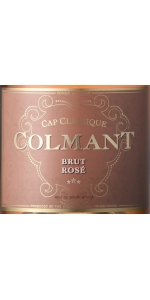
Lovely salmon pink color. A very delicate nose of strawberry and redcurrant fruit with floral undertones. There is a silky richness on the palate full of red berries balanced with a subtle bready texture. Very accessible. Will also develop nicely over time.
Colmant Brut Rose NV is made from 75% Pinot Noir and 25% Chardonnay
This wine spends a minimum of 24 months on the lees at a consistent temperature of 14C before degorgement.15% of the base wine has been barrel fermented.
Pinot Noir 75%, Chardonnay 25% (Franschhoek, Robertson and Elgin).
15% of the blend is made of reserve wine from the previous vintages and 15% of the base wine is barrel fermented.
This wine spends a minimum of 24 months on the lees at a consistent temperature of 14°C before degorgement.
Perfect as a summer sundowner. A delicious complement to white meat, strawberry dessert and decadent dark chocolate.
Review:
"The Brut Rosé (disgorged March 2018) is a blend of 75% Pinot Noir and 25% Chardonnay with 15% base wine and 15% reserve wine, with the Pinot Noir macerated on its skins for color, matured on the lees for 24 months. Deep salmon in color, it has a fine mousse and attractive strawberry and cherry scents on the nose - no shy and retiring rosé here. The palate is well balanced with Braeburn apples, hints of strawberry and a touch of tart cherries fanning out toward the creamy-textured, satisfying finish. A sparkling rosé that’s proud to be pink!- Neal Martin"
- Vinous (August 28th 2018), 91 pts

All older vintage wines have been purchased from a single collectors cellar. Pictures can be requested before shipment.
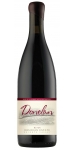
Obsidian Vineyard Syrah is bathed in terroir. The vines experience severe stress, pushing the roots ever deeper through rock in search of water, producing miniature clusters of intense power. Given the wine’s natural propensity for tannin, we take extreme care in the cellar to chisel/whittle its rough edges and leave room for richness to flatter its distinctive scaffold. The mid-palate supports flavors of roasted coffee beans, sarsaparilla, and dark chocolate. The finish marches on long after most wines have tired.
Our estate vineyard — the six-acre Obsidian Vineyard in the Knights Valley AVA — has an incredibly complex soil structure. It takes its name from a layer of volcanic obsidian rock that was discovered when we drilled for water.
Chocolate ganache, black currants, fig, graphite, and an expansive mouthfeel.
Review:
"Joe Donelan believes his Obsidian Vineyard is one of the world’s greatest sites for Syrah. I’ve visited the site twice, and can say candidly it certainly sits among the most striking vineyards I've ever laid eyes on within the U.S. It sits like a rock on a promontory—two switchbacks to reach the top—and the stones under the top soil, quite literally, never stop emerging from the ground. The place has an ancient, almost sacred, temple-like feel. It is consistently swept by afternoon breezes. The vineyard was replanted in 2017 after fires ravaged it. Winemaker David Milner laid out the site at denser spacing than before, at 2,000 vines per acre to keep yields per vine low while still achieving sensible tonnage, averaging around three tonnes per acre. Viognier was planted for co-fermentations, alongside some Cabernet Sauvignon, for a single vineyard bottling of that grape. ‘God put on his viticultural hat when he designed this site,’ says Milner. The vineyard is planted with ENTA 174, 877, and Alban 1 clones, along with Donelan Heritage selections certified virus-free. The wine, the 2023 vintage release (the first from the new vines), was aged for 21 months in 36% new oak and co-fermented with 1.8% Viognier, using 32% whole clusters. And it is positively gorgeous: composed of nine different blocks, each fermented separately, then assembled through sequential blending, with no racking until bottling. From just five-year-old vines, this wine is utterly extraordinary—something oddly achievable from young vines on rare occasion. I tasted this wine from the same bottle over three days. While the high-toned espresso-bean and cedar accents are present at first pull of the cork, they mellow out a day later, and the fruit profile is so vibrant. This is the sign of an excellent wine. I first tasted wines from the Donelan’s Obsidian Vineyard years ago at Tasting Panel Magazine in the late, great Anthony Dias Blue’s office. Cushing Donelan showed the wines, and to this day, I recall the first moment I put my nose into a glass of Obsidian Syrah. In early January of 2026, as I nosed this brand new release of Obsidian Syrah, I was transported straight back to that tasting twelve years ago. What’s remarkable is that the aromatics are unmistakably the same, yet from these new, more densely planted vines, the aromas are more refined—precision-farmed wines from young vines delivering a level of detail and poise that feels beyond their years. So what’s in the glass? Pure red, black, and blue fruit nuances layered with tobacco, white truffle character, violet pastille, and an intoxicating perfume. White pepper notes emerge on the medium- to full-bodied palate, framed by velvety tannins. Iron-like and crushed slate minerality underpins dazzling black cherry and blackberry fruit, brown spices, and blood orange richness. There’s a velvety, iron-fist quality here that exudes polish, complexity, and undeniable quality. You want to drink it now—and you absolutely can—but it will also reward time in the cellar. Either way, you’ll be utterly wowed. And when you realise the price is under £100, the achievement becomes even more staggering. As these vines mature, what will become of them in subsequent vintages? I suspect that as the vines mature, they'll go in and out of phases, but so long as Mother Nature cooperates, I expect this wine to continue to dazzle each vintage. - Jonathan CRISTALDI"
Decanter (January 5th 2026), 100 points
This is the first vintage of the Obsidian Syrah after wildfires torched the vineyard in 2017, leading to significant redevelopment. Throughout all those years, the Donelans have exhibited remarkable patience and a clear sense of purpose. This is their reward: a truly magnificent, towering wine of the highest level.
Knights Valley is one of the most magical grape-growing districts in the United States, but it is not very well known because only a few estate wineries are located there.
The 2023 Syria Obsidian Estate is one of the most profound, moving wines I have tasted in Sonoma County. Blackberry, gravel, incense, chocolate, lavender, and dried herbs race out of the glass. Delicate yet powerful, the 2023 is spectacular. It is also very fairly priced in today’s market.
Vinous 100 Points