
" We don't sell the wine without touching the vine "
| BUY MORE! SAVE MORE! | ||||||||||||||||||||
|
| Country: | Austria |
| Region: | Thermenregion |
| Winery: | Hartl |
| Grape Type: | Rotgipfler |
| Organic: | Yes |
| Vintage: | 2023 |
| Bottle Size: | 750 ml |
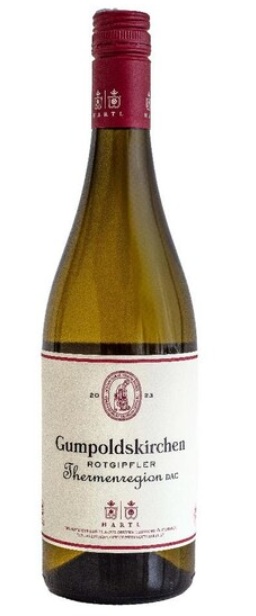
Hartl Rotgipfler Gumpoldskirchen Thermenregion DAC is made from 100% Rotgipfler.
The ancient Rotgipfler grape is packed with subtle fruit aromas of ripe peaches, juicy apricot and fresh pineapple. The inviting fruit aromas on the nose are complemented on the palate by orange zest, tangerine, vanilla and white pepper. Salty minerality supports a delicate structure with refined acidity.
The Rotgipfler grape has its name from the young shoots and veins of its leaves, which show a reddish (rot=red) color. It is indigenous to the Thermenregion and has become a rare variety, planted on about 120 ha only.
Acidity: 5.2 g/l
RS: 2.0 g/l
Excellent with intense spice (curry, chili, ginger, lemongrass) which can be found in Asian, Mexican and Italian cuisine.
Also counters its creamy texture with hollandaise and bechamel sauces, white meats, firm fish, poultry, Waldorff Salad or Eggs Benedict. A compliment also for mature cheeses, fig mustard and roasted nuts. Try Baked Camembert with honey, garlic and rosemary with a fresh baguette and salted butter.
Review:
"Pale golden yellow colour with silver reflections. Fresh yellow pears, delicate notes of meadow herbs and mango with fresh zest in the background. Medium body, fine nuances of white stone fruits, some melon, fine acidity, a lively food wine. - Peter MOSER"
- Falstaff (June 24th 2024), 92 pts
The winery carrys the name of the owner's family. It has been in the Hartl family for generations and winemaking has been in the region for centuries, dating back to roman times. As a traditional family business, Heinrich III is the seventh' generation winemaker in charge today. His parents still support him greatly, as well as his wife Marie-Sophie. Their children grow up on the property and learn about organic farming from their young days on.

Proidl Gruner Veltliner Ried Hausberg Kremstal DAC is made from 100 percent Gruner Veltliner.
Medium yellow green colour with silver reflections. Ripe tropical fruits, a bit of candied clementines, a bit of apricot, dark minerality, inviting bouquet. Juicy, elegant, fine acidity, mineral and salty, a touch of yellow apples, lingers long, versatile.
Review:
"Medium yellow green colour with silver reflections. Ripe tropical fruits, a bit of candied clementines, a bit of apricot, dark minerality, inviting bouquet. Juicy, elegant, fine acidity, mineral and salty, a touch of yellow apples, lingers long, versatile. - Peter MOSER"
- Falstaff (April 21st 2023, Kremstal DAC Cup 2023), 92 pts

Single vineyard Pinot Noir with a dark red brick color. Lots of ripe raspberries, wild strawberries, forest floor, cedar and a salty whiff of pine on the nose. The palate adds both herbal and peppery components as well as roasted coffee notes with a bit of caraway seed. Recommended to serve it slightly chilled in a round glass.
Braised beef with dumplings, lamb crown and brussels sprouts, roasted veal liver with pumpkin squash or tagliatelle with blue cheese.

Far Niente Post & Beam Napa Cabernet Sauvignon is made from 91% Cabernet Sauvignon, 6% Merlot, 1% Malbec, 1% Petit Verdot
At Post & Beam, we make wines of pure expression, built on generations of hands-on experience producing acclaimed Cabernet Sauvignon and Chardonnay. Backed by the expertise and legacy of Far Niente Wine Estates, we use time-honored techniques to make exceptional wines that can be enjoyed upon release. Our expertise of winemaking at the highest level has enabled us to create wines that seamlessly unite tradition and modernity.
The 2023 Post & Beam Cabernet Sauvignon opens with expressive aromas of red fruit, cassis, and blackberry jam, accented by hints of cedar and graphite. On the palate, the wine is youthful and vibrant, showing polished tannins and a core of dark fruit that brings both weight and freshness. Notes of brambly berry, mocha, and subtle spice carry through a long, mouth-coating finish, highlighting the vintage's balance and structure.

Proidl Senftenberg Riesling Alte Reben Kremstal DAC is made from 100 percent Riesling
Pale yellow-green, silver glints. Fine herbal savouriness, white peach, mineral nuances, followed by hints of lime, but still rather restrained. Complex, taut, green apple, fresh acidity, citrus-mineral reverberations, and exhibiting length. Definite ageing potential. .
Review:
"Very striking aromas of ripe melon, peaches and ginger. Impressive depth and elegant acidity on the medium-bodied palate. Very long, fresh, bright finish. Sustainable. Drink or hold. Screw cap."
- James SUCKLING (October 10th 2024), 93 pts

Pinot Noir is clearly the dedication of the Hartl Winery.
Strong garnet red, tending a little more towards brick-colored at the edge. On the nose, a complex abundance of herbs and dark berries, raspberry jam, thyme blossoms, dill, sage, violets and marzipan. Juicy on the palate, aromas of ripe raspberries, blueberries, rosehip tea and Mediterranean herbs, as well as hints of Assam tea. The elegant acidity gives a firm framework for the powerful body and highlights the fine-grained tannins. In addition to its classic ripe, typical Pinot fruit, the wine shows subtle notes of toast and smoked bacon in the long finish.
Pair with veal roast, leg of lamb with thyme and lemon, grilled Mediterranean vegetables, wild fowl like pheasant wrapped in bacon or duck with orange zest, prunes, roasted pumpkin and root vegetables.
Pinot Noir is clearly the dedication of the Hartl Winery.
Strong garnet red, tending a little more towards brick-colored at the edge. On the nose, a complex abundance of herbs and dark berries, raspberry jam, thyme blossoms, dill, sage, violets and marzipan. Juicy on the palate, aromas of ripe raspberries, blueberries, rosehip tea and Mediterranean herbs, as well as hints of Assam tea. The elegant acidity gives a firm framework for the powerful body and highlights the fine-grained tannins. In addition to its classic ripe, typical Pinot fruit, the wine shows subtle notes of toast and smoked bacon in the long finish.
Pair with veal roast, leg of lamb with thyme and lemon, grilled Mediterranean vegetables, wild fowl like pheasant wrapped in bacon or duck with orange zest, prunes, roasted pumpkin and root vegetables.
Review:
"Deep crimson red with a purple hue, brightening on the rim. Ripe red fruit, floral nuances, a hint of cranberries, raspberry pulp and candied mandarin zest. Juicy, good complexity, red berry fruit, an attractive sweetness, well-integrated tannins, lingers, delicate notes of nougat in the aftertaste, full-bodied, versatile. - Peter MOSER"
- Falstaff (June 24th 2024), 93 pts

The Special Club concept started in 1971. A dozen wine growers from some old families of Champagne had an idea to familiarize people with the originality of the “Champagne de Vigneron” (Champagne of wine grower), thanks to prestigious vintages.
In the beginning, they created an association called the “Club des Viticulteurs Champenois” and chose a bottle with a special shape, created exclusively for them & used only by then. In 1988, they changed the bottle and the label. In 1999, the Club changed its name to “Club Trésor of Champagne.”
The Club Trésors comprises 28 artisan wine makers, selected from the finest areas of the Champagne region, each one recognized for the quality of their work. The Club Trésors is the only organization in Champagne to select its members according to a set of unrelenting quality standards:
Roland Champion's Special Club selection has rich and structured aromas. Very pleasant and generous roundness, nice length in mouth. Golden color with buttery and fruity aromas. All the expression of a magnificent terroir for your most pleasurable moments.

Zena Crown Vineyard The Sum Pinot Noir is made from 100 percent Pinot Noir.
Massed from multiple vineyard blocks and clones, this wine has a timeless beauty that can be inherently understood by innate human nature. Wines of this stature, much like great art, reflect the complex and compelling relationship between humanity and Earth. Expressing Autumn, S (The Sum) leads with Gala
apple, Japanese plum, gun powder, dirt, and garlic power on the nose, with barely ripe cherry on the finish. 60% whole-cluster fermentation bolsters the wine, sustaining the tannic imprint and tension that uncoils like a rattlesnake strike on the finish.
Review:
A jeweled ruby hue, the 2021 Pinot Noir The Sum takes on fantastic crystalline and pure aromas of wild strawberries, raspberries, dark stones, menthol, and cedar spice, but it’s not very oaky. Medium-bodied, it has ripe tannins, with ripe acidity and a bit more modest acidity compared to the other wines from Zena Crown, but it’s long on the palate, with a more autumnal sensibility, and it’s going to show its best over the next 12-15 years.
-Jeb Dunnuck 95 Points



