
" We don't sell the wine without touching the vine "
| BUY MORE! SAVE MORE! | ||||||||||||||||||||
|
| Country: | Australia |
| Regions: | Barossa Valley Eden Valley |
| Winery: | Henschke |
| Grape Type: | Shiraz |
| Organic: | Yes |
| Vintage: | 2017 |
| Bottle Size: | 750 ml |
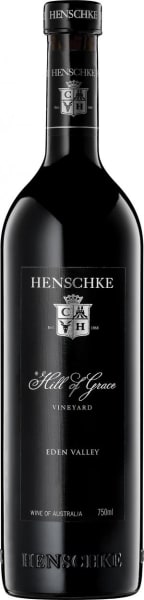
Dark crimson in color, with deep garnet hues. A concentrated array of aromas of mulberry, blackberry and dark plum indicate the richness to come, while savory and complex notes of charcuterie, cedar, sage and five spice tease the senses. Plush and velvety on the palate, the wine has intense fruit concentration with plum, red currant, blackberry and anise flavors, yet an enchantingly elegant and refined structure. Layers of silky tannins reveal the impressive depth of the wine before giving way to an incredibly long finish.
Review:
-James Suckling 99 Points
Henschke is one of Australia’s leading winemakers and grapegrowers. Henschke is recognised for its rich heritage, innovative spirit and commitment to handcrafting exceptional wines for 150 years. The Henschke family’s grapegrowing and winemaking tradition spans six generations, from outstanding sustainable vineyards in Eden Valley, Barossa Valley and the Adelaide Hills. The small-medium wine business has an annual crush of 700 tonne and employs around 50 staff. Prue Henschke manages the 105 hectares of vineyard, spanning from Eden Valley to Lenswood in the Adelaide Hills wine region.
Stephen and Prue continue to craft their white wines with a focus on purity, while their red wines have a strong focus on terroir, using traditional winemaking techniques.
“Prue and I are the current ‘keepers of the flame’. Just as earlier generations have done, we want to manage the vineyards and winery so they can be passed on to the next generation in better condition than we inherited them. The last 50 years have been an incredible journey for the Australian wine industry. Hill of Grace and Mount Edelstone are arguably the two oldest single vineyard wines produced in this country that tell the wine story of Australia. Our vision would not be complete without the expectation that future generations will uphold and perpetuate our belief that such ancient and unique single-vineyard sites can produce exceptional wines that are prized for their beauty and rarity.”
Stephen has retained the traditional approach to red winemaking used by his forebears. They handled the wines gently; used minimal racking, low sulphur, gentle fining and filtration, unlike what is so often done today for ‘cosmetic’ reasons. Stephen’s forebears took a puristic, holistic approach that had been passed down from generation to generation so it was almost intuitive. At the ’50 Years of Hill of Grace’ celebration in 2008 when Stephen tasted every vintage – some for the first time – he was struck by how closely he was emulating his father’s winemaking of the late 1950s and the 60s with his minimal intervention techniques.
With today’s advanced viticultural practices, of course, the greatest focus is given to the quality of fruit in the vineyard. And just as success of the reds is largely attributed to fruit quality, so too is the quality of the whites.
If Stephen shows a traditional influence with red winemaking, then it is true to say he has been influenced by his German studies for the whites. In a way he is using the best of Old World tradition coupled with New World technology. He retains a purity of fruit through careful handling of the juice and wine, which brings out the intense, varietally pure perfumes of the natural grape flavours. Combine this with the today’s technology – and taste the resulting whites – and it is clear that Stephen has created a new direction for Henschke that his forebears could never have imagined. In recent years they have welcomed next-generation family members into the business. Their son, Johann, has carried on the family winemaking tradition in his capacity as winemaker and viticulturist since 2013, as the fifth and sixth-generations transition through this important period of the transfer of knowledge, skills, and traditions.
With many of the challenges for the next generation already well-documented, Johann expects that innovation and careful strategic planning will be crucial tools for him and his peers to utilise. Above all, continuing on the traditional winemaking techniques which the Henschke family have used for generations, and ensuring that the Henschke continues to be nurtured in the same prudent way that it has always been, will allow it to be passed on to successive generations and to be held in the same high regard as it is today.

Dark crimson in color, with deep garnet hues. A concentrated array of aromas of mulberry, blackberry and dark plum indicate the richness to come, while savory and complex notes of charcuterie, cedar, sage and five spice tease the senses. Plush and velvety on the palate, the wine has intense fruit concentration with plum, red currant, blackberry and anise flavors, yet an enchantingly elegant and refined structure. Layers of silky tannins reveal the impressive depth of the wine before giving way to an incredibly long finish.
Review:
-James Suckling 100 Points

Henschke Mount Edelstone is made from 100 percent Shiraz.
Deep crimson with violet hues. Fragrant, spicy aromas of black pepper, sage, bay leaf and anise are interwoven with vibrant Satsuma plum, blackberry and blueberry, and gentle tarragon and cedar notes. The palate is complex and textured with rich and concentrated flavours of mulberry, blackberry and Satsuma plum, layered with sage, black pepper and star anise. The finish is beautifully balanced, with long, velvety tannins and excellent depth.
The beautiful and historic name Mount Edelstone is a translation from the German Edelstein meaning ‘gemstone’, a reference to small yellow opals once found in the area. The Mount Edelstone vineyard was planted in 1912 by Ronald Angas, a descendant of George Fife Angas who founded The South Australian Company and played a significant part in the formation and establishment of South Australia. Unusual for its time, the vineyard was planted solely to shiraz. The ancient 500-million-year-old geology in the vineyard has given rise to soils that are deep red-brown clay-loam to clay, resulting in low yields from the dry-grown, ungrafted centenarian vines. First bottled as a single-vineyard wine in 1952 by fourth-generation Cyril Henschke; by the time Cyril purchased the vineyard from Colin Angas in 1974, Mount Edelstone was already well entrenched as one of Australia’s greatest shiraz wines. Crafted by the Henschke family for over 60 years now, Mount Edelstone is arguably the longest consecutively-produced, single-vineyard wine in Australia.
Review:
-Decanter 98 Points

Medium garnet with crimson hues. Intense and evocative aromas of briary black currant, blackberry, blueberry, Satsuma plum, with lifted notes of sage, bay leaf, crushed flowering herbs, black pepper, anise and hints of cedar. The palate is rich and complex with well-defined blackberry, mulberry, red plum and black currant fruit, layered with sage, black pepper and bay leaf, and carried by fine-grained, mature, velvety tannins for an almost endless finish.
Pair with Lamb Loin.
Review:
-James Suckling 96 Points

The 2021 Shafer Hillside Select is crafted exclusively from grapes grown on Shafer's rugged hillside vineyards, where steep, rocky soils push the vines to produce low yields of intensely concentrated fruit. The unique terroir, combined with Napa Valley's hallmark climate of warm, sunny days and cool nights, contributed to a vintage with exceptional structure, lush tannins, and deep, vibrant color. The 2021 growing season exemplified these conditions, allowing the grapes to mature beautifully by early September, resulting in a wine with refined, pure aromas and flavors that reflect the richness and elegance of the vineyard.
“Such a beautifully balanced wine with tremendous staying power and expressive Stags Leap ironstone minerality with heady sagebrush and conifer notes with white pepper and walnut husk. The wine has an impressive depth of red-toned fruit on the mid-palate framed by tannins that practically dance across the palate, exuding length, tension, and power. Huckleberry and black cherry fruits, black truffle, dried violets, graphite, and salted dark chocolate are all framed by racy acidity, which keeps everything fresh and lifted. The 2021 releases mark Elias Fernandez's 38th vintage as Shafer's winemaker. He was hired by John Shafer in 1984, two weeks out of UC Davis.”
-Decanter, 99 Points
“The 2021 Cabernet Sauvignon Hillside Select was tasted as a barrel sample. Deep garnet-purple in color, it charges out with powerful notes of creme de cassis, plum preserves, and juicy blueberries giving way to an undercurrent of tar, candied violets, and star anise. The full-bodied palate is concentrated and impactful, delivering a firm, grainy texture and well-knit freshness to support the generous black and blue fruits, finishing long with loads of mineral and exotic spices sparks. This is impressive!”
-The Wine Independent, 98-100 Points
“As always, the 2021 Cabernet Sauvignon Hillside Select is 100% Cabernet Sauvignon that will spend 28 months in new barrels. Its deep purple hue gives way to a behemoth of a wine that has incredible cassis, black raspberry, and even blue fruits to go with loads of camphor, minty herbs, graphite, and darker chocolate. It's full-bodied, concentrated, yet pure, flawlessly balanced, and has a great finish.”
-Jeb Dunnuck, 97-99 Points
Review:
-The Wine Independent 100 Points
-Decanter 99 Points
-Joe Czerwinski (Robert Parker) 99 Points
-Decanter World Wine Awards 99 Points

The Barossa has a core of traditional growers of German Silesian descent, dating back five generations, staunchly continuing on the traditions of their forebears. Occasionally one or two parcels of fruit of overwhelming quality come over the weighbridge; this is such an example. This wine is sourced from up to 70-year-old, low-yielding shiraz vines from a selection of historical grower vineyards at Tappa Pass and Light Pass, growing in low-fertility Neoproterozoic soils more than 542 million years old, that range from red-brown earths to terra rossa. These vineyards provide shiraz fruit from both the Eden and Barossa Valleys of the Barossa zone, vinified in traditional open-top fermenters. Matured in 24% new and 76% seasoned French hogsheads for 18 months prior to blending and bottling.
Deep crimson with violet hues. Vibrant aromas of blueberry, blackberry, Satsuma plum and raspberry with hints of anise, crushed marjoram, cardamom, violets and cedar. The palate is rich, plush, and complex, with juicy blueberry and mulberry, spicy blackberry paste, and layers of fine velvety tannins creating incredible depth and length.
Review:
-Wine Pilot 96 Points

Hickinbotham Peake Cabernet Shiraz is made from 60 percent Cabernet and 40 percent Shiraz.
Named after the late Mr. Edward John Peake who established the first vineyard and orchard at Clarendon circa 1850. Blending Cabernet Sauvignon and Shiraz is a famous part of Australian winemaking history and whilst the individual components of this wine are mighty, the sum of The Peake’s parts is magnificent. The Cabernet shines aromatically with notes of blackberry pie and dark chocolate, while the Shiraz fills the mid-palate with black plum and toasty oak. Fine tannins and balanced acidity contribute to an incredibly long finish. The Peake continues to honor the legacy of this iconic Australian blend.
Review:
-Wine Advocate 96 Points

Salvadori Chianti Riserva DOCG 2017 is made from Sangiovese 90% , Merlot 10

Siro Pacenti Brunello di Montalcino Vecchie Vigne 2020 is made from 100% Sangiovese.
Siro Pacenti was founded in 1970 when Siro Pacenti established the Pelagrilli estate northeast of Montalcino; his son Giancarlo Pacenti took the reins in 1988 and, after training in Bordeaux, modernized the cellar and added the Piancornello vineyard on the appellation’s warmer southern side. The Vecchie Vigne, or “Old Vines”, bottling is drawn from the estate’s oldest Sangiovese plantings across both sites and aged in French barrique.
Brunello di Montalcino is made entirely from Sangiovese grown on the hills around the town of Montalcino in southern Tuscany, and is aged for years before release. The 2020 vintage is a touch more accessible in youth while keeping the concentration and firm, dusty tannic structure that give the wine its long aging runway.
Review:
-James Suckling 98 Points




