
" We don't sell the wine without touching the vine "
| BUY MORE! SAVE MORE! | ||||||||||||||||||||
|
| Country: | Australia |
| Region: | Eden Valley |
| Winery: | Henschke |
| Grape Type: | Shiraz |
| Organic: | Yes |
| Vintage: | 2017 |
| Bottle Size: | 750 ml |
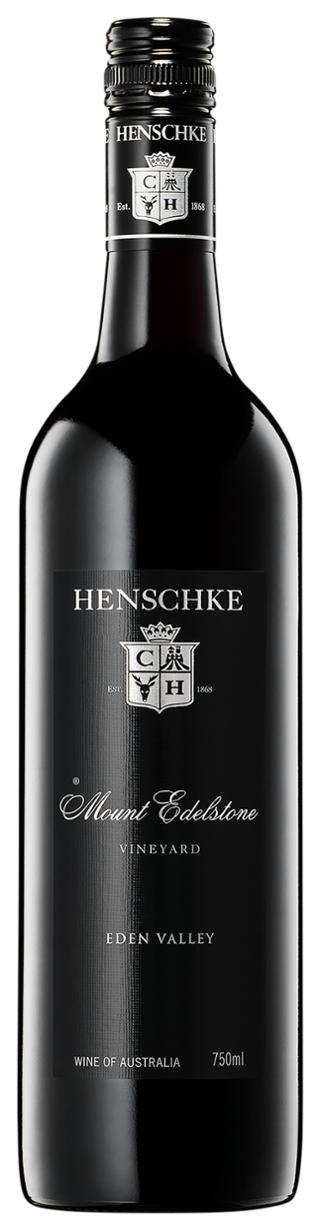
Henschke Mount Edelstone is made from 100 percent Shiraz.
Deep crimson with violet hues. Fragrant, spicy aromas of black pepper, sage, bay leaf and anise are interwoven with vibrant Satsuma plum, blackberry and blueberry, and gentle tarragon and cedar notes. The palate is complex and textured with rich and concentrated flavours of mulberry, blackberry and Satsuma plum, layered with sage, black pepper and star anise. The finish is beautifully balanced, with long, velvety tannins and excellent depth.
The beautiful and historic name Mount Edelstone is a translation from the German Edelstein meaning ‘gemstone’, a reference to small yellow opals once found in the area. The Mount Edelstone vineyard was planted in 1912 by Ronald Angas, a descendant of George Fife Angas who founded The South Australian Company and played a significant part in the formation and establishment of South Australia. Unusual for its time, the vineyard was planted solely to shiraz. The ancient 500-million-year-old geology in the vineyard has given rise to soils that are deep red-brown clay-loam to clay, resulting in low yields from the dry-grown, ungrafted centenarian vines. First bottled as a single-vineyard wine in 1952 by fourth-generation Cyril Henschke; by the time Cyril purchased the vineyard from Colin Angas in 1974, Mount Edelstone was already well entrenched as one of Australia’s greatest shiraz wines. Crafted by the Henschke family for over 60 years now, Mount Edelstone is arguably the longest consecutively-produced, single-vineyard wine in Australia.
Review:
-Decanter 98 Points
Henschke is one of Australia’s leading winemakers and grapegrowers. Henschke is recognised for its rich heritage, innovative spirit and commitment to handcrafting exceptional wines for 150 years. The Henschke family’s grapegrowing and winemaking tradition spans six generations, from outstanding sustainable vineyards in Eden Valley, Barossa Valley and the Adelaide Hills. The small-medium wine business has an annual crush of 700 tonne and employs around 50 staff. Prue Henschke manages the 105 hectares of vineyard, spanning from Eden Valley to Lenswood in the Adelaide Hills wine region.
Stephen and Prue continue to craft their white wines with a focus on purity, while their red wines have a strong focus on terroir, using traditional winemaking techniques.
“Prue and I are the current ‘keepers of the flame’. Just as earlier generations have done, we want to manage the vineyards and winery so they can be passed on to the next generation in better condition than we inherited them. The last 50 years have been an incredible journey for the Australian wine industry. Hill of Grace and Mount Edelstone are arguably the two oldest single vineyard wines produced in this country that tell the wine story of Australia. Our vision would not be complete without the expectation that future generations will uphold and perpetuate our belief that such ancient and unique single-vineyard sites can produce exceptional wines that are prized for their beauty and rarity.”
Stephen has retained the traditional approach to red winemaking used by his forebears. They handled the wines gently; used minimal racking, low sulphur, gentle fining and filtration, unlike what is so often done today for ‘cosmetic’ reasons. Stephen’s forebears took a puristic, holistic approach that had been passed down from generation to generation so it was almost intuitive. At the ’50 Years of Hill of Grace’ celebration in 2008 when Stephen tasted every vintage – some for the first time – he was struck by how closely he was emulating his father’s winemaking of the late 1950s and the 60s with his minimal intervention techniques.
With today’s advanced viticultural practices, of course, the greatest focus is given to the quality of fruit in the vineyard. And just as success of the reds is largely attributed to fruit quality, so too is the quality of the whites.
If Stephen shows a traditional influence with red winemaking, then it is true to say he has been influenced by his German studies for the whites. In a way he is using the best of Old World tradition coupled with New World technology. He retains a purity of fruit through careful handling of the juice and wine, which brings out the intense, varietally pure perfumes of the natural grape flavours. Combine this with the today’s technology – and taste the resulting whites – and it is clear that Stephen has created a new direction for Henschke that his forebears could never have imagined. In recent years they have welcomed next-generation family members into the business. Their son, Johann, has carried on the family winemaking tradition in his capacity as winemaker and viticulturist since 2013, as the fifth and sixth-generations transition through this important period of the transfer of knowledge, skills, and traditions.
With many of the challenges for the next generation already well-documented, Johann expects that innovation and careful strategic planning will be crucial tools for him and his peers to utilise. Above all, continuing on the traditional winemaking techniques which the Henschke family have used for generations, and ensuring that the Henschke continues to be nurtured in the same prudent way that it has always been, will allow it to be passed on to successive generations and to be held in the same high regard as it is today.

Domaine Jean Grivot Nuits-Saint-Georges Premier Cru Aux Boudots is made from 100 percent Pinot Noir.
Domaine Jean Grivot is among the great names in Burgundian wine. Étienne Grivot and his wife Marielle took over from Étienne’s father Jean Grivot in 1987. The vineyards are densely planted and farmed organically “sans certification” while the aim in the cellar is for balance and clear expression of terroir.
Jean Grivot’s 38.3 acres spread across 22 appellations with vineyards in the communes of Vosne-Romanée, Vougeot, Chambolle-Musigny, and Nuits-Saint-Georges. Besides the three grand crus, there are 8 premier crus including the much lauded Les Beaux Monts and Suchots in Vosne-Romanée. The grapes are completely de-stemmed and fermentation is spontaneous.
Nuits-Saint-Georges Aux Boudots 1er cru lies in the “Zone Vosnoise” or northern end of Nuits-Saint-Georges just below Les Damodes. It borders Vosne-Romanée Aux Malconsorts 1er just to its north. Its position slightly lower on the slope with deep soil full of pebbles results in a richer and fuller wine.
The grapes are destemmed and maceration à froid usually lasts just a day or two. The alcoholic fermentation is spontaneous and malolactic fermentation occurs in barrel. Depending on the vintage, the proportion of new oak is around 30-60% for the premier crus.
The wine shows aromas and flavors of red berries, herbs, and purple flowers. The palate is rich with ripe fruit and medium weight with bright acidity and fine tannins. Aging in 30-60% new Burgundian pièce brings notes of vanilla, toast, and baking spices.
Red Burgundy might be the world’s most flexible food wine. The wine’s high acidity, medium body, medium alcohol, and low tannins make it very food-friendly. Red Burgundy, with its earthy and sometimes gamey character, is a classic partner to roasted game birds, grilled duck breast, and dishes that feature mushrooms, black truffles, or are rich in umami.
Review:
-Jasper Morris MW 95 Points
-Neal Martin 95 Points
-Decanter 94 Points
-Burghound 92 Points

Pago de Carraovejas Cuesta Liebres is made from 100% Tinto Fino. The plot is located on a terraced hillside located at 900 m above sea level with slopes that range between inclines of 30% and 40%. Red cherry color with purple hues. Ripe fruit aromas, vanilla notes. Suave and unctuous in the mouth. A strong and noble character.
The harvest is carried out by hand using small crates and after passing through a refrigerated container it is transferred into tanks via gravity. The alcoholic and malolatic fermentation is carried out in small French “Haute Futaie” Oak casks with unique and original local yeasts and fermenting bacteria from the vineyard itself, to bring out the very best of the terroir, respecting the uniqueness of each and every vintage. Clarified with egg whites and bottled by gravity with natural cork stoppers.
Review:
-Jeb DUNNUCK 100 Points
-Wine Spectator 94 Points

Holocene The Black Square Cabernet Sauvignon is made from 100 percent Cabernet Sauvignon.
There is something ethereal about Cabernet Sauvignon grown in the cobblestone soils of the Walla Walla Valley. This region offers aromatic exuberance, elegance, finesse, a polished texture, layered complexity, and remarkable length. It is a place where one can craft a singular, stand-alone example of this varietal—unique not only in the United States but worldwide—while still echoing some of our favorite wines from Bordeaux.
In 2022, Winemaker Todd Alexander embarked on a new (yet familiar) journey that he had been patiently awaiting the perfect moment to explore. The Black Square is in its inaugural vintage, and this 2022 is 100% Cabernet Sauvignon grown in the Rocks District of Milton-Freewater, Oregon, which is part of the Walla Walla Valley.
The Black Square embodies elegance and grace framed by great structure, supple texture, and acidity to ensure longevity. It shows ample fruit with complex savory notes. This is not a heavy wine that is monolithic and dull—there are already plenty of those available. This wine offers a unique expression of Cabernet; it may be the most delicious wine Todd Alexander has ever crafted, venturing into new territory for Rocks District Cabernet Sauvignon.
Review:
-Jeb Dunnuck 99 Points
-Wine Enthusiast 98 Points
-Decanter 97 Points
-Decanter World Wine Awards 97 Points

Falletto di Bruno Giacosa Barolo is made from 100 percent Nebbiolo.
The 2020 growing season began with an early budbreak following a mild winter with regular rain and above-average temperatures. A steady, well-distributed water supply and temperatures at seasonal averages allowed the vines to move through every phenological phase evenly, and dry conditions kept fungal pressure (oidium and peronospora) firmly under control. The result is a vintage of beautifully balanced, mid-weight Barolo prized for grace, translucence and early appeal.
The fruit comes from the Falletto vineyard in the village of Serralunga d'Alba. In most vintages this is the most approachable of the Giacosa Barolos, showing the estate's sweetly fruited Nebbiolo in classic style.
Reviews:
The depth and beauty of this are so enticing and attractive that you want to drink the whole bottle. It's medium- to full-bodied with cherries, strawberries and white truffles. Juicy and precise, with a real presence and complexity as it opens. Best after 2027, but already gorgeous.
-James Suckling 97 Points

Clos Saint-Jean is a 41-hectare estate in Châteauneuf-du-Pape run by brothers Vincent and Pascal Maurel. Considered by many critics and wine-writers as the preeminent estate espousing the modern style of winemaking in Châteauneuf, this cellar is one of the oldest in the region, having been founded in 1900 by the greatgreat-grandfather of Vincent and Pascal, Edmund Tacussel. A short time after its founding and well before the AOP of Chateauneuf-du-Pape was created in 1923, Edmund began bottling estate wines in 1910.
The farming at Clos Saint-Jean is fully sustainable due to the warm and dry climate, which prevents the need for chemical inputs. Instead, Vincent and Pascal employ organic methods for pest control, mainly pheromones, to prevent pests from taking up residence in their vines, a process called amusingly enough in French, confusion sexuelle. The vines tended manually, and harvest is conducted in several passes entirely by hand.
Deus ex Machina is a literary and dramatic term for a miraculous intervention that interrupts a logical course of events in a plot or play. A suitable name for a cuvée that had it’s start in the torrid vintage of 2003 when Philippe Cambie and Vincent Maurel made the decision to harvest at the end of September, weeks after their neighbors. Deus ex Machina is a blend of old vine Grenache from La Crau, aged in tank with equally ancient Mourvedre from the sandy soils of BoisDauphin aged in demi-muid. Deus ex Machina is only made in the best vintages.
Review:
Lastly, the 2022 Châteauneuf Du Pape Deus-Ex Machina shows a similar profile to the Combes des Fous, yet it brings another level of tannins and concentration. Kirsch liqueur, white flowers, sandalwood, cured meats, and graphite notes all shine here, and it's full-bodied, has a deep, layered, powerful, yet weightless profile, lots of ripe tannins, and a blockbuster of a finish. This ripe, sexy, seamless, incredibly impressive beauty will compete with anything in the vintage. As usual, this cuvée is 60% Grenache and 40% Mourvedre, which is brought up in roughly 40% new demi-muids.
Review: Jeb Dunnuck 97 Points

2023 Shiraz Viognier The Shiraz Viognier is our flagship, a careful selection of the best of the Shiraz Viognier parcels we craft from our Murrumbateman vineyard.
Opulent aromas of roses, violets and layered spices, ripe berries of every hue. Perfectly formed tannins frame complex fruit flavors across the palate. This wine will age magnificently.
Enjoy Clonakilla Shiraz Viognier with roasted chicken and sauteed mushrooms.
Review:
-Erin Larkin (Robert Parker) 97 Points
-James Suckling 96 Points

Charles Krug Family Reserve Howell Mountain Cabernet Sauvignon is made from 100 percent Napa Cabernet Sauvignon.
Rising 1,650 feet above the Napa Valley floor on the southwestside of Howell Mountain, the Family Reserve Howell MountainCabernet Sauvignon sits above the fog line. The distinctiveclimate, along with volcanic and iron-rich red soils, producefruit with great balance and intensity.
Review:
-Vinous 92 Points

Klipsun Cabernet Sauvignon Red Mountain is made from 84% Cabernet Sauvignon, 4% Merlot, 4% Malbec and 8% Syrah.
The 2017 vintage started out with a cool, wet winter, with significantly above average snowfall in eastern Washington. Red Mountain had a 24% increase in rainfall in 2017 over the 10 year average. Going into spring, the cool trend continued. As a result, bud break at Klipsun was behind the historical average and significantly behind the most recent warm vintages of 2013 2016. Bloom was also slightly delayed. Because of the cool weather, set was lighter than usual which translated into significantly less fruit in 2017.
The early part of the summer saw average temperatures followed by above average temperatures in July and August. As a result, he at accumulation was a bit above average for the season, despite the cool start. And because of the smaller than normal yield, harvest began right on schedule, perhaps even a bit early for some of the whites. In the second half of September, when Klipsun traditionally harvests all the reds, the temperatures cooled considerably, which delayed ripening. This allowed for luxurious amounts of hang time without the threat of increased sugar accumulation, stretching harvest into the first week of October. A s a result, all fruit going into the 2017 Klipsun Cabernet Sauvignon could be picked at perfect sugars levels with great fruit maturity and flavors. Overall, the quality of t he 2017 harvest is as high as the 2016. However, the style is slightly different. The 2017 wine has a firmer structure, more spice & mocha in the nose and will take a few mo re years than the 2016 to reach a perfect balance between fruit and tannin.
Review:
The 2017 Cabernet Sauvignon Red Mountain is composed of 84% Cabernet Sauvignon, 4% Merlot, 4% Malbec and 8% Syrah, which immediately emanates with aromas of dark roasted espresso bean, toasted oak, dried tobacco and dusty black fruit tones of cassis, currant and blackberries covered in dark cocoa powder. Full-bodied, generous in complexity and still tight in the mouth, the wine unpacks layers of cedar and vanilla tones with dusty purple flowers and bitter dark chocolate across the mid-palate, giving way to fine-grained tannins that will loosen with time. As the wine sits on the palate, the 100% French oak regimen is on full display for all to see. The wine lingering long and continues to evolve in the mouth, ending with a drying finish that highlights the oak and terroir. It’s still a baby, and I would keep it in the cellar for another few years before popping the cork—this will effortlessly coast for more than a decade. The 2017 vintage marks the second release of this wine, with 6,300 bottles produced. It comes from its namesake vineyard, first planted in 1984 on Red Mountain. I’m keeping my eye on this producer. I’m impressed, and even though the oak may be a bit much at the moment, it's still delicious. - Wine Advocate 94+ Points
-Jeb Dunnuck 94 Points

Medium garnet with crimson hues. Intense and evocative aromas of briary black currant, blackberry, blueberry, Satsuma plum, with lifted notes of sage, bay leaf, crushed flowering herbs, black pepper, anise and hints of cedar. The palate is rich and complex with well-defined blackberry, mulberry, red plum and black currant fruit, layered with sage, black pepper and bay leaf, and carried by fine-grained, mature, velvety tannins for an almost endless finish.
Pair with Lamb Loin.
Review:
-James Suckling 96 Points

Mount Veeder Winery Cabernet Sauvignon is made from 85% Cabernet Sauvignon, 12% Merlot, 2% Malbec, 1% Cabernet Franc.
The Mount Veeder Winery Cabernet Sauvignon is a deep ruby color. Aromas of black plum, blackberry, fig and ripe cherry, framed by toasted oak and caramel. A hint of dried herb and floral notes. The concentrated fruit flavors and integrated tannins introduce a rich, full-body structure. Sweet fruit is balanced with acidity and savory notes of leather and wet stone, ending with a lengthy finish of dark berry, baking spice, and mocha.
Crafted in celebration of our 50th anniversary, the 2023 Mount Veeder Winery Napa Valley Cabernet Sauvignon is thoughtfully sourced from premier vineyards across Napa Valley, including fruit from our mountain estate. Complex without being cumbersome, this wine has successfully captured the characteristics of the growing season with its intense aromatics and lively acidity.
This vintage reflects our good fortune in working with growers who share our commitment to quality, and we look forward to strengthening these relationships to ensure consistently exceptional wines year after year. Our final blend includes a portion (11%) hailing from our Mount Veeder vineyards, helping link the Napa Valley bottling to the storied past of Mount Veeder Winery.
Review:
-Wine Spectator 93 Points
-James Suckling 94 Points

Inspired by the historical winemaking techniques of Erni Loosen’s great-grandfather, the Appassionata Riesling GG is made in the same way as the Dr. Loosen Grosses Gewächs (“Great Growth”) Rieslings he produces in Germany. The GG designation indicates a dry-style wine from a vineyard of special distinction — in this case, the old-vine Medici vineyard, planted in 1976. We farm this exceptional site, which is just a few miles east on the Chehalem Mountain ridge.
The fruit for this wine was harvested from old Rieslng vines (planted in 1976) in the Medici Vineyard, which is also in the Chehalem Mountains AVA, just a few miles from the winery. We lease this vineyard and have been farming it organically since 2015. The wine was fermented in a 3,000-liter German oak cask, and rests on the full lees for 12 months before bottling. The extended lees contact allows the wine to clarify and find its own harmonious balance naturally.
Production notes:
Whole-cluster pressing; natural fermentation in a neutral 3,000-liter oak cask; matured on the full lees for 12 months; no bâtonnage.
Review:
If you prefer a thinking person's wine you'll run out of superlatives to describe this Riesling from Dr Loosen's Oregon project with J Christopher Wines. From a personal favourite, the old vines of the Medici Vineyard, the winemaking shows serious patience and determination. Fermented in a 3,000-liter, neutral oak German Fuder cask. It rests on the full lees for two years and is then held in bottle for three to five years before release. Aged, savoury and delicious. Aromas are savoury and saline. Lanolin, dandelion, seafoam, and beeswax with hints of fresh herbs and dried lemon peel. The palate is brilliant, savoury and bright and complex. Energetic flavours of wet slate, savoury bee pollen, white tea and lanolin notes. The finish offers crushed stone vibrancy.
-Decanter 93 Points
"This energetic and fully dry Riesling is made in the same way as the Dr. Loosen Grosses Gewächs (“Great Growth”) Rieslings are produced in Germany and was raised in a 3000-liter oak cask. The 2017 Riesling GG Chehalem Mountains offers a pale straw hue and is forward and expressive with aromas of flint, ripe apricot, petrol, and wild herbs. Medium-bodied, it offers a fantastic, rich core of concentration along with a mineral, soft, stony texture and a long finish. If opening now, it will do well to decant this serious style of white. It’s certainly another age-worthy wine from Ernst Loosen. Drink 2025-2045."
-Jeb Dunnuck 96 Points

Avennia Sestina Cabernet Sauvignon is made from 77% Cabernet Sauvignon, 17% Merlot, 6% Cabernet Franc.
The story of this wine - The Sestina is an ancient form of poetry from Medieval France. Just as a modern poet can fill this form with new expressions, Avennia uses the traditional Bordeaux blend to express Washington. Sestina is their vision for an old vine, complex blend where all of the components complement each other. This wine is designed for the cellar, so the emphasis is on structure, balance, and complexity.
Winemaker Tasting Notes - “Good deep ruby/garnet color, with aromas of black cherry, fresh black currant, dark mocha, cigar box, and graphite. The palate is lively and dense with mountain berries, mocha, vanilla honey, damp earth, and wildflowers. The finish shows a distinct chalky minerality and beautiful tension. This is a classically balanced and ageworthy Sestina. Drink 2025-2040.” - Chris Peterson, Winemaker
Review:
-Jeb Dunnuck 95 Points
-Anthony Mueller (Robert Parker) 94 Points
-Stephen Tanzer (Vinous) 93 Points

Argot Napa Cabernet Sauvignon Sugarloaf Vineyard is made from 100 percent Cabernet Sauvignon.
Sugarloaf’s terroir continues to impress with its expression of classically-styled Napa Valley Cabernet Sauvignons — impeccably pure black and red fruit character; broad, rich, perfectly ripe tannins; classic Napa Valley notes of cigar leaf, eucalyptus, and freshly-tilled earth; and definitive complexities of clove, all-spice and bay leaf. Having assessed past vintages with a few years of age, we have come to greatly value the significant reward Sugarloaf delivers after a few years in the cellar.
From Block 6, an acre of fiercely steep, ferociously rocky hillside, located in Napa’s far south-eastern foothills, deeply affected by the cooling influences of San Pablo Bay. One of the latest harvests in all of Napa Valley each vintage. Mother Nature was kind to this site in 2019, being our most bountiful year here ever. With perfect set, and vines displaying great health, this normally stingy hillside delivered superlative quality, without restraint of yield. After a slow start in the Spring, 2019’s particularly warm September and October played beautifully to the vineyard’s strengths, and delivered a classic Halloween-time harvest.
Review:
-Lisa Perrotti-Brown (Robert Parker) 97 Points

Antonio Camillo Ciliegiolo 2025 is made from Ciliegiolo. It comes from the Tuscan Maremma, near Capalbio on the southern coast of Tuscany, where Antonio Camillo has built his name as the great champion of Ciliegiolo — the cherry-scented native red of the Maremma. After years making the wines at Poggio Argentiera, he struck out on his own in 2006 to work roughly nine hectares of mostly old vines with a light, low-intervention hand.
This is his benchmark everyday Ciliegiolo: hand-harvested, fermented in steel and left on the skins to draw out color and perfume. Expect bright, juicy red and black cherry, a lift of violets and wild herbs, and soft, supple tannins that make it endlessly drinkable with a chill or a plate of pasta.



