
" We don't sell the wine without touching the vine "
SALE!
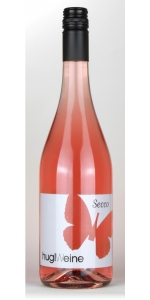
Hugl Zweigelt Secco Rose is made from 100% Zweigelt
Despite its relative youth, Zweigelt is actually an Austrian classic. This variety was created in 1922, when Dr. Fritz Zweigelt crossed two grapes - St Laurent and Blaufränkisch. Originally, it was intended for the new variety to be called Rotburger, referring to the place where it was born, Klosterneuburg. But this name never took hold, and instead, Zweigelt was named after the man who was the key in its development.
Today, Zweigelt is the most widely planted red variety in Austria, growing in nearly 9% of this country's vineyards. It is a robust grape, highly resistant to dryness, frost and various diseases.
Lively, fruity bouquet of strawberry, cherry and floral aromas. Refreshing and beautifully balanced, this is a great wine to enjoy as an aperitif. This is a Secco for the whole day and the whole night
The wine is made of 100% Zweigelt grapes of 15-35 years old (25 years old in avarage).
The soil is mainly loam and loess.
It is made using the Charmat method and the wine is aged for 3 months on the lees in stainless steel tanks.
The wine is slightly filtered before bottling.
Drink by itself as an aperitif, it is also a great picnic or brunch wine and will be a good pick to celebrate any occasion.
Despite its relative youth, Zweigelt is actually an Austrian classic. This variety was created in 1922, when Dr. Fritz Zweigelt crossed two grapes - St Laurent and Blaufränkisch. Originally, it was intended for the new variety to be called Rotburger, referring to the place where it was born, Klosterneuburg. But this name never took hold, and instead, Zweigelt was named after the man who was the key in its development.
Today, Zweigelt is the most widely planted red variety in Austria, growing in nearly 9% of this country's vineyards. It is a robust grape, highly resistant to dryness, frost and various diseases.
The wine boasts a pale rosé color, it has plenty of fruity aromas, with red cherry and wild strawberry flavors. It is medium-bodied, but it still have a nice long and pleasant finish with a light cinnamon type of spice to it.
Only the best grapes are harvested with a lot of experience and know-how and further processed. The grapes are fermented directly gently pressed and cooled. The fermentation takes place exclusively in stainless steel tanks.
Perfectly at home on any picnic, delicious with fried chicken, and tames the heat when paired with spicy dishes. There is also a slight watermelon note that makes it perfect for spring and summer. A great pairing with barbecued shrimp.
Despite its relative youth, Zweigelt is actually an Austrian classic. This variety was created in 1922, when Dr. Fritz Zweigelt crossed two grapes - St Laurent and Blaufränkisch. Originally, it was intended for the new variety to be called Rotburger, referring to the place where it was born, Klosterneuburg. But this name never took hold, and instead, Zweigelt was named after the man who was the key in its development.
Today, Zweigelt is the most widely planted red variety in Austria, growing in nearly 9% of this country's vineyards. It is a robust grape, highly resistant to dryness, frost and various diseases.
The wine boasts a pale rosé color, it has plenty of fruity aromas, with red cherry and wild strawberry flavors. It is medium-bodied, but it still have a nice long and pleasant finish with a light cinnamon type of spice to it.
Only the best grapes are harvested with a lot of experience and know-how and further processed. The grapes are fermented directly gently pressed and cooled. The fermentation takes place exclusively in stainless steel tanks.
Perfectly at home on any picnic, delicious with fried chicken, and tames the heat when paired with spicy dishes. There is also a slight watermelon note that makes it perfect for spring and summer. A great pairing with barbecued shrimp.
Despite its relative youth, Zweigelt is actually an Austrian classic. This variety was created in 1922, when Dr. Fritz Zweigelt crossed two grapes - St Laurent and Blaufränkisch. Originally, it was intended for the new variety to be called Rotburger, referring to the place where it was born, Klosterneuburg. But this name never took hold, and instead, Zweigelt was named after the man who was the key in its development.
Today, Zweigelt is the most widely planted red variety in Austria, growing in nearly 9% of this country's vineyards. It is a robust grape, highly resistant to dryness, frost and various diseases.
The wine boasts a pale rosé color, it has plenty of fruity aromas, with red cherry and wild strawberry flavors. It is medium-bodied, but it still have a nice long and pleasant finish with a light cinnamon type of spice to it.
Only the best grapes are harvested with a lot of experience and know-how and further processed. The grapes are fermented directly gently pressed and cooled. The fermentation takes place exclusively in stainless steel tanks.
Perfectly at home on any picnic, delicious with fried chicken, and tames the heat when paired with spicy dishes. There is also a slight watermelon note that makes it perfect for spring and summer. A great pairing with barbecued shrimp.
Hugl Zweigelt Classic is made from 100 percent Zweiglt.
Despite its relative youth, Zweigelt is actually an Austrian classic. This variety was created in 1922, when Dr. Fritz Zweigelt crossed two grapes - St Laurent and Blaufränkisch. Originally, it was intended for the new variety to be called Rotburger, referring to the place where it was born, Klosterneuburg. But this name never took hold, and instead, Zweigelt was named after the man who was the key in its development.
Today, Zweigelt is the most widely planted red variety in Austria, growing in nearly 9% of this country's vineyards. It is a robust grape, highly resistant to dryness, frost and various diseases.
The wine boasts a concentrated color, fruity and spicy aromas, cherry flavors. Full-bodied, smooth and round, the wine is an ideal food companion.
Cortenova Prosecco Spumante NV is 100 percent Prosecco
This Prosecco comes from the highly esteemed area of Valdobbiadene. There are two recognized quality zones for Prosecco, Conegliano and Valdobbiadene. Of the two, Valdobbiaden has always been recognized a having the superior quality due to its naturally higher acidity and its more northern location.
The vineyards lie at 350 meters above sea level. The vines are an average of 25 years old.
The grapes are soft pressed and the free run juice is placed in stainless steel. There is a brief maceration period of 4 hours. Specially selected yeast are added and fermentation is controlled at 20° C. There is no malolactic fermentation and the wine is transferred to autoclaves and a second fermentation is induced following the Charmat tradition. When the desired atmospheric pressure is reached (usually 1 month) the wine is bottled.
Light straw colored with greenish reflections. The perlage is fine and continuous. Fragrant bouquet full of flowers and almonds. In the palate it is fresh and clean with a soft body and a pleasing sparkle. The fruit is subtle and reminiscent of apples and pears with a hint of almond in the background. The finish is inviting.
Can be drunk by itself as an aperitif or with seafood and fish, pastas with cream sauces, chicken and fresh cheeses.
Review:
"Pale straw color. Bright, attractive aromas and flavors of roasted lemons and kiwis, green nectarine, nougat, and grass with a soft, vibrant, spritzy, dry-yet-fruity medium body and a tingling, complex, medium-length spiced clementine and delicate herbal honey finish with silky, crunchy, fruit tannins and no oak. A delicious, nicely layered Prosecco with an elegant style." - Beverage Testing Institute (November 23rd 2015), 91 pts, Best Buy
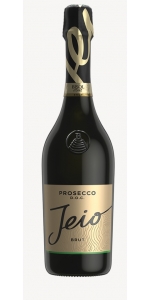
The Jeio line is inspired by the influential Desiderio Bisol, whose wife lovingly referred to him as Jeio. The father of the current generation of Bisol, Desiderio was dedicated to product quality, acquiring only the steepest plots. While considerably more difficult to work, these plots are ideal for vine cultivation. As a result of his vision, the Glera cultivated in these vineyards is especially rich in malic acid, making the final wine more dynamic and evolved. Glera sourced for the Prosecco Brut comes from vineyards in the DOC area just outside Valdobbiadene, taking advantage of the altitude and unique character.
Review:
A fresh and lively Prosecco with lots of lemon and lime character, as well as spiced pears. Medium body, lovely fruit and a fresh finish. Bottled in 2018. Drink now.
-James Suckling 91 Points
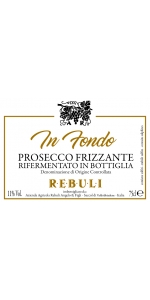
description: This is a Pét-Nat Prosecco.
Pét-Nat is short for Pétillant Naturel (French for Naturally Sparkling).
It is the same vinification method as "Methode Ancestrale" used in Bugey Cerdon.
The wine is bottled before the end of the first alcoholic fermentation. Unlike Champagne method (in which the base wine completes his first fermentation in tank and only the secondary fermentation takes place in the bottle adding sugar and yeast also known as liqueur de tirage, which will requires the wine to be disgorged), Pét-Nat method doesn't imply the wine will be filtered or disgorged upon fermentation.
This gives Pét-Nat its light and fizzy mouthfeel, generally with a little sweetness and low alcohol. Most of the times, bottles are slightly cloudy from the presence of lees.
The wine is vibrant with complex lemon citrus, pear and verbena. It finishes dry with delicate yeasty notes.
Alcohol 11,0% vol.
Acidity 5,1 g/l.
Residual sugar 0 g/l
PH 3.3
Pressure 2.4 atm
Area of origin: Vittorio Veneto
Soil: calcareous
Varietal: 95% Glera (known as Prosecco)
Harvest: Manual, with selection of the grapes.
Vinification: Soft pressing with bladder membrane press, settling of must, fermentation at controlled temperature
Fermentation: Processed according to the traditional method of fermentation in yeast bottles. Is normal his natural “bottom” deposit in the bottle, which is why it is brilliant or velvety straw yellow if shaken; the bubble development is brilliant.
Extremely digestible wine, suitable for casual moments or tasting the typical sausages of the local tradition such as the sopressa. Great with pizza daisy.
Review:
"Showing orchard fruit aromas, this wine offers exuberant fruit with light lemon and herbal notes. It offers bright acidity and finishes complete dry. One of the best Pet-Nats we’ve had this year. Made of 95% Glera, this is a sparkling wine made the ancestrale method where the wine is bottled before the end of fermentation, resulting in dissolved carbon dioxide that lends a light sparkling quality to the wine."
- International Wine Review (Champagnes & Sparkling Wines for the Holidays: The Best of 2018), 90 pts
Rebuli Prosecco is a noble wine with a bright straw color, made from a selection of Prosecco grapes, which highlights the flavors and perfumes of the area. It is ideal for important occasions and as an aperitif. It is also excellent with risotto and noble meat.
"Pretty silvery straw color. Orange, juicy lemon, peach aromas with a crisp, lightly effervescent, fruity-yet-dry medium body and a long, tangy mineral, starfruit and spice accented finish. Exceptional flavorful, balanced and stylish. A perfect aperitif."
World Wine Championship Award: GOLD MEDAL
Beverage Testing Institute - May 9th 2011 - 91 points (Exceptional)
"Toasty, which makes this a little more champagnelike and perhaps more familiar to consumers. Nice balance; quite refreshing."
- Washington Post (Dec 08) - VERY GOOD
"This wine is so much fun that it seems vaguely illegal. Lightly floral in aroma, it shows fresh but restrained fruit flavors. The effervescence is abundant but soft, yet the wine remains structural and refreshing thanks to crisp acidity. Clearly the top pop for parties." - Washington Post (2006)
"Very pale straw. Very fine mousse. Nice elegant bead. Aromas of fresh bread dough, pear, touch of marzipan. Light attack. Semi-dry. Licorice note on palate. Soft, light. Simple, light pear flavors."
- International Wine Review (Dec 08)
This large Spumante estate with just over 100 acres of vines produces high-quality Prosecco. The non-vintage Rebuli Prosecco di Valdobbiadene Extra Dry is light-bodied and flowery with plenty of white peach, orange and pineapple notes in its exotic aromatics and flavors. It is off-dry, but most consumers would consider it to be a dry sparkling wine. Drink it over the next 12-18 months.-Robert Parker 90 Points
Visual aspect: Straw yellow color with persistent mousse.
Aromas: Fruity notes of delicious Golden apple and Kaiser pear with a pleasant citrus background.
Mouthfeel: The wine is well balanced with a nice acidity and minerality, combined with freshness and complexity.
The finish is long and very pleasant.
Area of origin: Valdobbiadene, Conegliano, Vittorio Veneto.
Soil: calcareous clayey
Varietal: Glera (known as Prosecco)
Harvest: manual harvest with grape selection
Winemaking: off skins by gentle pressing.
Primary fermentation with controlled temperature by selected yeats.
Refinement :Stainless Steel tanks
Foaming: secondary fermentation in "autoclave" (cuve close) at a controlled temperature with selected fermentation as long as a 5 bar pressure is reached.
Fining: 60 days
Training system: autochthonous called "capuccina modificata"
Bottling: isobaric bottling after sterile filtration.
It is ideal for important occasions and as an aperitif. It is also excellent with risotto and noble meat.
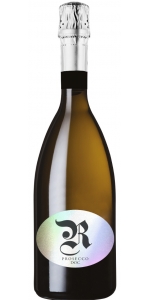
Rubus Prosecco Organic is made from 100% Glera.
The Rubus Project was created by Fran Kysela as a way to source & sell incredible wines at value prices. All wines in this international project are hand-selected by Fran Kysela. Rubus wines are fruit driven, true-to-type values that over deliver - a true representation of quality for the consumer at an excellent price.
Clean, light, fresh & airy. 100% Glera, Certified Organic + vegan friendly.
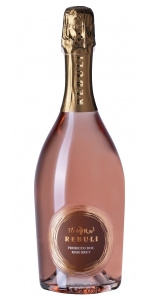
This pale rosé colored spumante boasts a rich mousse and persistent bubbles. The intense and fruity bouquet of raspberry, wild strawberry, pink grapefruit is intertwined with almond, rose petals and balsamic notes. The palate is fresh, well balanced and harmonious with full flavors of strawberry fruit and a long finish.
Hugl Gemischter Satz is made from 50% Grüner Veltliner, 40% Gelber Muskateller and 10% Riesling.
Gemischter Satz" has a long history in Austria. It is a field blend where different grape varieties are picked at the same time and vinified together:
In Vienna, the tradition of planting different and complementary grape varieties together in a vineyard – then harvesting and fermenting them together as well – has survived to the present day as Gemischter Satz. Thanks to the dynamic efforts of ambitious winegrowers, this traditional rarity has grown in stature and recognition to become the calling card of viticulture in Austria’s capital city.
Gemischter Satz is very popular in Vienna’s Heurigen (the Viennese term for wine taverns). Historically, Heurigen were simple places, where vineyard owners would open their doors during wine season to serve glasses of this years wine and juices to guests. At most, a plate of cold meats and cheese could be served along with the delicious wine.
For the traditional wines of Wiener Gemischter Satz - the planting of different grape varieties together in one vineyard - a unique style profile has been developed; a style that reflects the wine's origin-typical aromas and flavours. The regulation for the Wiener Gemischter Satz DAC requires that at least three white quality wine varieties must be planted together in one vineyard that is listed in the Viennese vineyard register as Wiener Gemischter Satz. The highest portion of one grape variety must be no more than 50%; the third highest portion must be at least 10%. Wines without vineyard indication must be dry and without any prominent wood flavour. The Wiener Gemischter Satz DAC can be marketed with an indication of vineyard site also. Single vineyard wines do not necessarily have to correspond with the “dry” taste indication, and they cannot be released for sale prior to March 1st of the year following the harvest. Minimum alcohol % of 12.5%.
Adds an enthusiastic Herbert Schilling, head of Vienna's Regional Wine Committee: “With the Wiener Gemischter Satz DAC, we've achieved a milestone in the consistent, years-long quality policy for wine growing in Vienna. The new regulations sharpen the origin profile of Wiener Gemischter Satz and, at the same time, reflect Vienna´s diversity in the glass.”

Hugl Gruner Veltliner (liter) is 100% Grüner Veltliner
This is an intense and concentrated wine offering pleasant citrus and grapefruit aromas, exotic tropical fruits with a hint of freshly ground white pepper. Full-bodied dry wine with a firm mineral backbone.
A firm mineral backbone, gives it the strength of character to work well with many cuisines.

Hugl Rosselberg Horse Hill Gruner Veltliner is made from 100% Grüner Veltliner
A powerful, very ripe Grüner Veltliner, intense and full-bodied with a long finish.
The ripe grapes are processed very gently with 12 hours on the skins and then vinified in Stainless Steel tanks. No Oak.
A firm mineral backbone, gives it the strength of character to work well with many cuisines.
SALE!
Hugl Sparkling Gruner Veltliner NV is made from 100% Grüner Veltliner.
Did you know that most of the base wines for Austrian sparkling wines come from our region? Poysdorf lies on the same line of latitude as Champagne and the climate is similar in both Champagne and the Weinviertel. This gives us enough reasons to expand our portfolio with a top-quality “sparkler”. Of course, it can only be a Veltliner-Sekt!
Pale golden color with a glint of green. Yellow fruit aromas, dry with a soft, juicy structure and a pleasing streak of minerality. Notes of crisp apple and pear.
The ripe grapes are gently pressed and fermented refrigerated.
Vinified in Stainless Steel tanks. No Oak.
A firm mineral backbone, gives it the strength of character to work well with many cuisines.
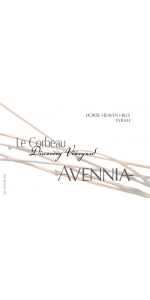
Named after the French word for Crow, or Raven, this Syrah is certainly as dark as the name implies. Hailing from Discovery Vineyard, perched high above the Columbia River in the heart of the Horse Heaven Hills, these grapes were grown in a very unique terroir. Avennia's approach of old-world style, minimalist winemaking allows for full expression of the fruit, showcasing the elegant and savory side of Syrah.
"Leads with a nice balance of dark fruits—blackberry and blueberry—with more savory elements, including blackberry leaf, olive, charcuterie, and a hint of shiitake. The palate features snappy fresh black fruits, a hint of smoked meat, and a lively finish with plenty of savory elements that make this wine quite interesting. Give it a year in the cellar and enjoy over the next eight years or so." - Chris Peterson, Winemaker
Reviews:
"Aromas of blackberry and violet accented by a note of stems. Sweet, supple wine with dark fruit flavors lifted by a black-peppery topnote and accented by cinnamony Red Hots. For all its high notes, this is essentially a creamy wine with no edges. I suspect it will tighten up in bottle and eventually display a more savory aspect. Incidentally, this will be the last vintage for this bottling because, beginning with vintage 2018, Chris Peterson will introduce some new single-vineyard Syrahs from the exciting new WeatherEye vineyard on top of Red Mountain. This steep site, owned by Cameron Myhrvold and farmed by Ryan Johnson, extends over the ridgeline and onto the northern flank of Red Mountain. The project is called Red Mountain Elevated, and Peterson is making the wines. (14.5% alcohol; done mostly in puncheons; vinified with 10% stems) - Stephen Tanzer”
- Antonio Galloni's Vinous (December 2019), 92 pts
"The last vintage for this cuvée, the 2017 Syrah Le Corbeau Discovery Vineyard is similar in style to the Arnaut yet offers slightly more floral notes in its blue fruits, wild strawberry, violets, rose petal, and sappy, forest floor aromas and flavors. Medium-bodied, with bright acidity and good balance, it’s a beautiful Syrah that leans heavily toward the fresh, elegant end of the spectrum while still offering tons of character and pleasure.”
- Jeb Dunnuck (April 2019), 92-94 pts
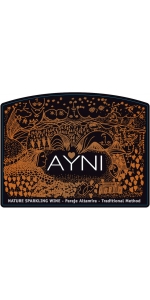
Ayni is the quechua name of a principle of reciporcity practised for centuries by the andean cultures, it means in order to receive something you first have to give. Ayni is also the name of our most special vineyard, located in Paraje Altamira one of the best appelations within Uco Valley in Mendoza.
Argentina has a history of sparkling wine production since the early 1960’s.
Tasting Notes: Aged for 18 months on its lees before disgorgement. It’s a creamy with a nice toast aroma. It is made in a well-balanced style, with fine bubbles and a dry, palate-cleansing finish.
Vineyards: 100% Altamira in the Uco Valley subregion
Soil type: Sandy loam over calcium carbonate coated gravels, 30 to 50 cm deep
Grapes: 100% Pinot Noir
Average age of the vines: 10 years
Winemaking: Methode Traditionnelle (Champenoise). Aged sur lattes for 18 months. Made following the tratidional method, fermentation goes until it gets totallay dry. No liquor is added to keep the freshnes, elegance and purity of is clean profile.
A versatile wine, good on its own or paired with any food.
"An impressive first release for this all-Pinot Noir bubbly from Paraje Altamira, aged for 18 months on its lees before disgorgement. It’s a creamy, bready, well-balanced style, with fine bubbles and a dry, palate-cleansing finish. A fizz to watch. 2017-22"
- Tim Atkin (Argentina Special Report 2017), 92 pts
"Perhaps with the same sort of structural power that Altamira reds possess, this sparkling rosé shows something immutable in body, lively texture, bracing acidity. The wine spent 18 months on the lees and this, no doubt, provides flavor complexities well beyond the fruit, but still the fruit predominates with intense aromas, substantial, and crisp, lively acidity. If what you’re looking for is a sparkler for carpaccio or roast beef, this is it."
- Descorchads 2018, 94 pts
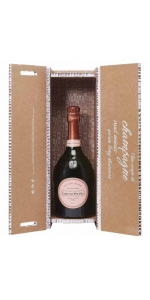
Laurent-Perrier Cuvee Rose Petal Jacket NV is made Pinot Noir from 10 crus in the Montagne de Reims
After the “Signature”, “Constellation”, “Safari”, “Butterfly” and “Bamboo” robes, Laurent‑Perrier unveils “Petals”. A robe of light where Dalhia or Strelitzia petals are subtly woven in iridescent Pop colours. A harmony of colours in shades of red and pink with highlights of orange or blue, recalling all of the fresh, crisp nuances of the red and black fruit palette of this great rosé champagne.
Laurent‑Perrier has been designing a reusable metal case with its clasp since 2017, to enhance the quality of the wine, matching the generously shaped Cuvée Rosé bottle.
The Cuvée Rosé from Laurent-Perrier is the most recognized rosé champagne in the world. The house uses its proprietary maceration technique and the wine is crafted for a fragrance and not mixed for a color. Held in an elegant bottle inspired by King Henri IV, it has been widely acknowledged for its consistent high quality for more than 40 years, and it is the benchmark for rosé champagne around the world.
Laurent-Perrier Cuvée Rosé is truly remarkable for its highly expressive bouquet, stemming from very careful preservation of fresh fruit aromas during the wine making. Made with 100% Pinot Noir from 10 different "crus " (or villages), from the North and South areas of the Montagne de Reims, as well as the famous village of Bouzy. Grapes from carefully selected plots are meticulously sorted and de-stemmed before going into the vats, and the controlled maceration helps with the color extraction and the development of the full aromatic richness of the Pinot Noir.
Intensely fruity flavors, clean and slightly sharp, the wine opens to the sensation of freshly picked red berries: strawberries, Morello cherries, black currants and raspberries. The finish is supple and rounded.
Its aromatic depth makes it ideal for pairing with marinated raw fish, grilled prawns, exotic dishes, Parma ham and red fruit desserts. Those who are more daring will try it with Asian or Indian cuisine.
Review:
Generosity no less than grace defines this 100% Pinot Noir from ten different crus primarily in the Montagne de Reims. Slightly coppery salmon-pink in the glass, it displays a radiant nose of ripe red berries that pop against glimmers of spiced biscotti and roasted cashew. On a broad palate of pure silk, raspberry and black cherry are underlined by blood-orange rind and crushed rock before a long, almost voluptuous finish that's slightly savory with dried mint.
-Tasting Panel 97 Points
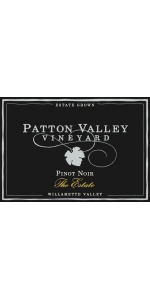
The nose here is brilliantly red fruited, with layer upon layer of subtle spice, bright floral notes, herbs, and stone. Its not all poetry and pageantry, though, and the first impression of the wine was simply, “oh that’s goooood.” A fair assessment, and sometimes that it all one requires. Further tastes show fine tannin throughout, a juicy, vibrant mouthfeel that is very likeable, and deft, long-developing layers of fruit that reveal themselves severally.
Patton Valley's flagship wine, The Estate is the most comprehensive expression of their vineyard site, and the wine that truly defines their place in a given vintage.
Review:
"Glistening red. Vibrant red fruit, floral and spice scents show very good clarity that picks up subtle hints of succulent herbs and smoky minerals with air. Juicy and energetic in the mouth, the 2017 offers gently sweet cherry raspberry and rose pastille flavors and a touch of spicecake. Smooth, well-integrated tannins make a late appearance on a long, floral-tinged finish that shows no rough edges.
- Josh Raynolds" - Antonio Galloni's Vinous (August 2020), 92 pts
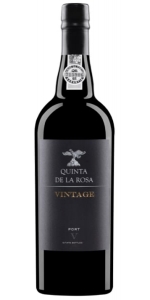
Opaque color. Very rich, dark chocolate aromas with some black cherry and mature fruit coming through. There is also a pleasing freshness to the port originating from its floral and cistus (rockrose) bouquet. The Quinta de la Rosa Vintage 2017 is a powerful wine with much potential but at the same time elegant and generous on the palate. Full of flavors, very complex with fine tannins that gives the wine a nobility and persistence. A great vintage made to give pleasure now and in the next few decades.
Review:
The 2017 Vintage Port was bottled a few weeks before tasting after spending 18 months in used tonels. It is a field blend, mostly Touriga Nacional and Touriga Franca, coming in with 98 grams per liter of residual sugar. Wonderfully aromatic and filled with flavor, this got plenty of aeration and didn't blink even a little. It was still vibrant and expressive. Aeration only made it more tannic. It is also delicious. This is potentially a great Port, and it seems like the best I've seen from La Rosa. This is sort of approachable in the near future, but it really needs (at least) a decade of cellaring. It has a lot of muscle and should age well.
-Wine Advocate 95 Points
Very floral in profile, with violet and lilac accents leading off, followed by a decidedly red-fruit spectrum of raspberry, cherry and red currant coulis flavors that race throughout. Has grip, but this is more reliant on acidity, showing a nearly piercing feel as the tightly focused finish zips along, leaving a mouthwatering impression. Delightfully idiosyncratic. Best from 2033 through 2050. 112 cases imported. — JM
-Wine Spectator 95 Points
This is a rounded Port, showing layers of black fruits, ripe tannins and spice. At the same time, it does have a solid structure that will allow it to age. The acidity comes through at the end. Drink from 2028.
-Wine Enthusiast 95 Points
Silver Oak Alexander Valley Cabernet Sauvignon is made from 95.2% Cabernet Sauvignon, 2.5% Cabernet Franc, 1.9% Merlot, 0.4% Petit Verdot
The Silver Oak Alexander Valley Cabernet Sauvignon 2019 has notes of red cherry, raspberry, blackberry, iris, vanilla and clove. Ruby in color, this elegant wine has great acidity and lift on the mid-palate. Black currant and warm baking spices linger with a deep and fruity finish. It will provide drinking pleasure through 2047 given proper cellaring.
Review:
The 2021 Silver Oak Cabernet Sauvignon from Alexander Valley was harvested between 4 September and 8 October. The blend comprises 96% Cabernet Sauvignon, 2% Merlot and 1% each of Cabernet Franc and Petit Verdot. After blending, it was barrel-aged for 24 months in American oak, 50% of which was new, followed by 14 months of bottle ageing prior to release. The wine is beautifully layered and highly fragrant, with remarkable precision and focus in this vintage. Medium- to full-bodied, it integrates the hallmark Silver Oak American spice character through cedarwood aromatics, elegant whispers of vanilla bean, and nuances of fresh fennel (from more refined American oak barrels crafted after precision trials of both seasoning and toasting from the American oak cooperage they own in Higbee, Missouri). Supple dark-cherry and blackberry fruit are framed by graphite minerality, violets and clove, building in richness and complexity across the palate. Suave and silken, the dark-berry fruit is wrapped in a tapestry of velvety tannins, gliding to a focused finish of brown baking spices and crisp, clean acidity.
-Decanter 96 Points
Bachelet Bertrand Maranges Rouge Premier Cru Fussiere is made from 100 percent Pinot Noir.
The Maranges appellation is the youngest of the Côte de Beaune family, making its debut in May 1989. It spans three villages, namely Dezize-lès-Maranges, Cheilly-les-Maranges and Sampigny-les-Maranges. Several hills and slopes make up this appellation, all south/south-east-facing.
'La Fussière' is one of the Premier Cru vineyards of the Maranges appellation, known for producing wines of great elegance and finesse.
The wine displays a beautiful ruby color with garnet hints. The nose offers aromas of red fruits, cherries, and subtle earthy notes. On the palate, the wine is elegant with fine-grained tannins and good length.
Excellent with grilled meats, duck, or mushroom-based dishes.



