
" We don't sell the wine without touching the vine "
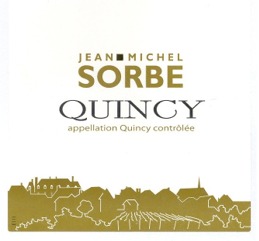
| Country: | France |
| Region: | Loire |
| Winery: | Joseph Mellot Jean-Michel |
| Grape Type: | Sauvignon Blanc |
| Vintage: | 2013 |
| Bottle Size: | 750 ml |
Jean-Michel Sorbe Quincy Blanc is made from 100 percent Sauvingon Blanc.
The first nose is expressive and opens up to notes of acacia, citrus (lemon, grapefruit). Full on the palate with lovely freshness. This wine boasts nice balance and good length.
The vines are 15 to 20 years old and are located on the left bank of the Cher River, southwest of Quincy. This vineyard enjoys good exposure to the sun and overlies hillocks composed of sandy alluvial deposits and gravel dating back to the Quaternary Period. Each terroir is managed with minimal intervention in an environmentally friendly approach. Vinification: Slow pressing. Fermentation took place under controlled temperatures (18°C).The wine was aged on fine lees for a minimum of 4 months. It was filtered only once before being bottled.
Pair with crustaceans, asparagus, or goat's cheeses.
After pouring, allow the wine to breathe for a few moments in the glass before enjoying so that it may fully release all of its aromas.
Jean-Michel Sorbe Reuilly Blanc is made from 100 percent Sauvignon Blanc.
The first nose is expressive and opens up to notes of acacia, citrus (lemon, grapefruit). Full on the palate with lovely freshness. This wine boasts nice balance and good length.
The vines are 15 to 20 years old and are located on the left bank of the Cher River, southwest of Quincy. This vineyard enjoys good exposure to the sun and overlies hillocks composed of sandy alluvial deposits and gravel dating back to the Quaternary Period. Each terroir is managed with minimal intervention in an environmentally friendly approach. Vinification: Slow pressing. Fermentation took place under controlled temperatures (18°C).The wine was aged on fine lees for a minimum of 4 months. It was filtered only once before being bottled.
Pair with crustaceans, asparagus, or goat's cheeses.
After pouring, allow the wine to breathe for a few moments in the glass before enjoying so that it may fully release all of its aromas.
Jean-Michel Sorbe Reuilly Blanc is made from 100 percent Sauvignon Blanc.
The first nose is expressive and opens up to notes of acacia, citrus (lemon, grapefruit). Full on the palate with lovely freshness. This wine boasts nice balance and good length.
The vines are 15 to 20 years old and are located on the left bank of the Cher River, southwest of Quincy. This vineyard enjoys good exposure to the sun and overlies hillocks composed of sandy alluvial deposits and gravel dating back to the Quaternary Period. Each terroir is managed with minimal intervention in an environmentally friendly approach. Vinification: Slow pressing. Fermentation took place under controlled temperatures (18°C).The wine was aged on fine lees for a minimum of 4 months. It was filtered only once before being bottled.
Pair with crustaceans, asparagus, or goat's cheeses.
After pouring, allow the wine to breathe for a few moments in the glass before enjoying so that it may fully release all of its aromas.
Jean-Michel Sorbe Quincy Blanc is made from 100 percent Sauvingon Blanc.
The first nose is expressive and opens up to notes of acacia, citrus (lemon, grapefruit). Full on the palate with lovely freshness. This wine boasts nice balance and good length.
The vines are 15 to 20 years old and are located on the left bank of the Cher River, southwest of Quincy. This vineyard enjoys good exposure to the sun and overlies hillocks composed of sandy alluvial deposits and gravel dating back to the Quaternary Period. Each terroir is managed with minimal intervention in an environmentally friendly approach. Vinification: Slow pressing. Fermentation took place under controlled temperatures (18°C).The wine was aged on fine lees for a minimum of 4 months. It was filtered only once before being bottled.
Pair with crustaceans, asparagus, or goat's cheeses.
After pouring, allow the wine to breathe for a few moments in the glass before enjoying so that it may fully release all of its aromas.
Jean-Michel Sorbe Quincy Blanc is made from 100 percent Sauvignon Blanc.
The first nose is expressive and opens up to notes of acacia, citrus (lemon, grapefruit). Full on the palate with lovely freshness. This wine boasts nice balance and good length.
The vines are 15 to 20 years old and are located on the left bank of the Cher River, southwest of Quincy. This vineyard enjoys good exposure to the sun and overlies hillocks composed of sandy alluvial deposits and gravel dating back to the Quaternary Period. Each terroir is managed with minimal intervention in an environmentally friendly approach. Vinification: Slow pressing. Fermentation took place under controlled temperatures (18°C).The wine was aged on fine lees for a minimum of 4 months. It was filtered only once before being bottled.
Pair with crustaceans, asparagus, or goat's cheeses.
After pouring, allow the wine to breathe for a few moments in the glass before enjoying so that it may fully release all of its aromas.

All older vintage wines have been purchased from a single collectors cellar. Pictures can be requested before shipment.
Jean Michel Sorbe Mellot Quincy Blanc 2013 is 100% Sauvignon Blanc.
35-40 year-old vines located on the banks of the Cher river; the soil is typical of the appellation, mainly sandy and gravelly.
Traditional vinification: gentle pressing in pneumatic press to extract the finest juice; temperature-controlled fermentation for several weeks to preserve the aromas; the wine is aged on its fine lees with a single filtration to give a greater finesse and freshness.
A pale golden-yellow color with green tints.
An expressive, powerful nose dominated by white flowers and grapefruit aromas. On the palate it is full and well-balanced with a ncie freshness and good acidity. Clean, crisp and dry finish.
Perfect with seafood and oysters. It is also a good match with goat cheese, such as Crottin de Chavignol, and cheese fondues.
The Domaine Joseph Mellot Jean-Michel Estate
Located in the town of Preuilly, Domaine Joseph Mellot is one of the leaders in the Loire Valley. The Mellot dynasty was founded in Sancerre almost five centuries ago by Pierre-Etienne Mellot and, since then, the family has always been involved in winemaking. In fact, in 1698 Cesar Mellot was entrusted with the weighty task of advising King Louis XIV on his choice of wines. Throughout the years, each new generation has continued to enrich and perfect the family's winemaking skills. In 1984, Joseph's son, Alexandre, took over the estate with quality as his main objective and a focus on the artisanal winemaking process and philosophy transmitted from one owner to the other.
Jeam-Michel Sorbe took over the family estate in 1973 and for about 30 years devoted his energy and passion to develop the reputation if the Quincy and Reuilly appellations. His wines had a great success and Jean-Michel Sorbe became a well-known personality in the region.
The Sorbe and Mellot families met through a mutual friend and began working together in 1988. In 1999, since his children had chosen to follow other paths, Jean-Michel decided to hand his estate over to Alexandre Mellot.
The Domaine Joseph Mellot Jean-Michel Vineyards
They farm 11 hectares (27 acres) in Reuilly (10 hectares in the commune of Preuilly, 1 hectare in Reuilly), and 3 hectares (7.4 acres) in Quincy.
Soils:
- Preuilly: orange colored clay on ancient alluvial deposits (clay and silt). Deep, structured sols.
- Reuilly: grainy sand, Fairly light soils with a clay subsoil.
- Quincy: 2 parcels are planted on alluvial deposits (sand and gravel from the beginning of the quaternary period); 1 parcel has a higher clay content with the presence of lacustrine limestone on the surface.
The Quincy appellation (A.O.C. founded in 1936) measures 200 hectares (494 acres). It is the second oldest A.O.C. in France after Châteauneuf du Pape. The appellation almost disappeared as a wine after World War II, but today is staging a come back with new blood and new plantings. The vineyards lie around and between two towns, Quincy and Brinay. Quincy is a A.O.C. on the move and its A.O.C. status only applies to white wines, not red or rosé.
The vineyards of Reuilly (A.O.C. founded in 1939) measures 150 hectares (370.50 acres). The grapes grown are Sauvignon, Pinot Gris, and Pinot Noir. Reuilly was once known for a vin Gris de Pinot Noir, which today is 15% of the area’s production.
Diane de Galinière is another property owned by Joseph Mellot. Once again, they have decided to keep the yield low in order to obtain the best quality. Coteaux du Giennois A.O.C. was unknown a few years ago and is now an appellation to watch thanks to the care provided by Joseph Mellot. The Coteaux du Giennois vineyards measure 160 hectares (395.2 acres) composed of siliceous-clay soil in the northern part and Kimmeridgian marl in the south.
This is a 6 pack with 2 bottles each from vintages from 2013, 2015, and 2016.
***Tenimenti Angelini Val di Suga Vigna Spuntali Brunello di Montalcino 2016:
The 2016 Vigna Spuntali Brunello di Montalcino is the most brooding of the lineup from Val di Suga and is sourced from the southwest of the region on sandy soils. There are aromatics of black raspberry, licorice, menthol, sage, cinnamon, and iron-rich earth. Its Mediterranean influence is felt on the palate with ripe black cherry, dried herbs, and sun-baked earth. This is the fullest bodied and most savory of the Val di Suga lineup, with more roundness and grip. Its structure will benefit from cellaring for several years and will be great drinking over the next 20 years or more. 2026-2040.
-Jeb Dunnuck 96 Points
***Tenimenti Angelini Val di Suga Vigna Spuntali Brunello di Montalcino 2015:
The 2015 Vigna Spuntali Brunello di Montalcino is more introverted on first opening, with notes of black plum, licorice, dried Mediterranean herb, and sun-baked earth. On the palate, it offers a tart dried fruit character, with a building tannin structure that finishes with tomato leaf, and bitter herbs. The most rustic and burly of the wines in the lineup of the 2015 Val di Suga vintage, it will benefit from allowing some time in cellar to see how this matures and its tarriness develops. Drink 2026-2036
-Jeb Dunnuck 94 Points
***Tenimenti Angelini Val di Suga Vigna Spuntali Brunello di Montalcino 2013:
Plenty of spices and fresh herbs on the nose, such as dried rosemary and nutmeg, to match the underlying dried redcurrants and cranberries. Full-bodied with plenty of concentration, but still shows a very sturdy, tannin backbone and punchy acidity, to drive this through to a long finish. Drink in 2021.
-James Suckling 94 Points
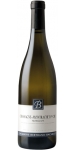
Bachelet Bertrand Chassagne Montrachet Blanc Premier Cru Morgeot is made from 100 percent Chardonnay.
The Chassagne-Montrachet appellation is located in the southern part of the Côte de Beaune and produces mainly white wines. 'Morgeot' is located in the south of the village, characterized by compact limestone soil containing iron oxide, which gives the soil its particular red-brown color.
The wine offers a golden color, a subtle nose of white flowers and honey notes. Full-bodied and well-structured on the palate.
The softness of the Chardonnay on the palate makes an interesting pairing with cooked foie gras; it also sits well with lobster, spiny lobster, or even morel mushroom dumplings or Bresse chicken in a cream sauce.



