" We don't sell the wine without touching the vine "
| BUY MORE! SAVE MORE! | ||||||||||||||||||||
|
| Country: | France |
| Regions: | Loire Sancerre |
| Winery: | Jean Reverdy |
| Grape Type: | Sauvignon Blanc |
| Vintage: | 2025 |
| Bottle Size: | 750 ml |
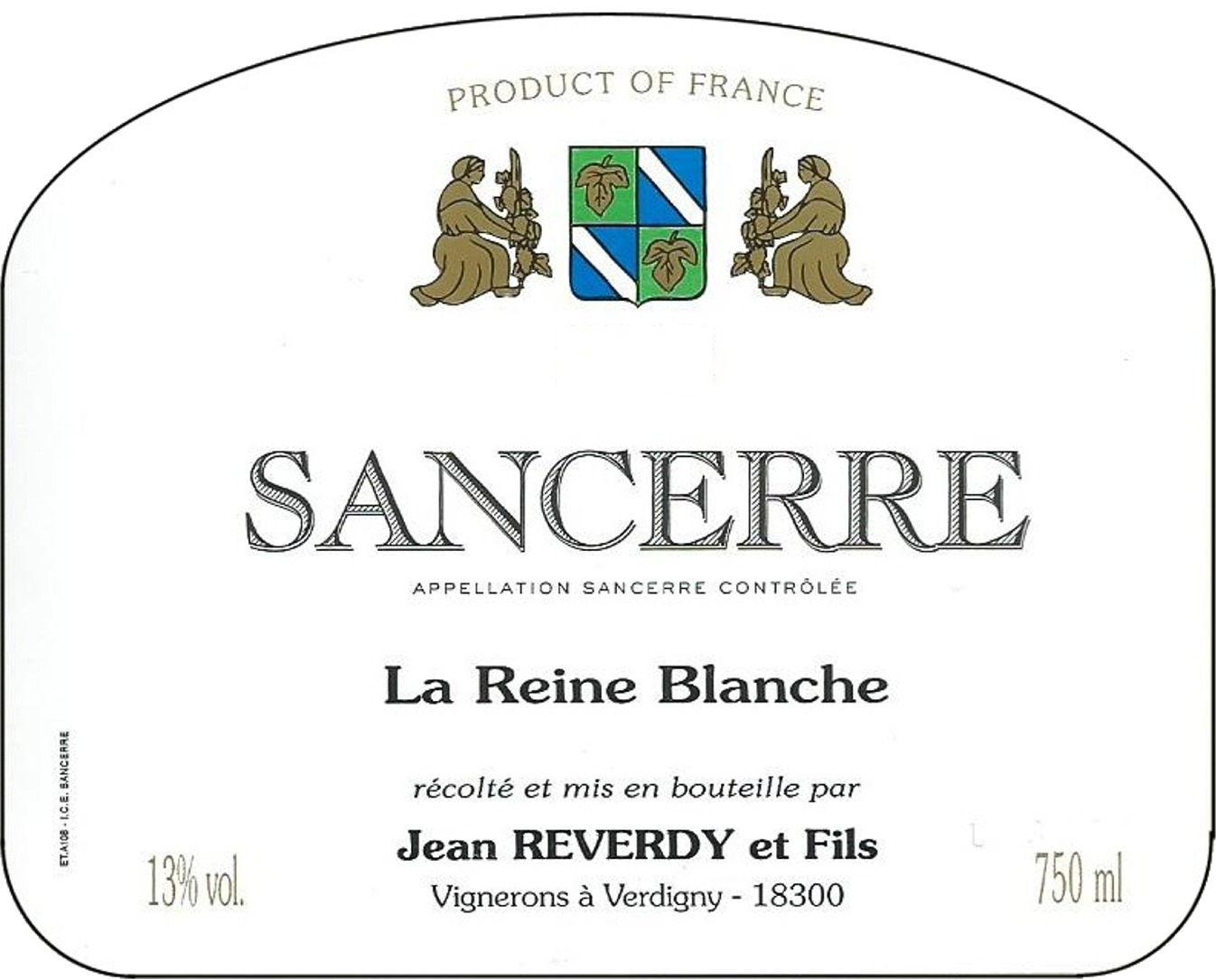
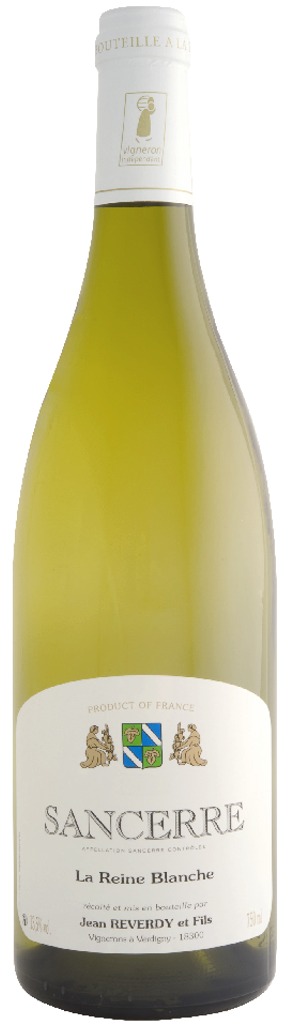
Jean Reverdy Sancerre Blanc is 100% Sauvignon Blanc
Single vineyard. Vinification: cold fermentation in stainless steel tank, no oak, no malolactic fermentation.
Sweet, fruity and clean. White flowers (acacia, jasmine) and citrus fruits aromas. Perfectly balanced.
A delicious wine, perfect with fish dishes, especially salmon, and a local goat cheese Crottin de Chavignol.
The Domaine Jean Reverdy Estate
This Domaine is located in Verdigny, one of the top villages in Sancerre. It dates back to 1650 and has been in the family for about 10 generations. Originally the family was growing vines and diverse polycultures, but since the 1950’s they have been focusing on producing wine only. Christophe Reverdy, son of the late Jean Reverdy, now produces around 100,000 bottles per year on average and exports 70% of the total production to UK, Germany, Sweden, Japan and the USA.
The Domaine Jean Reverdy Vineyard
The Domaine spreads over 12 hectares (29.64 acres): 9 hectares Sauvignon, 3 hectares Pinot Noir, and produces red, rose and white wine. The age of the vines is 25 years and older. The vineyard is divided into 15 parcels located on the hills of Verdigny, Saint Satur, Sancerre and Thauvenay.
The vineyards are planted on three different types of soil:
- silicious-clay soils, "Terres a Silex" (east of the hills) - 55%
- pebbly limestone soils, known as the "Caillottes" - 35%
- clay and limestone white soils, the "Terres Blanches" (west of the hills) - 10%
The vineyard of Sancerre measures 2,500 hectares (6,175 acres) total and spreads over 14 communes: Bannay, Bué, Crezancy, Menetou-Ratel, Menetreol, Montigny, St-Satur, Ste-Gemme, Sancerre, Sury-en-Vaux, Thauvenay, Veaugues, Verdigny and Vinon.
The Sancerre A.O.C. was created in 1936 for the white wines and in 1959 for the reds.

Leindl Gruner Veltliner Seeberg Kamptal is made form 100 percent Gruner Veltiner. Medium yellow green. Fine yellow apple fruit, delicate hint of quince and honey, candied orange zest, highly attractive bouquet. Juicy, good complexity, extract core sweet, silky texture, fine acidity bow, fine and salty minerality, great length, secure aging potential, a very finesse Veltliner-style.
Review:
“Inviting nose, with layers of quince and elegant, aromatic herb leading through to a richly textured palate of opulent fruit and a fine acidity.”
- Decanter World Wine Awards 2023, 96 pts

Trus Ribera del Duero Crianza is made from 100 percent Tempranillo.
Trus - an acronym for T-tierra (soil), R-roble (oak), U-uva (grape), S-sol (sun) - aims to reflect the uniqueness of each vintage, the aging potential of the wine in the bottle over the years.
Trus takes its roots in Palacios Vinos de Finca, the estate that was founded in 1999, then purchased by Javier Palacios who decided to focus on producing wines that express the purity and typicity of the Ribera terroirs.
The estate vineyards are located in Piñel de abajo, Pesquera de Duero, Quintanilla de Arriba. The winery also partners with winegrowers in Moradillo, Roa, Nava, Peñaranda or Baños de Valdearados. The clay-limestone soils of the high-altitude vineyards define the intense and complex personality of the wines. That is why Trus wines can be defined as classic, because an avant-garde look is the one that is directed towards the soil, preserving a typicity that is marked from its deepest roots.
Trus Crianza reveals a clean and bright cherry color with Burgundian tones at the rim. The nose is very intense and complex, offering ripe black fruits and liquorice aromas, toasty and vanilla nuances, spices and balsamic notes. The wine is tasty and unctuous on the palate, a perfect harmony between acidity and alcohol. Fresh and friendly mouthfeel, the ripe and soft tannins provide structure and great length. Long finish, ripe fruit aftertaste with a smoky and spicy finish.
Review:
"A plush and fabulous expression of variety and provenance with well-integrated alcohol, tannin and acidity. Will continue for several years and mellow. Be warned – one glass will be quickly followed by the next."
- Decanter World Wine Awards 2021, 96 points - GOLD MEDAL

Bavencoff Bourgogne Blanc is made from 100 percent Chardonnay.
This Bourgogne Chardonnay is fresh and bright. The aromas are expressive with Honeysuckle, Broom and Mushroom. A nice balance between the acidity and the fruitiness, complementing the minerality. It will drink well during its youth but will gain some extra aromatic complexity after a few month in the cellar.
Very pleasant as an aperitif. Our Bourgogne Chardonnay also goes very well with cold meats, fish, grilled and marinated vegetables as well as goat cheese.
Wine was slightly filtered before bottling.
100% Malolactic fermentation done.
Aged 14 months. 80%of the wine was aged in Stainless steel tanks with 20% was aged in French Oak barriques (228 liter barrels).
Review:
Wine Enthusiast (April 2025), 90 pts

Brilliant golden yellow robe. The Bourgogne Chardonnay from Remy Lefevre is a marvel of density and aromatic expression. Very expressive on the nose, hints of stone and yellow fruits such as peach, pineapple. The opulence of the mouthfeel is nicely balanced between minerality and very delicate oaky notes. Slightly saline finish marked by a magnificent tension and freshness leaving an great memory and pleasure !
No RS
Total acidity: 3.30 g/L
No irrigation. Machine harvested. Grapes destemmed 100%.
- Vinification in vats
- Malolactic fermentation done
- Fine lees stirred during vinification
- 10% of the wine was aged in French Oak barrels
- 2 rackings carried out: one at the end of fermentation and one before bottling
- Wine filtered through a tangential filter
Remy Lefevre Bourgogne Chardonnay goes well with caesar salads, seafood and soft cheeses such as goat cheese.

Cantina di Verona Amarone Valpolicella Vallis Dei is made from 65% Corvina Veronese, 30% Rondinella, 5% Molinara
Color: deep ruby red
Nose: Dried prune and blackberry with hints of vanilla and spice
Mouth: It is generously structured and velvety.
Yield: 8000 kg of grapes per hectar – after which the grapes are dried “appassimento”
Grapes are raisin-dried for at least 4 months after harvesting, losing at least 40% of their weight. It is made from selected grapes which are left to dry on racks in specially ventilated rooms until the end of winter.
Fermentation temperature between 18° and 22°C
Maceration time: 20 days

Salvadori Chianti Riserva DOCG 2017 is made from Sangiovese 90% , Merlot 10

Reverdy Jean Sancerre Rose is made from 100 percent Pinot Noir.
Color: Pale salmon pink color
Nose: delicate aromas of roses and orange blossom that will transform into gooseberry and peach blossoms as the temperature in the glass rises.
Mouth: The palate is crisp, lean and elegant, but the flavors are quite persistent with cherry, blackcurrant,apricot and red currant aromas.
According to the Sancerre AOC regulation, maximum yield authorized for the rosé is 55 hl/ha.
Pairs well with poultry and spicy food.

Reverdy Jean Sancerre Rouge is mader from 100% Pinot Noir
The wine is spicy and juicy with cherry aromas, and proves the point that power is not necessary for a fine wine.

Jean Reverdy Sancerre Blanc is 100% Sauvignon Blanc
Single vineyard. Vinification: cold fermentation in stainless steel tank, no oak, no malolactic fermentation.
Sweet, fruity and clean. White flowers (acacia, jasmine) and citrus fruits aromas. Perfectly balanced.
A delicious wine, perfect with fish dishes, especially salmon, and a local goat cheese Crottin de Chavignol.
Reverdy Jean Sancerre Rouge is mader from 100% Pinot Noir
The wine is spicy and juicy with cherry aromas, and proves the point that power is not necessary for a fine wine.

Reverdy Jean Sancerre Rouge Les Villots is made from 100% Pinot Noir
The wine is spicy and juicy with cherry aromas, and proves the point that power is not necessary for a fine wine.

Fleuriet Demoiselles Sancerre Blanc is made from 100 percent Sauvignon Blanc.
The name "Les demoiselles" (translate as "The young ladies"), refers to the beautiful migratory birds (Cranes) that fly over the town of Sancerre twice a year (in the Fall going South to spend the winter in the African continent, and in the Spring going back North to spend the Summer in Northern Europe). These graceful birds offer a unique and impressive show when they sometimes land on the banks of the Loire River. The Fleuriet family wanted to highlight this exceptional grace and express an elegant and refined bouquet in this Sancerre Demoiselles cuvée.
The wine shows a bright yellow color with green highlights, a fruity nose with aromas of white flowers and acacia. Light-medium bodied in the mouth, supple and well structured, its concentration and crisp acidity make it a harmonious and food-friendly wine.
Pairs nicely with fresh goat cheeses, oysters with lemon, grilled lemon chicken breasts and Mexican dishes. Serve these whites at 46 °F (8 °C).

Every now and then, in life and in wine, we are presented with unique opportunities to express ourselves and create something truly remarkable.
When rare opportunities arise, we need to capture, nurture and develop them so that their potential is fulfilled. So when Torbreck was given the opportunity to work with one of the most famous vineyards in the Barossa Valley, it became almost inevitable that the resulting wine would be truly remarkable.
In 2003, Torbreck growers and fourth generation descendants of the Seppelt family, Malcolm and Joylene Seppelt, asked our winemakers to create for them a small batch of Shiraz from their old Gnadenfrei vineyard in the sub-region of Marananga.
Planted in 1958, the five acre vineyard is traditionally dry grown and comes from an original Barossa clonal source. South facing, on the eastern side of a ridge separating the Seppeltsfield and Marananga appellations, these aged vines have been meticulously hand tended, traditionally farmed and pruned by a grower with a lifetime’s experience on Western Barossa soils of very dark, heavy clay loam over red friable clay. The resulting low yields of small, concentrated Shiraz berries make the vineyard the envy of all winemakers in the Barossa.
We looked longingly at the wine when it was returned to the Seppelts, knowing that it was the best we had ever made. In 2005 we convinced the Seppelts to sell Torbreck the fruit and The Laird was born. In 2013 Torbreck purchased the Gnadenfrei vineyard, securing The Laird’s reputation as one of the world’s great single vineyard Shiraz wines.
Torbreck is the name of a forest near Inverness, Scotland and you’ll find more than a passing nod to the Celts in our wine naming conventions. The Laird of the Estate in Scotland is the Lord of the Manor and master of all he surveys.
Review:
I poured the 2017 The Laird, set it aside and got about doing other jobs for 45 minutes or so, to give it some room to breathe. And it does breathe. It has its own pulse and beat and life, and it flexes and moves in the mouth. This is incredibly enveloping, with aromas reminiscent of campfire coals, charred eucalyptus, lamb fat, roasted beetroot, black tea and a prowling sort of countenance. In the mouth, the wine is bonded and cohesive and seamless, there are no gaps between anything, no space between fruit, oak and tannin; it all comes as one. While this is a singular wine, it is so big and concentrated that it needs no accompaniment other than some fresh air and a good mate. It's denser than osmium and is impenetrable at this stage.

Rinaldi Barbera Appassimento is made from 100% Barbera.
Intense ruby red in color. Hints of ripe red fruits, cocoa, tobacco and sweet spices on the nose. Complex, velvety and persistent on the palate.
Hand harvested. The bunches are set on racks to dry for 6 weeks. 20 days of skin contact maceration to extract color without bringing too much tannins. No oak, only stainless steel aging to preserve the fruit character.