
" We don't sell the wine without touching the vine "
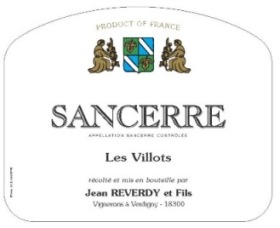
| Country: | France |
| Region: | Loire |
| Winery: | Jean Reverdy |
| Grape Type: | Pinot Noir |
| Vintage: | 2011 |
| Bottle Size: | 750 ml |
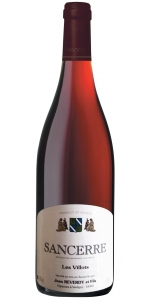
Reverdy Jean Sancerre Rouge Les Villots is made from 100% Pinot Noir
The wine is spicy and juicy with cherry aromas, and proves the point that power is not necessary for a fine wine.
Reverdy Jean Sancerre Rouge is mader from 100% Pinot Noir
The wine is spicy and juicy with cherry aromas, and proves the point that power is not necessary for a fine wine.
Reverdy Jean Sancerre Rouge Les Villots is made from 100% Pinot Noir
The wine is spicy and juicy with cherry aromas, and proves the point that power is not necessary for a fine wine.
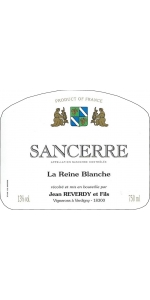
Jean Reverdy Sancerre Blanc is 100% Sauvignon Blanc
Single vineyard. Vinification: cold fermentation in stainless steel tank, no oak, no malolactic fermentation.
Sweet, fruity and clean. White flowers (acacia, jasmine) and citrus fruits aromas. Perfectly balanced.
A delicious wine, perfect with fish dishes, especially salmon, and a local goat cheese Crottin de Chavignol.
Reverdy Jean Sancerre Rouge is mader from 100% Pinot Noir
The wine is spicy and juicy with cherry aromas, and proves the point that power is not necessary for a fine wine.
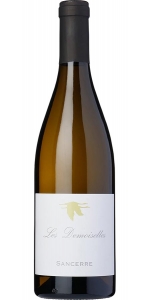
Demoiselles Sancerre Blanc is made from 100 percent Sauvignon Blanc.
The name "Les demoiselles" (translate as "The young ladies"), refers to the beautiful migratory birds (Cranes) that fly over the town of Sancerre twice a year (in the Fall going South to spend the winter in the African continent, and in the Spring going back North to spend the Summer in Northern Europe). These graceful birds offer a unique and impressive show when they sometimes land on the banks of the Loire River. The Fleuriet family wanted to highlight this exceptional grace and express an elegant and refined bouquet in this Sancerre Demoiselles cuvée.
The wine shows a bright yellow color with green highlights, a fruity nose with aromas of white flowers and acacia. Light-medium bodied in the mouth, supple and well structured, its concentration and crisp acidity make it a harmonious and food-friendly wine.
Pairs nicely with fresh goat cheeses, oysters with lemon, grilled lemon chicken breasts and Mexican dishes. Serve these whites at 46 °F (8 °C).
Jean Reverdy Sancerre Rose Les Villots 2011 is made from 100% Pinot Noir. 90% press wine, 10% saignee from the Pinot Noir Rouge.
Lean and light with apricot and red currant aromas.
Pairs well with poultry and spicy food.
"The Les Villots Rosé reveals a pale salmon color and a delicate nose of dried cherry with an earth/herbal note. It has a delicate palate of lightly flavored cherry with dried fruit notes and minerals. The palate is dry with some astringency and relatively high acidity. Judging from previous vintages, this wine should improve with further aging and merit a higher rating."
- I-WineReview (April 2012), 88 pts
"The 2011 Sancerre Les Villots, a rose from 10% Pinot Noir, displays notes of cranberry, strawberry and roasted herbs. It is fresh and medium-bodied, with piercing acidity. The color is a very light pink."
-Wine Advocate (Issue 201, June 2012), 87 pts
The Domaine Jean Reverdy Estate
This Domaine is located in Verdigny, one of the top villages in Sancerre. It dates back to 1650 and has been in the family for about 10 generations. Originally the family was growing vines and diverse polycultures, but since the 1950’s they have been focusing on producing wine only. Christophe Reverdy, son of the late Jean Reverdy, now produces around 100,000 bottles per year on average and exports 70% of the total production to UK, Germany, Sweden, Japan and the USA.
The Domaine Jean Reverdy Vineyard
The Domaine spreads over 12 hectares (29.64 acres): 9 hectares Sauvignon, 3 hectares Pinot Noir, and produces red, rose and white wine. The age of the vines is 25 years and older. The vineyard is divided into 15 parcels located on the hills of Verdigny, Saint Satur, Sancerre and Thauvenay.
The vineyards are planted on three different types of soil:
- silicious-clay soils, "Terres a Silex" (east of the hills) - 55%
- pebbly limestone soils, known as the "Caillottes" - 35%
- clay and limestone white soils, the "Terres Blanches" (west of the hills) - 10%
The vineyard of Sancerre measures 2,500 hectares (6,175 acres) total and spreads over 14 communes: Bannay, Bué, Crezancy, Menetou-Ratel, Menetreol, Montigny, St-Satur, Ste-Gemme, Sancerre, Sury-en-Vaux, Thauvenay, Veaugues, Verdigny and Vinon.
The Sancerre A.O.C. was created in 1936 for the white wines and in 1959 for the reds.
Paul Hobbs Edward James Estate Chardonnay Russian River Valley is made from 100 percent Chardonnay.
This small five-acre estate named after Paul's great-grandfather, Edward James, rewards us with a chardonnay that is pale straw in color with inviting aromas of lemon zest, red apple skin, gardenia, and honeysuckle. A creamy mouthfeel on the palate evolves into poached pear, ginger spice, and brioche that come together with a crunchy acidity and lively finish.
Review:
The 2022 Chardonnay Edward James Estate was named after Paul’s grandparents on his father’s side and originates in a vineyard planted entirely to Hyde Wente clone of Chardonnay. It was raised in French oak for 18 months on the lees. In the glass, it’s highly expressive and layered with aromas of toasted spice, incense, honeysuckle, quince, and preserved citrus. Medium to full-bodied, it has a fantastic, long, supple texture with a linear, crystalline feel, great, evenly fresh acidity, and a salty, mouthwatering finish. This is my favorite of the white wines at this tasting. Drink 2025-2037.
-Jeb Dunnuck 97 Points
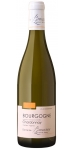
Boussey Bourgogne Blanc Cote d'Or Vieilles Vignes is made from 100 percent Chardonnay.
The grapes for Bourgogne Blanc Chardonnay Vieilles Vignes are grown on a parcel located within the city of Meursault.
The wine displays a refreshing nose of lime, citrus fruits, flint, honey and a touch of dried fruit. The palate is full of flavors, with honeysuckle, citrus and some salinity with an excellent balance between acidity and roundness.
Pair with cheese, seafood, nems, Spanish tapas and apple tart.



