
" We don't sell the wine without touching the vine "
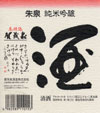
| Country: | Japan |
| Winery: | Kamoisumi Brewing Company |
| Grape Type: | Hiroshima Hattan |
| Vintage: | NV |
| Bottle Size: | 900 ml |

Domaine Jean Grivot Nuits-Saint-Georges Premier Cru Aux Boudots is made from 100 percent Pinot Noir.
Domaine Jean Grivot is among the great names in Burgundian wine. Étienne Grivot and his wife Marielle took over from Étienne’s father Jean Grivot in 1987. The vineyards are densely planted and farmed organically “sans certification” while the aim in the cellar is for balance and clear expression of terroir.
Jean Grivot’s 38.3 acres spread across 22 appellations with vineyards in the communes of Vosne-Romanée, Vougeot, Chambolle-Musigny, and Nuits-Saint-Georges. Besides the three grand crus, there are 8 premier crus including the much lauded Les Beaux Monts and Suchots in Vosne-Romanée. The grapes are completely de-stemmed and fermentation is spontaneous.
Nuits-Saint-Georges Aux Boudots 1er cru lies in the “Zone Vosnoise” or northern end of Nuits-Saint-Georges just below Les Damodes. It borders Vosne-Romanée Aux Malconsorts 1er just to its north. Its position slightly lower on the slope with deep soil full of pebbles results in a richer and fuller wine.
The grapes are destemmed and maceration à froid usually lasts just a day or two. The alcoholic fermentation is spontaneous and malolactic fermentation occurs in barrel. Depending on the vintage, the proportion of new oak is around 30-60% for the premier crus.
The wine shows aromas and flavors of red berries, herbs, and purple flowers. The palate is rich with ripe fruit and medium weight with bright acidity and fine tannins. Aging in 30-60% new Burgundian pièce brings notes of vanilla, toast, and baking spices.
Red Burgundy might be the world’s most flexible food wine. The wine’s high acidity, medium body, medium alcohol, and low tannins make it very food-friendly. Red Burgundy, with its earthy and sometimes gamey character, is a classic partner to roasted game birds, grilled duck breast, and dishes that feature mushrooms, black truffles, or are rich in umami.
Reviews:
‘The 2020 Nuits Saint-Georges Aux Boudots Ter Cru has the best aromatics among Grivat Nuits Saint-Georges with very well defined red berry fruit, briary and lignt sous-bois aromas. The palate is medium-badied with fine-grain tannins, slightly savory on the entry, fresh and saline on the finish. This has real verve and class, though it will benefit from time in bottle
-Vinous 93-95 Points
A wine with the substance and structure to support the generous lashings of new oak used for maturation, and the overall effect is elegant and classic in style. Aux Boudots, where Grivot has 0.85ha, is at the northern edge of Nuits, just over the border from Vosne-Romanée Malconsorts. They began to pick on the 3rd of September – Etienne specified that they are very particular that the tannins are ripe and do what they can to prolong the vegetative cycle. Still, the grapes were picked with an entirely correct pH of around 3.4.
-Decanter 94 Points
-150x300.jpg "Fullerton Three Otters Pinot Gris 2022")
Fullerton Three Otters Pinot Gris is made from 100 percent Pinot Gris.
Pours a brilliant gold-straw, with warm aromatics of green apple, pear-blossom, pineapple, vanilla and baker’s spice. Flavors of bright green apple, pear, and lemon/lime acidity are tamed by sweet pie crust. This wine is ready for almost any meal, or just a relaxing afternoon in the sun.
Pairs well with any salad, poultry, cheese, pasta in a creamy sauce, or by itself as an aperitif.
ABV: 13.5%
TA: 6.4 g/L
pH: 3.31

Fullerton Three Otters Pinot Noir is made from 100% Pinot Noir - 7-40 years old
This Willamette Valley blend hails mainly from three different vineyards in the north, east, and south of the Willamette Valley, with a smaering from five of Fullerton's other sites. The soils of the vineyards represent the breadth and diversity of the Willamee Valley with both sedimentary- and volcanic-based soils.
Blueberry and ripe strawberry with a dash of baker’s spice, bramble, and herbs. The palate carries the fruit forward elegantly with balanced tannins following. Intriguing complexity and depth—an impressive wine for all.
This wine comes from 100% destemmed rotator barrels fermented at ambient temperature reaching a peak temperature of 73° F. The rotator barrel spun twice daily during fermentation yielding a gentle extraction. After fermentation, the wine went through a three-week extended maceration, allowing the tannins to polymerize, soffening the wine. Aged for 12 months in French oak barrels and three months in tank, the wine was then bottled after filtration.
This wine is handled very gently in the cellar allowing the nuances of the delicate fruit to be preserved and the wine to be very approachable in its youth. We have a preference for pump-overs versus punch-downs for its smoother extraction and softening effect on the tannin. To retain freshness and verve we age most of the wine in tank. However, we softened up and rounded out about 25% of the blend in barrel. The result is a fresh, fruit forward, yet earthy and intriguing, Pinot Noir.

Fullerton Three Otters Rose is made from 60% Pinot Noir, 40% Pinot Gris (7-50 years old)
This Willamee Valley blend hails mainly from three different vineyards in the north, east, and south of the Willamee Valley, with a smaering from five of our other sites. The soils of the vineyards represent the breadth and diversity of the Willamee Valley with both sedimentary- and volcanic-based soils.
Acid: TA 5.6 g/L
pH: 3.45
Aging: 100% stainless steel
Bottled Unfined
Clones: Pommard, Wadensville, Dijon 113, 114, 115, 667, and 777
The story of Fullerton’s rosé originates from the 2012 harvest. Winemaker Alex Fullerton and his father and proprietor Eric Fullerton couldn’t decide on a house style for rosé, so they held a friendly competition. They each made a rosé to see whose would win over a crowd. Though the wines were destined to be boled separately, Alex got curious and tried blending the two. Voila! The sum was better than the parts, and a tradition was born. Alex now makes one rosé that is whole cluster pressed and tank fermented, yielding a very crisp and light colored wine, while Eric crafts his rosé from a more robust extraction, which yields a darker and fuller-bodied wine. The two lots are then blended to taste, delivering a crisp, fresh rosé with wonderful structure. The juice spent three weeks on the gross lees prior to fermentation to extract aroma precursers, and then six months on lees post-fermentation.
Pairs with soft cheeses, chicken/turkey.

Hartford Court Three Jacks Chardonnay is made from 100 percent Chardonnay.
The Three Jacks Vineyard Chardonnay exhibits aromas of lemon curd, orange marmalade, and brioche, with juicy flavors of pear, candied citrus peel, chamomile, and a rich, mineral-driven texture. The wine is full-bodied, weighty, and rich yet remarkably agile on its feet because of firm underlying acidity.
The 2019 Chardonnay Three Jacks Vineyard, from vines planted in 1995, was barrel fermented and matured in 31% new French oak for 14 months. It's one of the best iterations I've tasted, combining expansive flavor and texture with precise, laser-like acidity. It offers delicate, pure scents of apricot, dried tarragon, white pepper and citrus blossoms with a stony undercurrent. The medium-bodied palate has dynamic energy from its oily texture and shimmery acidity, and it finishes with tense, mineral-driven flavors. It has much more to give as it unfurls in bottle and will be long lived in the cellar.
- Robert Parker's Wine Advocate 95 Points

This Junmai Daiginjo has a beautiful nose full of banana, melon and star anise. The all natural brewing process gives this sake a bright fresh palate of plum, lime and minerality with a clean dry finish. A very food friendly sake, and is thought to be best after the meal with a light, smooth, rich cow's milk cheese.
POLISHING RATIO: 40%
ALCOHOL: 16-17%
SMV +/-: +1.0
ACIDITY: 1.2
RICE KOJI: HATTANISHIKI
RICE KAKE: HATTANISHIKI
YEAST STRAIN: PROPRIETARY YEAST
FOOD PAIRINGS: Poached Lobster, Seared Scallops, Tofu, Steamed Dumplings
CHEESE PAIRINGS: Brillat Savarin, Cambozola, Dulce Latte Gorgonzola, Mimolette
Kamoizumi Junmai, Three dots
A wild card in the sake deck, Kamoizumi has a woodsy, forest-floor aroma of fall leaves and mushrooms. Once past the captivating first sip, a velvety smoothness, not unlike that of a vintage sherry, comes to the fore. There is a lot to explore in this big-boned and surprisingly elegant sake, which is best enjoyed warm.
First choice for duck and fois gras and pairs well with dishes using mushrooms and root vegetables. Especially delicious served warm at 105 degrees.
Rice Variety: Hiroshima Hattan, Nakate Shinsenbon
Polishing Ratio: 58%
Alcohol Percentage: 16%
Sake Meter Value: +1.0
Acidity: 1.6
Yeast Type: Setouchi 21
The Kamoisumi Brewing Company Brewery
From December through March, the Saijo area west of Hiroshima has an average temperature of 38 degrees Fahrenheit with low humidity. The water is mildly alkaline. The rice is good. It is one of the most favored brewing locales in the entire Japanese archipelago.
The Maekake family, who run the Kamoizumi brewery, started out as rice farmers who became landlords and then moved into "value added" areas such as rice milling and eventually sake brewing at the onset of the modern era in 1910. In 1965, Kamoizumi became one of a pioneering group
of ten breweries who committed to junmai sake production at a time when breweries all over Japan were heavy-handedly adding brewers alcohol to their vats to make as much money as possible.
In 1971, Kamoizumi introduced its first junmai label. At the time, it was the practice to filter the pressed sake through charcoal to remove impurities and attain the pure, colorless state that was the aesthetic ideal. The Kamoizumi brewers felt, however, that these "impurities" were essential characteristics of the sake itself and that to remove them entirely was to compromise the essential nature of its identity.
No brewery in Japan has taken a stronger stand for individuality than Kamoizumi. Their sake has an attitude: robust, tawny, full-flavored, yet with the smooth finish and easy drinkability that
are the hallmarks of technical mastery. Aging and blending are paramount, and when finally released, the Kamoizumi labels pair well with meat dishes and Chinese cuisine, a rarity in the sake world. For the connoisseur, their supple balance of sweetness, acidity, astringency and the elusive flavor component of "umami" is without peer.

Sake Eikun Junmai Ginjo Water Lords is made with Iwai rice.
Eikun sake uses water from a source called "Fusui", rated as one of the top 100 sources of water in Japan. This water source is located just south of the ancient Japanese, and still cultural capital of Japan, Kyoto.
Aromas of macadamia oatmeal cookie, spicy zucchini bread, and vanilla cream with a satiny fruity-yet-dry medium-to-full body and a layered, banana custard, jicama, salted whole nut, apple, and radish nuanced finish. A Wonderfully vibrant and flavorful sake.-Beverage Tasting Institute 94 points (Exceptional)
RATING: 94 points (Exceptional)
CATEGORY: Junmai Ginjo Sake, Sake
ALCOHOL BY VOLUME: 15.3%
TASTING LOCATION: In Our Chicago Tasting Room
TASTING DATE: Dec-05-2012
WINE ID: 200768

Weingut Robert Weil Kiedricher Grafenberg Riesling Grosses Gewachs is made from 100 percent Riesling.
The Robert Weil Kiedrich Grafenberg GG is always at the head of its class. Deep, brooding, powerful aromas of sea salt, ripe lime, lemon curd and jasmine. Bass notes of moist earth. Explosive flavors of pineapple, honey, peach, apple and spearmint. So much fruit, but bone dry. Aristocratic finish.
A powerful, almost monolithic Riesling, that can stand up to buttered lobster, Eastern scallops, a roast garlic chicken, or just an array of ripe cheeses.
Review:
“This very youthful GG needs some aeration to open up, but with every swirl of the glass more wild herbs, red-fleshed vineyard peaches and exotic floral nuances emerge. Very concentrated, yet cool and focused, with a very precise interplay of tangerine fruit, wet-stone minerality and a hint of oak that echoes down the valleys.”
Founded in 1875, Weingut Robert Weil is considered to be one of the Rheingau’s younger wine estates. It is located in the heart of Kiedrich, a village first documented in the year 950. Kiedrich Turmberg and Kiedrich Gräfenberg, the estate’s top vineyards, are among the finest sites in the Rheingau.
-James Suckling 98 Points

Jean Arthaud Bourgogne Blanc is made from 100% Chardonnay.
Located in the south of the Mâconnais region, the Pouilly Fuissé AOP covers four communes Its patchwork of Climats produces white wines that are well suited to fine cuisine. Our Pouilly Fuissé comes from vines nestling between the Roche de Solutré and the Roche de Vergisson. It combines the firm crispness created by the limestone soils with the smoothness derived from the more clay rich soils to produce a well rounded wine.
Fruity aromas of peaches, lemons and Granny Smith apples interwoven with lighter notes of jasmine and acacia Mineral and buttery overtones subtly round off the bouquet.



