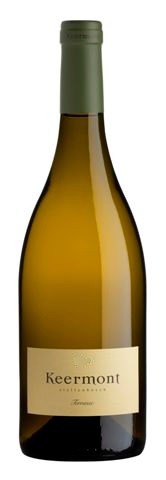
" We don't sell the wine without touching the vine "
| Country: | South Africa |
| Region: | Swartland Region |
| Winery: | Keermont Vineyards |
| Grape Type: | Chenin Blanc |
| Organic: | Yes |
| Vintage: | 2015 |
| Bottle Size: | 750 ml |

Graviere La Rouge Cuvee les Terrasses is made of 70% Merlot and 30% Cabernet Sauvignon
Deep red color with a narrow purple rim. Attractive aromas of ripe, juicy cherry and blackberry over spice, integrated toasted aromas. The palate is balanced and full-bodied with supple tannins, displaying rich cherry flavors combined with gentle toasting characters and a touch of spice. The finish is lasting with a bitter almond aftertaste.
Average age of the vines is 25 years.
Manual harvest from September 21th to October 7th 2015.
Upon arrival at the winery, only the best grapes were selected using a sorting table.
Skin contact maceration during 2 weeks in temperature controlled vats.
75% of the final wine was aged in stainless steel tanks with French oak staves and blended with 25% of wine aged in barrels.
Serve with red, white meats, poultry and fine cheeses.
Graviere La Rouge Cuvee les Terrasses is made of 70% Merlot and 30% Cabernet Sauvignon
Deep red color with a narrow purple rim. Attractive aromas of ripe, juicy cherry and blackberry over spice, integrated toasted aromas. The palate is balanced and full-bodied with supple tannins, displaying rich cherry flavors combined with gentle toasting characters and a touch of spice. The finish is lasting with a bitter almond aftertaste.
Average age of the vines is 25 years.
Upon arrival at the winery, only the best grapes were selected using a sorting table.
Skin contact maceration during 2 weeks in temperature controlled vats.
75% of the final wine was aged in stainless steel tanks with French oak staves and blended with 25% of wine aged in barrels.
Serve with red, white meats, poultry and fine cheeses.

Avennia Valery Red Blend is made from 86% Merlot and 14% Cabernet Franc
Valery is named for the patron saint of wine in the St. Emilion region that inspired it.
We started with old vine Merlot from a stony block in the heart of the Yakima Valley and added complex, aromatic Cabernet Franc from the Horse Heaven Hills. The result is a balanced, complex wine with the elegance and ethereal perfume that this blend of two of Washington’s best varietals are known for.
The nose on this wine is very perfumed, almost exotic with notes of fresh violets, red plum, winter mint, fresh herbs and crushed limestone qualities. The palate is poised and balanced, with red fruits and mocha powder encapsulated in limestone. The finish lingers delicately, with the Cabernet Franc asserting a light tobacco and herb note, giving depth. A compelling wine that will continue to unwind for 7-10 years in the cellar.
Review:
"Brought up in 30% new French oak, the 2016 Valery (70/30 Merlot and Cabernet Franc) offers more black cherry and earthy, herbal notes as well as a medium-bodied, seamless, beautifully balanced style. It too shows a vibrant, fresh, yet concentrated style that has a Bordeaux feel in its weight and texture."
- Jeb Dunnuck (April 2019), 93 pts
"Good medium-dark red. Aromas of blueberry, mocha, licorice and violet are a bit darker than those of the 2015 version. Dense and penetrating, with wild flavors of dark berries, licorice and game given lift by rocky minerality and a minty nuance. Chris Peterson slightly acidified his Cabernet Franc from Champoux Vineyard, which he added to the wine for richness. This beauty may yet tighten up in the bottle.- Stephen Tanzer"
- Antonio Galloni's Vinous (November 2018), 92+ pts

Blending Detail:
Grenache speaks loudly in the Bésoleil with notes of pomegranate, red raspberry, and strawberry leaf. The Counoise and Cinsualt bring bing cherry fruit and blueberry notes to the table, complicated by pepper and garrique. Mourvedre donates a wild meatiness to the blend, and a purple hue. Syrah rounds things out, adding texture, and flesh to the palate.
Review:
The first vintage where they’ve pushed the bottling back to give the cuvee 16-18 months in barrel, the 2015 Besoleil is a dead ringer for a high-quality Chateauneuf du Pape and offers perfumed notes of herbes de Provence, kirsch, licorice and sweet spice. It’s medium to full-bodied, textured and fruit-forward, with a hedonistic yet elegant profile that’s going to evolve gracefully.
Robert Parker 91-93 Points

Dominus Napa Valley Red Blend is made from 88% Cabernet Sauvignon, 7% Cabernet Franc, 5% Petit Verdot.
The historic Napanook Vineyard, a 124-acre site west of Yountville, was planted in 1838. This vineyard was the source of fruit for some of the finest Napa Valley wines. Estate-bottled in the spirit of the Bordeaux châteaux, Dominus Estate is dry-farmed to allow natural stress and good concentration of fruit. Grape clusters are crop-thinned to allow sun and air to pass in between, helping to achieve full maturation and soften the tannins. Only 20% to 40% new French oak barrels are used in order to limit the extraction of oak notes. To express the unique terroir, the classic Bordeaux grape varietals of Cabernet Sauvignon, Merlot, Cabernet Franc and Petit Verdot are planted with different root stocks best suited for the varying soil composition of gravel, heavy clay and loam.
Reviews:
One of the legendary Dominus, the 2021 Cabernet Sauvignon is unquestionably in the same league as the 2018, 2016, 2015, 2013, 2010, and 1991, and to my mind, wine simply doesn't get any better. Sporting a dense purple hue as well as an incredible perfume of blackcurrants, crushed stone, cedar pencil, smoke tobacco, and baking spices, it s rich, full-bodied, and voluptuously textured, with ripe yet building tannins. It reminds me slightly of the 2010 (maybe the 2013), and I suspect it will have a similar evolution. Hide bottles for 7-8 years, and it will evolve gracefully for 30+ years. Hats off to the team of Christian Moueix and director Tod Mostero.
Jeb Dunnuck 100 Points

La Despensa Boutique Pool Blend 75% Cinsault, 15% Pais, 5% Marsanne and 5% Roussanne.
A genuinely unique wine - La Despensa is the only producer of Cinsault in Colchagua and Pais from this valley is also extremely rare! The Cinsault and the 2 whites come from a new vineyard planted in 2017 and the Pais from a 150 year old, dry-farmed vineyard in Pumanque about 20 minutes from the winery that they run themselves organically. The Cinsault and Pais give notes of raspberry and strawberry and the white Roussanne and Marsanne a little mouthfeel and a hint of tropical fruit.
Organically grown grapes (not certified) from our own vineyard in Santa Ana, and Pumanque in the Colchagua Valley. Irrigated as sparingly as possible via drip irrigation (dry-farming for the 150 year old Pais). Hand harvested and sorted personally by me in the vineyard (I personally check every single bunch), then destemmed with the crusher removed from the destemmer. Grapes are fermented in open top bins and concrete tank and blended immediately after pressing. MLF occurs with the wine already blended. Wines are racked in November and again in January before being bottled after about 10 months ageing in 50% neutral oak barrels and 50% Flextank.
Versatile, goes well with beef, chicken, pasta, great for Summer BBQs
Review:
"The red blend 2021 Wines Pool Blend was produced with an unusual blend, especially for a wine from Colchagua, of 75% Cinsault, 15% País and 5% each Marsanne and Roussanne. It has kept a moderate 13.5% alcohol and retained good freshness (pH 3.44) after maturing exclusively in Flextank and being bottled unoaked. This is fruit-driven and straightforward, with a medium-bodied palate and fine tannins. 2,400 bottles produced. It was bottled in March 2022. - Luis Gutiérrez"
- Robert Parker's Wine Advocate (April 2023), 90 pts
Closeout!
65% Chenin Blanc, 13% Chardonnay, 17% Sauvignon Blanc and 5% Viognier
A polished light yellow gold color, this wine has a bouquet of citrus blossom with hazelnut, lemon grass and butterscotch undertones. The wine has a soft sweet entry with a racy linear acidity. Ripe citrus and stone fruit flavours evolve into a lovely lingering dry earthy finish. This is a textured white wine with layers of flavour. Drink 2014-2024.
Reviews:
The 2015 White Blend Terrasse comprises 56% Chenin Blanc, 17% Viognier, 14% Sauvignon Blanc and 13% Chardonnay, raised for 12 months in French oak. It has quite an aromatic bouquet of white peach, freshly sliced grapefruit and a touch of lychee, all well defined and vivacious. The palate is very well balanced with a slightly resinous, waxy opening, the Viognier here making its presence felt. There is a pleasant salinity on the finish with a gorgeous brightness and tension. This is a strong follow-up to the outstanding 2014.
- Wine Advocate, 93 pts
The Viognier component of
this Chenin Blanc-based blend with Sauvignon Blanc and Chardonnay was increased
to 17% in 2015, but it was also picked earlier to retain acidity. The result is
a very harmonious cuvee: rose water, aniseed, tangerine, some stone fruit and a
tangy, refreshing finish. 2017-21"
- Tim Atkin (South Africa
2017 Special Report), 93 pts
This Chenin Blanc-based blend, with additional portions of Chardonnay, Sauvignon Blanc and Viognier, is delicate in nature, though complex and layered beneath it's reserved surface. It boasts notes of apple flesh, melon rind, yellow flower, fynbos and beeswax on the nose and mouth, with final impressions of orange pith and lemon zest on the enduing finish. Harmonouos and well-balanced, it offers a pleasant, softly astringent texture that lends structure to the medium-weight palate and length to the close. Drink now–2023.
– Wine Enthusiast 93 Points
"This bristles with
quinine, mirabelle plum, blanched almond and lemon pith notes, while crackling
acidity runs underneath. Rich melon and yellow apple details fill in through
the finish, adding bass to match the treble. Chenin Blanc, Viognier, Sauvignon
Blanc and Chardonnay. Drink now through 2019. 625 cases made.–JM"
- Wine Spectator (May 31st
2017), 92 pts
The Keermont Estate and Vineyards
Located just beyond Stellenbosch, Keermont Vineyards is nestled in farm land in the beautiful valleys of South Africa. Keermont uses their name to honor the former farm, Keerweder, that once occupied their land. The word “keerweder” means a dead end in a valley. The literal translation is “blocked again”, which is in reference to the early settlers being blocked by the terrain when trying to pass through the valley.
The Keermont winery building and vineyards actually lie in the shadow of Guardian Peak, or “Suurberg”. This location is ideal for Keermont, as the fruit on this mountain is often compared to the grapes of Napa Valley’s famous Howell Mountain AVA.
In 1694, Jan Jac Van Dyk founded the land in the Blaawklippen Valley that is the location of present day Keermont. Other wineries such as Waterford, Dornier, and Stellenzicht are also on the land once owned by Van Dyk. The earliest account of a European landowner utilizing the area for agricultural use are Van Dyk’s records. Afterwards, the potential and beauty of the Blaawklippen Valley attracted many other landowners to the area and the land was divided into individual farms.
Mark and Monica Wraith bought into this land by purchasing the Fleurfontein and Keerweder III farms in 2003. They combined the two farms into the Keermont Vineyards Estate. The couple still live on the Keermont land with their family. Alex Starey is the Keermont winemaker. In 2005, Keermont began a major vineyard planting program and it now holds 27 ha under vine. In 2007, Keermont releases its first vintage, from a crop of only 5 barrels or 108 cases. In 2010, the physical Keermont winery building, complete with offices, processing facilities, barrel rooms, and a tasting room, was converted from the former spring water bottling plant that had once resided on the Fleurfontein farm. The total farm acreage for Keermont Vineyards is 157 hectares or 388 acres, with 27 hectares under vine. 18 hectares produce red varietals such as Cabernet Savignon, Merlot, and Syrah. 9 hectares hold the white varietals like Chenin Blanc, Chardonnay, and Viognier. Keermont also boasts Chenin Blanc vines that are over forty years old and used by De Trafford winery. Keermont aims to create wines that reflect their beautiful land and the particular year’s vintage condition. Keermont focuses on using minimal chemical fertilizers, few pesticides, and irrigate as little as possible. No fining or filtration is practiced on the Keermont Estate. Keermont desires a natural, harmonious vineyard that will in the long run produce better quality wines.
The goal of this estate is to make superior blends. The wines to be produced, but not written in stone, are:
Keermont Red – 40 % Cabernet Sauvignon, 40% Merlot, 20% Syrah.
Keermont White – 70% Chenin Blanc, 30% Viognier and Chardonnay
Dessert wine in exceptional vintages
Keermont Syrah – Syrah, Mourvedre, Viognier
Some wines from Keermont Winery:
Any Keermont wines we have in stock are listed below, if you don’t see the wine you are looking for please don’t hesitate to ask for it.

Lokoya Spring Mountain Cabernet Sauvignon is made from Napa Valley Cabernet Sauvignon.
Review:
The 2018 Cabernet Sauvignon Spring Mountain District is a monster of a mountain Cabernet that has a primordial bouquet of blackcurrants, smoked earth, chocolate, and graphite. While Spring Mountain wines tend to be more aromatic and complex right out of the gate, that’s not the case here, and this is going to need bottle age to round into form. Full-bodied on the palate, with a rich, concentrated mouthfeel, it has serious tannins, notable purity of fruit, and a great finish. With air, it picks up more and more classic Spring Mountain floral and exotic notes, and it’s flawlessly balanced, with gorgeous tannins and a great, great finish. This is a brilliant wine in the lineup and unquestionably one of the true gems from Spring Mountain in 2018. Give bottles 4-5 years and enjoy over the following 2-3 decades.
-Jeb Dunnuck 98 Points

Jip Jip Rocks Shiraz is made from 100 percent Shiraz.
Jip Jip Rocks wine is synonymous with premium wines from South Australia’s Padthaway wine region. The vineyard is planted in some of the world’s oldest mineral rich soils and in the most temperate of maritime climates. The Jip Jip Rocks vineyard consistently produces excellent fruit quality from low yielding vines.
Only the best parcels of fruit are carefully selected throughout the vineyard and utilized in the Jip Jip Rocks label. Great attention to detail with the integration of fruit flavors and fine oak barrels helps produce classic handcrafted wine styles.
Lifted spice and ripe mulberry/blackberry aromas are complimented with chocolate, cedar and cinnamon on the nose. Well-integrated oak tannin provides flavors of clove and supple texture, which supports the rich plum, blackberry and mocha. The overall structure is supple and generous with fine-grained tannin and a lingering finish.
Pairs well with venison, ribeye steak, lamb.