" We don't sell the wine without touching the vine "
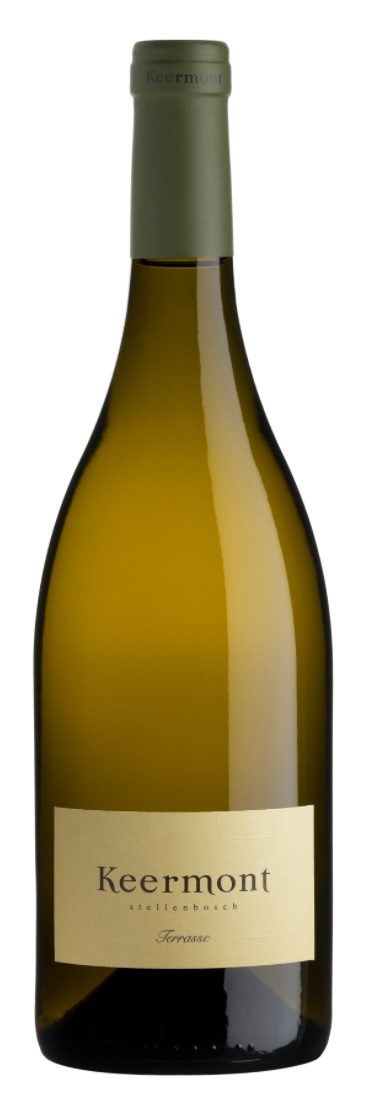
| Country: | South Africa |
| Region: | Swartland Region |
| Winery: | Keermont Vineyards |
| Grape Type: | Chenin Blanc |
| Organic: | Yes |
| Vintage: | 2018 |
| Bottle Size: | 750 ml |
Graviere La Rouge Cuvee les Terrasses is made of 70% Merlot and 30% Cabernet Sauvignon
Deep red color with a narrow purple rim. Attractive aromas of ripe, juicy cherry and blackberry over spice, integrated toasted aromas. The palate is balanced and full-bodied with supple tannins, displaying rich cherry flavors combined with gentle toasting characters and a touch of spice. The finish is lasting with a bitter almond aftertaste.
Average age of the vines is 25 years.
Upon arrival at the winery, only the best grapes were selected using a sorting table.
Skin contact maceration during 2 weeks in temperature controlled vats.
75% of the final wine was aged in stainless steel tanks with French oak staves and blended with 25% of wine aged in barrels.
Serve with red, white meats, poultry and fine cheeses.
Mascot is a small-production label founded by Will Harlan in Napa Valley. The wines under this label are made from the younger vines of Harlan Estate, BOND, and Promontory, but The Mascot bottles share an exclusive preview at the development of their estates. Founded as an initial experiment to see what the young vines were capable of producing, the wines were initially only shared with close friends and family. By 2008, Will officially released the first vintage to the public since production had increased significantly. They create just one wine made from Cabernet Sauvignon, and the bottle is aged for five years before release. Assembled into a single, youthful expression, this wine shares a glimpse into the evolution and pedigree of its parent estates.
Tasting Notes:
Following a vintage full of changing conditions and demanding decision points, the steady and pleasant progress of the 2018 vintage left our team, at times, in limbo. Contradictory as it may seem, the dramas that sometimes punctuate the definitive months for the growing season help to frame the winegrowing team’s course of action; yet the tranquil succession of weeks that emerged between spring and fall in 2018 left almost entirely open the question of when to harvest. Healthy rainfall in March and April preceded a benevolent summer, whose mildness was interrupted only briefly by a few warming periods. The fruit of the young vines maintained a measured balance that gave the team little indication that harvest was imminent. Fog and temperate days followed in September, when—relying more on instinct than empirical cues—we began to pick. This judgment—as well as the gentle nature of the season—is confirmed in the subtle, ethereal power of the vintage, which reveals itself first in the deep, brooding aromas of dark fruit, black tea, and herbal notes. The texture expands around a lifted structure, as powdery tannins gently resolve. This diffused, enigmatic softness is anchored on the mid-palate by a gratifying density, which prepares the senses for a flourish of hidden energy and vivid detail that illuminates the finish.
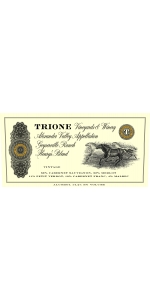
A tribute to the family patriarch, Henry Trione, this deep red wine is an artful blend of the five classic Bordeaux varieties: 35% Cabernet Sauvignon, 34% Merlot, 13% Petit Verdot, 13% Cabernet Franc and 5% Malbec. Cabernet Sauvignon forms the base structure and Merlot contributes fruit flavors and velvety texture; the Malbec, Cabernet Franc and Petit Verdot add depth, color and spice. We harvested the fully ripe grapes from select blocks on three Trione ranches in Alexander Valley, just ahead of early rains.
Winemaker Notes:
Aromas of black currants, blackberry pie and warm spices are the wine’s first impressions. On the palate Henry’s Blend is soft and supple, a seamless integration of ripe fruit, French oak and fine-grained tannins. Delicious now, the solid structure and abundant fruit suggest this wine will age well for 6–7 years with proper cellaring.
Review:
"This is a rich and flavorful red with aromas of plums, currants, mocha, cloves and burnt sage. Fleshy and textured, with a full body and polished, broad tannins. Lovely creamy texture, with a long and toasty finish. 35% cabernet sauvignon, 34% merlot, 13% petit verdot, 13% cabernet franc and 5% malbec. Drink now or hold."
- James SUCKLING (June 2023), 92 pts
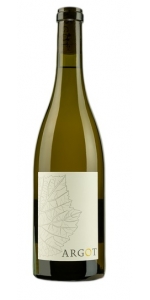
Argot Chardonnay Sonoma County is made from 100 percent Chardonnay.
Pouring a green-tinted gold, our Sonoma County Chardonnay is a beautiful wine from word go. Radiating from within, a blast of apple/pear fruit informs this wine both aromatically, and on the palate. As flavors unfurl, a progression of orange blossom, pineapple, white peach, and hazlenut are followed by a finish dominated by ginger, baked apple, with a trailing kiss of mint’s freshness. A stunning wine — wholly informed by the perfection of 2018’s growing season — defined by its dichotomy of massively intense flavors, and superb acidity and freshness.
Raised by minimalistic methods, often associated with the classic Chardonnay winemaking techniques of Meursault. With a focus on the coolest Chardonnay region in Sonoma County, 2018’s long, even growing season favored our vineyards’ moderate climate, old vines and deep volcanic soils. These grapes were allowed an extended ripening period on the vine, resulting in perfect balance and concentrated flavors.
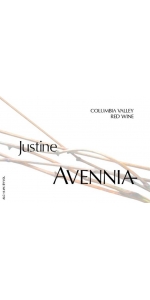
Avennia Justine Red Blend 56% Grenache, 31% Mourvèdre, 13% Syrah
Justine reflects our belief that Washington is capable of producing world class blends of grape varieties traditional to the Southern Rhone region of France. The name is inspired by one of the great heroines of recent literature, who also sprung from the imagination of the Mediterranean. Dark, seductive, complex, with a chasm of depth: The Justine is a great reflection of Avennia's mission of expression, and Washington's generous terroir.
Tasting Note: Big black cherry, blackberry, hints of orange peel, fresh herbs and loam on the nose. Plush and round on the palate. Dark earthy fruits from the Mourvedre, along with citrus high notes, mountain flowers, jasmine, and savory herbs. Balanced and complex without forgetting its hedonistic roots in the Southern Rhone.
Review:
A blend of 56% Grenache, 31% Mourvèdre, 13% Syrah brought up all in older oak, the 2016 Justine offers a great core of black fruits as well as lots of peppery herbs, earth, and classic meatiness. It looks to be a great vintage for this cuvée."
- Jeb Dunnuck (April 2018), 92-94 pts
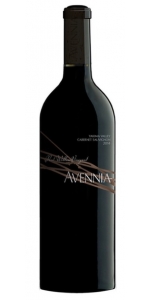
Avennia Red Willow Cabernet Sauvignon is made from 100% Cabernet Sauvignon.
The Red Willow Cabernet is a true blockbuster.
Coming from one specific block of 30 year old vines at this iconic vineyard, then strictly barrel selected, this is the essence of powerful, old vine Washington Cabernet. After all of our efforts promoting the idea of the Bordeaux blend, it would take a pretty compelling argument to suspend that idea and make a 100% varietal Cabernet. In 2016 Red Willow provided us with just that. Each time we tasted it in the barrel, the belief grew that this was something special. Something we can't make every year. In the end we were won over, and decided to make a limited amount of this wine. But don't be fooled, as this too is a blend and a selection. Each year as we are tasting the grapes as harvest approaches, we notice that the vines near the bottom of this long, steep west-facing slope, are a little different. The vines at the bottom are in a little richer soil, and get a little more water, so we pick them separately, sometimes even a week or ten days apart, and keep them separate in barrel.
This wine is all from the top of the vineyard, with its lower yield and poorer soils giving more concentration and interest. Then further, nearly every combination of new and used French oak barrels were trialed to find the best blend. It's not enough just to use the four best barrels, but to trial each combination to see how they complement each other. For a wine with this much mass, 100% new French oak was used for the first time at Avennia. It is a wine that needs a little cellaring to start, but should last a very long time.
Review:
The flagship Cabernet, the 2018 Cabernet Sauvignon Red Willow Vineyard is all varietal, from old vines in a great vineyard in Yakima Valley, that spent 20 months in 80% new French oak. It reveals a deep purple hue as well as a backward, brooding nose of smoked blackcurrants, tobacco, scorched earth, and violets. It has beautiful richness yet takes plenty of coaxing to open up. On the palate, it's medium to full-bodied and has a nicely textured, balanced mouthfeel, plenty of tannins, and outstanding length. It's mostly potential at this point and is going to benefit from at least 4-5 years of bottle age, but my money is on it having 20+ years of prime drinking.
-Jeb Dunnuck 96 Points
A polished light yellow gold color, this wine has a bouquet of citrus blossom with hazelnut, lemon grass and butterscotch undertones. The wine has a soft sweet entry with a racy linear acidity. Ripe citrus and stone fruit flavours evolve into a lovely lingering dry earthy finish. This is a textured white wine with layers of flavour.
Review:
"From South Africa’s coastal region on the Western Cape, are the terraced vineyards of Chenin Blanc (39%), Sauvignon Blanc (34%) and Chardonnay (13%) on Keermont. The wine imparts a generous entry of peach nectar, honeyed tangerine, ginger root, and white flowers. Sumptuous notes of butterscotch, reined in by a fine acidity."
- The Tasting Panel (November/December 2021), 93 pts
The Keermont Estate and Vineyards
Located just beyond Stellenbosch, Keermont Vineyards is nestled in farm land in the beautiful valleys of South Africa. Keermont uses their name to honor the former farm, Keerweder, that once occupied their land. The word “keerweder” means a dead end in a valley. The literal translation is “blocked again”, which is in reference to the early settlers being blocked by the terrain when trying to pass through the valley.
The Keermont winery building and vineyards actually lie in the shadow of Guardian Peak, or “Suurberg”. This location is ideal for Keermont, as the fruit on this mountain is often compared to the grapes of Napa Valley’s famous Howell Mountain AVA.
In 1694, Jan Jac Van Dyk founded the land in the Blaawklippen Valley that is the location of present day Keermont. Other wineries such as Waterford, Dornier, and Stellenzicht are also on the land once owned by Van Dyk. The earliest account of a European landowner utilizing the area for agricultural use are Van Dyk’s records. Afterwards, the potential and beauty of the Blaawklippen Valley attracted many other landowners to the area and the land was divided into individual farms.
Mark and Monica Wraith bought into this land by purchasing the Fleurfontein and Keerweder III farms in 2003. They combined the two farms into the Keermont Vineyards Estate. The couple still live on the Keermont land with their family. Alex Starey is the Keermont winemaker. In 2005, Keermont began a major vineyard planting program and it now holds 27 ha under vine. In 2007, Keermont releases its first vintage, from a crop of only 5 barrels or 108 cases. In 2010, the physical Keermont winery building, complete with offices, processing facilities, barrel rooms, and a tasting room, was converted from the former spring water bottling plant that had once resided on the Fleurfontein farm. The total farm acreage for Keermont Vineyards is 157 hectares or 388 acres, with 27 hectares under vine. 18 hectares produce red varietals such as Cabernet Savignon, Merlot, and Syrah. 9 hectares hold the white varietals like Chenin Blanc, Chardonnay, and Viognier. Keermont also boasts Chenin Blanc vines that are over forty years old and used by De Trafford winery. Keermont aims to create wines that reflect their beautiful land and the particular year’s vintage condition. Keermont focuses on using minimal chemical fertilizers, few pesticides, and irrigate as little as possible. No fining or filtration is practiced on the Keermont Estate. Keermont desires a natural, harmonious vineyard that will in the long run produce better quality wines.
The goal of this estate is to make superior blends. The wines to be produced, but not written in stone, are:
Keermont Red – 40 % Cabernet Sauvignon, 40% Merlot, 20% Syrah.
Keermont White – 70% Chenin Blanc, 30% Viognier and Chardonnay
Dessert wine in exceptional vintages
Keermont Syrah – Syrah, Mourvedre, Viognier
Some wines from Keermont Winery:
Any Keermont wines we have in stock are listed below, if you don’t see the wine you are looking for please don’t hesitate to ask for it.
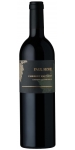
Paul Hobbs Coombsville Cabernet Sauvignon is made fro 85% Cabernet Sauvignon, 7% Cabernet Franc, 6% Petit Verdot, 2% Merlot.
Since our inaugural release last year, this wine has quickly become one of the most compelling in their portfolio. Offering a gorgeous deep purple hue, our 2019 captivates with a bouquet of crushed blueberry, summer savory spice, and a delicate tobacco leaf note. The palate is remarkably balanced with well-integrated
tannins and fresh acidity that wraps around boysenberry and black fig along subtle notes of rosemary and a crush rock minerality, which lends tension through the long finish.
Review:
A delicious, layered, chocolate- and cherry-scented wine that entices you from the first sniff and pulls you through a rich palate and a lingering finish. So luscious, balanced, vivid and deep, showing the silky tannins and cool fruit notes of this southern Napa district. Contains 6% petit verdot, 2% cabernet franc and 4% merlot. Aged in 53% new French oak.
-James Suckling 96 Points
A delicious, layered, chocolate- and cherry-scented wine that entices you from the first sniff and pulls you through a rich palate and a lingering finish. So luscious, balanced, vivid and deep, showing the silky tannins and cool fruit notes of this southern Napa district. Contains 6% petit verdot, 2% cabernet franc and 4% merlot. Aged in 53% new French oak. Drinkable now, but best from 2030.
-PinotReport 96 Points
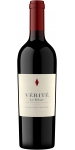
Verite Le Desir Red is made from 83% Cabernet Franc, 8% Merlot, 5% Malbec, 4% Cabernet Sauvignon.
2019 Le Désir has a rich violet hue, ringed by a slender rim of incandescent purple-ruby color. Beautifully characteristic of Cabernet Franc, the aromatics of this wine are expressive and exotic, showing fresh rose petal perfume, fresh cherry blossom, California bay laurel, crushed pomegranate, blackberry coulis, and well-integrated French oak aromas of ground cinnamon, and brown buttered toast. On the palate, a robust structure defined by powdery tannins and lively acidity delivers a very fine balance, with an exceptionally long finish.
Review:
Sublime cabernet franc aromas of currants, flowers and citrus. Full-bodied with incredible purity of fruit and length. You don’t feel the tannins, but they are there. The acidity gives you dynamic reality and perfect length. A truly great wine. 83% cabernet franc, 8% merlot, 5% malbec, and 4% cabernet sauvignon. Best from 2026.
-James Suckling 100 Points
The 2019 Le Désir is just as stunning as the first time I tasted it from bottle. It's pure and layered, with alluring scents of Morello cherries, dried mushrooms, cigars, sage and aniseed wafting from the glass. The palate strikes a fine balance of concentrated fruit, loads of powdery tannins, and energetic bursts of fresh acidity. It has a deep core of concentrated, perfumed fruit with the first faint touches of umami character and a long finish driven by floral and iron tones. I can't get enough of this wine!
Robert Parker's Wine Advocate 100 Points