
" We don't sell the wine without touching the vine "
| BUY MORE! SAVE MORE! | ||||||||||||||||||||
|
| Country: | South Africa |
| Region: | Western Cape |
| Winery: | Kershaw |
| Grape Type: | Chardonnay |
| Vintage: | 2021 |
| Bottle Size: | 750 ml |
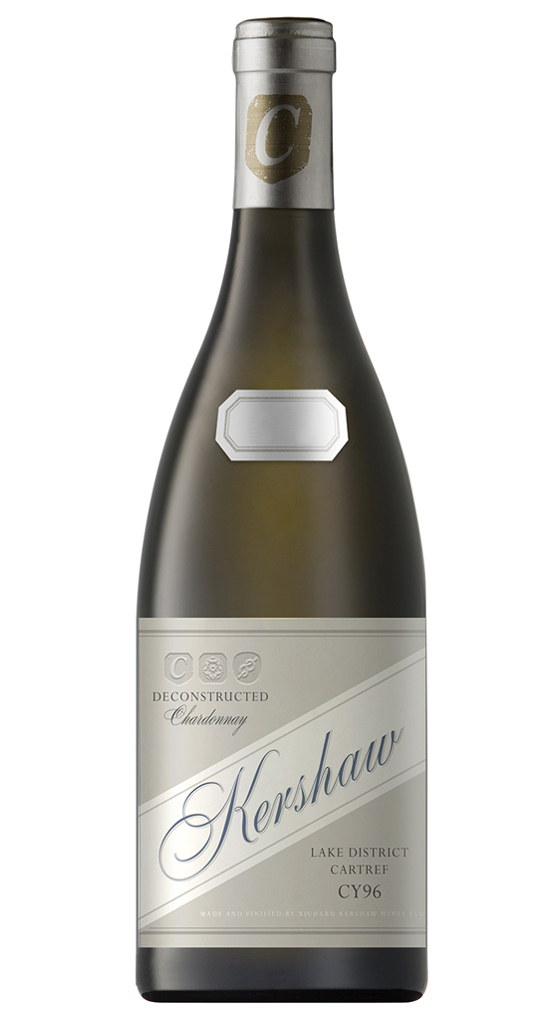
Kershaw Chardonnay Deconstructed Lake District Cartref CY96 is made from 100 percent Chardonnay.
Sourced from the western part of Elgin, known as the Lake District, this clone produces wines that are nervous, aromatic, elegant and sharp with slightly lower alcohol and finely balanced, the fruit profile being subtle with hints of citrus/orange peel and peach blossom and with time, some nutty elements. The Cartref soils, a mixture of decomposed granite, pebbles and quartz, adds delicacy and heightens the fruit intensity.
The inspiration for my Deconstructed Chardonnay stems from my belief that the Elgin region boasts credentials that make it world-class. To bolster these regional credentials, I have set out to prove that Elgin has both a signature grape, as well as specific ‘terroirs' (meso-climates) that reflect intra-regional distinctions. To fully comprehend this, it is necessary to dig deeper into the DNA that make up our region. To elucidate this, I have decided to make these 3 Chardonnay wines, each selected from a specific vineyard and an individual clone. Importantly, this is an ongoing story that will unfold over the coming years.
Surrounded by mountains, the Elgin district sits in the Western Cape of South Africa. The year-round cool climate is perfect for producing grapes with rich, subtle flavors.
Focusing on apposite noble grapes, i.e. ones with the ability to produce world-class examples, our Kershaw Elgin Chardonnay, Syrah and Pinot Noir and Kershaw Deconstructed Chardonnay and Syrah are made by South Africa’s only winemaking Master of Wine, Richard Kershaw.
Richard Kershaw Wines was established in January 2012 to create clonally selected, site-specific, cool climate wines in the Elgin Valley, South Africa’s coolest wine region. Focusing on apposite noble grapes, i.e. ones with the ability to produce world-class examples, our Kershaw Elgin Chardonnay, Syrah and Pinot Noir and Kershaw Deconstructed Chardonnay and Syrah are made by South Africa’s only winemaking Master of Wine, Richard Kershaw.
Winery Philosophy: Our commitment is to make the best wines possible from the vine clones best suited to our unique terroir. Our grapes are grown in the cool climate vineyards of Elgin in the Western Cape of South Africa. We produce only a very limited number of cases of Kershaw Elgin Chardonnay and Kershaw Elgin Syrah each vintage. Our aim always is to produce some of the best wines of their style in South Africa.
Owner: Richard Kershaw MW
Date Founded: January 2012
Born and raised in the UK, Richard travelled extensively before settling in South Africa in 1999 to make wine full time. He established Richard Kershaw Wines in January 2012 to create clonally selected, site-specific, cool climate wines in the Elgin Valley, the country’s coolest wine region, choosing to focus on apposite noble grapes (ones with the ability to produce world-class examples) and now has a stable of award-winning, much in demand wines including Kershaw Elgin Chardonnay, Syrah and Pinot Noir and Kershaw Deconstructed Chardonnay and Syrah.
One of only 10 Masters of Wine who actively make their own wines and South Africa’s only winemaking Master of Wine, Richard is much in demand when not in the vineyard or cellar. A wine show judge for many prestigious competitions around the globe, he is also part of the educational panel for the Institute of Masters of Wine, lectures for the WSET (Wine & Spirit Education Trust) in South Africa, and shares the breadth of his knowledge with students and consumers via talks, tastings and blogs.
Our grapes are grown in the cool climate vineyards of Elgin in the Western Cape of South Africa. We produce a limited number of cases of Kershaw Elgin Chardonnay, Syrah and Pinot Noir each vintage under our Clonal Selection range, and site- soil- and clone- specific Elgin Chardonnay and Syrah in our Deconstructed range. We have recently introduced our GPS Series range which explores unusual sites from outside the Elgin region, and our Smuggler's Boot range in which Richard uses a variety of winemaking techniques to produce easy drinking wines. Our aim always is to produce some of the best wines of their style in South Africa.
The Elgin Valley benefits from higher altitude, ocean proximity, specific cloud cover sequencing, high cold units and a large diurnal range, similar to Southern Burgundy and the Northern Rhône, which enables the germane grapes, Chardonnay and Syrah, to show a sense of place.
Kershaw Elgin Chardonnay makes use of the lower-yielding Dijon clones, namely 76, 95 & 96 (developed at the University of Burgundy in Dijon, France), offering a restrained, mineral style focused on elegance with a white, fruit character, some oatmeal, and complexity gained from percipient wood.
Kershaw Elgin Syrah makes use of local clones 9c and 22 giving subtlety and precision built on fine tannins that educe harmony, freshness and flavours of black fruit, iodine, medicinal notes and black pepper.
Kershaw Elgin Pinot Noir makes use of French clones PN667, PN115 and PN113 giving floral attributes underscored by purity, focus and freshness framed by fine powder tannins yet cushioned by a succulent texture and flavours of black cherry, pomegranate, rose petal and raspberry.
Each Clonal Selection wine is made from 3-4 small parcels on terroir-specific plots with particular soils types. Each Deconstructed wine is made from clone specific, soil specific site in Elgin. They are all handpicked into small lugs and vinified in Elgin travelling no more than 10-15 minutes between vineyard and cellar, avoiding unnecessary crushing and premature juice oxidation. In the cellar, they are handled minimally using a gravity-fed system that avoids pumping and no products are added to the wine.
Winemaker: Richard Kershaw MW

Kershaw Chardonnay Deconstructed Groenland Shale CY548 is made from 100 percent Chardonnay.
The inspiration for this Chardonnay stems from my belief that the Elgin region has both a signature grape as well as particular terroirs within its demarcated boundary that reflect regional credentials. This Chardonnay was selected from a sub-region of Elgin from a specific vineyard and an individual clone (CY548).
Tasting Notes:
Sourced from the foothills of the Groenland Mountain in Northern Elgin this clone has been taken from Corton Charlemagne cuttings. It produces wines that have aromatics oscillating between lemon blossom, white flowers, petrichor and struck stone. Full in body they exude concentration with white stone fruit yet reinforced with an austere texture and robustness that makes for excellent aging potential. The Bokkeveld Shales adds structure and concentration to the flavor.
Vineyards:
Sourced from the foothills of the Groenland Mountain in Northern Elgin this clone has been taken from Corton Charlemagne cuttings.
Winemaking:
Grapes were hand-picked in the early autumnal mornings, placed into small lug baskets and tipped directly into a press before being gently whole-bunch pressed up to a maximum of 0.6 bar or until a low juice recovery of 580 liters per ton was obtained. The juice gravity-flowed directly to barrel (no pumps were used at all) without settling. The unclarified juice had no enzymes or yeast added to it and therefore underwent spontaneous fermentation until dry, with malolactic discouraged. The wine rested in barrel for 4 months prior to judicious sulfuring and a further 7 months’ maturation in barrel before racking and bottling.
Barrel: Selection: A small number of artisanal coopers are selected from mostly Burgundy, with only French oak was chosen. Up to 40% of the oak is new with the remainder split into 2nd and 3rd fill barrels of predominantly 228 litres.
Look at pairing this with textured fish, straightforward chicken dishes, pan-fried or grilled pork dishes, soft-rind cheeses, cream or creamy dishes be it with pasta or the aforementioned fish, chicken or pork, to allow the complexity of the wine to shine through. If using mustard, preferably use Dijon mustard as it uses verjus (soured grape juice) and not vinegar. Also look to delicate herbs (tarragon, dill, basil, parsley) rather than hard stalked herbs (rosemary, thyme, oregano, etc). Avoid smoked meats or fish as well as highly spiced dishes as this can overwhelm the wine and clash with the oak. I would try oysters; Lobster grilled or boiled but not thermidor as it is too rich; turbot, dover sole, sea bass, yellowtail with a shellfish sauce; fish pie; roasted free-range chicken with tarragon; roast loin of pork with garlic and ginger; truffle risotto; pasta in a clam sauce; slice of brie de meaux.
Review:
"Perfume of flowers, minerals and citrus zest. The palate is dense and focused, almost chewy with an opulent mandarin mid palate and long, savory finish. Matured in 50% new oak that is seamlessly integrated with the wine."
- International Wine Review (Richard Kershaw Lifts Elgin To New Heights, February 2019), 94 pts

Kershaw Syrah Deconstructed Lake District Cartref SH22 is made from 100 percent Syrah.
The inspiration for this Syrah stems from my belief that the Elgin region has both a signature grape as well as particular terroirs within its demarcated boundary that reflect regional credentials. This Syrah was selected from a sub-region of Elgin from a specific vineyard and an individual clone.
Sourced from a single parcel in the Western part of Elgin, the 22 clone produces fuller, well-colored yet finely structured wines. They tend to be more concentrated as yields are low with more black fruit, black pepper and meaty notes. The Cartref soils, a mixture of decomposed sandstone, pebbles and quartz, add gracefulness and heighten the fruit intensity.
The grapes were handpicked under autumnal skies into small lug baskets and then manually sorted on a conveyor before the stems were removed. The destemmed berries fell onto a vibrating table in order to remove jacks and substandard berries before dropping uncrushed into a small 500kg conical hopper and forklifted into open-topped fermenters. The grapes underwent a 3-day maceration before spontaneous fermentation began. A gentle pigeage (punch-down of the cap) program was charted and the grapes remained on skins for 26 days. The wine was then racked to barrel under gravity and the remaining pomace basket-pressed. Malolactic then proceeded in barrel followed by a light sulfuring and 17-month maturation. No finings were necessary and the wine was simply racked and bottled unfiltered.
Review:
"The 2017 Kershaw Deconstructed Lake District Cartref SH22, matured 50% in new oak for 17 months, is a little more open on the nose compared to the SH9c and delivers a touch more red berry fruit, quite candied in style and suggesting strawberry pastilles. The palate is medium-bodied with a saline entry, fine definition and a mélange of red and black fruit laced with licorice toward the poised finish. Excellent.- Neal Martin"
- Antonio Galloni's Vinous (April 2021), 93 pts

Kershaw Pinot Noir Deconstructed Kogelberg Sandstone PN115 is made from 100 percent Pinot Noir.
Only two barrels made. The inspiration for these Deconstructed Pinot Noir’s stems from my belief that the Elgin region boasts credentials that make it world-class. My mandate has been to prove that Elgin has a signature grape synonymous with the area and exhibits specific ‘terroirs’ (mesoclimates) within its demarcated boundary, reflecting regional distinctions. To fully comprehend this, it is necessary to dig deeper into the DNA that makes up our region. As such, I split Elgin into seven different sub-regions or zones whereby each zone identifies with a particular topographical or climatic nuance. Within these zones, I then selected specific vineyards and further an individual clone. This wine is from the South Western part of Elgin, in the Kogelberg biosphere. The Sandstone soils lend lightness, elegance and lift in the mid-palate, very subtle. PN115 tends to be more broad and structured but on these soils still has a lovely lift.
Tasting Notes : Light to medium cerise; intense and attractive aromas of strawberry, Bing cherry, orange peel and dark chocolate. The perfume lingers into the palate as the entry is medium-bodied, juicy, ripe and silky-textured. A pulsating acidity coated by fleshy red plums, cherry compote and tinned strawberry. Intermingled are wisps of incense, almost peat notes from an earthier wood content giving a beguiling interplay of wood and fruit. Complex with excellent concentration, the wine has a crushed velvet tannin and persistency that lingers on for many minutes.
Pair with roast duck breast with a raspberry glaze.
Kershaw Chardonnay Deconstructed Groenland Shale CY548 is made from 100 percent Chardonnay.
The inspiration for this Chardonnay stems from my belief that the Elgin region has both a signature grape as well as particular terroirs within its demarcated boundary that reflect regional credentials. This Chardonnay was selected from a sub-region of Elgin from a specific vineyard and an individual clone (CY548).
Tasting Notes:
Sourced from the foothills of the Groenland Mountain in Northern Elgin this clone has been taken from Corton Charlemagne cuttings. It produces wines that have aromatics oscillating between lemon blossom, white flowers, petrichor and struck stone. Full in body they exude concentration with white stone fruit yet reinforced with an austere texture and robustness that makes for excellent aging potential. The Bokkeveld Shales adds structure and concentration to the flavor.
Vineyards:
Sourced from the foothills of the Groenland Mountain in Northern Elgin this clone has been taken from Corton Charlemagne cuttings.
Winemaking:
Grapes were hand-picked in the early autumnal mornings, placed into small lug baskets and tipped directly into a press before being gently whole-bunch pressed up to a maximum of 0.6 bar or until a low juice recovery of 580 liters per ton was obtained. The juice gravity-flowed directly to barrel (no pumps were used at all) without settling. The unclarified juice had no enzymes or yeast added to it and therefore underwent spontaneous fermentation until dry, with malolactic discouraged. The wine rested in barrel for 4 months prior to judicious sulfuring and a further 7 months’ maturation in barrel before racking and bottling.
Barrel: Selection: A small number of artisanal coopers are selected from mostly Burgundy, with only French oak was chosen. Up to 40% of the oak is new with the remainder split into 2nd and 3rd fill barrels of predominantly 228 litres.
Look at pairing this with textured fish, straightforward chicken dishes, pan-fried or grilled pork dishes, soft-rind cheeses, cream or creamy dishes be it with pasta or the aforementioned fish, chicken or pork, to allow the complexity of the wine to shine through. If using mustard, preferably use Dijon mustard as it uses verjus (soured grape juice) and not vinegar. Also look to delicate herbs (tarragon, dill, basil, parsley) rather than hard stalked herbs (rosemary, thyme, oregano, etc). Avoid smoked meats or fish as well as highly spiced dishes as this can overwhelm the wine and clash with the oak. I would try oysters; Lobster grilled or boiled but not thermidor as it is too rich; turbot, dover sole, sea bass, yellowtail with a shellfish sauce; fish pie; roasted free-range chicken with tarragon; roast loin of pork with garlic and ginger; truffle risotto; pasta in a clam sauce; slice of brie de meaux.
Review:
"Perfume of flowers, minerals and citrus zest. The palate is dense and focused, almost chewy with an opulent mandarin mid palate and long, savory finish. Matured in 50% new oak that is seamlessly integrated with the wine."
- International Wine Review (Richard Kershaw Lifts Elgin To New Heights, February 2019), 94 pts
Kershaw Syrah Deconstructed Lake District Cartref SH22 is made from 100 percent Syrah.
The inspiration for this Syrah stems from my belief that the Elgin region has both a signature grape as well as particular terroirs within its demarcated boundary that reflect regional credentials. This Syrah was selected from a sub-region of Elgin from a specific vineyard and an individual clone.
Sourced from a single parcel in the Western part of Elgin, the 22 clone produces fuller, well-colored yet finely structured wines. They tend to be more concentrated as yields are low with more black fruit, black pepper and meaty notes. The Cartref soils, a mixture of decomposed sandstone, pebbles and quartz, add gracefulness and heighten the fruit intensity.
The grapes were handpicked under autumnal skies into small lug baskets and then manually sorted on a conveyor before the stems were removed. The destemmed berries fell onto a vibrating table in order to remove jacks and substandard berries before dropping uncrushed into a small 500kg conical hopper and forklifted into open-topped fermenters. The grapes underwent a 3-day maceration before spontaneous fermentation began. A gentle pigeage (punch-down of the cap) program was charted and the grapes remained on skins for 26 days. The wine was then racked to barrel under gravity and the remaining pomace basket-pressed. Malolactic then proceeded in barrel followed by a light sulfuring and 17-month maturation. No finings were necessary and the wine was simply racked and bottled unfiltered.
Review:
"The 2017 Kershaw Deconstructed Lake District Cartref SH22, matured 50% in new oak for 17 months, is a little more open on the nose compared to the SH9c and delivers a touch more red berry fruit, quite candied in style and suggesting strawberry pastilles. The palate is medium-bodied with a saline entry, fine definition and a mélange of red and black fruit laced with licorice toward the poised finish. Excellent.- Neal Martin"
- Antonio Galloni's Vinous (April 2021), 93 pts
Kershaw Pinot Noir Deconstructed Kogelberg Sandstone PN115 is made from 100 percent Pinot Noir.
Only two barrels made. The inspiration for these Deconstructed Pinot Noir’s stems from my belief that the Elgin region boasts credentials that make it world-class. My mandate has been to prove that Elgin has a signature grape synonymous with the area and exhibits specific ‘terroirs’ (mesoclimates) within its demarcated boundary, reflecting regional distinctions. To fully comprehend this, it is necessary to dig deeper into the DNA that makes up our region. As such, I split Elgin into seven different sub-regions or zones whereby each zone identifies with a particular topographical or climatic nuance. Within these zones, I then selected specific vineyards and further an individual clone. This wine is from the South Western part of Elgin, in the Kogelberg biosphere. The Sandstone soils lend lightness, elegance and lift in the mid-palate, very subtle. PN115 tends to be more broad and structured but on these soils still has a lovely lift.
Tasting Notes : Light to medium cerise; intense and attractive aromas of strawberry, Bing cherry, orange peel and dark chocolate. The perfume lingers into the palate as the entry is medium-bodied, juicy, ripe and silky-textured. A pulsating acidity coated by fleshy red plums, cherry compote and tinned strawberry. Intermingled are wisps of incense, almost peat notes from an earthier wood content giving a beguiling interplay of wood and fruit. Complex with excellent concentration, the wine has a crushed velvet tannin and persistency that lingers on for many minutes.
Pair with roast duck breast with a raspberry glaze.

Argot Simpatico Ranch Chardonnay is made from 100 percent Chardonnay.
Powerful aromas of key-lime, white flowers, orange blossoms and a fierce, flinty, sauvage note define a wildly complex nose. Once in the mouth, gracefully pronounced textures coat the palate delivering an exotic interpretation of cool-climate Chardonnay character — lime peel, orange blossom, ginger and clove —lingerings deep into a vibrant finish.
Planted 1978. Shallow volcanic soils on the gently-sloped, south-facing foothills of Bennett Peak on Bennett Valley’s floor. One of California’s coolest Chardonnay vineyards. In the final year of 3-year draught cycle, Simpatico Ranch saw its earliest ever harvest and smallest crop, exposing a reserve of exoticism and minerality previously untapped. A watershed vintage for both the vineyard, and appellation. Night harvested by hand on 9/16, whole-cluster pressed direct to barrel; no settling to ensure maximum lees contact. Barrel fermented on heavy lees. Malolactic fermentation. 16 months in French oak, 50% new. Finished 2 months in steel tank, low Sulphur during barrel elevage.
Review:
The 2021 Chardonnay Simpatico Ranch needs a lot of swirling before it shoots from the glass with notes of lemon tart, orange blossoms, candied ginger, and fresh nectarines with hints of crushed rocks, struck flint, and nutmeg. The medium to full-bodied palate delivers amazing tension, with tight-knit citrus and spice layers and a fantastically well woven satiny texture, finishing long and layered. "We only get about 1.5 tons per acre here," said owner/winemaker Justin Harmon. "This comes from old vines on AXR rootstock."
-Wine Independent 97 Points

A pale, straw-colored wine with a green hue that is sure to transport you to the sea with its salty succulence and crushed oyster shell notes. Acacia flowers, white pepper, and pear are highlights of an intensely floral expression. Crisp flavors of lime and stone fruit ensure a delightfully light-on-it’s-feet mouthfeel with electric acidity and a long finish.
Reviews:
Creamy in texture yet vibrant in racy acidity, this medium-bodied wine is balanced to a tee and ready to enjoy now or saved for the short term. Offers tangy lemon zest, crisp green apple and delicate lactic accents along with mild oak spices.
-James Suckling 93 Points
The 2021 Chardonnay Old Stones has inviting aromas of baked apples, quince paste, dried acacia, matchstick and gravel dust. The light-bodied palate is most notable for its concentrated fruit and luxurious, mouth-coating texture. Its generosity is balanced by vibrant acidity, and it has a long, honey-nut finish.
-Robert Parker's Wine Advocate 93 Points

2021 Rossj-Bass displays the main features of the vintage well, with intense fruit concentration and floral notes. The nose shows ripe citrus notes of lemon peel and orange evolving into tropical fruits. The richness of the nose and the same notes are reflected on the palate, where remarkable acidity balances the fruit concentration. The wine is rich, full-bodied and creamy, with a long finish.
Review:
The 2021 Gaja Rossj-Bass starts off with very, crisp, green fruit and much more Sauvignon Blanc dominant aromas of grassy, bright, fragrant green apple and green pepper - all very bright and cheerful. Then Chardonnay seems to take over in the medium-full bodied and pleasing creamy texture of the wine. This is balanced again by the tangy, juicy acidity of Sauvignon. This is very elegant blend of Sauvignon Blanc aromas and zestiness and the textural comfort of Chardonnay. The name Rossj is a nickname of Angelo Gaja’s second daughter, Rossanna.
-Wine Independent 94 Points

Aalto P.S. Pagos Seleccionados Tinto is made from 100 percent Tempranillo.
Climatic conditions
The farming year began with a mild autumn and little precipitation. A very dry winter started with -9ºC reaching at the end higher temperatures than normal for that time of the year. Spring and summer characterized by little rain, only some rain showers in July and late August avoided the hydric stress of the vines. The vegetative cycle of the vine developed with big variations of temperatures, alternating warm and atypical low temperatures of 4ºC for mid-June. The ripening of the grapes happened under very good conditions and the harvest started on 24th September 2019.
100% Tinto Fino (Tempranillo) primarily from very old vines – 60 to 90 years old – from selected plots in La Horra and La Aguilera. The harvest was done by hand, in small boxes of 15 kilos that are thoroughly inspected, bunch by bunch, on the selection table.
Tasting notes
Review:
Lots of depth here, with ripe blackberries and some nicely baked black cherries, roasted herbs, incense, dark spices, mussels and a balsamic tinge. An admirably fine dollop of tannins on the palate, which are immaculate and juicy, as they thoroughly dunk into the black fruit, melting into a persistent finish that lasts for over a minute. Very impressive. Drink or hold.
-James Suckling 96 Points

Vinsacro Rioja Blanco is made from 60% Chardonnay, 40% Viura.
Aged 7 months in oak barrels of 225 liters
The grapes come from vineyards located in Grávalos, on the southern slopes side of Mount Yerga at the foothills of the “Cordillera Ibérica” at an altitude of between 700 and 800 meters. A very high located area where you obtain fresh wines with little graduation, with very fine and elegant aromas.
Bright straw yellow color, intense aromas and elegance with outstanding floral and fruity notes. After some time in glass balsamic and spicy aromas with toasty notes rise, due to aging in oak and bottle maturation. Very cool and structured with an unusual power for a white with a variety of flavors ranging from citrus to balsamic. A white wine that is full of surprises and capable of taking on many years in the cellar.
Vinsacro white has a long aging potential and presumably will have a positive development for 20 years.
The Chardonnay grape is harvested during the second or third week of October. The Viura grape in the first two weeks of October.
The collection of the grapes is done manually.
The selected must will go through the fermentation in American oak barrels of 225 liters with medium toast, remaining in the barrel with its lees for seven months before being removed with a daily battonage, daily at first and then more sparingly.
Pairs great with roast lamb, grilled vegetables.



