" We don't sell the wine without touching the vine "
| Country: | France |
| Region: | Bordeaux |
| Winery: | Chateau des Landes |
| Grape Types: | Semillion Sauvignon Blanc |
| Organic: | Yes |
| Vintage: | 2018 |
| Bottle Size: | 750 ml |
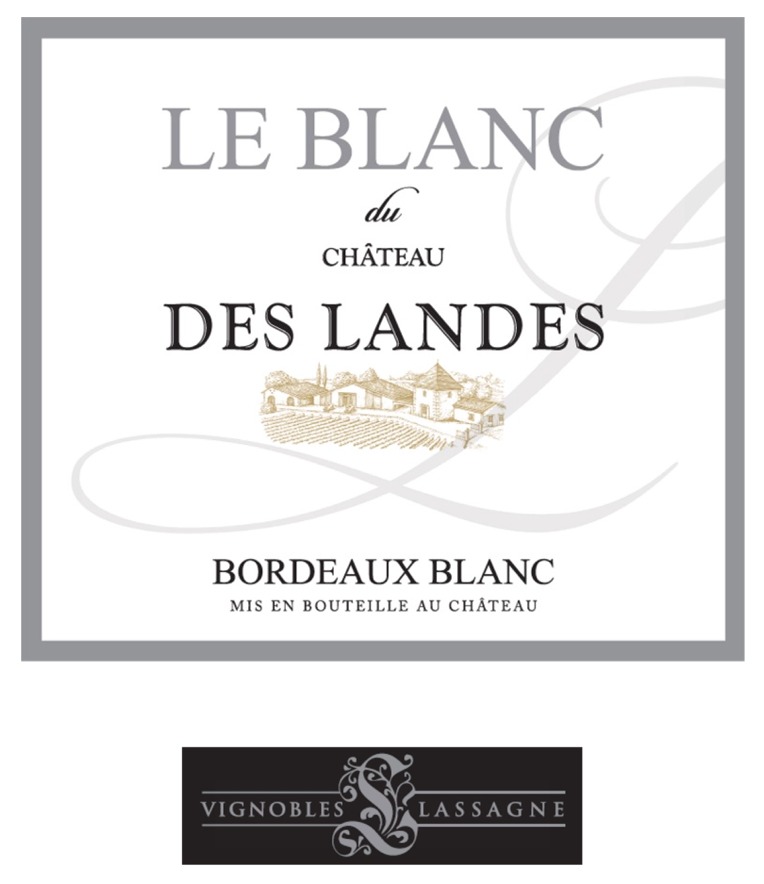
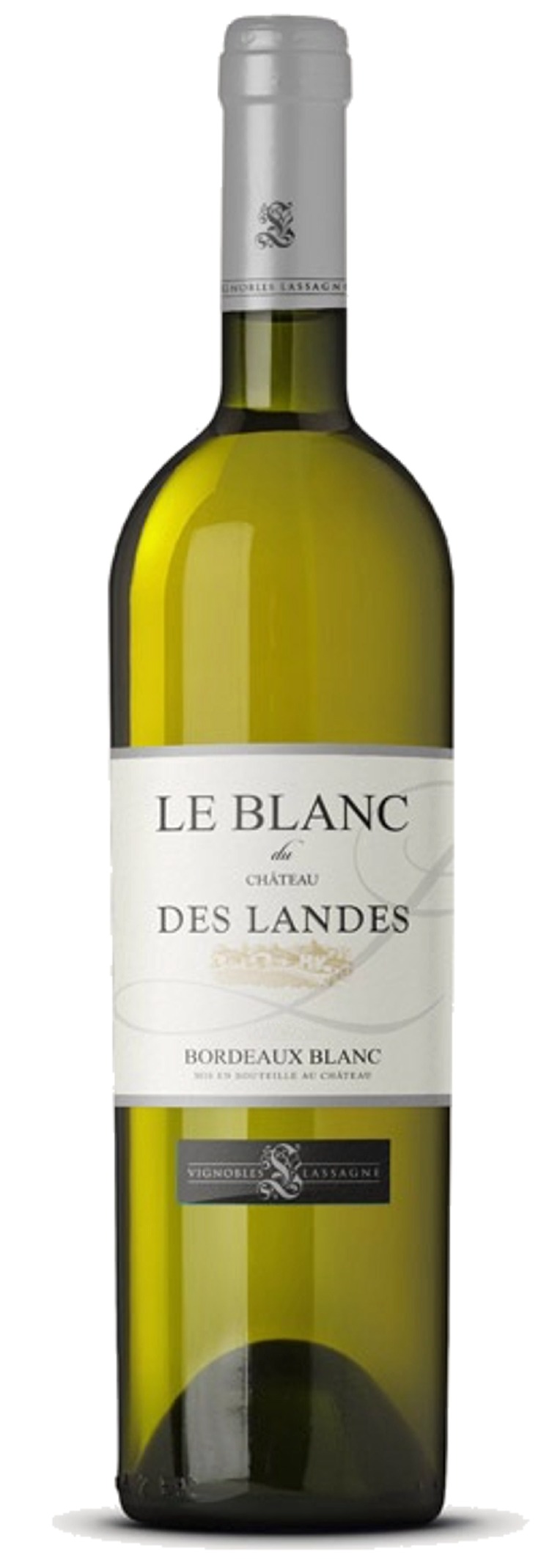
Le Blanc du Chateau des Landes Bordeaux Blanc is made from 50% Sauvignon Blanc and 50% Semillion.
Le Blanc du Chateau des Landes Bordeaux Blanc is a very fruity style of Bordeaux Blanc AOC. It has great aromatic intensity with white peach and citrus aromas.
No oak for this wine. The wine was aged on the lees for a few month in stainless steel tank.
Malolactic fermentation was completed as well in the process .
Excellent as an aperitif, it also goes very well with poultry and salads. If you have a chance to have access to fresh oyters, it is a great match as well.
The first vintage of this wine was made in 2018 as Nicolas Lassagne wanted to create an easy drinking wine that will be perfect as an aperitif in the summer time or to compliment salads and seafood in the winter time.
Ambre de Maltus Bordeaux Blanc is made from 70% Sauvignon Blanc, 30% Sémillion.
Malolactic fermentation.
The wine was aged in French Oak barrels for a few month (between 6 and 8 months depending on the barrel's toastiness and cooper)
Delicious with grilled fish or grilled vegetables
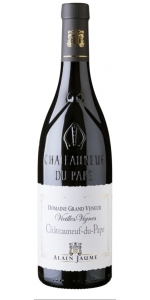
Grand Veneur Chateauneuf Du Pape Vieilles Vignes is made from 50% Grenache, 40% Mourvedre, 10% Syrah
Matured in concrete vats (40%) and oak casks (60%)
It boasts an inky/purple color in addition to a gorgeous perfume of crushed rocks, jammy black fruits, charcoal and graphite. Blackberry aroma with an air of dates pressed in alongside – this is sweet-noted. It is easy to appreciate, a sleek and stylish start. The palate holds excellent fruit that runs well and has kick. Its tannins move round freely and a minted finale comes forward. Its dark fruit is tasty, darkens on the finish, where tar and char from its oak enter. It is all very much together, a bundle of harmony, and will gain local attributes as it ages.
An outstanding Chateauneuf du Pape which display the best of its terroir.
The vines are 50 to 100+ year old. They are planted on red clay soils covered with pebble stones.
Harvest is destemmed and crushed. Fermentation temperature is controlled at 30°C. Vatting period of 18 to 20 days. Matured in concrete vats (40%) and oak casks (60%).
The vineyards are located in the north of Châteauneuf du Pape. GRAND VENEUR «Vieilles Vignes» cuvee is produced from the older vines. Thanks to time and an organic growing, roots go very deep in the soil. Yields are naturally low and grapes highly concentrated.
The vines are 50 to 100+ year old. They are planted on red clay soils covered with pebble stones.
Winemaking and aging
Harvest is destemmed and crushed. Fermentation temperature is controlled at 30°C. Vatting period of 18 to 20 days. Matured in concrete vats (40%) and oak casks (60%).
Pair with venisson, duck, braised lamb or strong cheese.
Review:
"Up with the crème de la crème of the vintage, the 2018 Châteauneuf Du Pape Vieilles Vignes is a bigger, richer wine than the Les Origines cuvée and has a beautiful core of smoked black fruits, candied violets, peppery garrigue, and scorched earth-like aromas and flavors. Playing in the medium to full-bodied end of the spectrum, it’s flawlessly balanced and has terrific tannins, a stacked mid-palate, and a great finish. It certainly shows the more front end-loaded, fleshy, mildly concentrated style of the 2018 vintage, yet the balance is top-notch, and it’s just a thrill to drink today. It should evolve nicely for 10-15 years."
- Jeb Dunnuck (October 2020),96 pts
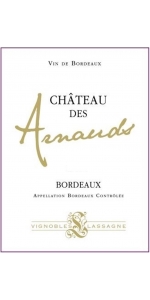
Chateau Arnauds des Bordeaux Rouge is made from 100% Merlot.
The wine shows a deep red purple color and intense aromas of black fruits (blackcurrant, black cherry) with hints of liquorice. Very fruity and well-balanced. It is powerful and well structured in the mouth with round and silky tannins, ripe flavors of black fruits. Strong and a slightly spicy finish.
Grapes are coming from 30 year old vines planted on gravelly soils.
The land benefits from sun exposure, warmth and humidity that are strong assets for the vine culture.
The wine pairs well with game meat and beef on the grill.
Chateau Arnauds des Bordeaux Rouge is made from 100% Merlot.
The wine shows a deep red purple color and intense aromas of black fruits (blackcurrant, black cherry) with hints of liquorice. Very fruity and well-balanced. It is powerful and well structured in the mouth with round and silky tannins, ripe flavors of black fruits. Strong and a slightly spicy finish.
Grapes are coming from 30 year old vines planted on gravelly soils.
The land benefits from sun exposure, warmth and humidity that are strong assets for the vine culture.
The wine pairs well with game meat and beef on the grill.
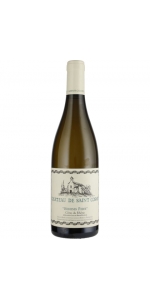
At Saint Cosme, their white wine traditions are as important and time-honored as the reds. The Clairette grape variety has found the ideal place to express itself in the cool, limestone valley of Saint Cosme. Produced by massal selection from the Le Poste vinevard, the Clairette for Hominis Fides thrives in Miocene limestone sand. Its aromas of fennel and grapefruit usher in its finely textured palate, imparting it with substantial agability.
Le Blanc du Chateau des Landes Bordeaux Blanc is made from 50% Sauvignon Blanc and 50% Semillion.
Le Blanc du Chateau des Landes Bordeaux Blanc is a very fruity style of Bordeaux Blanc AOC. It has great aromatic intensity with white peach and citrus aromas.
No oak for this wine. The wine was aged on the lees for a few month in stainless steel tank.
Malolactic fermentation was completed as well in the process .
Excellent as an aperitif, it also goes very well with poultry and salads. If you have a chance to have access to fresh oyters, it is a great match as well.
The first vintage of this wine was made in 2018 as Nicolas Lassagne wanted to create an easy drinking wine that will be perfect as an aperitif in the summer time or to compliment salads and seafood in the winter time.
Chateau des Lande Estate
Château des Landes was created in 1952 by Paul Lassagne, Nicolas' grandfather. He started with only 2 hectares and grew to 7 hectares in 1979.
His son, Daniel, came along and bought more vineyards surrounding the cellar and he managed to grow to 27 hectares in almost 20 years.
In 2001, Nicolas, came aboard and decided to continue on the family tradition bringing his expertise and his knowledge.
Nicolas is now in charge of the Estate and he manage 27.2 hecatres of vineyards (68 hectares).
27.2 hectares (68 acres) of vineyard with a density of 5,500 vineplants per hecatres ( 2,217 vineplants per acre).
The average age of the vine is 30 years.
The soil is mostly a mix of Clay and limestone, while the subsoil is white clay.
Johann Michel Cornas Cuvee Jana is 100% Syrah.
Black raspberry aromas, licorice, sizzled bacon and smoke. Elegant and pure with depth and well-integrated tannins.
Jana is the name of Johann and Emmanuelle's daughter.
Manual harvest, selection of the grapes from the "Chaillot" parcel, full clusters, fermentation in tanks for 3 weeks, daily remontage and pigeage. Malolactic fermentation in oak barrels and aging on the lees for 12-18 months in barrels (new old barrels) The average age of the vines is 11 years. Yield: 25 hl/ha
Review:
"Dark purple. Highly perfumed, oak-spiced black and blue fruits, incense, vanilla and potpourri on the hugely perfumed nose, along with hints of licorice, smoked meat and mocha. Stains the palate with concentrated, spice-laced blueberry, cassis, cherry-vanilla and espresso flavors that turn sweeter as the wine opens up. Broad, polished tannins add shape to a strikingly long, smoke- and spice-driven finish that strongly echoes the floral and blue fruit notes. - Josh Raynolds"
- Antonio Galloni's Vinous (December 2022), 97 pts
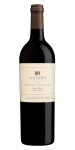
Neyer's Cabernet Sauvignon Red Wine has a bright ruby hue with aromas of wild cherries, chocolate and fresh tobacco leaf. The finished wine is remarkable for its flavor and complexity, and the wine looks to be one that will improve for many years. Planted in 1992 by David Abreu, this fruit is located on ground higher than 600 feet on rocky land rich with basalt. This vineyard is one of the rare 10% in Napa Valley capable of producing great Cabernet Sauvignon and is planted around the Neyers Ranch.
Review:
-Decanter 93 Points
-Wine Enthusiast 93 Points