" We don't sell the wine without touching the vine "

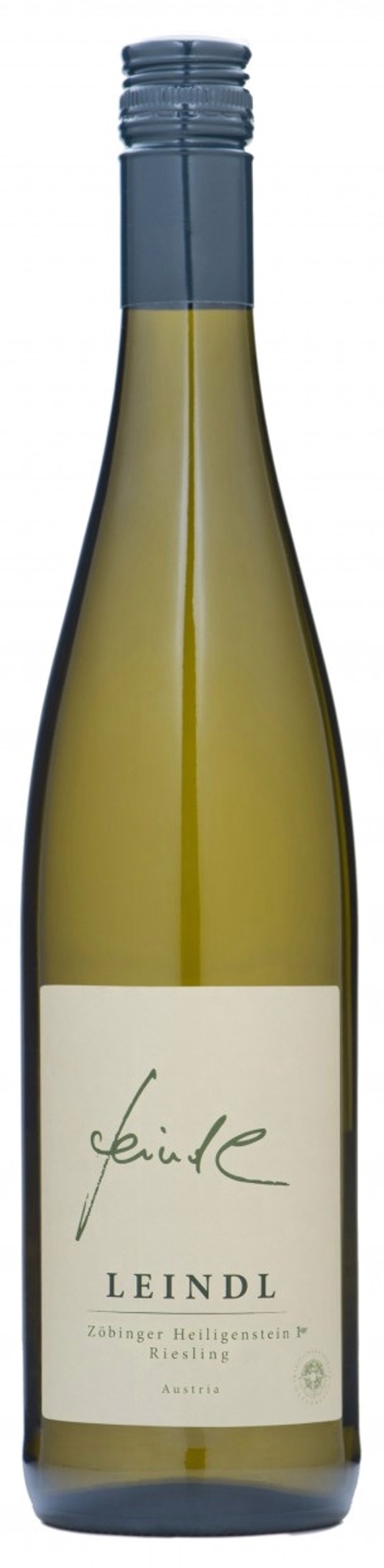
Leindl Riesling Zobinger Heiligenstein Kamptal is made from 100 percent Riesling.
Medium yellow green. Fine nuances of ripe apricot, a hint of yellow apple, delicate herbs and spices, mineral Touch, hints of candied orange zest. Juicy, elegant, fine stone fruit, touch of finesse acidity, salty minerality in the finish, remains long, already well to drink.
Cold Fermentation.
Aged on the lees for 12 months in Stainless Steel tank. No Oak.
No ML
Review:
-The Tasting Panel 94 Points
Leindl Riesling Zobinger Heiligenstein Kamptal is made from 100 percent Riesling.
Medium yellow green. Fine nuances of ripe apricot, a hint of yellow apple, delicate herbs and spices, mineral Touch, hints of candied orange zest. Juicy, elegant, fine stone fruit, touch of finesse acidity, salty minerality in the finish, remains long, already well to drink.
Cold Fermentation.
Aged on the lees for 12 months in Stainless Steel tank. No Oak.
No ML
Review:
-James Suckling 94 Points
Leindl Riesling Zobinger Heiligenstein Kamptal is made from 100 percent Riesling.
Medium yellow green. Fine nuances of ripe apricot, a hint of yellow apple, delicate herbs and spices, mineral Touch, hints of candied orange zest. Juicy, elegant, fine stone fruit, touch of finesse acidity, salty minerality in the finish, remains long, already well to drink.
Cold Fermentation.
Aged on the lees for 12 months in Stainless Steel tank. No Oak.
No ML
Review:
-James Suckling 95 Points
-Wine Enthusiast 91 Points
Leindl Riesling Zobinger Heiligenstein Kamptal is made from 100 percent Riesling.
Medium yellow green. Fine nuances of ripe apricot, a hint of yellow apple, delicate herbs and spices, mineral Touch, hints of candied orange zest. Juicy, elegant, fine stone fruit, touch of finesse acidity, salty minerality in the finish, remains long, already well to drink.
Cold Fermentation.
Aged on the lees for 12 months in Stainless Steel tank. No Oak.
No ML
Review:
-James Suckling 96 Points
-The Tasting Panel 94 Points

Leindl Riesling Ried Kogelberg is made from 100 percent Riesling.
Kogelberg is known as a Grand Cru vineyard.
Delicate yellow tropical fruit paired with overripe apricots. Juicy, good complexity, fruity sweetness of ripe peaches, pleasant acidity, citrus touch in the aftertaste, good aging potential.
Review:
-James Suckling 94 Points

Leindl Riesling Urgestein is made from 100 percent Riesling.
Review:
-James Suckling 90 Points
Leindl Riesling Zobinger Heiligenstein Kamptal is made from 100 percent Riesling.
Medium yellow green. Fine nuances of ripe apricot, a hint of yellow apple, delicate herbs and spices, mineral Touch, hints of candied orange zest. Juicy, elegant, fine stone fruit, touch of finesse acidity, salty minerality in the finish, remains long, already well to drink.
Cold Fermentation.
Aged on the lees for 12 months in Stainless Steel tank. No Oak.
No ML
Review:
-Wine Enthusiast 95 Points
Leindl Estate
Georg Leindl has been a flying winemaker since 1989 at numerous wineries.
He has worked with and rented space from Nigl for some time.
He is currently working from 5 hectares of vineyards but he is planning on moving to 12 hectares in time.
Date Founded: 2013
Georg Leindl has been in the wine industry for quite some time, and in 2013, he decided to created his own Estate.
He studied Food and Biotechnology; He was a researcher at the Federal College for Oenology and Pomology at Klosterneuburg. He has also been a consultant in Oenology for International and National companies.
Grüner Veltliner is coming from the Seeberg vineyard. Total acreage is 2 hectares (4.94 acres)
Riesling is coming from the Heiligenstein vineyard. Total acreage is 3 hectares (7.41 acres)
Age of the vines is roughly 15 to 35 years old.

Alain Jaume Gigondas Terrasses de Montmirail is made from 65% Grenache the rest Syrah, Mourvèdre by less than 15%.
Deep red garnet color. Aromas of ripe and black fruits. On the palate the wine is rich, powerful and harmonious - well balanced with wild berry and pepper dominating.
Soil types
Located in and around the famous area called “Dentelles de Montmirail”, the landscape typicity is made by a rocky bar (between 100 and 600 meters high). Soils are made of clay and sand with limestone. The “Dentelles” appeared thanks to the pressure between the Pyrenees and Alps mountains. This is a land of predilection to produce both powerful and fresh wines. Nights are cooler and the grapes ripeness usually comes in late September.
Winemaking & aging
Traditional wine-making in stainless and concrete vats. Crushed and destemmed grapes. Average of 18 days of vatting with pigeages. Ageing in vats mostly and oak barrels. Bottling after 12 – 14 months.
Review:
-Wine Enthusiast 92 Points
-Antonio Galloni's Vinous 91 Points

Dominus Napa Valley Red Blend is made from 88% Cabernet Sauvignon, 7% Cabernet Franc, 5% Petit Verdot.
The historic Napanook Vineyard, a 124-acre site west of Yountville, was planted in 1838. This vineyard was the source of fruit for some of the finest Napa Valley wines. Estate-bottled in the spirit of the Bordeaux châteaux, Dominus Estate is dry-farmed to allow natural stress and good concentration of fruit. Grape clusters are crop-thinned to allow sun and air to pass in between, helping to achieve full maturation and soften the tannins. Only 20% to 40% new French oak barrels are used in order to limit the extraction of oak notes. To express the unique terroir, the classic Bordeaux grape varietals of Cabernet Sauvignon, Merlot, Cabernet Franc and Petit Verdot are planted with different root stocks best suited for the varying soil composition of gravel, heavy clay and loam.
Reviews:
One of the legendary Dominus, the 2021 Cabernet Sauvignon is unquestionably in the same league as the 2018, 2016, 2015, 2013, 2010, and 1991, and to my mind, wine simply doesn't get any better. Sporting a dense purple hue as well as an incredible perfume of blackcurrants, crushed stone, cedar pencil, smoke tobacco, and baking spices, it s rich, full-bodied, and voluptuously textured, with ripe yet building tannins. It reminds me slightly of the 2010 (maybe the 2013), and I suspect it will have a similar evolution. Hide bottles for 7-8 years, and it will evolve gracefully for 30+ years. Hats off to the team of Christian Moueix and director Tod Mostero.
Jeb Dunnuck 100 Points

Paul Hobbs Chardonnay Edward James Estate is grown on a small, cool-climate parcel in the Russian River Valley named for a forebear of the Hobbs family. It is 100% Chardonnay, barrel-fermented and matured on its lees to build the mouth-coating texture and depth the estate is known for, framed by the bright, structuring acidity that this foggy corner of Sonoma gives.
Winery: Paul Hobbs founded his namesake winery in 1991 and has become one of California's most exacting vintners, famed for a terroir-driven, minimal-intervention approach from his Sebastopol estate. His vineyard-designate wines - Russian River and Sonoma Coast Chardonnay and Pinot Noir, and Napa Valley Cabernet - are benchmarks for purity and site expression.
Region: The Russian River Valley in Sonoma County is cooled by coastal fog that pours through the Petaluma Gap, giving long, slow ripening - the source of this wine's concentration held in balance by fresh acidity.
Review:
-James Suckling 97 Points
-Erin Brooks (Robert Parker) 95 Points