
" We don't sell the wine without touching the vine "
| BUY MORE! SAVE MORE! | ||||||||||||||||||||
|
| Country: | France |
| Region: | Bordeaux |
| Winery: | Segla |
| Grape Type: | Cabernet Sauvignon |
| Organic: | Yes |
| Vintage: | 2015 |
| Bottle Size: | 750 ml |
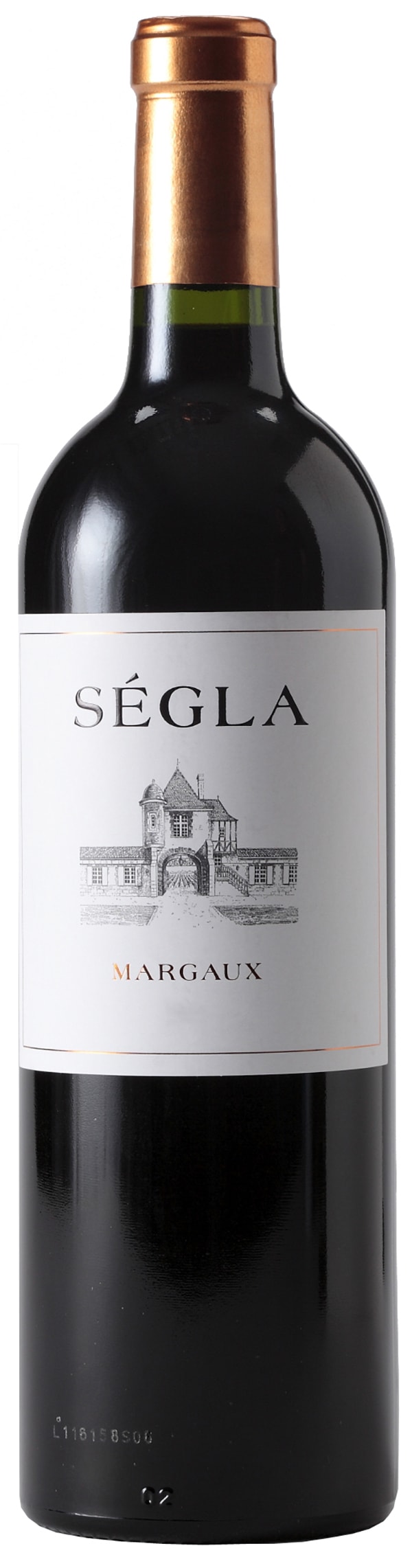
Segla Rauzan Margaux is made from 54% Cabernet Sauvignon, 41% Merlot, 4% Petit Verdot, 1% Cabernet Franc.
Deep ruby in appearance, Segla delivers aromas of blueberry and vanilla on the nose. On the palate it is medium bodied with silky tannins.
Review:
Takes a very fresh approach, with an open-knit feel to the mulled raspberry and red currant fruit. Pretty lilac, incense and singed apple wood notes underscore the fruit, while silky but persistent tannins carry the finish. Shows latent depth and precise balance, so don't let this early charm fool you, as this should unfurl beautifully in the cellar. Best from 2022 through 2040. 10,000 cases made.
-Wine Spectator 95 Points
Ségla is the second wine of the prestigious Château Rauzan Ségla and a Craft + Estate exclusive. The history of Château Rauzan-Ségla dates back to 1661 when Pierre de Rauzan acquired the estate. Rauzan-Ségla grew in reputation in a remarkable way and produced some of the most highly rated wines in Bordeaux. They delighted many well-known dignitaries, most notably Thomas Jefferson who came across this wine during his visit to Bordeaux in 1787, subsequently placing an order for several cases in 1790. Some decades later, the historic 1855 Bordeaux Classification ranked Château Rauzan-Ségla as a 2nd Growth. Today, the property is owned by the Wertheimer family of the fashion house Chanel and managed by Nicolas Audebert.
About half of the 126 acres (51 hectares) of vineyard are around the château, but there are additional parcels near Château Margaux and Brane-Cantenac. The vines are comprised of 54% Cabernet Sauvignon, 40% Merlot, 5% Petit Verdot and 1% Cabernet Franc, with an average vine age of 30 years and a vine density of 2,670 to 4,050 plants per acre (6,600 to 10,000 vines/ha). Soils at Rauzan-Ségla are composed of deep, fine gravel, which makes for natural irrigation.
More accessible than the first wine, the aim for Ségla is to produce a wine of extremely good quality and value reflecting all the elements of Margaux and giving a true insight to the quality of the Grand Vin. The estate puts the same amount of effort and care into the production of Ségla as it does the first wine, making it a true and authentic introduction to the château.

Saint Pierre Saint Julien is made from 79% Cabernet Sauvignon and 21% Merlot.
Chateau Saint-Pierre Saint-Julien 4th Grand Cru Classé boasts a rich and brilliant purple color, a complex aromatic expression marked by beautiful ripe fruits combined with soft spices, chocolate and licorice nuances. Well-balanced and a good texture, the palate is round and subtle, supported by velvety tannins that enhance the elegant and pure character of this Saint Julien.
Review:
"Very pretty and typical for the appellation with aromas of blackcurrants, violets and sandalwood that follow through to a full body with layers of polished tannins and a long, flavorful finish. Lasts a long time on the palate. Classic structure. Drink after 2027."
- James Suckling (January 2022), 96 pts

Chateau Lascombes Margaux is made from 67% Cabernet Sauvignon, 30% Merlot, 3% Petit Verdot and Cabernet Franc.
An Earth Mother, with velvet-lined blackberry, Bay leaf, graphite, and roasted coffee bean. Chalky tannins grip the teeth, with a dusty grip. From its backbone and vibrant acidity, to its notes of dried violets on the finish, we bow to its elegant nature.
- The Somm Journal, Apr/May 2025 97 Points
Precise, brilliant and engaging, a three-dimensional wine that shows itself in all its splendor. Notes of black cherries, mixed plums, mixed flowers and bergamot describe the secondary scene. Lemon peel and ginger the secondary one. Full body, perfectly extracted tannins and a vertical finish of infinite presence. Better from 2029.
-WineCritics.com 97 Points
Based on 67% Cabernet Sauvignon, 30% Merlot and the rest Petit Verdot and Cabernet Franc, the 2022 Château Lascombes pulls from 40% of the total production and was aged 18 months mostly in barrels (60% new) with a small portion in foudre. This inky hued beauty boasts a rich, concentrated, full-bodied, well-oaked style as well as pure cassis and darker berry fruits, some graphite, scorched earth, and licorice nuances, terrific overall balance, and a great finish.
-Jeb Dunnuck 96+ Points

Gap's Crown Vineyard has become one of the most iconic Pinot noir vineyards in the Sonoma Coast. It was originally developed by Premier Pacific Vineyards between 2002 and 2005 and later purchased by Price Family Vineyards in 2013. In 2007, Sojourn Cellars became one of the best to make a vineyard-designate wine from Gap's Crown. Our clone 115 block, planted in 2005 on 3309 root stock at 800 feet elevation, has been the foundation for Sojourn since we began making Pinot noir from this vineyard. Our clone 828 block was planted in 2002 on 420A root stock, and two clone 667 blocks round out the blend, both planted in 2004 on 3309 root stock. This hillside vineyard is situated on the western slope of Sonoma Mountain and is cooled by the persistent wind and fog of the Petaluma Gap.
WINEMAKER NOTES: The 2021 growing season offered optimal conditions in the Sonoma Coast to harvest grapes of exceptional quality. The air remained clear with no res in Sonoma and pandemic lock downs ended. Our spirits were lifted and the grape harvest and wine quality benefited. . Brief heat waves in August and September ripened the grapes to ideal maturity as the weather stayed dry until major rains arrived October 22, after our grapes were harvested. Yields were lower than average in 2021, with small berries and loose clusters creating wines of increased depth and concentration. In 2021 we blended destemmed clone 115 and clone 667, while fermenting all the clone 828 100% whole-cluster. The resulting wine, our 15th vintage of Pinot noir from Gap’s Crown Vineyard, offers complex layers of elegant fruit flavors with a bold strength at its core.
Review:
Like a majority of the Sojourn 2021 Pinot Noirs, the Gap’s Crown is also aged in 50% new French oak but sees approximately 15% whole cluster during fermentation. This Pinot Noir is always one of my favorites coming out of the Sonoma Coast, and the Sojourn 2021 is another beautiful example. A shimmering ruby-garnet core with a blueish rim in the glass, it assembles bountiful notes of dark cherry compote, fresh black raspberry, spiced blue plum skin, brown mushroom, salty sea breeze, liquid chocolate, and hints of dried lemongrass. Complex, engaging, and downright delicious, this should be a wine that everyone should seek out to try. 1025 cases were produced. Better in 2023 and then enjoy for the next 12–15 years. Highly recommended and editor’s choice.
- International Wine Report 97 Points

Pazo de Senorans Seleccion de Anada Albarino is made from 100 percent Albarino.
Straw yellow with greenish tints, vivid and brilliant. High intensity and very expressive. Profusion of aromas with traces of mineral. Great volume and ample body leaving a lasting impression from beginning to end.
Reviews:
The 2015 Albariño Selección de Añada is nothing short of phenomenal. For some reason, I hadn't tasted the young 2015 Albariño at the time it was released. It comes from the Los Bancales vineyard planted some 50 years ago and fermented with indigenous yeasts but without malolactic fermentation. It has a bright, almost fluorescent color and a complex, subtle and nuanced, elegant and expressive nose, with notes of sea shells and sea breeze, grass and white flowers. It's very clean, and the palate shows great balance and even feels a bit young. It has remarkable acidity and freshness (seven grams of tartaric acid) with good ripeness and 13% alcohol. This matured in tank with lees for over 30 months and was bottled in June 2024. It feels more serious and less exotic than earlier vintages. 18,000 bottles produced. This is the finest vintage that I can remember. Bravo!
-Wine Advocate 97 Points
Tech:
Chateau Lascombes Margaux is made from 67% Cabernet Sauvignon, 30% Merlot, 3% Petit Verdot and Cabernet Franc.
An Earth Mother, with velvet-lined blackberry, Bay leaf, graphite, and roasted coffee bean. Chalky tannins grip the teeth, with a dusty grip. From its backbone and vibrant acidity, to its notes of dried violets on the finish, we bow to its elegant nature.
- The Somm Journal, Apr/May 2025 97 Points
Precise, brilliant and engaging, a three-dimensional wine that shows itself in all its splendor. Notes of black cherries, mixed plums, mixed flowers and bergamot describe the secondary scene. Lemon peel and ginger the secondary one. Full body, perfectly extracted tannins and a vertical finish of infinite presence. Better from 2029.
-WineCritics.com 97 Points
Based on 67% Cabernet Sauvignon, 30% Merlot and the rest Petit Verdot and Cabernet Franc, the 2022 Château Lascombes pulls from 40% of the total production and was aged 18 months mostly in barrels (60% new) with a small portion in foudre. This inky hued beauty boasts a rich, concentrated, full-bodied, well-oaked style as well as pure cassis and darker berry fruits, some graphite, scorched earth, and licorice nuances, terrific overall balance, and a great finish.
-Jeb Dunnuck 96+ Points

Salmon hue with bright red tints. Fine and energetic bubbles. A ripe, complex and youthful bouquet of slightly tangy red fruit (redcurrants, blackcurrants), ripe citrus (blood orange) and roasted cocoa beans. After some time in the glass, the wine reveals sappier, floral and sweet notes with a saline, almost briny, core. The first impression of the wine is of a generosity, softness and concentration. One has the sensation of biting into juicy, ripe fruit and blood orange, it is a fabulous aromatic explosion with luscious and slightly tangy overtones. The concentrated and dense body takes over and reinforces the impression of substance, of concentrated liqueur on the mid-palate. The finish stretches out, perfectly-honed, gradually revealing umami notes thanks to the precise and crisp mineral freshness.
Reviews:
The 2015 Brut Vintage Rosé is generous and demonstrative, bursting with aromas of peach, orange and pear mingled with hints of red berries, fresh bread and ginger. Full-bodied, layered and vinous, it's rich and enveloping, its textural attack segueing into an ample, fleshy core that's girdled by bright acids and enlivened by a pillowy mousse. Long and expansive, it's more generous and gourmand than its racier 2014 predecessor, but just as good.
-Wine Advocate 94 Points
This shows lots of cotton candy and peach, together with strawberries and cream. But not overpowering. Some cranberry, too. It’s medium-to full-bodied with fine bubbles and a lively finish. Dosage 8g/L. Drink now or hold.
-James Suckling 94 Points

Marquis d'Alesme Margaux is made from 63% Cabernet Sauvignon, 30% Merlot, 5% Petit Verdot and 2% Cabernet Franc.

Paradigm Cabernet Sauvignon is made from 90% Cabernet Sauvignon, 8% Merlot, 1% Petit Verdot, 1% Cabernet Franc
20 months in French oak (only about a third of that is new oak) and for 20 more months in bottle before release
Our winemaking "style" is solely determined by this place or terrior we call "Paradigm." Winemaking is agriculture when you own your vineyards and are able to farm them to promote the very best Earth will give you. All of our selections of wines are made from five varietals on the estate. Every wine is 100% farmed and grown by us.
Complexity in our wines supported by luscious fruit and acidity is our hallmark. Our efforts during harvest and barrel cellaring concentrate on maintaining the freshness from the first day we handpicked each vineyard block. Simple winemaking protocols are employed while crucial “timing” oriented winemaking decisions rule each day.
The 2015 vintage produced delicious concentrated wines in smaller quantity than normal. This black raspberry colored Cabernet has lovely open aromatics of black cherry, berry, and plum layered with a perfect balance of new and used French Oak.
Reviews:
"Owned and managed by the Harris family, Paradigm winery produced its first vintage in 1991 in Oakville with winemaker Heidi Barrett. A self-contained winery estate with 50 acres of vineyards, Paradigm maintains a hands-on approach to all winemaking and vineyard operations. The 2015 Cabernet Sauvignon consists of 89% Cabernet Sauvignon, 6% Merlot, 3% Petit Verdot and 2% Cabernet Franc, and is aged in both new and used French oak for 20 months, then aged a further 20 months in bottle before release. The total production for this vintage was 5,544 bottles." Blind tasted by Dave Allen, Stephen Brook, Terry Kandylis (at Decanter Magazine's December 2019 Californian Cabernet 2015 Panel Tasting, London, 17 Sep 2019) - Decanter 95 Points

My First comment tasting this wine is "wow!" It's delicious; our flagship wine at Paradigm and it delivers. Dense, deep, ripe aromas of black berry and black cherry-like fruit layered with caramel and toastiness from a nice mix of French Oak barrels. Flavors coat the palate with matching notes in a classic Cabernet Sauvignon presentation. One of our best Cabs to date!
Paradigm Cabernet Sauvignon is made from 96% Cabernet Sauvignon, 3% Merlot , 1% Petit Verdot
Review:
"Owned and managed by the Harris family, Paradigm winery produced its first vintage in 1991 in Oakville with winemaker Heidi Barrett. A self-contained winery estate with 50 acres of vineyards, Paradigm maintains a hands-on approach to all winemaking and vineyard operations. The 2015 Cabernet Sauvignon consists of 89% Cabernet Sauvignon, 6% Merlot, 3% Petit Verdot and 2% Cabernet Franc, and is aged in both new and used French oak for 20 months, then aged a further 20 months in bottle before release. The total production for this vintage was 5,544 bottles." Blind tasted by Dave Allen, Stephen Brook, Terry Kandylis (at Decanter Magazine's December 2019 Californian Cabernet 2015 Panel Tasting, London, 17 Sep 2019)
- Decanter 95 Points

Corinne Perchaud Chablis is 100 percent Chardonnay.
A classic Chablis with aromas of ripe white fruits and a taste of rich minerals.
The Vineyards The plots are in Chablis located predominantly on the village of Fleys, but also on the common Chichée and Fontenay, their total area is 13 hectares. They are mostly north and north-west oriented. The ground floor is Kimmeridgian marl consisting clay and limestone. The oldest of of the vines is 35 years. Winemaking After a slight settling, the juice is put in stainless tanks to achieve its fermentation both alcoholic and malolactic. Ther is a long aging on lees to refine the flavors and develop complex flavors. If necessary, we make a collage of Bentonite to remove proteins and a passing cold which eliminates tartar crystals. Then we perform a tangential filtration method friendly to the wine. The wine is bottles between 14 and 21 months after the harvest.
Pairs well with Oysters or shellfish and Sole Meunière.

Roland Champion Champagne Special Club Grand Cru is made from Chardonnay.
The 'Special Club' designation is one of the most prestigious in Champagne, reserved exclusively for the finest vintages from member growers of the Club Trésors de Champagne. Each Special Club wine undergoes rigorous peer tasting and must meet exceptional quality standards before receiving the coveted Special Club label.
Roland Champion's Grand Cru Special Club comes from the finest Chardonnay parcels in the Côte des Blancs. Generous aromas of sun-ripened green apple, peach, nougat, and white chocolate layered with fresh lemon and grilled citrus. On the palate, rich and creamy with lively, fine-beaded mousse. Bright notes of grapefruit, lime, and toasted nuts lead to a long, round finish accented by toasted brioche, white flowers, and pronounced chalky minerality. Elegant and structured with excellent aging potential.
A collector's Champagne, perfect for special celebrations or paired with fine cuisine such as lobster, truffle dishes, or aged Comté cheese.



