" We don't sell the wine without touching the vine "
| Country: | Portugal |
| Region: | Vinho Verde |
| Winery: | Encostas do Lima |
| Grape Type: | Loureiro |
| Vintage: | 2020 |
| Bottle Size: | 750 ml |

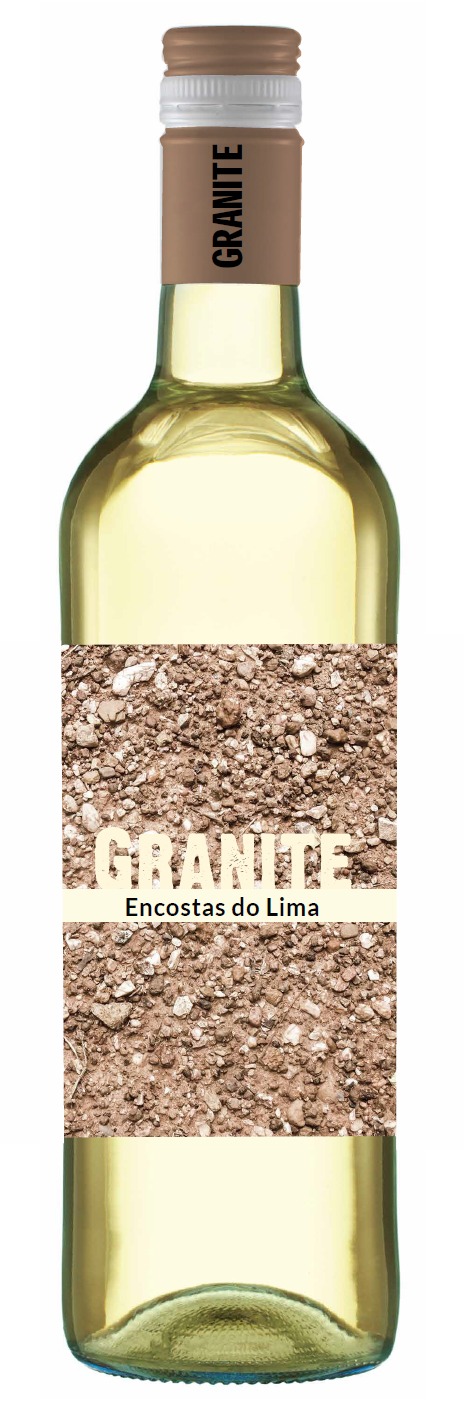
Lima Granito Vinho Verde is made from Loureiro.
This bottling from Adega Ponte de Lima showcases the granite soils of the Lima sub-region of Vinho Verde, in Portugal's cool, green northwest. Made from 100% Loureiro, the Granito shows intense floral aromatics, crisp acidity and an expressive, stony minerality, finishing fresh and light on its feet. A natural partner for sushi, fish, shellfish, fresh cheeses and salads, or simply well-chilled on a warm afternoon.

Lima Xisto (Schist) Vinho Verde is made from 100 percent Loureiro.
his special project from the Adega Ponte de Lima highlights the diverse soils of the Vinho Verde region. Made from 100% Loureiro grapes, both the Granite and Schist varieties boast a crisp acidity and expressive minerality.
Lima Schist Vinho Verde displays subtle yet more complex aromas. Full bodied, persistent and engaging.
Sushi, fish, seafood, cheeses and salads.

Lima Adega Vinho Verde is made from 80% Loureiro and 20% Trajadura
All Vinho Verde (or green wines – meaning young, not green in flavor) are the best in the first 18 months. The wine is fresh, crisp, lively with a touch of spritz. It has some very interesting aromas of stone fruit and lime.
Portuguese Vinho Verde with a screwcap!
Loureiro: Loureiro is a white vine variety grown in the northern region of Portugal that produces an aromatic bay leaf scent. The pale-skinned variety is used to make the Vinho Verde white wine that of the Minho region.Traditionally, Vinho Verde wines include Trajadura and Pederna, but varietal Loureiro wines are becoming increasingly popular. The Loureiro variety is also grown in smaller batches in Galicia, which sits to the north of border of Spain. Loureiro variety grapes are high in acid and is sometimes called "Branco", "Marques", or "Redondo". In this region, the variety is used to create the Rias Baixas white wine, and is typically blended with the variety, Albarino. The wine works perfectly with fish, grilled good, sushi, shellfish, salads or fruits. The wine also pairs nicely with clams and white wine or fresh spring rolls. The variety is high in acidity and is typically bottled with a shot of carbon dioxide to maintain the quality of the wine and to give it a nice, bubbly texture. The taste of the wine includes aromas of citrus, tropical fruits and a mineral tone, and also has hints of floral aromas.
Trajadura: Trajadura is a white grape varietal also known as Treixadura. Trajadura originates from Portugal, particularly the Northern region. Trajadura is most famously used in Portugal's Vinho Verde wine, but Trajadura is also utilized in blends to add fullness and brisk citrus flavor. The low acid content in Trajadura, combined with a higher alcohol content make it an ideal and rare blending component in this particular climate region. When Trajadura is blended with Loureiro and Albarino it is the perfect balance for Vinho Verde. In Spain, Trajadura is called Treixadura and is most commonly found n Rias Baixas and Ribeiro. Spain also takes advantage of the blending characteristics while combining with Albarino, Abillo, Lado, Macabeo, Godello, and Torrontes. The Trajadura vines are recognized by average sized bunches that are dense with moderately sized berries. Trajadura ripens early, so to keep the acidity, it must be harvested rather early. The flavor profile for Trajadura will consist of apricot, peach, apple, lemon, and pear.
With low alcohol, it is best as an aperitif or with seafood. Definitely a summer drink.

Lima Vinho Verde Rose is made from 75% Souzao, 15% Borraçal and 10% Espadeiro.
It is a blend of 75% Souzao (same as Vinhao), 15% Borraçal (which is also known as Caino Tinto) and 10% Espadeiro:
Souzão (or Sousão or Vinhão) is a Portuguese wine grape that is used in the production of port wine. While originating in the Minho regions, it is used primarily in Australia, California and South Africa. In Portugal, it is also an authorized planting in the Douro, and Dão-Lafões area (Vinho do Dão). The grape is known for the deep color it produces in a wine as well as its coarse and raisiny taste.
Caiño tinto (also known as Borraçal) is a red Galician wine grape variety that is also grown in Portugal's Vinho Verde wine region where it is known as Borraçal. In Spain, it is a permitted variety in the Denominación de Origens (DOs) of Rías Baixas and Ribeiro where it produces highly perfumed wines with noticeable tartness and high acidity.
Espadeiro is a red Portuguese wine grape planted primarily in the Minho region for making Vinho Verde. It is also grown across the border, in Spain, in Galicia where it is used to make light bodied wines.

Vinhão (also known as Souzao or Sousao) is a Portuguese wine grape used in the production of port wine. While originating in the Minho regions, it is used primarily in Australia, California and South Africa. In Portugal, it is also an authorized planting in the Douro, and Dão-Lafões area (Vinho do Dão). The grape is known for the very deep color it produces in a wine as well as its coarse and raisiny taste.

Praia Aveleda Vinho Verde NV is made from 40% Loureiro, 20% Trajadura, 20% Arinto, 20% Azal.
Praia, which means "beach" in Portuguese, is a smooth and fresh wine with delicate and lovely fruity flavors. Slightly spritzy, it is well balanced and very refreshing.
The region is typical for its unique wines that are fresh and light, combined with a very well balanced acidity. These characteristics result from the region's unique soil and climate, with a strong Atlantic influence that you will identify when you taste it.
The wine is ideal as an aperitif or throughout a meal, especially with fish, seafood, white meat and salads. Due to it freshness, it is particularly pleasant in a relaxed and informal ambiance.
Lima Granite Vinho Verde is made from 100 percent Loureiro.
This special project from the Adega Ponte de Lima highlights the diverse soils of the Vinho Verde region. Made from 100% Loureiro grapes, both the Granite and Schist varieties boast a crisp acidity and expressive minerality.
Lima Vinho Verde Granite displays intense floral aromas with great freshness and more accentuated minerality.
Sushi, fish, seafood, cheeses and salads.
The Encostas do Lima Estate
Encostas do Lima is produced at Adega Cooperativa de Ponte de Lima, a beautiful small town with a Roman bridge and medieval towers.
The Encostas do Lima Vineyard
Vinho Verde country is located in northeastern Portugal and is the largest demarcated wine region in Portugal (61,750 acres in size). The six official sub-regions are: Moncão (Alvarinho country), Lima (our wine), Braza, Basto, Peñafiel and Amarante. The maximum yield is 5.45 tons/acre (80 hectoliters/hectare). Soils are poor with an underlying granite base. Grapes used in the production of Vinho Verde are: Alvarinho, Rabigato, Loureiro, Batoca, Trajadura, Avesso, Pederña, Azal.

Johann Michel Cornas Cuvee Mere Michel is made from 100 percent Syrah.
Cuvee Mère Michel was first introduced in 2016 and is not produced every year. This wine is a tribute to Johann Michel' wife, Emmanuelle, and a nod to the French song, La Mere Michel. This wines comes from Selection Massale (replanting new vineyards with cuttings from exceptional old vines from the same property) cuttings of Serine off the 1947 Yves Cuilleron vineyard at Chavanay. The vineyards are located in the lieu-dit "Les Cotes" at an altitude of 230 meters and benefiting from a southern sun exposure.
Review:
"Only made in top vintages, the 2018 Cornas Mère Michel is a tribute to Johann's wife and a play on the French song "La Mere Michelle." Brought up in a new demi-muid, it's a richer, broader wine compared to the Cuvée Jana yet still has incredible Cornas style in its red, black, and blue fruits as well as notes of toasted spice, roasted meat, chocolate, and wild herbs. Rich, full-bodied, and opulent, it has a touch more upfront appeal and should be drinkable in just 4-5 years yet also evolve for two decades." -
Jeb Dunnuck (Northern Rhône: The 2018s and 2019s, November 19th 2020), 98 pts
-Joe Czerwinski (Robert Parker) 97 Points

Corinne Perchaud Chablis is made from 100% Chardonnay.
A classic, unoaked Chablis grown on the Kimmeridgian clay-limestone of the appellation's right bank. Drawn from the family's plots around Fleys, Chichee and Fontenay, it shows aromas of ripe white fruits over a core of wet-stone minerality, finishing taut, saline and precise — the benchmark expression of cool-climate Chardonnay.
Winery Info: Domaine Corinne Perchaud is a family estate in Fleys, on the eastern edge of the Chablis appellation, farming vineyards across Fleys, Chichee and Fontenay on classic Kimmeridgian clay-limestone soils.