
" We don't sell the wine without touching the vine "

Fenocchio DOC Nebbiolo Langhe Bussia is made from 100 percent Nebbiolo.
The color is a deep ruby red with garnet reflections and an intense and fruity bouquet of plum and cherry. The flavor is dry with good body, well balanced tannins and harmonious with hints of licorice and rose.
Parcel is 2 hectares (5 acres) planted at 300 meters above sea level.
Pairing well with all types of food, from appetizers to cheeses with red and white meat.

Pierinvaletta Organic Barolo Langhe is made from 100 percent Nebbiolo .
Elegant with a good structure and a long pleasant finish.
No filtration before bottling.Wine was aged in Oak foudre for 24 months.
Average 40 years (oldest vines are 70 years old)
Pair with meat, steak.

Lodovico Barolo Cannubi is made from 100% Nebbiolo.
With a ruby-red color, the Barolo Cannubi has a rich bouquet which gradually recalls the scents of roses flowers, truffles and wood spice. The palate is at first elegant and refined, then is begins to gain in complexity with a little breathing or decanting.
Vine: Nebbiolo, sub-variety Lampia and Michet
Grapes provenance: Cannubi Boschis vineyard in the village of Barolo
Soil: composed mainly of large clayey limestone marls and sands
Vineyards: South-est facing with Guyot pruning (6-8 buds / vine)
N° Vines / hectare: 5000
Yield / hectare: 50-55 q / Ha
Plant year: 1970
Size of the vineyard: 1.3 hectare (3.21 acres) in the family since 1996 out of 40 hectares (98.8 acres) total for Cannubi.
Average height: 250-260 mt
Nebbiolo is a native black grape variety of Piedmont that gives birth also Barolo and Barbaresco. The name ‘Nebbiolo’ derives from the word ‘fog’ and there could be two reasons. The first hypothesis traces the name of Nebbiolo back to the obscured, almost clouded appearance of the grape, covered with abundant bloom. The second hypothesis, more suggestive, is linked to the very late ripening of the grapes: the Nebbiolo grape harvest often takes place in late October, when the vineyards are enveloped in morning mists.
Pairs with aged cheeses, red meat, rich/earthy dishes, truffle risotto, pasta with sausages and mushrooms. Braised or roasted meats.
Lodovico Barolo Cannubi is made from 100% Nebbiolo.
With a ruby-red color, the Barolo Cannubi has a rich bouquet which gradually recalls the scents of roses flowers, truffles and wood spice. The palate is at first elegant and refined, then is begins to gain in complexity with a little breathing or decanting.
Vine: Nebbiolo, sub-variety Lampia and Michet
Grapes provenance: Cannubi Boschis vineyard in the village of Barolo
Soil: composed mainly of large clayey limestone marls and sands
Vineyards: South-est facing with Guyot pruning (6-8 buds / vine)
N° Vines / hectare: 5000
Yield / hectare: 50-55 q / Ha
Plant year: 1970
Size of the vineyard: 1.3 hectare (3.21 acres) in the family since 1996 out of 40 hectares (98.8 acres) total for Cannubi.
Average height: 250-260 mt
Nebbiolo is a native black grape variety of Piedmont that gives birth also Barolo and Barbaresco. The name ‘Nebbiolo’ derives from the word ‘fog’ and there could be two reasons. The first hypothesis traces the name of Nebbiolo back to the obscured, almost clouded appearance of the grape, covered with abundant bloom. The second hypothesis, more suggestive, is linked to the very late ripening of the grapes: the Nebbiolo grape harvest often takes place in late October, when the vineyards are enveloped in morning mists.
Pairs with aged cheeses, red meat, rich/earthy dishes, truffle risotto, pasta with sausages and mushrooms. Braised or roasted meats.

Lodovico Barolo di Barolo is made from 100% Nebbiolo.
Barolo di Barolo is a blend of 2 different vineyards in Barolo: PREDA and SARMASSA, both in the village of Barolo. The somewhat different soils, exposures and microclimates of the Preda and Sarmassa vineyards combine to produce a well-balanced, harmonious wine packed with the fresh, elegant aromas supplied by La Preda, and the full body and structure catered for by Sarmassa.
Loads of blackberry and red berry with vanilla oak character. full and concentrated, displaying seamless tannins and gorgeous fruit. Complex and complete, full-bodied, with lots of fruit and round tannins. It's long and fruity. It will be at its best after 2-3 years stored lying down in cool, dark surroundings. Serving recommended in large glasses at a temperature of 17-18°C.

Lodovico Barolo Sarmassa is made from 100% Nebbiolo.
Very deep ruby-red; still rather fresh nose, with hints of red berries steeped in delicate vanilla; dry, full taste, packed with body and structure combined with polyphenolic compounds that cater for lengthy ageing.
Grape-variety: Nebbiolo sub-varieties Lampia and Michet
Location: Sarmassa vineyard in the village of Barolo. The Sarmassa vineyard is facing south; grandfather Lodovico has always called it Africa, due to the very high summer temperatures.
Pruning: Guyot (6-8 buds)
Sun exposure: south
Vines/hectare: average 5000
Yield in grapes: 5-5.5 t/hectares
Year of planting: 1970/1980
Size of the vineyard: 0.5 hectare (1.23 acres) in the family since 1968 out of 33 hectares (81.5 acres) total for Sarmassa.
Altitude: 250-260 metres
Nebbiolo is a native black grape variety of Piedmont that gives birth also Barolo and Barbaresco. The name ‘Nebbiolo’ derives from the word ‘fog’ and there could be two reasons. The first hypothesis traces the name of Nebbiolo back to the obscured, almost clouded appearance of the grape, covered with abundant bloom. The second hypothesis, more suggestive, is linked to the very late ripening of the grapes: the Nebbiolo grape harvest often takes place in late October, when the vineyards are enveloped in morning mists.
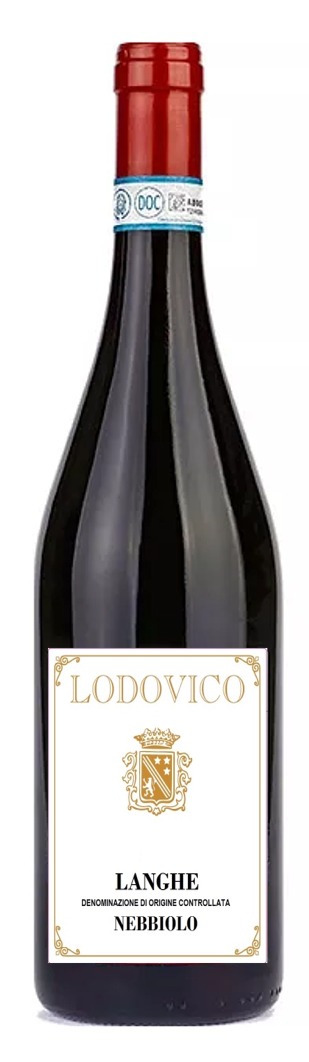
Lodovico Langhe Nebbiolo is made from 100% Nebbiolo.
Bright ruby-red which softens on ageing; delicate, fruity nose of raspberries and violets that becomes ethereal over time; dry, balanced flavor, with good body that softens after ageing and lingers on the finish.
Vine: Nebbiolo
Vineyards: North-est facing with Guyot pruning (7-9 buds / vine).
N° Vines / hectare: 4,000
Yield / hectare: 70-80 q / Ha
Plant year: 2007
Nebbiolo is a native black grape variety of Piedmont that gives birth also Barolo and Barbaresco. The name ‘Nebbiolo’ derives from the word ‘fog’ and there could be two reasons. The first hypothesis traces the name of Nebbiolo back to the obscured, almost clouded appearance of the grape, covered with abundant bloom. The second hypothesis, more suggestive, is linked to the very late ripening of the grapes: the Nebbiolo grape harvest often takes place in late October, when the vineyards are enveloped in morning mists.
It pairs with pasta, soup, meats, seasonal dishes and medium-aged cheeses.
Founded by Lodovico Borgogno in 1950, the Estate is now run by 4th generation winemakers Virna and Lorenzo Borgogno. Virna was the first woman in Italy to have received her degree in Winemaking Technique (Enologica Tecnica) from the University of Turin in 1991. She creates magnificent wines, primarily from the Nebbiolo grape. Her Barolos are long lived, structured wines that should be appreciated throughout their long life.
The estate is located in Barolo at the center of the Langhe region. The winery sits at the foothill of Cannubi, which marks the dividing line between two different soil types - the Tortonian soil to the north and west (La Morra) is generally more compact marl mixed with sand, producing elegant, softer wines that are more approachable in their youth. The Helvetian soils, with loose, less fertile sandstone and limestone rich marl, are to the south and east (Monforte and Serralunga).
The vineyards spread over 12 hectares of the most important crus in Barolo:
Barolo Cannubi 1.5 ha (the word "Cannubi" means union in local dialect - union of two soil types)
Barolo Preda 1.0 ha
Barolo Sarmassa 0.5 ha
Barolo Cerviano Merli (Novello) 3 ha
Barolo San giovanni (Monforte) 0.5 ha
Barbera d’Alba 2 ha
Dolcetto d’Alba 0.5 ha
Langhe Nebbiolo 1.5 ha
Timorasso (langhe Bianco) 0.5 ha
Fenocchio DOC Nebbiolo Langhe Bussia is made from 100 percent Nebbiolo.
The color is a deep ruby red with garnet reflections and an intense and fruity bouquet of plum and cherry. The flavor is dry with good body, well balanced tannins and harmonious with hints of licorice and rose.
Parcel is 2 hectares (5 acres) planted at 300 meters above sea level.
Pairing well with all types of food, from appetizers to cheeses with red and white meat.

This is a 6 pack with 2 bottles each from vintages from 2013, 2015, and 2016.
***Tenimenti Angelini Val di Suga Vigna Spuntali Brunello di Montalcino 2016:
The 2016 Vigna Spuntali Brunello di Montalcino is the most brooding of the lineup from Val di Suga and is sourced from the southwest of the region on sandy soils. There are aromatics of black raspberry, licorice, menthol, sage, cinnamon, and iron-rich earth. Its Mediterranean influence is felt on the palate with ripe black cherry, dried herbs, and sun-baked earth. This is the fullest bodied and most savory of the Val di Suga lineup, with more roundness and grip. Its structure will benefit from cellaring for several years and will be great drinking over the next 20 years or more. 2026-2040.
-Jeb Dunnuck 96 Points
***Tenimenti Angelini Val di Suga Vigna Spuntali Brunello di Montalcino 2015:
The 2015 Vigna Spuntali Brunello di Montalcino is more introverted on first opening, with notes of black plum, licorice, dried Mediterranean herb, and sun-baked earth. On the palate, it offers a tart dried fruit character, with a building tannin structure that finishes with tomato leaf, and bitter herbs. The most rustic and burly of the wines in the lineup of the 2015 Val di Suga vintage, it will benefit from allowing some time in cellar to see how this matures and its tarriness develops. Drink 2026-2036
-Jeb Dunnuck 94 Points
***Tenimenti Angelini Val di Suga Vigna Spuntali Brunello di Montalcino 2013:
Plenty of spices and fresh herbs on the nose, such as dried rosemary and nutmeg, to match the underlying dried redcurrants and cranberries. Full-bodied with plenty of concentration, but still shows a very sturdy, tannin backbone and punchy acidity, to drive this through to a long finish. Drink in 2021.
-James Suckling 94 Points

This Pinot Grigio is grown at the foot of the remains of what was once the stunning villa of the della Scala family, one of the most influencial families in Verona from the early 1200's to the late 1300's. The much admired ruler of Verona, Cangrande I della Scala, summered at this villa. Cangrande I was a great warrior, diplomatic prince and an important patron of the arts. He championed the works of Dante, Patrarch and Giotto. He created beautiful architecture throughout the city in the ornate, gothic style of his time. This label is a reproduction of the design taken from a fragment of the ornate and intricate art that once covered the ceilings of the villa. In Italian, Ornato means ornate or adorned. This label celebrates the beautiful, complex taste of the Della Scala family and the Gothic art of that period.
Color: Brilliant straw colored wine with golden reflections.
Bouquet: Fresh and floral bouquet with a hint of pears, apricots and bananas blended with the intense aroma of acacia flowers.
Taste: Fresh and inviting with bright fruit and an easy drinking style with a pleasing hint of almonds in the aftertaste.
Vineyard: Rich in limestone the soil is of alluvial origin. The vineyards are located in the province of Verona. The agricultre is sustainable. No chemical fertilizers, herbicides or pesticides are used. The vineyards are South facing at 300 meters above sea level.
Harvest: September – by hand. The grapes are picked as they ripen to keep the acidity high. The grapes are brought to the cellar and refrigerated within a half hour of picking to keep oxidation to a minimum.
The grapes are soft pressed and the juice is placed in stainless steel along with the skins for a brief maceration of 12 hours at 8-10° C. The must is then racked and lightly filtered. Fermentation then takes place with selected indigenous yeast under controlled temperatures. Of 16-18°C. The fermentation is slow and cool to emhance the natural aromas of the grapes. The finished wine is placed in stainless steel holding tanks until bottled.
Aging: 3-4 months in stainless steel.
Alcohol: 12%
Acidity: 5.30
Seafood dishes, risottos with scampi, spaghetti with clams, sole in white wine.



