
" We don't sell the wine without touching the vine "
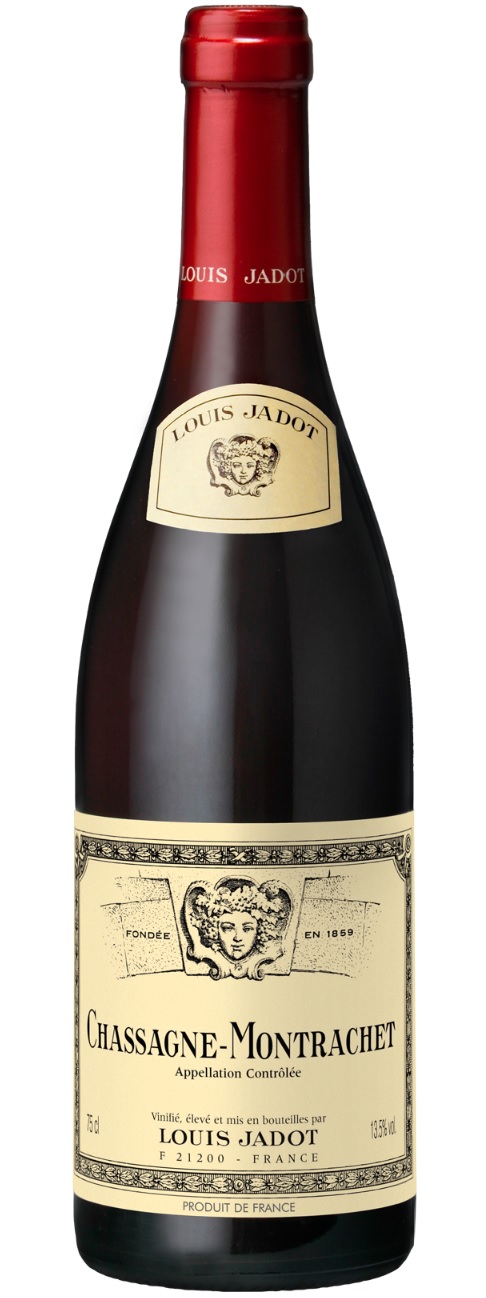
| Country: | France |
| Region: | Burgundy |
| Winery: | Louis Jadot |
| Grape Type: | Chardonnay |
| Vintage: | 2017 |
| Bottle Size: | 750 ml |
Louis Jadot Montrachet Grand Cru is made from 100 percent Chardonnay.
Le Montrachet is situated to the south of the Côte de Beaune, on both villages of Puligny Montrachet and Chassagne Montrachet (like the Batard Montrachet Grand Cru).
The terroir is extremely chalky with a lot of stones, perfectly drained and easy to overheat with south-south-eastern exposition.
The Montrachet is produced with Chardonnay
Grapes are harvested by hand and put in small cases in order not to damage the fruits. Grapes are pressed softly, they ferment in oak barrels produced by our cooperage. 1/3 are new barrels. Aging usually lasts 15 months on fine lies before bottling.
Review:
Aromas of buttered toast, honeyed peaches, white flowers and mint introduce the 2019 Montrachet Grand Cru (Maison Louis Jadot), a full-bodied, layered and enveloping wine that's satiny and sumptuous, with lively acids and fine depth at the core. While I'd give the nod to the stunning Demoiselles as Jadot's best white wine this year, this Montrachet—purchased from the Chassagne-Montrachet side, from the house's usual source—is undeniably promising.
-Wine Advocate 94-96 Points
Domaine du Colombier Hermitage Rouge is made from 100 percent Syrah.
Perfect with beef ribs, grilled meats and cheese.
Manually harvested with destemmed grapes and fermented for about 2 to 3 weeks in temperature controlled vats, with an ageing period of 12 months, 65% in oak barrels and 35% in concrete tanks.
Review:
Brought up in 30% new demi-muids, with the balance in used barrels, the 2017 Hermitage is beautifully pure and layered, with smoking good notes of crème de cassis, white flowers, crushed rocks, and violets. Deep, full-bodied, and concentrated on the palate, it has plenty of tannins and is going to need 5-7 years of bottle age. This is a sensational Hermitage from Colombier that will drink well for 25+ years.
These wines are made by the talented Florent Viale and shine for their purity as well as character. While the winemaking here is traditional, with the wines destemmed and brought up mostly in used demi-muids, the purity of fruit can give the impression that wines are more modern styled than they are. They will all benefit from short-term cellaring.
-Jeb Dunnuck 96+ Points
Begude Bandol Rouge is made from 90% Mourvèdre, 10% Grenache.
Eye: dark ruby colored
Nose: Intense, aromatic, fresh and elegant
Mouth: Structured on black fruits flavors, lightly woody , tanins are strong an firm in their early days (<5years) Good acidity give freshness backbone and great fruit/alcoholic balance . Delicate final on spices.
Opening: Decant 4-6 hours before serving
Soil: Clay-limestone Culture: Organic without pesticides nor chemicals additives Yield: 20 hectoliters/hectare Harvest: Manual in small cases Winemaking: Double sorting, 100% destemming, skin contact, with daily sticking in order to optimize color and aromatic extraction Alcoholic fermentation 15 days followed by malo lactic fermentation. Aging: 18 months in oak cask Bottling:
Grilled lamb, meat cooked with sauce, southern French cuisine and tasty dishes (tajines, couscous, paellas).
Review:
"Inviting spicy oak, malt and blackberry cream scents. Powerfully structured tannins, spicy liquorice and clove flavours as well as bramble fruit; very long finish. Its best years are far into the future. Terrific stuff."
- Decanter World Wine Awards 2020, 97 pts & Platinum Medal
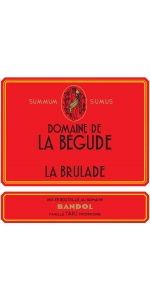
Begude Bandol Rouge La Brulade is made from 95% Mourvedre and 5% Grenache.
"La Brulade" is the name of a select slope located at an altitude of 400 meters overlooking the Mediterranean sea between La Baie d'Amour (the town of La Ciotat) in the South and La Sainte Baume in the North. This is one of the highest parcels in the Bandol appellation.
The wine is only produced in exceptional vintages. This carefully selected blend is made of 95% Mourvedre and 5% Grenache, aged in large French oak barrels for 24 months.
The wine shows a deep purple color. It is fresh and fruity on the nose with intense garrigue aromas. Structured, elegant and well-balanced on the palate with strong tannins. Licorice, ripe black fruits, garrigue flavors and some peppery freshness on the finish.
The 35-year old grapes are grown on clay and limestone soils and are farmed organically. Yield is very low - 15hl/ha. The grapes are harvested manually.
Winemaking: Double selection, destemming, crushing before skin contact fermentation. No filtration. Aging for 24 months in French oak casks (600L).
Grilled meat (lamb, beef, boar), Mediterranean cuisine, spicy dishes.
Review:
"Complex nose with deep black berry fruits, spice and hints of polish. Really lovely texture with layers of creamy red and black fruits, spices and powerful but super fine tannins. Great expression of the appellation; powerfully long."
- Decanter World Wine Award 2020 - 97 pts & Platinum Medal
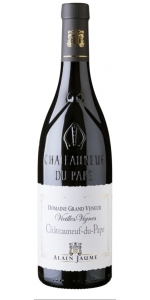
Grand Veneur Chateauneuf Du Pape Vieilles Vignes is made from 50% Grenache, 40% Mourvedre, 10% Syrah
Matured in concrete vats (40%) and oak casks (60%)
It boasts an inky/purple color in addition to a gorgeous perfume of crushed rocks, jammy black fruits, charcoal and graphite. Blackberry aroma with an air of dates pressed in alongside – this is sweet-noted. It is easy to appreciate, a sleek and stylish start. The palate holds excellent fruit that runs well and has kick. Its tannins move round freely and a minted finale comes forward. Its dark fruit is tasty, darkens on the finish, where tar and char from its oak enter. It is all very much together, a bundle of harmony, and will gain local attributes as it ages.
An outstanding Chateauneuf du Pape which display the best of its terroir.
The vines are 50 to 100+ year old. They are planted on red clay soils covered with pebble stones.
Harvest is destemmed and crushed. Fermentation temperature is controlled at 30°C. Vatting period of 18 to 20 days. Matured in concrete vats (40%) and oak casks (60%).
The vineyards are located in the north of Châteauneuf du Pape. GRAND VENEUR «Vieilles Vignes» cuvee is produced from the older vines. Thanks to time and an organic growing, roots go very deep in the soil. Yields are naturally low and grapes highly concentrated.
The vines are 50 to 100+ year old. They are planted on red clay soils covered with pebble stones.
Winemaking and aging
Harvest is destemmed and crushed. Fermentation temperature is controlled at 30°C. Vatting period of 18 to 20 days. Matured in concrete vats (40%) and oak casks (60%).
Pair with venisson, duck, braised lamb or strong cheese.
Review:
"The 2017 Châteauneuf Du Pape Vieilles Vignes is a bigger, richer, more opulent wine. Beautiful notes of blackcurrants, scorched earth, graphite, and crushed violets, all flow to a full-bodied, Châteauneuf Du Pape that has a voluptuous, sexy texture, brilliant depth of fruit, fine tannins, and a purity of fruit that's hard to find in this vintage. It's a thrill a minute, and while it's approachable today, it will keep for 15-20 years. 416 cases."
- Jeb Dunnuck (August 16th 2019),97+ pts
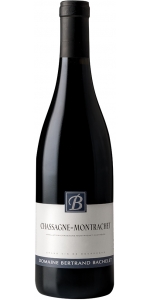
Bachelet Bertrand Chassagne Montrachet Rouge is made from 100 percent Pinot Noir.
The Chassagne-Montrachet appellation is originally better known for its white wines, but also produces high quality red wines. The complexity of the terroir allows both varieties to thrive side by side.
The wine is produced from vineyards located in the villages of Les Lombardes and Les Benoites that benefit from iron rich clay soils. A ruby garnet color, and an expressive nose of spices and red fruits that echo on the palate.
Pairs well with a nice cut of red meat.
In Burgundy’s Côte d’Or, where the integrity of the producer is often more important than a renowned appellation or vineyard, Maison Louis Jadot is one of the most venerable, most trusted and revered wine houses. Jadot’s winemaking team, now led by Technical Director Frédéric Barnier, has maintained a balance of tradition and technology in winemaking that allows Jadot’s wines to express the subtle differences between terroirs that are the essence of fine Burgundy. Though officially retired in 2013, esteemed winemaker Jacques Lardière continues to work in an advisory role and on special projects.Founded in 1859, the house has grown through a long-term policy of acquisition or management of exceptional vineyard lands and owns 528 acres of vineyards, including nearly 280 acres of the Cote d’Or’s most prestigious Premier and Grand Cru plots.
Frédéric Barnier joined Maison Louis Jadot in 2010 as Technical Director, working under the guidance of Jacques Lardière. For 42 years, the legendary Lardière was responsible for the winemaking and bottling of all Maison Louis Jadot wines, and he is considered to be one of Burgundy’s finest winemakers. He briefly retired, then came out of retirement to launch Resonance Wines, Jadot’s new brand from Oregon. Frédéric now leads the winemaking team with the Maison Louis Jadot philosophy: no compromise on quality.
Maison Louis Jadot was founded in 1859 by the man whose name it bears, Louis Henry Denis Jadot. The first of his family arrived in Beaune from Belgium in 1794 and soon began purchasing Premier and Grand Cru vineyards. With grape growing a part of his heritage, Louis Henry set about gaining experience first in the cellars, in the evaluation of wines, and then in the vineyards, in the study of viticulture.
Jadot invests in Burgundy, only purchasing grapes from the highest quality producers where they have a relationship and vinifying the wine on-site rather than buying ready-made wines.
For its Beaujolais and Mâconnais wines, Jadot practices a further, though expensive, practice called réplis, in which wines of a higher appellation are incorporated into a wine bearing the appellation below them. Thus, for example, Jadot’s Beaujolais-Villages will customarily contain a percentage of wines from Beaujolais crus.
Maison Louis Jadot’s principles of vinification balance tradition and technology, and focus on the purest expression of each wine’s terroir, taking the lightest possible hand in winemaking and a restrained use of oak maturation. For its village level Côte d’Or wines, Jadot practices a further, though expensive, practice called réplis, in which wines of a higher appellation are incorporated into a wine bearing the appellation below them.
Jadot’s cellar practices, including long macerations, the choice of wild yeast when possible for fermentation, fermentation temperature and other winemaking methods are also designed to preserve the character of the fruit in the wines. For both red and white wines, Maison Louis Jadot places great importance on the restrained use of new oak in the aging process. Time in cask and percentage of new oak is dictated differently by each vintage. In keeping with its non-interventionist philosophy, Jadot considers that very great vintages, complete and harmonious by themselves, require minimum contact with new oak.
In 1970, aware that Maison Louis Jadot’s future growth lay in its increasing role as owner-producer, Gagey engaged Jacques Lardière, a brilliant young enologist, as his assistant and eventual technical director. Lardière, now retired, is today acknowledged as one of Burgundy’s finest winemakers, an artist with the reins of nature in one hand and those of technology in the other. In 1984, André Gagey’s son, Pierre-Henry Gagey, joined the firm. He had a strong background in business administration and management, and an inherited knowledge of wines. In February of 1985, the négociant firm of Maison Louis Jadot was purchased by the owners of Kobrand Corporation, sole United States importer of Jadot Burgundies since 1945. In 1991, Pierre-Henry Gagey assumed the position of President, and in 2012 upon Lardière’s retirement, promoted Frederic Barnier to succeed him.
As Louis Henry traveled he acquired a faithful clientele, and in 1859 purchased the respected négociant firm of Lemaire-Fouleux and gave the firm his name. After his death, his son, Louis Baptiste Jadot, enthusiastically carried on the work his father had begun. He expanded his export markets as well as his clientele in France, reinvesting his profits in the acquisition of vineyards in some of the finest and most famous Grands Crus and Premiers Crus of the Côte d’Or.
In 1939, Louis Baptiste Jadot died and left control of the firm to his eldest son, Louis Auguste Jadot, who had assisted in the direction of the business under his father since 1931. He opened and greatly developed the new export market of the United States, as well as those of Great Britain, Holland, South America and New Zealand.
In 1954, André Gagey joined Maison Louis Jadot as assistant to Louis Auguste Jadot. When Louis Auguste Jadot died in 1962, survived only by his wife, André Gagey was appointed managing director of the firm. He had full responsibility for its operations, under Mme. Jadot’s ownership and direction. As managing director, Gagey was for nearly three decades responsible for the final decisions over selection and purchase of all grapes and wines bottled under the Jadot label, as well as the care and maintenance of the vineyards within the Jadot estate.
Domaine Jean Grivot Nuits-Saint-Georges Premier Cru Aux Boudots is made from 100 percent Pinot Noir.
Domaine Jean Grivot is among the great names in Burgundian wine. Étienne Grivot and his wife Marielle took over from Étienne’s father Jean Grivot in 1987. The vineyards are densely planted and farmed organically “sans certification” while the aim in the cellar is for balance and clear expression of terroir.
Jean Grivot’s 38.3 acres spread across 22 appellations with vineyards in the communes of Vosne-Romanée, Vougeot, Chambolle-Musigny, and Nuits-Saint-Georges. Besides the three grand crus, there are 8 premier crus including the much lauded Les Beaux Monts and Suchots in Vosne-Romanée. The grapes are completely de-stemmed and fermentation is spontaneous.
Nuits-Saint-Georges Aux Boudots 1er cru lies in the “Zone Vosnoise” or northern end of Nuits-Saint-Georges just below Les Damodes. It borders Vosne-Romanée Aux Malconsorts 1er just to its north. Its position slightly lower on the slope with deep soil full of pebbles results in a richer and fuller wine.
The grapes are destemmed and maceration à froid usually lasts just a day or two. The alcoholic fermentation is spontaneous and malolactic fermentation occurs in barrel. Depending on the vintage, the proportion of new oak is around 30-60% for the premier crus.
The wine shows aromas and flavors of red berries, herbs, and purple flowers. The palate is rich with ripe fruit and medium weight with bright acidity and fine tannins. Aging in 30-60% new Burgundian pièce brings notes of vanilla, toast, and baking spices.
Red Burgundy might be the world’s most flexible food wine. The wine’s high acidity, medium body, medium alcohol, and low tannins make it very food-friendly. Red Burgundy, with its earthy and sometimes gamey character, is a classic partner to roasted game birds, grilled duck breast, and dishes that feature mushrooms, black truffles, or are rich in umami.
Reviews:
‘The 2020 Nuits Saint-Georges Aux Boudots Ter Cru has the best aromatics among Grivat Nuits Saint-Georges with very well defined red berry fruit, briary and lignt sous-bois aromas. The palate is medium-badied with fine-grain tannins, slightly savory on the entry, fresh and saline on the finish. This has real verve and class, though it will benefit from time in bottle
-Vinous 93-95 Points
A wine with the substance and structure to support the generous lashings of new oak used for maturation, and the overall effect is elegant and classic in style. Aux Boudots, where Grivot has 0.85ha, is at the northern edge of Nuits, just over the border from Vosne-Romanée Malconsorts. They began to pick on the 3rd of September – Etienne specified that they are very particular that the tannins are ripe and do what they can to prolong the vegetative cycle. Still, the grapes were picked with an entirely correct pH of around 3.4.
-Decanter 94 Points
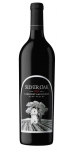
Silver Oak Cellars Napa Valley Cabernet Sauvignon is made from 81.6% Cabernet Sauvignon, 14.8% Merlot, 1.8% Petit Verdot, 1.4% Cabernet Franc, 0.4% Malbec.
Ruby in color, the 2020 Silver Oak Napa Valley Cabernet Sauvignon is a harmony of black and blue fruit notes that dance delicately on the palate. Plum and blueberry intertwine with whispers of baking spices, creating a tapestry of flavors that unfold in layers of complexity. On the palate, it is a study in elegance—smooth and effortlessly refined. Silky tannins provide structure without imposing, ensuring a seamless journey from the first sip to the last.
Review:
A super creamy, delicious and detailed red with oodles of red fruit, silky tannins and a full body. It tastes pure, fresh, almost delicate, offering raspberries, cherry cream, blueberries, cafe au lait and subtle oak toast on the palate. A gentle, layered, pretty wine that seems not at all affected by the wildfire smoke that year.
-James Suckling 95 Points



