
" We don't sell the wine without touching the vine "

| Country: | United States |
| Region: | Mendoza |
| Winery: | Maipe |
| Grape Type: | Malbec |
| Vintage: | 2010 |
| Bottle Size: | 750 ml |
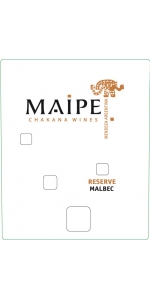
Maipe Malbec Reserve is made from 100 percent Malbec.
Maipe was the Lord of the Winds for the ancient Andean Indians. He is still called upon to clear the skies after heavy rain, or to temper the summer heat.
The nose reveals dried plum and dark fruits, exotic spices, with hints of violet and chocolate. Round and fleshy, with enticing crushed plum and boysenberry fruit enlivened by a liquorice snap note. Fresh acidity lies buried on the medium-weight, juicy finish.
The grapes are carefully chosen and fermented in small lots to preserve the vineyard identity. Alcoholic fermentation for 12 days with indigenous and selected yeasts, at temperatures of 26 and 30°C, combining, remontage, pigage and delestage in order to obtain the best quality of tannins and structure.
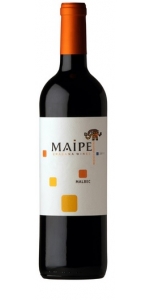
Maipe Malbec is made from 100 percent Malbec.
This Malbec has a deep purple color with violet tints, complex plum, fig, strawberry, spices and floral aromas; rounded and velvety tannins, excellent length with a distinguished character.
Excellent when paired with game, roasted red meats, pasta or pizza.
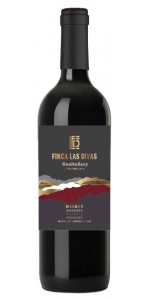
Finca las Divas Malbec Reserve Gualtallary 2022 is 100% Malbec.
Named in honor of different divas because of the detailed attention to each varietal and plot, consequence of the terroir, origin of the Andes slopes.
Deep violet red in color, its aromas are intense and concentrated, with hints of black and red fruits with smoky touches obtained during its oak aging.
In the mouth it is persistent, full of juicy yet firm tannins and balanced acidity. It is frank and expressive, modern and of great personality.
Pairs with red meat, pasta with tomato sauce and hard cheeses.
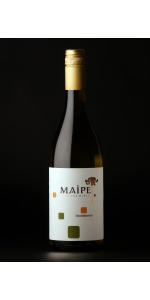
Maipe Chardonnay 2013 is made from 85% Chardonnay, 15% Viognier.
Manual harvest.
5 hour maceration on skins in temperature controlled steel vats; fermentation with selected yeasts at 14°-16°C; 30% malolactic fermentation.
30% was aged in French oak barrels.
Brilliant yellow golden color with green hints.
The wine is crisp and filled with white peach, pear, green apples flavors, toasty vanilla. Elegant and luscious wine, well balanced. Crisp and long finish.
Pairs well with creamy soups, pork, veal, vegetables.
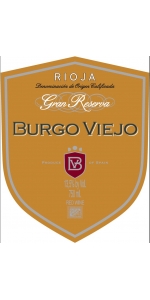
Burgo Viejo Rioja Gran Reserva is made from 100 percent Tempranillo. 30 year old vines.
Burgo Viejo Gran Reserva shows a deep red ruby color and offers powerful aromas of blackberry jam, spice, leather, chocolate with toasty nuances. Smooth yet full-bodied with firm tannins and a long finish.
Review:
"Shimmering garnet. Aromas of cherry, blueberry, candied flowers, tobacco and coconut pick up a smoky overtone with air. Smooth and fleshy on the palate, offering ripe red and blue fruit, mocha, cola and spicecake qualities that tighten up on the back half. Finishes long and supple with repeating spiciness, even tannins and a lingering suggestion of red berry preserves. This old-school Rioja was aged for two years in 90% American and 10% French oak. - Josh Raynolds"
- Antonio Galloni's Vinous (April 2021), 92 pts
2010 Burgo Viejo Rioja Gran Reserva - Silver Medal - MUNDUS VINI
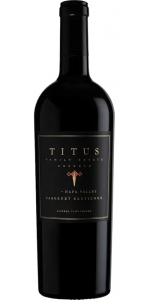
The 2021 Titus Family Estate Reserve embodies the depth, concentration, and beauty of our Ehlers Lane vineyard with grace and elegance. A core of Blueberry, black currant, mulberry and warm coffee are rounded out with hints of lilac and maduro wrapped cigar. Inkiness in the glass gives the wine depth and length with rich finely knit tannins melting to chocolate pot de crème intensity. Crème de cassis and berry tart notes yield to espresso and rich oak on the finish as the palate endures. Enjoy 2025-2041.
Review:
Lastly, the 2021 Cabernet Sauvignon Family Estate Reserve is based on 87% Cabernet Sauvignon, 9.5% Petit Verdot, and the rest Malbec. It's a touch more focused and linear compared to the Imperatus, but I love the purity and precision in its cr me de cassis, espresso, classy oak, and spicy, floral aromatics. Medium to full-bodied on the palate, with fine tannins and a seamless, layered mouthfeel, as well as ripe tannins, it's going to benefit from 2-3 years in the cellar and evolve for 15 years with ease.
-Jed Dunnuck 94 Points
Maipe Malbec Reserve 2010 is made from 100% hand-selected Malbec from the best parcels of the estate. The grapes are carefully chosen and fermented in small lots to preserve the vineyard identity.
Alcoholic fermentation for 12 days with indigenous and selected yeasts, at temperatures of 26 and 30°C, combining, remontage, pigage and delestage in order to obtain the best quality of tannins and structure.
The resulting wine is aged for 12 months in French oak barrels to fully reveal the character of the Andean terroir.
The nose reveals dried plum and dark fruits, exotic spices, with hints of violet and chocolate. Round and fleshy, with enticing crushed plum and boysenberry fruit enlivened by a liquorice snap note. Fresh acidity lies buried on the medium-weight, juicy finish
"The 2010 Malbec Reserve spent 12 months in French oak. Cedar, Asian spices, incense, cherry cola, and assorted black fruits set the stage for a spicy, concentrated, layered Malbec that offers excellent value. Drink it over the next 5-6 years"
- Wine Advocate (December 23rd 2011), 90 pts
The Maipe Estate
Looking for Chakana's other labels?
Click below:
Maipe was the Lord of the Winds for the ancient Andean people. Argentineans still invoke his name to clear the skies after a heavy rain or to temper the summer heat. These wines, children of the Sun and the Winds, are produced from grapes grown at the foothills of the Andes Mountains at an altitude of 3,000 feet above sea level. The intense color and aromas capture the expression of the soils that gave them birth.
Maipe is produced in a state-of-the-art winery, Chakana, built with the purpose of achieving outstanding quality.
Chakana winery was founded by Juan Pelizzatti on May 2nd, 2002. Juan was driven to enter the wine industry first and foremost by his passion for wine, and also by the desire to invest his time and money on a product of agriculture. Although Juan did not know it at the time, the company was founded on the same day the Chakana was celebrated on the Andes highlands: on that same day, the Southern Cross (the Chakana for the Inca people) becomes vertical in the night Andean sky.
Juan's mission is to create an integral experience to introduce world consumers to the taste and culture of the Andes. His vision is to become one of the top 20 exporters of wine from Argentina, by consistently offering outstanding value for money.
Wine is currently produced in four different levels at Chakana, by winemaker Gabriel Bloise:
Entry Level: Maipe
Reserve Level: Maipe Reserve, Cueva de las Manos, Nuna
Estate Selection
Ayni
The winemaking process is focused on treating the grapes with great care and with strict control of every step of the production.
Wines are designed under the responsibility of the renowned international wine consultant Alberto Antonini.
The winery is located on a 150 ha. estate, 34 km South of the city of Mendoza, in Agrelo, Lujan de Cuyo.
The grapes grown are 35 year-old Malbec, Bonarda and Cabernet Sauvignon.
Deep and textured soils facilitate plant development and confer great body and structure to the wines.
The year-long sunny and dry conditions allow almost organic viticulture practices. The outstanding feature includes a great daily thermal amplitude, with mild days and cold nights, permitting a particular richness of polifenols that improves the wines flavors and color.
A drip irrigation system has been set up to achieve a precise control of the vegetative cycle and a rational use of water. Waters are processed and used in the vineyards.
The Maipe Vineyards
Chakana sources grapes from their own four estates:
Agrelo
Acreage: 150 ha, 120 ha with vineyards
70 ha entry level
40 ha reserve level
10 ha estate & ayni
Acreage by varietal at Agrelo Estate:
Malbec: 50 ha
Cabernet Sauvignon: 30 ha
Syrah: 10 ha
Bonarda: 10 ha
Tannat: 2,5 ha
Petit Verdot: 2.5 ha
Cabernet Franc: 1.5 ha
Aspirant Bouchet: 2.5 ha
Ancellotta: 2 ha
Sauvignon Blanc: 4 ha
Viognier: 2.5 ha
Chardonnay: 2.5 ha
Wine Profile: Medium bodied, elegant, fresher fruit. Round tannin on gravels.
Terroir: Very heterogeneous – deep clay to sandy clay gravels; cool climate
Altamira I
Acreage: 15 ha, Malbec high density. Planted in 2010, not in production
Wine Profile: Full bodied, impressive tannic structure and roundness, spicy and complex.
Terroir: Sandy clay gravel, limestone; cooler climate
Altamira II
Acreage: 36 ha, 26 ha with vineyards
20 ha malbec, estate and ayni level
4 ha chardonnay, entry level and reserve
2 ha pinot noir (used for sparkling wine)
Wine Profile: Medium bodied, elegant, fresher fruit. Round tannin on gravels.
Terroir: Very heterogeneous – deep clay to sandy clay gravels; cool climate
Terrada
Acreage: 21 ha, all in vines
100% malbec, old vines, high density
Reserve – Estate Selection
Wine Profile: Complex, ripe fruit, medium bodied, elegant.
Terroir: Sandy clay gravels, 70cm. soil depth, Some limestone; warmer climate.
They also source wines from contract suppliers in Ugarteche and Medrano, for entry level wines, and in Vista Flores, for Estate Selection & Ayni levels.
Resonance Decouverte Vineyard Pinot Noir is made from 100 percent Pinot Noir.
The wine reflects a beautiful and brilliant garnet color, with an expressive and complex nose of strawberry, plum, wild cherry, almond and licorice. The wine reveals an elegant palate, vibrant and complex, with delicate notes of noble wood, and very long and mineral finale.
Review:
James Suckling 93 Points
Hailing from over two dozen vineyards across the beautiful Golden State, the Turley Juvenile is more of a clear bellwether for a vintage than any other wine we make. Fragrant, lifted aromas of ripe dark fruits like black raspberry and blood orange on the nose. Superb balance between acidity, tannin, and spice, with a succulent, profoundly satisfying texture.
Review:
The 2024 Zinfandel Juvenile is a very pretty entry-level offering from Turley. Crushed flowers, sweet red berry fruit, spice and mint give this mid-weight, perfumed red tons of character. The 2024 is an especially delicate, gracious Zinfandel. What a beauty.
-Vinous 91 Points



