
" We don't sell the wine without touching the vine "
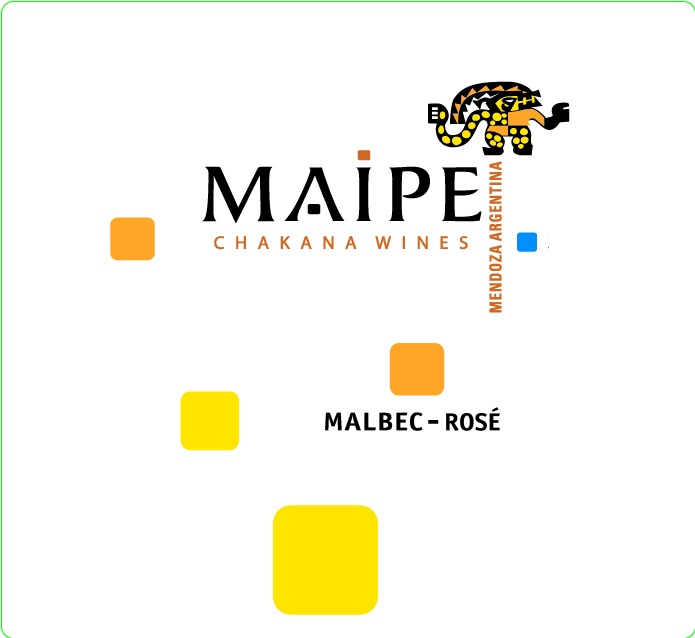
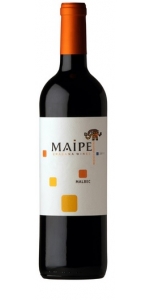
Maipe Malbec is made from 100 percent Malbec.
This Malbec has a deep purple color with violet tints, complex plum, fig, strawberry, spices and floral aromas; rounded and velvety tannins, excellent length with a distinguished character.
Excellent when paired with game, roasted red meats, pasta or pizza.
Maipe Malbec Reserve is made from 100 percent Malbec.
Maipe was the Lord of the Winds for the ancient Andean Indians. He is still called upon to clear the skies after heavy rain, or to temper the summer heat.
The nose reveals dried plum and dark fruits, exotic spices, with hints of violet and chocolate. Round and fleshy, with enticing crushed plum and boysenberry fruit enlivened by a liquorice snap note. Fresh acidity lies buried on the medium-weight, juicy finish.
The grapes are carefully chosen and fermented in small lots to preserve the vineyard identity. Alcoholic fermentation for 12 days with indigenous and selected yeasts, at temperatures of 26 and 30°C, combining, remontage, pigage and delestage in order to obtain the best quality of tannins and structure.
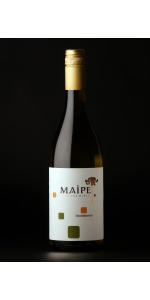
Maipe Chardonnay 2013 is made from 85% Chardonnay, 15% Viognier.
Manual harvest.
5 hour maceration on skins in temperature controlled steel vats; fermentation with selected yeasts at 14°-16°C; 30% malolactic fermentation.
30% was aged in French oak barrels.
Brilliant yellow golden color with green hints.
The wine is crisp and filled with white peach, pear, green apples flavors, toasty vanilla. Elegant and luscious wine, well balanced. Crisp and long finish.
Pairs well with creamy soups, pork, veal, vegetables.
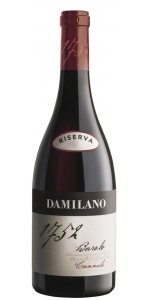
“1752” is the name of the Damilano Barolo Cannubi Riserva, in honor of the year in which the historic bottle was first marked “Cannubi”. It still exists today perfectly conserved by the Manzone family in Bra, close to Barolo. The bottle is clearly marked as being of “1752” vintage, indicating that Cannubi historically precedes Barolo.
About the Vineyard:
The Cannubi Cru is in found within one of the 6 core zones which comprise a UNESCO heritage site in Italy. A mixture of Tortonian and Helvetian calcareous marl gives the grapes intense aromas of cherry, plum and tobacco, rose and violet in sequence. Its low potassium and high calcium/magnesium content offer the wine a fine and polished touch. The vineyard is located at about 270 m. a.s.l. and has a south-east sun exposure. Barolo Riserva Cannubi 1752 It is a small plot of about 2 hectares of Nebbiolo vines, currently between 30 and 50 years of age.
Tasting Notes:
Garnet ruby red in color, the bouquet is intense and balanced, with notes of violet, red fruit, cherry and plum, spices, liquorice, cocoa, leather and tobacco. Dry, robust, full-bodied, very persistent, rich and velvety
Food Pairing:
This wine is excellent with typical piedmontes pasta (tajarin, ravioli); perfect with red meat, braised and roast meat, game and absolutely ideal with all types of cheeses.
Review:
The purity of this wine is pretty phenomenal with blackberries, strawberries, fresh flowers and licorice. Hints of tar. It’s full-bodied, yet composed and compact with ultra fine tannins and a long, flavorful finish. Very structured. Try after 2024.
-James Suckling 97 Points
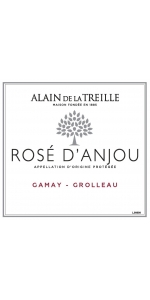
Alain de la Treille Rose d'Anjou is made from 50% Gamay, 50% Grolleau
The Rosé d'Anjou AOC, also known as Anjou Rosé AOC, produces medium-sweet rosés. Wines are made predominantly from Grolleau, with percentages of Cabernet Franc, Cabernet Sauvignon, Gamay, Malbec and Pineau d'Aunis permitted. Anjou soils reflect the geological identity of its border position between Armorican and Parisian basins. The terroirs consist of metamorphic and crystalline rocks (schist, sandstone) known as Anjou Noir, and ‘Terres Blanches’ (white earth) limestone known as Anjou Blanc. The AOC covers 1,890 hectares (4,668 acres).
The Grolleau grape derives its name from the French word ‘grolle’, meaning crow – a reflection of the dark black color of the grapes.
Crisp and refreshing with vibrant aromas of strawberry and raspberry. Juicy and well-balanced with a long finish.
Selective juice extraction to preserve color & aromas. Temperature controlled fermentation is followed by aging on the fine lees. No malolactic fermentation; no oak.
To be served chilled (10°C/50°F) with barbecued meats, salads, any spicy food, poultry dishes and of course appetizers.
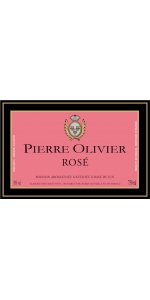
Pierre Olivier Sparkling Rose NV is a value sparkling rosé, made with Tempranillo grapes from around the French/Spanish border (next to the Pyrenees). This is a new Kysela Project.
This wine is aromatized with a very little amount of Raspberry flavor, giving a nice mouthfeel, with an extra aromatic boost.
The bubbles are obtained using the Charmat method, named after Eugene Charmat, where the second fermentation takes places in a large, closed pressurized tank. It is different from the Methode Champanoise as the secondary fermentation doesn't take place in the bottle.
"Pale pink salmon. Just a touch off-dry, this is a very pleasant sparkler that reveals aromas of spicy red apple with a hint of cinnamon that carry through to the palate. Well made and exceedingly pleasant to drink."
- International Wine Review (Annual Rosé Report / April 2013), 89 pts
Maipe Malbec Rose 2013 is made from 100% Malbec. Manual harvest.
35 year old vines.
1 day maceration in temperature controlled steel vats; 10 day fermentation with selected yeasts at 14°-16°C;
30 days of batonage (stirring of the lees).
Intense pink color with violet hints.
Fresh red fruit bouquet, strawberry and cherry flavors, balanced acidity, dry and lingering finish.
Excellent with tuna or green salad, pasta, spicy Asian dishes.
The Maipe Estate
Looking for Chakana's other labels?
Click below:
Maipe was the Lord of the Winds for the ancient Andean people. Argentineans still invoke his name to clear the skies after a heavy rain or to temper the summer heat. These wines, children of the Sun and the Winds, are produced from grapes grown at the foothills of the Andes Mountains at an altitude of 3,000 feet above sea level. The intense color and aromas capture the expression of the soils that gave them birth.
Maipe is produced in a state-of-the-art winery, Chakana, built with the purpose of achieving outstanding quality.
Chakana winery was founded by Juan Pelizzatti on May 2nd, 2002. Juan was driven to enter the wine industry first and foremost by his passion for wine, and also by the desire to invest his time and money on a product of agriculture. Although Juan did not know it at the time, the company was founded on the same day the Chakana was celebrated on the Andes highlands: on that same day, the Southern Cross (the Chakana for the Inca people) becomes vertical in the night Andean sky.
Juan's mission is to create an integral experience to introduce world consumers to the taste and culture of the Andes. His vision is to become one of the top 20 exporters of wine from Argentina, by consistently offering outstanding value for money.
Wine is currently produced in four different levels at Chakana, by winemaker Gabriel Bloise:
Entry Level: Maipe
Reserve Level: Maipe Reserve, Cueva de las Manos, Nuna
Estate Selection
Ayni
The winemaking process is focused on treating the grapes with great care and with strict control of every step of the production.
Wines are designed under the responsibility of the renowned international wine consultant Alberto Antonini.
The winery is located on a 150 ha. estate, 34 km South of the city of Mendoza, in Agrelo, Lujan de Cuyo.
The grapes grown are 35 year-old Malbec, Bonarda and Cabernet Sauvignon.
Deep and textured soils facilitate plant development and confer great body and structure to the wines.
The year-long sunny and dry conditions allow almost organic viticulture practices. The outstanding feature includes a great daily thermal amplitude, with mild days and cold nights, permitting a particular richness of polifenols that improves the wines flavors and color.
A drip irrigation system has been set up to achieve a precise control of the vegetative cycle and a rational use of water. Waters are processed and used in the vineyards.
The Maipe Vineyards
Chakana sources grapes from their own four estates:
Agrelo
Acreage: 150 ha, 120 ha with vineyards
70 ha entry level
40 ha reserve level
10 ha estate & ayni
Acreage by varietal at Agrelo Estate:
Malbec: 50 ha
Cabernet Sauvignon: 30 ha
Syrah: 10 ha
Bonarda: 10 ha
Tannat: 2,5 ha
Petit Verdot: 2.5 ha
Cabernet Franc: 1.5 ha
Aspirant Bouchet: 2.5 ha
Ancellotta: 2 ha
Sauvignon Blanc: 4 ha
Viognier: 2.5 ha
Chardonnay: 2.5 ha
Wine Profile: Medium bodied, elegant, fresher fruit. Round tannin on gravels.
Terroir: Very heterogeneous – deep clay to sandy clay gravels; cool climate
Altamira I
Acreage: 15 ha, Malbec high density. Planted in 2010, not in production
Wine Profile: Full bodied, impressive tannic structure and roundness, spicy and complex.
Terroir: Sandy clay gravel, limestone; cooler climate
Altamira II
Acreage: 36 ha, 26 ha with vineyards
20 ha malbec, estate and ayni level
4 ha chardonnay, entry level and reserve
2 ha pinot noir (used for sparkling wine)
Wine Profile: Medium bodied, elegant, fresher fruit. Round tannin on gravels.
Terroir: Very heterogeneous – deep clay to sandy clay gravels; cool climate
Terrada
Acreage: 21 ha, all in vines
100% malbec, old vines, high density
Reserve – Estate Selection
Wine Profile: Complex, ripe fruit, medium bodied, elegant.
Terroir: Sandy clay gravels, 70cm. soil depth, Some limestone; warmer climate.
They also source wines from contract suppliers in Ugarteche and Medrano, for entry level wines, and in Vista Flores, for Estate Selection & Ayni levels.
Gaja Sperss is made from 100 percent Nebbiolo.
Vibrant and intense notes of herbs and spices such as thyme, cloves and black pepper. On the palate the wine is tense, loaded with energy that will need serious ageing to fully develop although extremely approachable in its youth. Impressive fruit concentration, with dark and ripe fruits – prunes and black cherries. Acidity and tannins lift this wine to its freshest expression.
Nebbiolo based wines have not only complexity and structure but also great elegance and finesse. The distinctive silky tannins of the Nebbiolo make it the right wine to drink with meat. Usually a young vintage goes very well with richer dishes because of the stronger tannins; mature Barolos are more suitable with delicate white meat courses or braised meat courses with sauces or concentrated red wines reductions.
Review:
The 2019 Barolo Sperss is rich with dark mineral earth, black cherry, and Earl Grey tea. Long and mouthwatering, it has a powerful structure while retaining finesse. It is fantastically balanced, with gripping tannins, fresh acidity, and notes of forested earth and ripe red berries. A wine for the long haul, this is another great and noble wine to drink over the coming three decades.
-Jeb Dunnuck 99 Points
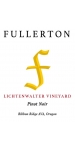
Fullerton Lichtenwalter Pinot Noir is made from 100% Pinot Noir - 10 years old
12 months in 100% neutral French Oak
On the western slope of the south-facing Ribbon Ridge sits the lovely Lichtenwalter Vineyard. Here Willakenzie soils, derived from ancient sedimentary seabed, coax black fruits and concentrated spices out of the wines.
Aromas of blackcurrant, blueberry, blackberry, and black cherry with concentrated spices followed by hints of sandalwood, smoke and oolong tea. Depth in the mid-palate pairs with balanced acidity, and so, yet structured tannins. The Willamee Valley’s smallest AVA speaks clearly and compellingly through this wine.
This wine comes from 100% destemmed rotator barrels fermented at ambient temperature reaching a peak temperature of 73° F. The rotator barrel spun twice daily during fermentation yielding a gentle extraction. Aer fermentation, the wine went through a three-week extended maceration, allowing the tannins to polymerize, soening the wine. Aged for 12 months in French oak barrels and three months in tank, the wine was then boled aer filtration.



