" We don't sell the wine without touching the vine "
| Country: | Spain |
| Region: | Calatayud |
| Winery: | El Escoces Volante |
| Grape Type: | Macabeo |
| Vintage: | 2018 |
| Bottle Size: | 750 ml |
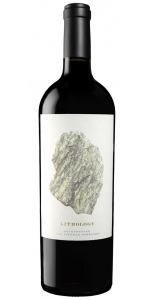
Alejandro Bulgheroni Lithology Beckstoffer Las Piedras Cabernet Sauvignon is made from 100 percent Cabernet Sauvignon.
From a St. Helena vineyard planted by early Napa settler Edward Bale more than 150 years ago, and later serving as the estate vineyard for the area’s first winery built by Henry Pellet in 1860, the Las Piedras site always gives us our prettiest wine. When placed next to Dr. Crane and To-Kalon wines, the Las Piedras show a certain elegance, with a very graceful entry and finely detailed complexity. We produce it with at least 75% new French oak, so there is a floral, spicy, and vanilla accent to the intense red and black fruits, cassis, and black cherry liqueur. What distinguishes this bottling is the beautifully fine tannins, delicate texture, and stunning purity. (Less than 100 cases made.)
Fermentation 70% Oak, 24% Concrete, 6% Puncheon
Review:
"The 2018 Cabernet Sauvignon Lithology Beckstoffer Las Piedras Vineyard comes from a world-class site outside of St. Helena and is all Cabernet that spent 20 months in 80% new oak. It offers a touch more red fruit as well ample cassis, spring flowers, loamy earth, and spice-like aromas and flavors. It has a wonderful sense of minerality, ultra-fine tannins, a dense, layered texture, and incredibly purity of fruit. It’s another just about off the charts release from this estate."
- Jeb Dunnuck 98 Points
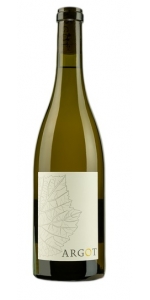
Argot Chardonnay Sonoma County is made from 100 percent Chardonnay.
Pouring a green-tinted gold, our Sonoma County Chardonnay is a beautiful wine from word go. Radiating from within, a blast of apple/pear fruit informs this wine both aromatically, and on the palate. As flavors unfurl, a progression of orange blossom, pineapple, white peach, and hazlenut are followed by a finish dominated by ginger, baked apple, with a trailing kiss of mint’s freshness. A stunning wine — wholly informed by the perfection of 2018’s growing season — defined by its dichotomy of massively intense flavors, and superb acidity and freshness.
Raised by minimalistic methods, often associated with the classic Chardonnay winemaking techniques of Meursault. With a focus on the coolest Chardonnay region in Sonoma County, 2018’s long, even growing season favored our vineyards’ moderate climate, old vines and deep volcanic soils. These grapes were allowed an extended ripening period on the vine, resulting in perfect balance and concentrated flavors.
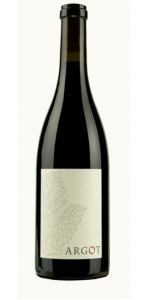
Argot Pinot Noir Sonoma County is made from 100 percent Pinot Noir.
Everything you have come to expect from an Argot Pinot Noir, shone through the filter of a textbook-perfect vintage. We simply can not get over the quality of fruit this wine displays! Intense, yet fresh; fruity, yet spicy; brambly, yet juicy; immediate, yet lingering. A Pinot Noir that displays the variety’s natural come-hither attitude, while succinctly capturing its intriguing nature. There are not enough superlatives to describe this wine. Almost too easy to love!
VINEYARD Multiple vineyards throughout Sonoma County, including both valley floor and high-elevation hillside sites
PRODUCTION 600 cases
VARIETAL 100% Pinot Noir
CRUSH Night harvested by hand beginning in mid-September, concluding at our coolest sit on October 13. Cluster and berry sorted by hand, de-stemmed, no crushing
FERMENT 7-day cold soaks, followed by native fermentation in open-top containers, with the grapes fermenting on their skins for an average time of 14 days.
AGING 16 months, French oak barrels, 7% new, remainder once-used. Never racked prior to bottling. Bottled un-fined, unfiltered.
NOTES Singularly great. 2018 was an all-time vintage for California’s North Coast, achieving rarely before experienced heights. A mild summer gave way to Autumnal perfection, allowing cooler areas the opportunity to ripen their crop while chemistries remained perfect. What arrives in bottle is nothing short of a pinnacle representation of Sonoma County Pinot Noir — profound depth of pure, red Pinot Noir fruits, caressing textures balanced by deep minerality and a quenching acidity.
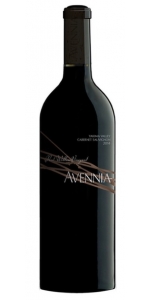
Avennia Red Willow Cabernet Sauvignon is made from 100% Cabernet Sauvignon.
The Red Willow Cabernet is a true blockbuster.
Coming from one specific block of 30 year old vines at this iconic vineyard, then strictly barrel selected, this is the essence of powerful, old vine Washington Cabernet. After all of our efforts promoting the idea of the Bordeaux blend, it would take a pretty compelling argument to suspend that idea and make a 100% varietal Cabernet. In 2016 Red Willow provided us with just that. Each time we tasted it in the barrel, the belief grew that this was something special. Something we can't make every year. In the end we were won over, and decided to make a limited amount of this wine. But don't be fooled, as this too is a blend and a selection. Each year as we are tasting the grapes as harvest approaches, we notice that the vines near the bottom of this long, steep west-facing slope, are a little different. The vines at the bottom are in a little richer soil, and get a little more water, so we pick them separately, sometimes even a week or ten days apart, and keep them separate in barrel.
This wine is all from the top of the vineyard, with its lower yield and poorer soils giving more concentration and interest. Then further, nearly every combination of new and used French oak barrels were trialed to find the best blend. It's not enough just to use the four best barrels, but to trial each combination to see how they complement each other. For a wine with this much mass, 100% new French oak was used for the first time at Avennia. It is a wine that needs a little cellaring to start, but should last a very long time.
Review:
The flagship Cabernet, the 2018 Cabernet Sauvignon Red Willow Vineyard is all varietal, from old vines in a great vineyard in Yakima Valley, that spent 20 months in 80% new French oak. It reveals a deep purple hue as well as a backward, brooding nose of smoked blackcurrants, tobacco, scorched earth, and violets. It has beautiful richness yet takes plenty of coaxing to open up. On the palate, it's medium to full-bodied and has a nicely textured, balanced mouthfeel, plenty of tannins, and outstanding length. It's mostly potential at this point and is going to benefit from at least 4-5 years of bottle age, but my money is on it having 20+ years of prime drinking.
-Jeb Dunnuck 96 Points
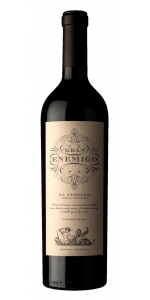
Enemigo El Enemigo Gran Enemigo is made from 100% Cabernet Franc.
In the spectrum of people who pay attention to detail, winemakers are often incredibly detail-oriented. This can sometimes spill over to become an internal battled, and, as Alejandro Vigil and Adrianna Catena state, "We are our own worst enemy." El Enemigo pays homage to this internal struggle.
The nose presents sweet aromas of black ripen fruits with hints of vanilla and chocolate, which appear after the oak ageing. The mouthfeel is sweet with structured, persistent tannins due to the natural acidity of this wine, leading into an excellent long finish.
Review:
The nose of the 2018 Gran Enemigo El Cepillo Single Vineyard, from a low-yielding and drier year, is full of curry, a note that was a constant across the three vintages I tasted together, but it tends to be stronger in low-yielding and dry years like this. It's also floral and comes through as aromatic and a little exotic, in a good way, with elegance, persistence and very pure flavors. It has fine-grained tannins, great acidity and balance. 7,200 bottles. All these single-vineyard bottlings mature in ancient 4,000-liter oak foudres for some 15 months.
-Wine Advocate 97 Points"Pretty and inviting on the nose with gorgeous aromas of floral violet, cassis and completed with a lifted, delicate liquorice note. The palate is graced with deep herb, pepper, crunchy red fruit and graceful, silky tannins."
-Decanter 97 Points
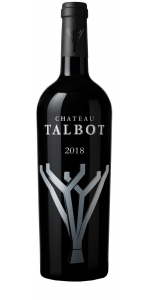
Chateau Talbot Saint-Julien Grand Cru Classe is made from 69 % Cabernet Sauvignon, 26 % Merlot, 5 % Petit Verdot.
The wine presents a delicate and captivating nose of black fruits, fresh tobacco, peppermint and floral nuances. Ripe and juicy fruit flavors of black currants on the palate with well integrated velvety tannins and a beautiful refreshing acidity to the long finish.
For the 2018 vintage, a special packaging with a unique silkscreen printing bottle was created to mark the 100th anniversary of the Cordier Family's acquisition of Chateau Talbot
Pair with red meat, roast pork, game meat, poultry, hard cheeses, poached pear.
"Rich aromas of blackcurrant, blackberry, chocolate, tobacco and licorice. Oyster shell, too. It’s full-bodied with firm, well integrated tannins. Polished, silky layers with a long finish. Gorgeous ripe and bright fruit in the center palate. Best in a long time. Try from 2025."
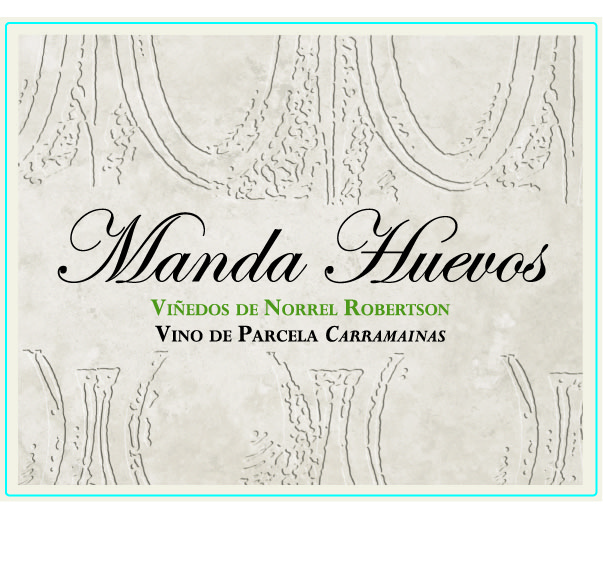
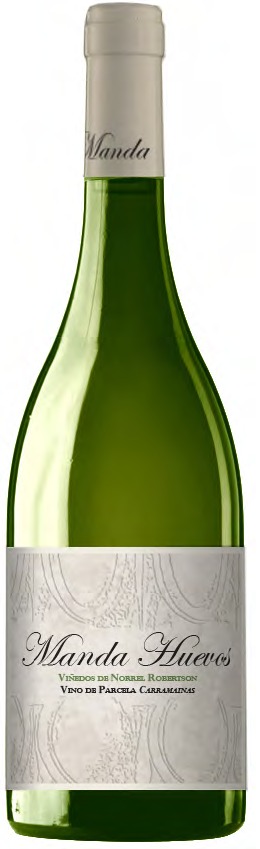
Manda Huevos Blanco Parcela Carramainas is made from 95% Macabeo, 5% Garnacha.
Manda Huevos – Vulgarism originating from the Latin Mandat Opus, precursor of the expression manda oebos. The original meaning being one is obliged out of necessity. Nowadays it is a vulgarism in Spanish born out of frustration meaning 'I can´t believe it', 'get out of here', etc but actually originating from the latin Mandat Opus meaning your are obliged to do something out of necessity.
The Carramainas parcel is an unusual mix of decomposed red sand with gives rise to a loamy / sandy texture with gravel and pebble stones interspersed, 850 m above sea level, South West facing directly below the Pingorote de la Zorra, a famous peak outside Villarroya de la Sierra in the Sistema Iberico.
Manda Huevos single vineyard Carramainas is produced with minimum intervention. It offers a pale straw color with notes of chamomile and apples on the nose giving way to floral touches and cut straw. On the palate the wine is unctuous with seemlessly integrated oak and a long mineral persistent finish. Drinking from 2020 for another 10 years - built to last.
Review:
"The regular white 2018 Manda Huevos Blanco Carramainas was produced with grapes from the single vineyard that is mentioned on the label. There is a skin-contact version of grapes from this same plot, but these grapes were harvested 12 days earlier than those destined to ferment with the skins, as the aim here was to achieve higher acidity and freshness and let the lees rather than the skins be the ones defining the style of the bottled wine. This is 95% old-vine Macabeo with only 5% Garnacha Blanca, with good ripeness and bright acidity. It fermented after a slow pressing and one night of settling in 500- and 900-liter oak barrels, where it was kept with the full lees for two months. It was then racked into Flextank (plastic) eggs with fine lees and then matured for another 12 months. It has a Burgundian profile, going back to the style of the 2014, in a leesy and smoky style, still very young and undeveloped. There's also something that reminded me of old-style white Rioja. The palate is vibrant and has pungent citrus acidity. It feels like a white to lay down, as it should develop nicely in the bottle. 2,581 bottles were filled in November 2019. - Luis Gutiérrez"
- Robert Parker's Wine Advocate (Issue #248, April 2020), 93+ pts
EL ESCOCÉS VOLANTE is based in Aragón, Spain dedicated to the production of high quality wines with a particular focus on the native Garnacha grape variety. They also specialize in making very individual wines from native Spanish varieties from other exciting wine regions.
El Escocés Volante (The Flying Scot), Norrel Robertson MW, touched down with his family in Spain in 2003 and released his first wine in 2004.
Date Founded: 2003
Norrel has been making wine in Spain for over 10 years and is currently the only Master of Wine living in Spain. He was born and raised in Scotland and, after graduating from Aberdeen University with a MA Honours degree in Politics and International Relations, has worked in the wine industry for the last 20 years, starting in sales before moving on to buying and product development.
In the 1990´s Norrel decided to pursue a career in winemaking and decided the best way was to learn from the cellar up. Norrel went on to work vintages in Chianti in Italy, Portugal, Australia, France and Chile. In 1998, Norrel embarked on the Master of Wine Course and became a Master of Wine in November 2000, winning the Robert Mondavi Award for the best overall theory performance in the exam.
In 2002-2003 Norrel studied the Postgraduate Viticulture and Oenology course at Lincoln University in Christchurch, New Zealand, obtaining his postgraduate qualification with distinction.
In 2003, he moved to Spain to as Winemaker for International Wine Services and quickly fell in love with the old Garnacha vineyards in the area of Calatayud, Aragon and decided to start making his own wines.
His company - EL ESCOCÉS VOLANTE SL - took off and Norrel now produces many award winning wines made from very specially selected vineyards at high altitude in Aragon, Spain. He also has winemaking projects in Murcia, Andalucia and Galicia. His own wines are sold in over 15 markets. He consults for many high profile wineries in Spain and also to import businesses in the UK .
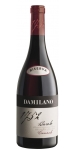
“1752” is the name of the Damilano Barolo Cannubi Riserva, in honor of the year in which the historic bottle was first marked “Cannubi”. It still exists today perfectly conserved by the Manzone family in Bra, close to Barolo. The bottle is clearly marked as being of “1752” vintage, indicating that Cannubi historically precedes Barolo.
About the Vineyard:
The Cannubi Cru is in found within one of the 6 core zones which comprise a UNESCO heritage site in Italy. A mixture of Tortonian and Helvetian calcareous marl gives the grapes intense aromas of cherry, plum and tobacco, rose and violet in sequence. Its low potassium and high calcium/magnesium content offer the wine a fine and polished touch. The vineyard is located at about 270 m. a.s.l. and has a south-east sun exposure. Barolo Riserva Cannubi 1752 It is a small plot of about 2 hectares of Nebbiolo vines, currently between 30 and 50 years of age.
Tasting Notes:
Garnet ruby red in color, the bouquet is intense and balanced, with notes of violet, red fruit, cherry and plum, spices, liquorice, cocoa, leather and tobacco. Dry, robust, full-bodied, very persistent, rich and velvety
Food Pairing:
This wine is excellent with typical piedmontes pasta (tajarin, ravioli); perfect with red meat, braised and roast meat, game and absolutely ideal with all types of cheeses.
Review:
“Incredible, reserved ripeness and depth already evident on the nose after one whiff, offering plum, cedar, rose hip, sandalwood, and licorice. Full-bodied with superb depth of fruit and an abundance of polished tannins that give the wine poise and grace, even though it’s long and powerful. The quality of the tannins are exceptional. Sheer and refined. This comes from the center of Cannubi.”
-James Suckling 99 Points
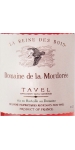
Mordoree Tavel Rose Reine des Bois is made from 60% Grenache, 15% Clairette, 10% Syrah, 10% Cinsault, 5% Bourboulenc (biodynamically farmed on a rocky/sandy plateau over clay).
This wine comes from a parcel planted on a pebbled soil covered with stones, whose geology is typical of the grands crus from the Rhone Valley (a base made of marine molasse from the Miocene period covered with an alpine diluvium from the Villafranchian period). 100 % destemming, cold maceration during 48 h., pneumatic pressing, fermentation at 18° C.
To pair with: roasted and or spicy chicken, duck, goose, fish soup, white meat, seafood and a lot of fishes (tuna, John Dorry, red mulet, etc...).Quite all Asian cuisine. Dishes with garlic, dishes with tomatoes.
In the glass the wine is deeply colored pink, almost orange/salmon. Complex aromas of white flowers, raspberry, pomegranate, strawberry, minerals, and citrus rise from the glass. Palate is full-bodied and voluptuous yet retains elegance while delivering great fruit intensity balanced by minerals and citrus. Light tannins appear mid-palate and carry through to the finish, giving it serious structure. Fresh, complex, and very long on the finish. Overall, powerful, textured, and food-driven — a “serious” Tavel that can age 1–5 years. Best enjoyed from June/July 2026 onward.