
" We don't sell the wine without touching the vine "
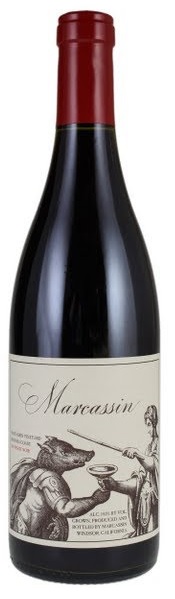
| Country: | United States |
| Regions: | California California (Sonoma County) |
| Winery: | Marcassin |
| Grape Type: | Pinot Noir |
| Vintage: | 2013 |
| Bottle Size: | 750 ml |

Sonoma Bench Pinot Noir comes entirely from the heart of the Russian River Valley, and Green Valley AVA situated on Burnside Rd.
This Pinot Noir shows a deep ruby/garnet red color. The aromas are fresh with raspberry, red fruits with a soft earthy tone. There are vanilla notes from French oak barrel aging. The pallet is lush with roundness, texture, and fruit purity. Tannins are balanced and the finish is firm and refreshing. The length of the wine is elegant and shows harmony and textural balance. 2021 was an exceptionally short harvest in Russian River Valley.
Enjoy now or cellar for 3-5 years,

Argot Pinot Noir Sonoma County is made from 100 percent Pinot Noir.
Everything you have come to expect from an Argot Pinot Noir, shone through the filter of a textbook-perfect vintage. We simply can not get over the quality of fruit this wine displays! Intense, yet fresh; fruity, yet spicy; brambly, yet juicy; immediate, yet lingering. A Pinot Noir that displays the variety’s natural come-hither attitude, while succinctly capturing its intriguing nature. There are not enough superlatives to describe this wine. Almost too easy to love!
VINEYARD Multiple vineyards throughout Sonoma County, including both valley floor and high-elevation hillside sites
PRODUCTION 600 cases
VARIETAL 100% Pinot Noir
CRUSH Night harvested by hand beginning in mid-September, concluding at our coolest sit on October 13. Cluster and berry sorted by hand, de-stemmed, no crushing
FERMENT 7-day cold soaks, followed by native fermentation in open-top containers, with the grapes fermenting on their skins for an average time of 14 days.
AGING 16 months, French oak barrels, 7% new, remainder once-used. Never racked prior to bottling. Bottled un-fined, unfiltered.
NOTES Singularly great. 2018 was an all-time vintage for California’s North Coast, achieving rarely before experienced heights. A mild summer gave way to Autumnal perfection, allowing cooler areas the opportunity to ripen their crop while chemistries remained perfect. What arrives in bottle is nothing short of a pinnacle representation of Sonoma County Pinot Noir — profound depth of pure, red Pinot Noir fruits, caressing textures balanced by deep minerality and a quenching acidity.

Ferren Pinot Noir Sonoma Coast is made from 100 percent Pinot Noir.
100% native fermentation (primary and secondary), long cool fermentations often lasting up to a full year, minimal lees stirring, no additions of any kind (commercial yeast, water, acid, enzymes, etc., never any fining or filtration). Aged 18 months in 15% new French oak (Francois Freres, Vosges, Troncais Forrests)
Review:
"This red's pure beam of mulberry, griotte and blood orange pâte de fruit is racy, fresh and in perfect alignment as the flavors pick up dried anise, bergamot and iris accents along the way. Captivating for its combination of range and restraint, with a long, streamlined finish that ripples with subtle tension. Drink now through 2032. - James MOLESWORTH”
- Wine Spectator's insider (May 22nd 2024), 95 pts
#96 - Wine Spectator Top 100 of 2024

The Sonoma Coast AVA is becoming known as the top source for cool climate Pinot Noir. Flanagan Pinot Noir is founded in letting each site and each vintage express itself. They do not have a dogmatic approach to wine-making. Pinot Noir, more than any other grape variety, is made in the vineyard.
The nose is reminiscent of Chambord with rich raspberry notes. The palate has great depth of fruit and notes of Christmas spices like clove and nutmeg. The wine displays vibrant acidity and has a very clean finish. Our Flanagan Pinot Noir Sonoma Coast pairs beautifully with duck, salmon, pork and game; like pheasant, venison, and elk.

Kosta Browne Sonoma Coast Pinot Noir is made from 100 percent Pinot Noir.
Dark cherry, raspberry, and elderberry intertwine with intriguing hints of fresh basil, and pomegranate. Decadent fruit flavors unfold, showcasing remarkable acidity with dynamic structure and an enduring finish.
Our Appellation Series wines embody our unwavering commitment to exploration and the artistry of crafting soulful, thought-provoking wines that pay homage to the world’s extraordinary terroirs.
The Sonoma Coast is the largest appellation in Sonoma County, strongly influenced by its proximity to the ocean and heavy rainfall—producing more than twice the annual amount of its inland neighbors.
Our Sonoma Coast vineyards span the northern true coastal zone and the southern edge of the appellation. This distinctive blend is made from 11 different clones, fermented in predominantly stainless steel, and aged for 16 months in 38% new oak. The resulting wine has an energetic acidity with cascading layers of black cherry and elderberry, followed by a lasting finish.
Fact of Note: This Sonoma Coast blend was the longest to ferment in stainless steel from our Appellation Series.

The Stone Corral Vineyard is planted on a southeast slope on the west side of the Edna Valley which has an east/west orientation opening up to the Pacific Ocean from Morro Bay and Pismo Beach. Approximately 120 to 300 feet above sea level, the climate is strongly influenced by the ocean providing ideal temperate growing conditions for Pinot Noir. Early spring warming, mild summer temperatures and late arriving cold fall temperatures and rain provide a long growing season for the development of rich color, concentrated and complex flavors. Soil profiles vary between blocks from sand, sandy loam, loamy sand, pebbly sandy clay loam, all fine angular blocky , including decomposing sandstone layers and numerous fossil rocks. The soils are well drained and marine in origin, resulting in an elegant Pinot Noir with extraordinary attributes.
This gem is a blend of a few precious, select barrels hailing from the finest blocks of Stone Corral Vineyard. Offers blue-toned fruit on the nose and a pretty bouquet of black raspberry, sandstone, marzipan and wild lupine flowers. Opulent, yet delicate on the palate, with velvety layers of cola nut, cherry, dried herbs and pecan sandie cookies.
Wine analysis – 13.7% Alcohol, .69 TA, 3.5pH
- A barrel select Stone Corral Vineyard bottling, utilizing the finest blocks and clones of the 2013 vintage
- Blend of clones 115, 777 and 667 on 101-14 and 3309 rootstalks
- Hand harvested, cold fruit from night picks during the month of September 2013
- Yield about 2 tons per acre between 23.8 and 24.5 ° Brix
- Destemmed with nearly 100 % whole berries remaining
- Fermented in small open top tanks
- 4 day cold soak, average 14 day fermentation, peak temperature 83°
- Hand punched down several times daily as needed
- Pressed off just dry, tank settled then racked to barrels
- Aged in small French oak barrels for 18 months
- Once the fresh wine is transferred from the press pan, all moving of the wine is done with inert gas pressure.
When handling the wine, care is taken at all opportunities to avoid shear.
"This bottling comes from the best blocks and barrels from this single vineyard, co-owned by a number of Edna Valley luminaries. The result is stunning, with baked raspberry, strawberry, maple, and peppery bacon aromas comprising a spicy, exotic nose. Black plum fruit melds with white pepper and crushed herbs, diving into tangy strawberry and sandalwood incense notes on the finish. - Matt Kettmann"
- Wine Enthusiast Magazine (April 1st 2017), 95 pts
Marcassin Sonoma Coast Pinot Noir 2013 in stock and ready to ship.
The 2013 Pinot Noir Marcassin Vineyard doesn’t have quite the drama, depth of flavor or profound depth of the 2012. This dark plum/ruby-colored wine offers displays crisp acids as well as notes of Chinese black tea and orange rind, and builds incrementally in the mouth to a medium to full-bodied finish. By Marcassin standards, it’s just a brilliant wine rather than a compellingly great one.
Marcassin (French for ‘young wild boar’) is a distinctive Sonoma Coast, California winery owned by renowned winemaker Helen Turley and her husband John Wetlaufer, a viticulturalist. Helen Turley has worked as a consultant for numerous acclaimed wineries, but she now focuses mainly on her Marcassin wines.
Helen & John (a viticulturalist) produce around 2,500 cases of Chardonnay and Pinot Noir annually. The wines are highly sought after: 90% of the wine is sold via mailing list, and eager connoisseurs can wait years for the chance to be allocated a bottle.
Marcassin’s limited yield 20-acre estate vineyard is located on the Sonoma Coast and planted 2/3 Pinot Noir & 1/3 Chardonnay. It is meticulously farmed with densely planted vines. Fruit for their other vineyard-designated wines are sourced from neighboring Sonoma Coast vineyards.
Helen crafts unique, complex, and highly extolled expressions of Sonoma Coast wines following traditional Burgundian style, fermenting with natural yeast, primarily new oak and extended time on lees. The wines are bottled without fining, filtering or cold stabilization and are typically aged five years prior to release.

Caymus has a signature style that is dark in color, with rich fruit and ripe, velvety tannins – as approachable in youth as in maturity. We farm Cabernet grapes in eight of Napa’s 16 sub-appellations, with diversification enabling us to make the best possible wine in a given year. This Cabernet offers layered, lush aromas and flavors, including cocoa, cassis and ripe dark berries.

Mt Monster Shiraz is 100 percent Shiraz
Deep purple in color. Ripe cassis and black plum fruits on the nose with violets. Varietal fruit-driven palate, with cassis and dark berryfruit and spice flavors. Soft tannins compliment the fruit with mouth-filling generous finish.
French & American oak has been used sparingly to ensure maximum fruit expression is retained in the final wine.
Our Shiraz is fermented in static fermenters at controlled temperatures to retain the varietal aromatics. Once complete the wine is left for 7–10 days on skins to aide in the extraction of soft fleshy tannins and build wine structure.



