
" We don't sell the wine without touching the vine "
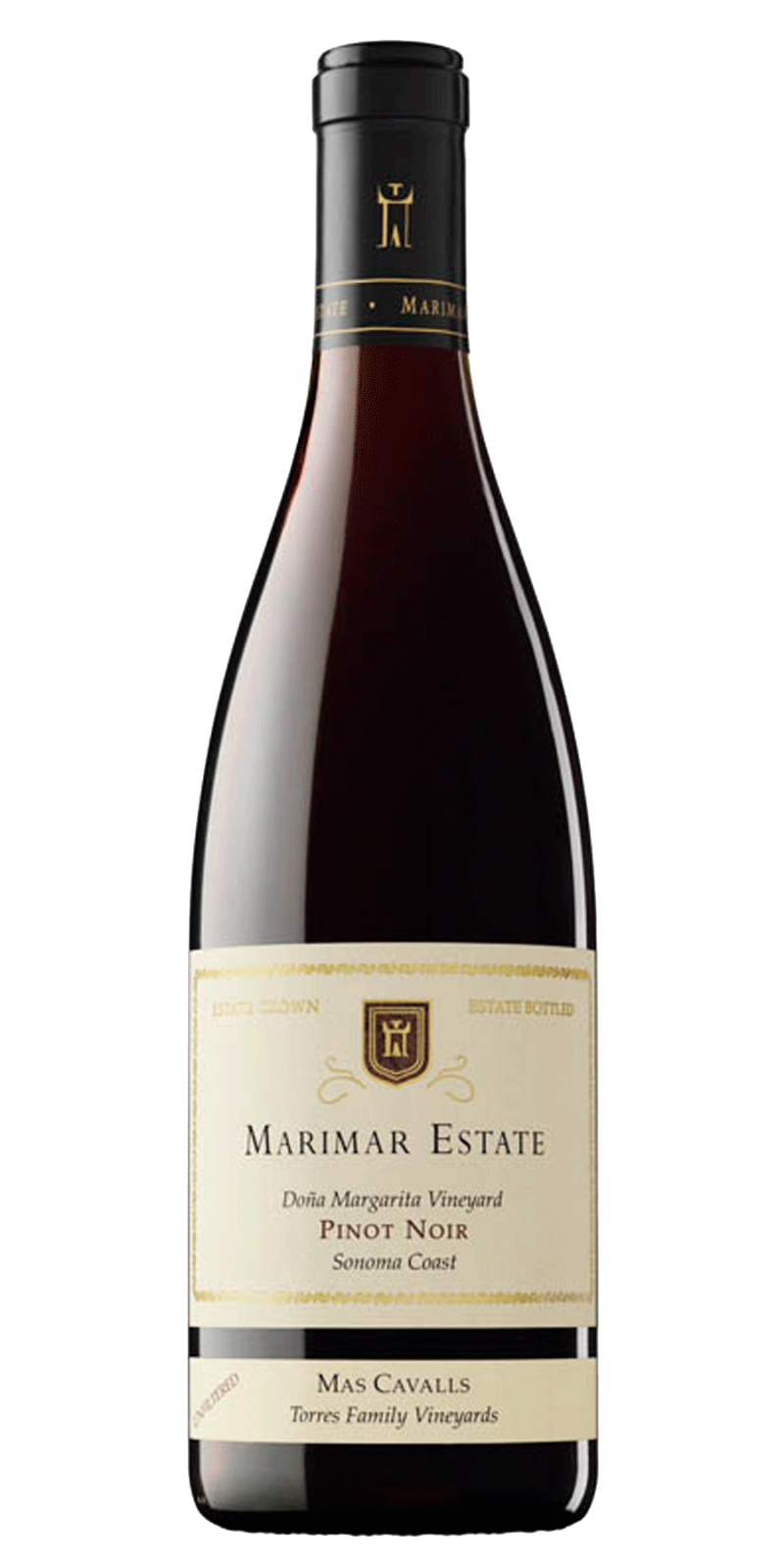
| Country: | United States |
| Regions: | California California (Sonoma County) |
| Winery: | Marimar Estate |
| Grape Type: | Pinot Noir |
| Vintage: | 2012 |
| Bottle Size: | 750 ml |

J. Christopher Appassionata Fortissimo Pinot Noir is made from 100 percent Pinot Noir.
Inspired by the three movements of Beethoven’s “Appassionata” Piano Sonata, there are three Appassionata Pinot Noirs, released at different tempos.
The finale of the Appassionata Pinot Sonata is Fortissimo (dynamically forceful). Selected for ultimate expressivity and longevity, it is not released until 10 years after the vintage. This is the epitome of expressive excellence that we are seeking in Willamette Valley Pinot Noir – a wine that combines brooding intensity with lilting grace and can stand alongside the classic wines of the world. The 2012 Fortissimo is muscular and full-bodied, with a deep color and seamless structure. In this phase of maturation, tertiary aromas begin to show a profound complexity and subtle earthiness that only develops with bottle age and cannot be accelerated
Review:
Loosen Bros. and J. Christopher Wines just released the Fortissimo and it is showing great acidity and fine-grained tannins. Its aromas and flavors of sweet red cherries, roasted pork shoulder and orange-pekoe tea are alive and kicking. Enjoy 2023–2032.
-Wine Enthusiast 95 Points
More intense than you might expect from an 11 year old Pinot Noir, certainly one that has been held back at the estate for 10 years before release. Grilled raspberry leaf and reductive smoky notes greet you on the nose here, with sweet black fruits softening the tangy red cherry and cranberry of Oregon Pinot, all wrapped up with waves of leather, sage and tobacco. This has power and succulence, and even at 10 years old it feels pretty young, just at the beginning of its development with a good decade ahead of it. Late release is an unusual approach in Oregon, but not so unusual if you follow Loosen’s winemaking in the Mosel, where he has been known to keep Riesling between 20 and 30 years in barrel. In this case the barrel ageing is for around two years, with the rest taking place in the bottle. Old fashioned winemaking, delicious results. 20% new oak. Fermented with natural yeast, unfiltered and unfined. Tim Malone winemaker. First time on the Place from this wine, from a vineyard in the foothills of the Chehalem Mountains in Oregon’s Willamette Valley. Heavy bottle.
- Jane Anson - Inside Bordeaux 97 Points

Solomon Hills Estate Pinot Noir is made from 100 percent Pinot Noir.
Solomon Hills Pinot Noir is always distinctive and singular in its ability to harness the Coastal influence of Santa Maria Valley. Earth tones alongside briar bush and blueberries contrast aromas of forest floor and fired red clay. The noticeable savory elements of cracked black pepper and teriyaki beef nicely balance ripe cherries and blackberries on the palate.
Review:
I loved the bouquet of the 2021 Pinot Noir Solomon Hills, a light ruby-hued effort with perfumed darker cherry, mulberry, leafy herb, and smoked earth nuances. It's medium-bodied, has a layered, seamless texture, integrated tannins, and a gorgeous finish. It's absolutely brilliant. Enjoy bottles over the coming decade or more.
-Jeb Dunnuck 96 Points

Bass Phillips Estate Pinot Noir is made from 100 percent Pinot Noir.
For this reviewer's money, BP's Estate Pinot offers the best bang for buck. While still a special occasion wine, it's almost as gorgeous as its elder siblings, and crafted for drinking younger. Ironically, it's also the one that takes longest to open up. But when it does, it billows aromas of dried cranberry, cherry preserves, umami-like mushrooms, cocktail bitters and potpourri. The palate is silky with a lift of crystalline acidity, wound ultra fine, talc-like tannins. An iron fist in a velvet glove, this is long and elegant, able to age another 5-7 years but drinking beautifully right now.
-Wine Enthusiast 95 Points

Our DuMOL Estate Vineyard is our original high-density vine planting from 2004. It’s organically farmed without irrigation – these vines work hard each season. We make a strict selection for this bottling, one of our flagship wines, so that only three acres of its nine total comprise this bottling; the balance forms the core of Highland Divide. This is the best of the best. The high vine density and exclusively Calera Selection produce a wine with a significant level of both tannin and acidity. This structure is buffered by a deep core of fruit extract, the product of the ripe grape skins themselves, and the essence of the wine. Each vintage can age for many years, and it gradually deepens into a woodsy, truffley, and enveloping wine with grand scale complexity while never relinquishing its inherent brightness.
The wine’s aromas and flavors are akin to black cherry, boysenberry, hibiscus, anise, moss, and juniper. The palate is simultaneously bright yet dark, with mineral drive, violet floral lift, and bay laurel freshness. Tannins and acidity fuse to lengthen these flavors, and the wine finishes with dried herbs and orange zest lift. Great aging potential. Drink between 2025 and 2034 and decant for an hour in its youth to hasten the development.
Review:
Medium to deep ruby-purple in color, the 2022 Pinot Noir Estate Vineyard comes barreling out with bold notes of fresh blackberries and black cherries opening out to suggestions of anise, garrigue, and lilacs. The medium-bodied palate reveals impactful black berry flavors with wonderfully spicy accents supported by grainy tannins and great tension, finishing long with a minerally lift. This is an all Calera vineyard. (LPB)
-The Wine Independent 97 Points

Paul Hobbs George Menini Estate Pinot Noir is made from 100 percent Pinot Noir.
Brilliant ruby red in the glass, the 2022 vintage follows the color with matching aromas of wild mountain strawberry, raspberry, and cherry infused with hints of black tea. On the palate, this wine has the texture of thick satin, evolving seamlessly with subtle energy and pleasant tension. Elegant, fine-grained tannins run through a lingering, juicy finish.
Review:
This has fantastic intensity and focus with firm and racy tannins that show blue fruits, orange peel, hibiscus flowers and plants. Medium body. Acid and tannin driven. Complex structure. 85% of this is heritage clones of Mount Eden, Calera and Swan. Drinkable, but better in two or three years.
-James Suckling 97 Points

In the far northwest corner of the Sonoma Coast appellation, near the town of Annapolis, the vineyard sits just five miles from the Pacific Ocean, and provides a poignant setting for producing pinot noir with elegance, great precision, and intensity.
Review:
The 2021 Pinot Noir Goldrock Estate is deep, rich and explosive. Dark red cherry, pomegranate, blood orange, menthol, spice and rose petals are all amplified in this dramatic Sonoma Coast Pinot. The complexity and intensity here are simply unreal. Give this time, there's a lot of wine in the glass.
-Vinous 96 Points
This vintage shows deep, beautiful color and a classic nose of raspberry, with notes of sassafras, sandalwood, and orange peel in the background. On the palate the wine is round and seamless, rich and supple, with great structure and nicely integrated tannins that promise a long life.
Marimar Estate Mas Cavalls Pinot Noir 2012 is 100 percent Pinot Noir.
The grapes were harvested September 18-21. After minimal crushing, they fermented in small stainless steel tanks, with no whole clusters. The wine was aged in premium French oak barrels, 40% new, coopered by Remond, Rousseau, Marchive, and François Frères, from the forests of Central France. It was bottled, unfined and unfiltered, in August 2012.
The Clones
The vineyard’s 20 acres of Pinot Noir are planted with three different clones. The blend of clones in this vintage is 58% Pommard and 42% Dijon 115.
The Marimar Estate
Exporting a Legacy To California
Nestled in the rolling hills of western Sonoma County, the Russian River/Green Valley appellation is a perfect microclimate for growing Chardonnay and Pinot Noir. Only 10 miles from the Pacific Ocean and 50 miles north of San Francisco, the site is influenced by the sea's cooling breezes and drifting fog. That is why Marimar Torres selected this privileged location to "export" the Torres family legacy of fine wines to California.
A Catalan Farmhouse-Winery
Built in 1992 with a capacity of 15,000 cases, the winery sits on a hill surrounded by vines. The production wing is outfitted with carefully selected equipment, to allow the control essential to producing a wine based on minimal handling. Its three barrel rooms with independent temperature and humidity controls provide flexibility to experiment with various vinification techniques, in order to best express the fruit's character.
The Marimar Vineyard
The Don Miguel Vineyard: A Unique Site
Marimar came to live in California in 1975. After two years of searching, she acquired the land and began planting the vineyard in 1986. Today there are 30 acres planted with Chardonnay and 30 with Pinot Noir. The wines are made entirely from estate-grown grapes. Named in honor of the late patriarch of the family, the vineyard is unique in California because it is totally European in style. The vines are trained very close to the ground on an open vertical trellis, following the slope of an east-facing hillside; the rootstocks are phylloxera resistant; and the planting density is 2000 vines per acre, four times more than is traditional in California. Such high density promotes root competition and diminishes vigor, naturally reducing the output per vine.
Yields are low and labor is intensive, but the vines live longer and produce grapes with greater concentration of flavors, more refined and elegant aromas, and better balance. To contribute complexity, Marimar did extensive research to select several clones of each varietal: See, Rued and Spring Mountain for Chardonnay; and Cristina 88, Swan, Pommard, Lee, Dijon 115 and Dijon 667 for Pinot Noir. Each clone brings different attributes to the final blend, resulting in wines with deep layers of flavor

Morlet Family Vineyards Mon Chevalier Cabernet Sauvignon is made from 94% Cabernet Sauvignon, 4% Cabernet Franc, 1% Malbec and 1% Petit Verdot .
Located on the hillsides of Knights Valley, near Calistoga, this vineyard benefits from its proximity to Mount St. Helena, whose warm and windy climate is ideal for the long ripening of the Bordeaux red varietals. Handcrafted by using classical winemaking techniques, this special wine is dedicated to our son, Paul Morlet.
Dark red with a hue of purple. Intense and complex bouquet of red, black and blue berries intermixed with notes of blueberries, minerals (graphite, wet river rocks) licorice, fresh blond tobacco and a hint of lavender. Full bodied, the palate is reminiscent of the nose, with a richly tannic yet round frame and a great intensity. The hillside tannins and the classical aromatic complexity create a harmonious ensemble, leading to a very long and elegant finish. Built to age for decades, this collectible wine opens up after a few years of cellaring and is particularly representative of this special vineyard from the hillside of Knights Valley. Mon Chevalier features the interaction of the loamy, well drained and rocky volcanic soil, the typical sunny mountain climate and the low-interventionistic Morlet winemaking approach.
Propietary Name Mon Chevalier
Name Meaning My Knight Named after our son, Paul Morlet
Type of wine Vineyard designated
Appellation Knights Valley
Vineyard singularity Morlet Family Estate Hillside 1100-1200 feet elevation Rhyolitic, loam & volcanic ash
Typical harvest date End of October
Picking Manual, small lugs, refer truck
Sorting Cluster by cluster, berry per berry
Fermentation Through native yeast Tank and Puncheons
Upbringing 16 months French oak from artisan coopers
Bottling Unfiltered
Cellaring time Decades
Serving Room temperature
Decanting recommended
Review:
The estate-grown 2016 Cabernet Sauvignon Mon Chevalier is a blend of 94% Cabernet Sauvignon, 4% Cabernet Franc, 1% Malbec and 1% Petit Verdot. Very deep purple-black in color, it charges forth with intense notes of crushed black cherries, black berry preserves and cassis scents with touches of spearmint, Indian spices, espresso and dried lavender plus a waft of roses. Full-bodied, the palate reveals incredible restraint, slowly revealing earth and black fruit layers framed by firm, grainy tannins and just enough freshness, finishing very long and spicy.
-Wine Advocate 96+ Points
Moving to the top releases, the 2016 Cabernet Sauvignon Mon Chevalier comes from Knights Valley and was brought up in puncheons. A gorgeous bouquet of sandalwood, violets, loamy earth, and incense as well as some iron-laced black and blue fruits flow to a rounded, supple, incredibly textured Cabernet that has sweet tannins, a stacked mid-palate, and a great finish. It’s already terrific yet will keep for 20-25 years or more.
-Jeb Dunnuck 96 Points

Vinsacro Dioro Seleccion is made from 100% Vidau (Blend of the de varietals Tempranillo, Graciano and Mazuelo with predominance of 70+ years old Garnacha).
A wine to enjoy.Vinsacro Dioro, a wine inspired by the Egyptian, Greek and Roman cultures that worshipped wine and gave it a sacred meaning associated with joy and festivity. It is the fruit of our best vineyards, living witnesses to the work and passion of the four generations that preceded us.
Pair with Roast lamb or pork, game, beef steaks, stewed meats. During the aperitive, it will accompany as well with aged and blue cheese.
14% Vol.
Grapes selected manually from our vineyards located on the southern slopes of Monte Yerga in the “Cuesta la Reina” estate. Grapes that are harvested with the utmost care, transported at low temperature in fruit boxes to the winery to avoid any damage to the fruit.
Fermentation is carried out with indigenous yeasts and the wine is kept in maceration for 30 days while breaking the cap daily. Afterwards, the wine is transferred to oak barrels where it remains for 17 months before bottling.
"Really sophisticated and polished with vanilla, coffee, earth and spice scents and oaky flavours. Long, brooding finish."
- Decanter World Wine Award (April 2022), 94 pts
"The 2019 Vinsacro Dioro Selección is a Vidau field blend sourced from Monte Yerga in Rioja Oriental. Aged for 18 months in French and Eastern European oak barrels, it is only released after five years in the cellar. Dark garnet in color, time in the glass reveals soy sauce, bay leaf and thyme notes, along with black fruit and chutney-like undertones. Dry and rich on the palate, it flows with softened tannins and a clingy mouthfeel, lingering long with an impression of tomato leaf. This is a complex, nuanced and solar red that will warmly captivate your palate. - Joaquin HIDALGO"
- Antonio Galloni's Vinous (April 2024), 94 pts



