
" We don't sell the wine without touching the vine "
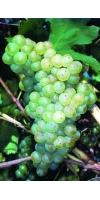
Marsanne is a white wine variety from the Rhone Valley in France. In Switzerland and Savoie, Marsanne is sometimes referred to as “Ermitage”. This is due to the ability to produce some of the most famous white wines of Hermitage. Marsanne has been adopted and grown successfully in Australia, and the United States. Marsanne is full bodied with excellent weight and structure, however it can struggle to produce good acidity in warm climates. In cooler climates, Marsanne will shine and produce complex wine worthy of age. Marsanne will have a light straw color with hints of gold and green. On the nose, Marsanne will allow for an earthy and mineral tone with characteristics of honeysuckle and melon. When aged, Marsanne becomes a rich amber color with nut and orange marmalade flavor. Marsanne has the potential to age for up to 15 years. Marsanne is often blended with more aromatic varieties such as Roussanne and Clairette in northern Rhone. When paired with Roussanne, Marsanne produces the sparkling wine, Saint-Peray. In Languedoc, Marsanne is blended Viognier and Rolle.
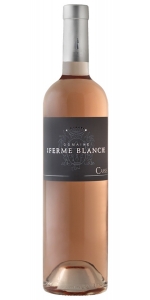
Ferme Blanche Cassis Blanc is made from 40% Marsanne, 20% Ugni Blanc, 20% Clairette, 10% Sauvignon Blanc and 10% Bourboulenc. .
The wine has a pale golden color and offers subtle aromas of citrus fruits, peach and apricot, and floral notes of acacia and linden. Crisp and lively on the palate, good tension and length and a refreshing finish.
Sea stews, shellfish, traditional fish and chips, octopus salad.
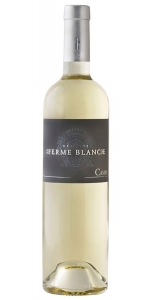
Ferme Blanche Cassis Blanc Excellence is made from 40% Marsanne, 20% Ugni Blanc, 20% Clairette, 10% Sauvignon Blanc and 10% Bourboulenc.
The wine has a pale golden color and offers subtle aromas of citrus fruits, peach and apricot, and floral notes of acacia and linden. Crisp and lively on the palate, good tension and length and a refreshing finish.
Pair with sea stews, shellfish, traditional fish and chips, octopus salad.
Ferme Blanche Cassis Blanc Excellence is made from 50% Marsanne and 50% Clairette.
On the nose, white fruits, citrus zest, hint of vanilla. Velvety well balanced mouth of ripe fruits and minerality.
Pair with trout, Scallop, or better yet lobster would complement this wine perfectly.
Ferme Blanche Cassis Blanc Excellence is made from 50% Marsanne and 50% Clairette.
On the nose, white fruits, citrus zest, hint of vanilla. Velvety well balanced mouth of ripe fruits and minerality.
Pair with trout, Scallop, or better yet lobster would complement this wine perfectly.
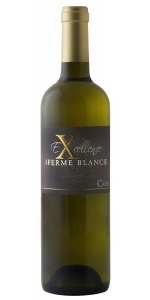
Ferme Blanche Cassis Blanc Excellence is made from 50% Marsanne and 50% Clairette.
On the nose, white fruits, citrus zest, hint of vanilla. Velvety well balanced mouth of ripe fruits and minerality.
Pair with trout, Scallop, or better yet lobster would complement this wine perfectly.
Made from 50% Marsanne and 50% Roussanne
The wine is aromatic with white flowers such as acacia and honeysuckle. In the mouth, you will find some lanolin flavors as well as apricot and yellow ripe peach.
The finish is long, delicate and balanced.
It is waxy and very White Burgundy like.
Average age of the vines is 15 years old.
Johann Michel owns 0.5 hectare (1.24 acre) of Saint Peray.
The Saint Peray AOC is smaller in size, covering just 90 hectares (222 acres). In the past, Saint Peray was famous for producing mostly sparkling wine, made from Roussanne and Marsanne. 90% of the wines were sparkling and only 10% were still wines. Today, it is the opposite: 90% of the AOC is producing still wines and only 10% is turned into sparkling wine. There are about 35 vignerons making Saint Peray.
Johann Michel Saint Peray Blanc has a shining golden yellow color. The wine is aromatic with white flowers such as acacia and honeysuckle. In the mouth, you will find some lanolin flavors as well as apricot and yellow ripe peach. The finish is long, delicate and balanced. Reminiscent of White Burgundy.
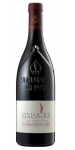
Clos Saint-Jean is a 41-hectare estate in Châteauneuf-du-Pape run by brothers Vincent and Pascal Maurel. Considered by many critics and wine-writers as the preeminent estate espousing the modern style of winemaking in Châteauneuf, this cellar is one of the oldest in the region, having been founded in 1900 by the greatgreat-grandfather of Vincent and Pascal, Edmund Tacussel. A short time after its founding and well before the AOP of Chateauneuf-du-Pape was created in 1923, Edmund began bottling estate wines in 1910.
The farming at Clos Saint-Jean is fully sustainable due to the warm and dry climate, which prevents the need for chemical inputs. Instead, Vincent and Pascal employ organic methods for pest control, mainly pheromones, to prevent pests from taking up residence in their vines, a process called amusingly enough in French, confusion sexuelle. The vines tended manually, and harvest is conducted in several passes entirely by hand.
Deus ex Machina is a literary and dramatic term for a miraculous intervention that interrupts a logical course of events in a plot or play. A suitable name for a cuvée that had it’s start in the torrid vintage of 2003 when Philippe Cambie and Vincent Maurel made the decision to harvest at the end of September, weeks after their neighbors. Deus ex Machina is a blend of old vine Grenache from La Crau, aged in tank with equally ancient Mourvedre from the sandy soils of BoisDauphin aged in demi-muid. Deus ex Machina is only made in the best vintages.
Review:
Lastly, the 2022 Châteauneuf Du Pape Deus-Ex Machina shows a similar profile to the Combes des Fous, yet it brings another level of tannins and concentration. Kirsch liqueur, white flowers, sandalwood, cured meats, and graphite notes all shine here, and it's full-bodied, has a deep, layered, powerful, yet weightless profile, lots of ripe tannins, and a blockbuster of a finish. This ripe, sexy, seamless, incredibly impressive beauty will compete with anything in the vintage. As usual, this cuvée is 60% Grenache and 40% Mourvedre, which is brought up in roughly 40% new demi-muids.
Review: Jeb Dunnuck 97 Points
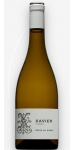
Xavier Vignon Cotes du Rhone Blanc is 40% Viognier, 30% Grenache, 20% Roussane, & 10% Picpoul.
From Vienne to Avignon, the Côtes du Rhône appellation is one of the largest in the french vineyard.
Around 6% of the area is dedicated to the production of grapes from varieties that can be vinified as white wine.
Brilliant yellow with gold highlights.
Suave and generous taste. Long saline finish with good acidity.
Perfumes of yellow fruit, citrus, white flowers with mineral notes.
A fresh, fruity and mineral wine that pairs best with French onion soup, green vegetables, risottos, light pastas and goat cheese.



