
" We don't sell the wine without touching the vine "
| BUY MORE! SAVE MORE! | ||||||||||||||||||||
|
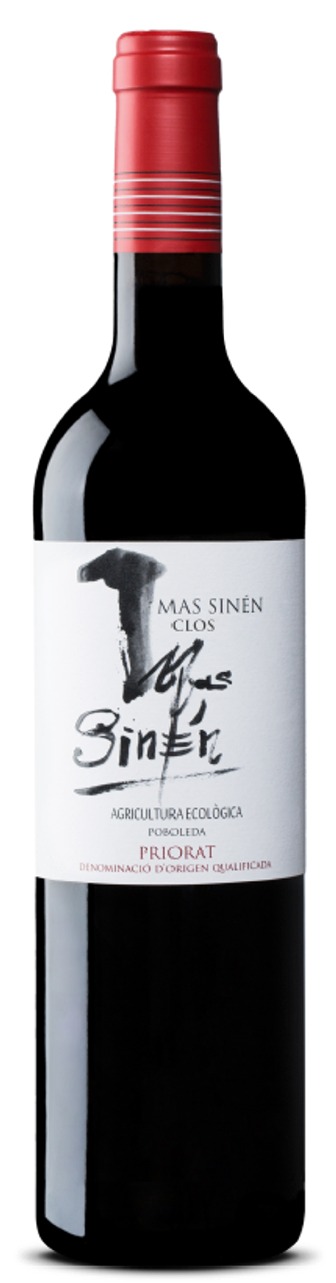
Mas Sinen Clos Priorat is made from 38% Garnacha, 22% Cabernet Sauvignon, 23% Carinena, 16% Syrah.
Before the 2017 vintage, this wine was called Negre. It is the same vinification and level of excellence as the prior cuvee, but with a different name.
It's quite ripe, concentrated, powerful and oaky with black rather than red fruit and peat and graphite aromas. The palate is full-bodied with plenty of rough-hewn tannins and moderate acidity, and is in need of bottle age and/or powerful food. An XXL Priorat.
The Mas Sinen Estate
Mas Sinen is located in the village of Poboleda, in the province of Tarragona. The winery dates back to the 19th century and has been in the family for a few generations. Mas Sinen is a beautiful estate made of stone and surrounded by the family vineyards. Today, Salvador Burgos and his wife Conxita Porta, together with their two daughters, continue the family tradition using the most modern technologies to produce high quality wine from the Priorat Denomination of Origin.
The ancient Mountainous region of Priorat incorporates nine villages of wine production. They are:
- Gratallops
- Bellmunt del Priorat
- Torroja del Priorat
- Poboleda
- Porrera
- La Morera de Montsant
- Escaladei
- La Vilella Alta
- La Vilella Baixa
- El Llorar
- El Molar
The vineyards measure 1.662,55 hectares on size or 4,106.50 acres.
Priorat is about vines per hectare and not about hectares, because the yields are so low.
The name Priorat comes from the word Priory and refers to the 12th century Carthusian Priory established in the region
The old vines in the Priorat region are almost entirely Garnacha and Carignane.
Soil type: local schist called llicorella (decomposing soil type).
Prior to 1979 very few wineries were in production and the area was becoming depopulated. The interest and revolution in Priorat was created by five wineries whose names all began with the word Clos.
1. Clos Mogador - Rene Barber - the modern day pioneer of the region
2. Clos Martinet
3. Clos de L'OBAC
4. Clos Erasmus
5. Clos Dofi - famous winemaker, Rock star and self prom Alvaro Palacios
Today many new small producers with less than 3,000 cases in production are emerging from this area.
Prices for the wines are high and Priorat along with Rioja are the two regions entitled to the highest quality designation by D.O. law: Denominacion de Origen Calificada or DOQ
Today there are 73 wineries in Priorato with new ones coming all the time.
Wines are designed to age for 10-20 years. The styles vary, but Priorat reds are normally dark colored, muscular, tannic, ripe, rich in alcohol in nature Think Chateauneuf-du-Pape from Spain with a Spanish twist.
The Mas Sinen Vineyards
The vineyards measure 15 hectares total. They are planted in terraces, in the slopes of the "Mas Sinen" mountain and are situated 300-500 meters above sea level, cultivated under organic methods. The vines are 5 to 50 years old planted to local schist called llicorella (decomposing soil type) which is typical of the Priorat region.
Mas Sinen Coster Reserve Priorat is made from 50% Grenache and 50% Carignan.
he Priorat DO was created in 1954. But it is only in the 1990 that the quality of the wines were able to compete internationally. It is now a DOCa (The highest qualification level for a wine region according to Spanish wine regulations, alongside Rioja DOCa). Total acreage for the entire appellation is 4,400 acres. Intense red cherry color with garnet reflections. Black fruit, compote fruits, hints of balsamic. The mouth is ripe and intense, fresh and powerful. Strong and flavorful.
50 year old vines planted on Llicorella soil (decomposed black and reddish Slate, mixed with Mica and Quartz). Light filtration.
Mas Sinen La Vall Priorat is made from 57% Garnacha, 24% Cabernet Sauvignon, 10% Cariñena (Carignan), 9% Syrah.
This wine has a highly intense, lively vermilion red color, complex yet direct aromas with predominant ripe black and red fruits, notes of minerals and forest herbs. Flavors are strong, full and layered with round, fresh and delicate tannins.
Pairs with meat, sausage, cheese.
Mas Sinen Negre Priorat is made from 38% Garnacha, 22% Cabernet Sauvignon, 23% Carinena, 16% Syrah
Aged in 90% French, 10% American oak barrels for 12 months.
Maceration for 21 days. ML in stainless steel tanks.
Clarification with white egg and soft filtration.
The wine shows great spice and leather components, some minerality and a lot of ripe red fruits aromas as well.
This wine is certified organic.
Review:
"Dark, bright-rimmed ruby. Highly perfumed, mineral- and smoke-accented red and dark fruit preserve, baking spice and floral pastille aromas, along with hints of licorice and black tea. Gently chewy and focused on the palate, offering juicy cherry, blackberry and spicecake flavors that deepen and turn spicier as the wine opens up. Finishes impressively long and sappy, with a lingering floral nuance, well-integrated tannins and a jolt of smoky minerality. Raised in new and used barrels, 90% French and 10% American.- Josh Raynolds"
- Antonio Galloni's Vinous (March 2021), 93 pts
Mascot is a small-production label founded by Will Harlan in Napa Valley. The wines under this label are made from the younger vines of Harlan Estate, BOND, and Promontory, but The Mascot bottles share an exclusive preview at the development of their estates. Founded as an initial experiment to see what the young vines were capable of producing, the wines were initially only shared with close friends and family. By 2008, Will officially released the first vintage to the public since production had increased significantly. They create just one wine made from Cabernet Sauvignon, and the bottle is aged for five years before release. Assembled into a single, youthful expression, this wine shares a glimpse into the evolution and pedigree of its parent estates.
Tasting Notes:
Following a vintage full of changing conditions and demanding decision points, the steady and pleasant progress of the 2018 vintage left our team, at times, in limbo. Contradictory as it may seem, the dramas that sometimes punctuate the definitive months for the growing season help to frame the winegrowing team’s course of action; yet the tranquil succession of weeks that emerged between spring and fall in 2018 left almost entirely open the question of when to harvest. Healthy rainfall in March and April preceded a benevolent summer, whose mildness was interrupted only briefly by a few warming periods. The fruit of the young vines maintained a measured balance that gave the team little indication that harvest was imminent. Fog and temperate days followed in September, when—relying more on instinct than empirical cues—we began to pick. This judgment—as well as the gentle nature of the season—is confirmed in the subtle, ethereal power of the vintage, which reveals itself first in the deep, brooding aromas of dark fruit, black tea, and herbal notes. The texture expands around a lifted structure, as powdery tannins gently resolve. This diffused, enigmatic softness is anchored on the mid-palate by a gratifying density, which prepares the senses for a flourish of hidden energy and vivid detail that illuminates the finish.
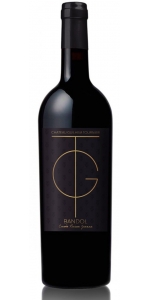
Mas Redonne Tournier Bandol Luisa Jeanne is made from 95% Mourvedre and 5% Syrah.
The wine takes its name from a goddess, Luisa Jeanne. It has a deep red color with dark brick hues, a very intense and complex nose with strong sensations of dark fruit, compote, spice, earth and garrigue, with a minty touch. Palate intense, complex and silky, full and opulent with olfactive sensations and a slightly mineral saline aftertaste accompanied by rich but ripe tannins wrapped in a fruity robe. Approachable, long, harmonious, elegant.
Late manual harvesting of left grapes, their selection according to ripeness, harvesting parcel by parcel, variety by variety, separate vinification. Long fermentation with natural yeasts to oxygenate the must, gentle extraction of color and tannins, decanting and dipping of the matoline cap to absorb the tannins and make the wine silky and expressive. Aged for 18 months in old foudres.
A gastronomic wine for major occasions, ideal for red meat, game, charcuterie, cheese, chocolate and Provençal cuisine.
The wine takes its name from a goddess, Luisa Jeanne. It has a deep red color with dark brick hues, a very intense and complex nose with strong sensations of dark fruit, compote, spice, earth and garrigue, with a minty touch. Palate intense, complex and silky, full and opulent with olfactive sensations and a slightly mineral saline aftertaste accompanied by rich but ripe tannins wrapped in a fruity robe. Approachable, long, harmonious, elegant.
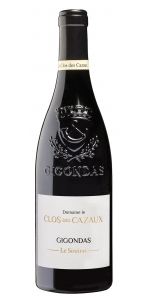
Clos des Cazaux Gigondas Le Souiras is 100% Grenache.
“Le Souiras” is the terroir located at the very South end of the Gigondas appellation. Here, in the midst of the Dentelles de Montmirail, an extraordinary calcareous massif, we planted grapevines on slopes surrounded by Mediterranean vegetation.
We are situated at an altitude of 250 meters, where the nights are cooler. The terroir is stony with a layer of grey and blue clay under the topsoil. The slopes face West and are protected from the strong summer sun by the Montmirail hill. Due to this ideal microclimate, our old Grenache grapevines contain all the complexity and balance of this sunny terroir.
Color : Dark intense ruby color.
Bouquet : Notes of little red fruits, white pepper, caramel and juniper.
Palate : The first impression is arresting and generally qualified as round, complex and dense.
The aromas of black cherry, mocha and white pepper are very intense. The palate is powerful, elegant and velvety.
The finish is long, with very silky tannins and a very slight bitterness that gives this exceptional Grenache an impression of freshness.
Review:
"A brilliant wine that has so much to love, the 2022 Gigondas Le Souiras is all Grenache that was brought up in barrels. It exhibits a vivid ruby hue as well as classic kirsch and blackberry fruit intermixed with peppery garrigue, spice, and ample Provençal nuances. This medium-bodied, fresh, focused 2022 has a beautiful sense of elegance, fine tannins, and the balance to evolve gracefully over the coming 10-12 years."
- Jeb Dunnuck (December 5th 2024), 94 pts
Rudi Pichler is among the elite growers of the Wachau producing wines of precision, power, and longevity. Grüner Veltliner and Riesling make up 95% of the production with the remaining 5% shared between Weißburgunder and Roter Veltliner. Rudi Pichler belongs to the prestigious Vinea Wachau and vinifies under the strict parameters of their codex.
Yields are kept low between 30 and 35 hectoliters per hectare with botrytis carefully removed by hand. Grapes are crushed by foot and receive between three and 36 hours of maceration on the skins. Vinification is entirely in stainless-steel tanks and malolactic fermentation is avoided.
Hochrain, a name meaning "high place," is a southeast-facing terraced vineyard in Wösendorf sitting between 200 and 300 meters of elevation. The vineyard consists of an unusually high content of loess, a mineral-laden soil that produces wines that are especially broad and rich.
Review:
“A stunning wine for this grape that is also rather easy to understand. The Reine Claude plum and peppery nose is complex, but already charming. As exciting as the simultaneously creamy and succulent mid-palate is, what makes this medium- to full-bodied gruner veltliner really stand out is the extremely long, crushed rock finish.”
James Suckling 96 Points
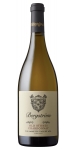
A pale, straw-colored wine with a green hue that is sure to transport you to the sea with its salty succulence and crushed oyster shell notes. Acacia flowers, white pepper, and pear are highlights of an intensely floral expression. Crisp flavors of lime and stone fruit ensure a delightfully light-on-it’s-feet mouthfeel with electric acidity and a long finish.
Reviews:
Creamy in texture yet vibrant in racy acidity, this medium-bodied wine is balanced to a tee and ready to enjoy now or saved for the short term. Offers tangy lemon zest, crisp green apple and delicate lactic accents along with mild oak spices.
-James Suckling 93 Points
The 2021 Chardonnay Old Stones has inviting aromas of baked apples, quince paste, dried acacia, matchstick and gravel dust. The light-bodied palate is most notable for its concentrated fruit and luxurious, mouth-coating texture. Its generosity is balanced by vibrant acidity, and it has a long, honey-nut finish.
-Robert Parker's Wine Advocate 93 Points



