" We don't sell the wine without touching the vine "
| Country: | France |
| Region: | Burgundy |
| Winery: | Maurice Protheau |
| Grape Type: | Pinot Noir |
| Vintage: | 2017 |
| Bottle Size: | 750 ml |

Bertrand Bachelet Maranges Rouge 1er Cru Les Clos Roussots is made from 100 percent Pinot Noir.
The Maranges appellation is the youngest of the Côte de Beaune family, making its debut in May 1989. It spans three villages: Dezize-lès-Maranges, Cheilly-les-Maranges and Sampigny-les-Maranges. Several hills and slopes make up the appellation; they face south/south-east, at an altitude of between 200 and 400 meters. This appellation produces mainly red wines comprising 95% of total production.
The Maranges 1ers Crus are spread over seven distinct terroirs: "Les Clos Roussots", which represents the second largest terroir of the appellation, spans the Cheilly-les-Maranges and Sampigny-les-Maranges areas.
The wine boasts a beautiful bright red color. The nose provides subtle harmony between red and black fruits, spices and vanilla. On the palate, this wine is both solid and fresh, harmonious and bold.
Enjoy with a veal roast and sweet potatoes or matured cheeses.
Bertrand Bachelet Maranges Rouge 1er Cru Les Clos Roussots is made from 100 percent Pinot Noir.
The Maranges appellation is the youngest of the Côte de Beaune family, making its debut in May 1989. It spans three villages: Dezize-lès-Maranges, Cheilly-les-Maranges and Sampigny-les-Maranges. Several hills and slopes make up the appellation; they face south/south-east, at an altitude of between 200 and 400 meters. This appellation produces mainly red wines comprising 95% of total production.
The Maranges 1ers Crus are spread over seven distinct terroirs: "Les Clos Roussots", which represents the second largest terroir of the appellation, spans the Cheilly-les-Maranges and Sampigny-les-Maranges areas.
The wine boasts a beautiful bright red color. The nose provides subtle harmony between red and black fruits, spices and vanilla. On the palate, this wine is both solid and fresh, harmonious and bold.
Enjoy with a veal roast and sweet potatoes or matured cheeses.

Bertrand Bachelet Maranges Rouge is made from 100 percent Pinot Noir.
The Maranges appellation is the youngest of the Côte de Beaune family, making its debut in May 1989. It spans three villages, namely Dezize-lès-Maranges, Cheilly-les-Maranges and Sampigny-les-Maranges. Several hills and slopes make up this appellation, all south/south-east-facing, at an altitude of between 200 and 400 metres. The Maranges 1ers Crus are spread over seven distinct villages.
'La Fussière' is the main village of the Maranges appellation and is located in the Cheilly and Dezize-les-Maranges areas.
When young, ideal with meat such as a rib of beef or filet mignon; when aged, it pairs wonderfully with dishes in spicy sauces.
Bertrand Bachelet Maranges Rouge is made from 100 percent Pinot Noir.
The Maranges appellation is the youngest of the Côte de Beaune family, making its debut in May 1989. It spans three villages, namely Dezize-lès-Maranges, Cheilly-les-Maranges and Sampigny-les-Maranges. Several hills and slopes make up this appellation, all south/south-east-facing, at an altitude of between 200 and 400 metres. The Maranges 1ers Crus are spread over seven distinct villages.
'La Fussière' is the main village of the Maranges appellation and is located in the Cheilly and Dezize-les-Maranges areas.
When young, ideal with meat such as a rib of beef or filet mignon; when aged, it pairs wonderfully with dishes in spicy sauces.

Domaine du Colombier Hermitage Rouge is made from 100 percent Syrah.
Perfect with beef ribs, grilled meats and cheese.
Manually harvested with destemmed grapes and fermented for about 2 to 3 weeks in temperature controlled vats, with an ageing period of 12 months, 65% in oak barrels and 35% in concrete tanks.
Review:
Brought up in 30% new demi-muids, with the balance in used barrels, the 2017 Hermitage is beautifully pure and layered, with smoking good notes of crème de cassis, white flowers, crushed rocks, and violets. Deep, full-bodied, and concentrated on the palate, it has plenty of tannins and is going to need 5-7 years of bottle age. This is a sensational Hermitage from Colombier that will drink well for 25+ years.
These wines are made by the talented Florent Viale and shine for their purity as well as character. While the winemaking here is traditional, with the wines destemmed and brought up mostly in used demi-muids, the purity of fruit can give the impression that wines are more modern styled than they are. They will all benefit from short-term cellaring.
-Jeb Dunnuck 96+ Points

Les Gentilhommes Pouilly Fuisse Premier Cru Clos Reyssier is made from 100 percent Chardonnay.
A gentilhomme is a gentleman characterized by his delicacy, thoughtfulness, and courtesy. "Les Gentilhommes" was created by brothers Richard and Stephane Martin as brand embodying the gentleman's character combined with Burgundian know-how.
From the work in the vineyard to the vinification in barrel, they are inspired to share these noble values. Quality, authenticity and long family tradition are the foundation of these wines.
Les Gentilhommes Pouilly Fuisse Premier Cru Clos Reyssier's description
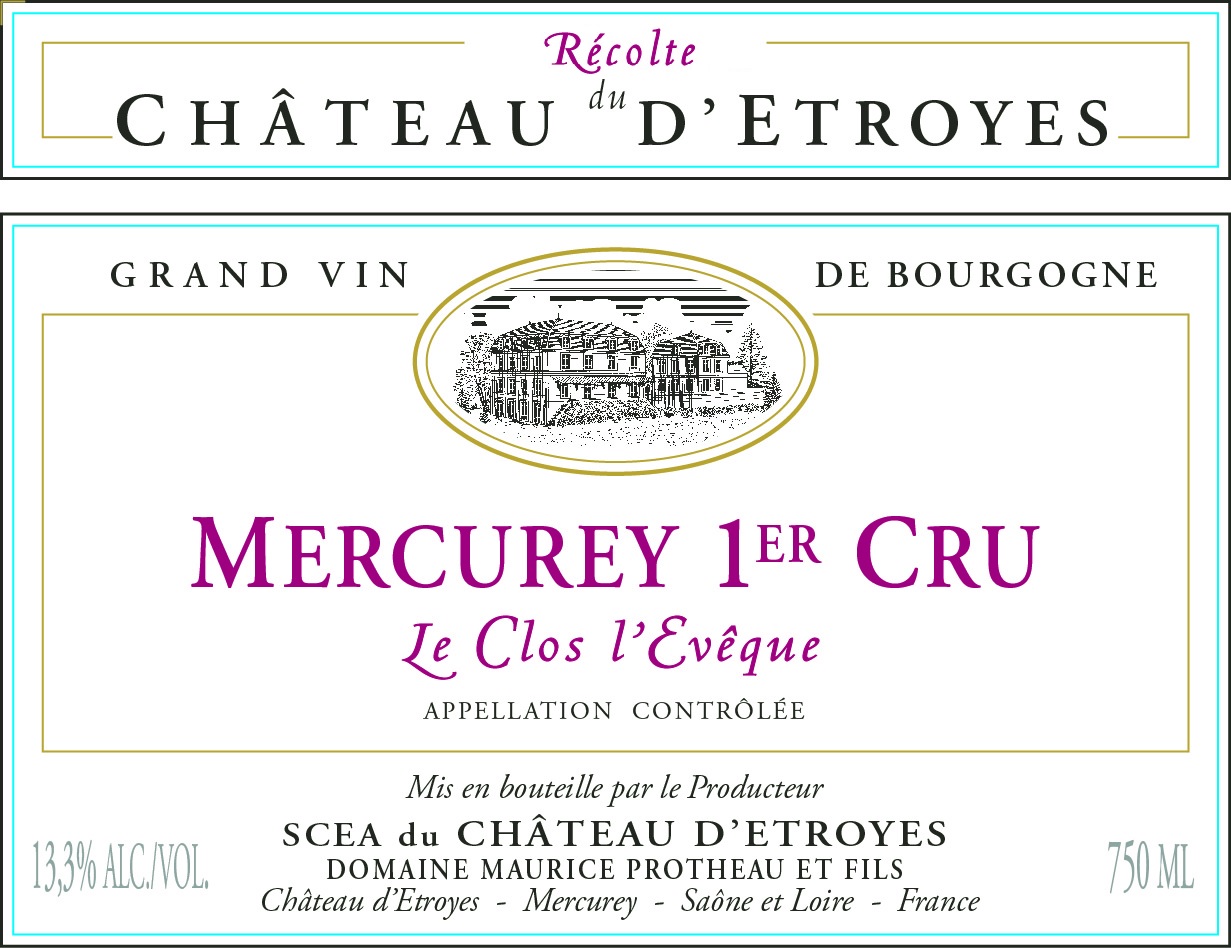
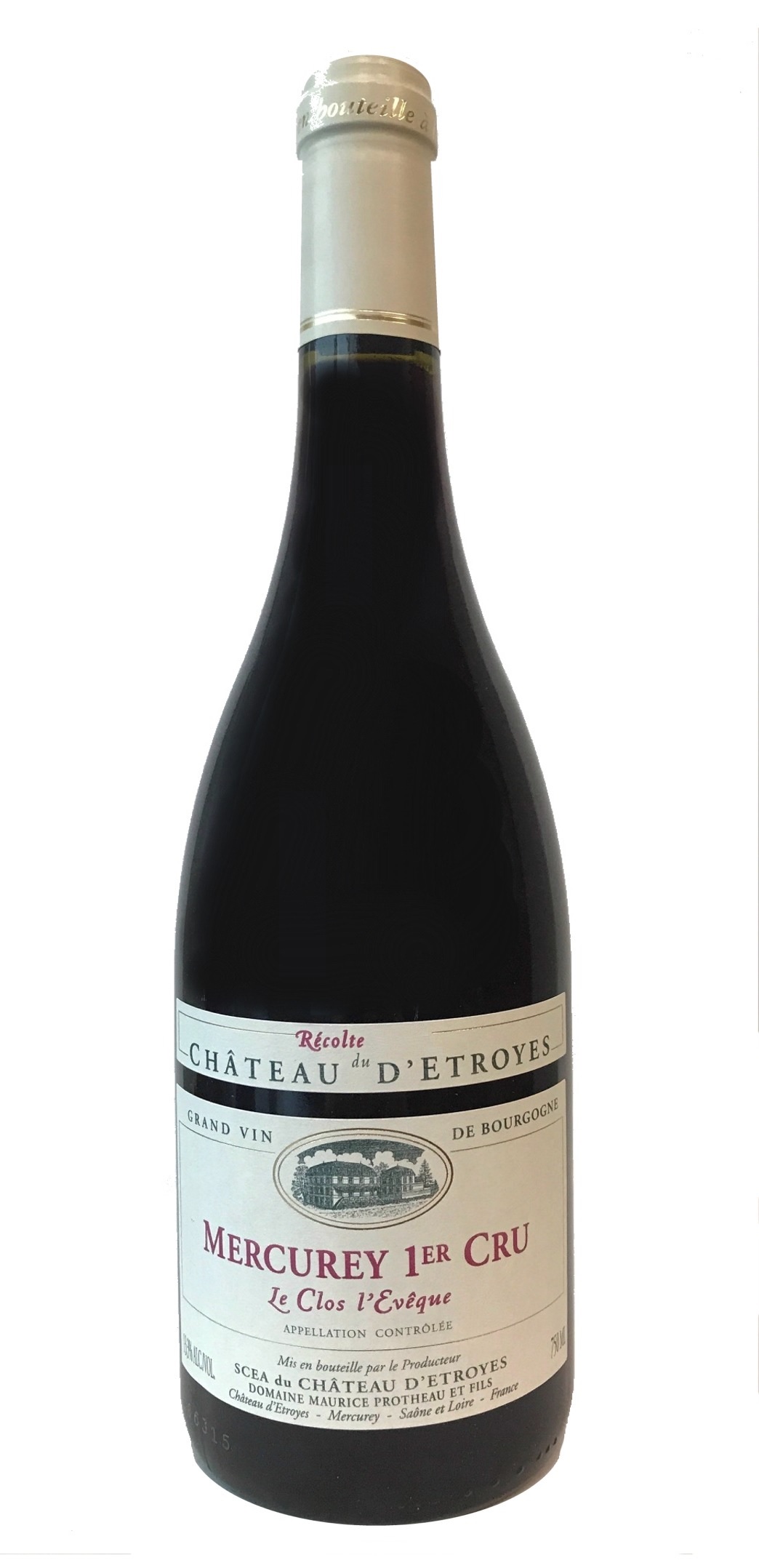
Maurice Protheau Mercurey Rouge Premier Cru Cru Clos l'Eveque is made from 100 percent Pinot Noir.
The "Clos l'Evêque" was in the XVIII century the best vineyard in Mercurey. It belonged to the Bishopric of Chalon-sur-Saône, near Mercurey, and the wine was used for the bishop' receptions as well as for the masses (only the best wine could be served to God). In French "Evêque" means Bishop. It is also called a "Clos" because the vines used to be surrounded by a wall. Some parts of it still remain.
Lovely garnet color, medium intensity, limpid and bright, beautiful tears. The nose, clean and elegant, evokes ripe red and black fruits, rapsberry, cherry, blackberry, blueberry; the aeration is enriched by fine woody notes, roasted coffee, cocoa and a hint of licorice. The palate is ample, full, round and fleshy with a fruity expression of a beautiful purity; the evolution shows a fine substance, silky tannins supported by the freshness; the whole, perfectly balanced, presents a long torrefied finish on sweet spices.
From the 1er Cru "Clos l'Eveque", situated in the Northern part of the Mercurey village.
Harvesting is done manually and in crates to avoid trituration and bursting of the berries. The grapes are totally de-stemmed and put into tanks at low temperature for 3 days minimum. The maximum fruit is extracted. Pumping and some light pigeages will allow us to extract the coloring matter and tannins, which will promise us a good aging. The fermentation temperature will rise gradually to more than 30°C in order to stabilize the color. Once the sugars are finished, about 15 days minimum, maceration ends in closed tank for the final outcome of the wine.
The juice from the vat will be drawn off, then the solid material will be pressed into a pneumatic press and will be added in small touches to the free-run juice. After settling of the juice for 24 hours, the wines are intoned for aging in oak barrels for a period of 11 months. Malolactic fermentation will gradually start and will end in barrels.
Pairs with Beautiful meats (roast beef) and cheese. After the wine has aged, it can also be served with game.
The roots of the PROTHEAU family - winegrowers from father to son - have plunged into the soil since 1720. Thanks to the determination and perfectionism of the 7 generation old-family estate, the vineyard expanded to reach today a surface area of 50 hectares - 38 hectares in Mercurey and 12 hectares in Rully. For the past 40 years, the family has dedicated itself to viticultural which resulted in the creation of DOMAINE MAURICE PROTHEAU ET FILS. This magnificent family vineyard extends in the best appellations where the Maurice Protheau family strives to produce “cuvées” worthy of the greatest Burgundy’s wines. By mixing craft industry and tradition with the best technological tools and avant-garde methods while respecting the traditional touch that has made the fame of Domaine Maurice Protheau.
Date Founded: 1930
Owner: Philippe Protheau
Winery Philosophy: To do even better than what we already do best
1720 - The first PROTHEAU family members cultivate the vineyard in Mercurey.
1886 - François PROTHEAU was born in Touche - today a commune of Mercurey.
1902 - François PROTHEAU was the winemaker and broker of fine Burgundy wines, created his own trading house of Fine Wines.
1925 - Maurice PROTHEAU was born in Bourgneuf Val d'Or, Mercurey town today.
1930 - François PROTHEAU bought the Château d' ETROYES and "LE CLOS DE LA FAUCONNIÈRE" for the sum of 130,000 gold francs. This Clos will become in 1985 "LE CLOS DES NOITERONS".
1939 - François and Maurice PROTHEAU planted "LES ORMEAUX" in Chardonnay. They thus become precursors of the first white Mercurey.
1955 - François PROTHEAU died and Maurice succeeded him at the head of the trading activity and the viticultural estate of Mercurey.
1969 - Maurice PROTHEAU bought the DOMAINE DU CLOS DE L'EVÊQUE as well as the 3 ha 50 of fallow land next to it. The creation of this vineyard will end in 1979. The first blows of pickaxes are given to Rully in the parcel of “LES FROMANGES”. He completely restored the vineyard.
1979 - By completing the plantation of the "CLOS DES NOITERONS", Maurice PROTHEAU put an end to the polyculture at the Domaine.
1980 - Maurice PROTHEAU separated the wine business from the wine estate by creating the Société Civile du Domaine Maurice PROTHEAU & Fils. The new cellars of CLOS L'EVÊQUE are completed for the harvest.
1985 - Thanks to the reorganization of the Mercurey terroir, the Domaine operated 0.06 hectares (0.15 acres) of MERCUREY 1ST CRU CLOS L'EVÊQUE white and 10 hectares of MERCUREY 1ST CRUS.
1990 - The CLOS L'EVÊQUE winery was completely redesigned: stainless steel vats, thermo regulated, robotic pigeage, pneumatic presses...
1992 - Martine and Philippe PROTHEAU created the Civil Society of the DOMAINE DES FROMANGES by taking over the management of the Rully vineyard.
1996 - Maurice PROTHEAU and his children decided to sell the trading business to dedicate themselves to the operation of their Domaines that represented more than 50 hectares. They then signed a commercial exclusivity agreement with this new partner.
2002 - After the disappearance of their trading partner, the vineyards regained their commercial independence and sold their production directly. The Domaine was committed to sustainable viticulture, but did not yet have the qualification.
2003 - The two Domaines merged to give birth to the S.C.E.A. DU CHATEAU D’ETROYES - DOMAINE MAURICE PROTHEAU
2004 - The Domaine's sales already exceeded 100,000 bottles shipped from the Château's cellars.
2005 - Maurice PROTHEAU died in December. The destiny of the Domaine was in the hands of his children Michelle, Martine and Philippe who have already worked on the estate for many years, each one of them in their specialty. Philippe manages the vineyard, Martine vinifies the wines and Michelle takes care of the orders from their customers all over the world.
The MERCUREY 1ST CRU “CUVÉE SIGNATURE” was born to pay tribute to Monique and Maurice PROTHEAU - this cuvée comes from the 10 best barrels of the Domaine and will be produced only during great vintages.
2008 - Birth of the CRÉMANT DE BOURGOGNE ROSÉ BRUT.
2011 - The temperature regulation set up in the CLOS L'EVÊQUE winery was reviewed and the cellars and wine cellar are now air-conditioned.
2014 - Their new cuvée was born: the BOURGOGNE CHARDONNAY.

Trus Ribera del Duero Crianza is made from 100 percent Tempranillo.
Trus - an acronym for T-tierra (soil), R-roble (oak), U-uva (grape), S-sol (sun) - aims to reflect the uniqueness of each vintage, the aging potential of the wine in the bottle over the years.
Trus takes its roots in Palacios Vinos de Finca, the estate that was founded in 1999, then purchased by Javier Palacios who decided to focus on producing wines that express the purity and typicity of the Ribera terroirs.
The estate vineyards are located in Piñel de abajo, Pesquera de Duero, Quintanilla de Arriba. The winery also partners with winegrowers in Moradillo, Roa, Nava, Peñaranda or Baños de Valdearados. The clay-limestone soils of the high-altitude vineyards define the intense and complex personality of the wines. That is why Trus wines can be defined as classic, because an avant-garde look is the one that is directed towards the soil, preserving a typicity that is marked from its deepest roots.
Trus Crianza reveals a clean and bright cherry color with Burgundian tones at the rim. The nose is very intense and complex, offering ripe black fruits and liquorice aromas, toasty and vanilla nuances, spices and balsamic notes. The wine is tasty and unctuous on the palate, a perfect harmony between acidity and alcohol. Fresh and friendly mouthfeel, the ripe and soft tannins provide structure and great length. Long finish, ripe fruit aftertaste with a smoky and spicy finish.
Review:
"A plush and fabulous expression of variety and provenance with well-integrated alcohol, tannin and acidity. Will continue for several years and mellow. Be warned – one glass will be quickly followed by the next."
- Decanter World Wine Awards 2021, 96 points - GOLD MEDAL

This dry Rosé is very aromatic on the fruitiness with a great style and elegance.
Average age of the vines is 25 years old.
We produce a part of this cuvee with 12 hours skin maceration and another part from directly pressed grapes.
Wine was slightly filtered before bottling to insure the wine remains stable.
This wine is the perfect friend for barbecue, salads and of course aperitif. This is ideal for warm days in the garden, as well as elegant poultry dishes.