
" We don't sell the wine without touching the vine "
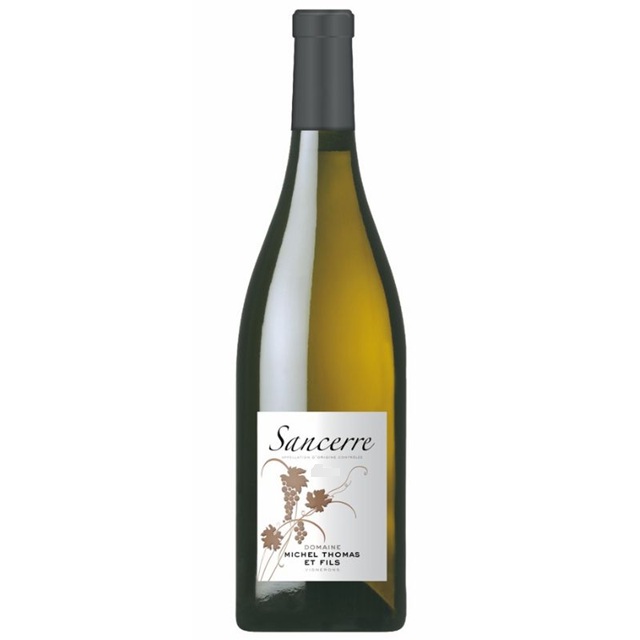
| Country: | France |
| Region: | Loire |
| Winery: | Michel Thomas |
| Grape Type: | Sauvignon Blanc |
| Vintage: | 2024 |
| Bottle Size: | 750 ml |
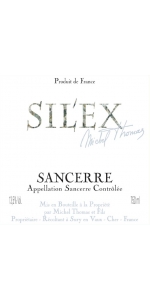
Michel Thomas Sancerre Blanc Silex is 100 percent Sauvignon Blanc.
Intensely aromatic and concentrated Sauvignon from the Silex soils, this is a wine of great concentration and excellent balance. Aromas of fresh herbs, with flavors of citrus, ripe gooseberry, apple and a hint of gunflint. A delicious apéritif and the classic match for goat cheese or asparagus.
The special bottling "Silex" is limited each year to between 400-500 cases. They grow grapes on three soil types: 40% Terre Blanche-Argilo-Calcaire, 40% Caillottes-calcaire, 20% Le Roc-Silex. This wine come from the hardest stone soil on the vineyard giving it pleasant notes of fruit and a very dry flavor: This wine is bottled using traditional methods without filtration, allowing for a authentic and natural taste to the wine.
A delicious apéritif and the classic match for goat cheese or asparagus.
Michel Thomas Sancerre Blanc is 100% Sauvignon Blanc (40% Caillottes, 40% Grosses Terres, 20% Silex)
The wine displays an exotic nose with a touch of smoke and licorice. On the palate, peach and watermelon dominate with citrus zest and chalk notes.
Aged on the lees for a few months (no oak). It goes well with seafood, fish, goats cheese.
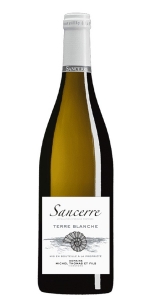
Thomas Sancerre Blanc Cuvee Terre Blanche is made from 100 percent Sauvignon Blanc.
A typical Sancerre with citrus, honey, and flint notes, supple and fragrant. The palate is fresh, with grapefruit and lemon flavors and a pleasant minerality throughout.
Thomas Sancerre Blanc Terre Blanche was fermented in part Oak foudre (Cuve tronconique) and part 400-liter oak barrels for 18 Months.
Pair with grilled fish with lemon sauce, caesar salad with chicken as well during the spring or summer time.
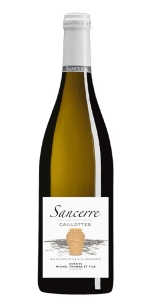
From the caillottes soil type.
A Sancerre fermented and aged in amphorae, straw-colored, with full aromas and a beautiful complexity: grapefruit, honeysuckle, orange blossom and a pinch of curry. A fine sweetness coats an expressive, dynamic and juicy mouth, with a zesty accent. Complete, persistent, its place is at the table, on fish with fennel for example.
A pure expression of Sancerre’s classic terroir. Grown on the appellation’s prized Caillottes soils — shallow, stony limestone mixed with gravel — this Sauvignon Blanc delivers exceptional elegance and vibrancy. The well-draining stones promote deep rooting and early ripening, yielding a wine with bright aromatics of citrus, white peach, fresh herbs, and wet stone. Crisp, lively acidity and a refined, mineral-driven finish make this the quintessential Sancerre — refreshing, aromatic, and perfectly balanced. Ideal as an aperitif or with shellfish, goat cheese, and fresh seafood.
Only 1000 bottles produced.
Thomas Sancerre Rose is made from 100% Pinot Noir.
Vines are 20-55 years old.
Terroir (soil type) is a blend of "Caillottes" and "Terre Blanche".
Everything is machine harvested (which means it is 100% destemmed).
50% Direct press + 50% Saignée (bled) with 12-24 hours of skin contact maceration.
The alcoholic fermentation is done in temperature controlled stainless steel tanks.
Right before bottling, the wine is fined with Bentonite (very light filtration with oenologic clay).
Tasting Notes:
Light, bright pink. Redcurrant, strawberry and chalk on the nose, with a touch of singed orange gaining strength with air. Dusty red fruit and citrus flavors are braced by tangy minerality, which adds lift and cut. Uncompromising in the best way, finishing with excellent clarity and echoes of lemon and orange zest.
Food pairings:
This is a very versatile wine. You can have it on its own in the summer time as an apéritif. But it is also excellent with Hors d'Oeuvres and terrines. It will compliment any white meat dish and poultry. You can also enjoy it with salmon or exotic food (slightly spicy sushi).
Michel Thomas Sancerre Blanc is 100% Sauvignon Blanc (40% Caillottes, 40% Grosses Terres, 20% Silex)
The wine displays an exotic nose with a touch of smoke and licorice. On the palate, peach and watermelon dominate with citrus zest and chalk notes.
Michel Thomas Sancerre Blanc is 100% Sauvignon Blanc (40% Caillottes, 40% Grosses Terres, 20% Silex)
The wine displays an exotic nose with a touch of smoke and licorice. On the palate, peach and watermelon dominate with citrus zest and chalk notes.
Aged on the lees for a few months (no oak). It goes well with seafood, fish, goats cheese.
The Domaine Michel Thomas Estate
Michel Thomas and his son Laurent took over the estate in 1970 from Michel's father, who started in 1946. The total production is about 10,000-12,000 cases per year. They export 65-70% of their production, mainly to Japan and Russia.
The Domaine Michel Thomas Vineyard
Today they farm 40 parcels located in four villages, totalling 17 hectares (42 acres): 11 hectares Sauvignon, 6 hectares Pinot Noir. The special bottling "Silex" is limited each year to between 400-500 cases. They grow grapes on three soil types: 40% Terre Blanche-Argilo-Calcaire, 40% Caillottes-calcaire, 20% Le Roc-Silex.
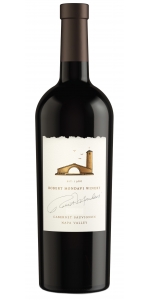
Robert Mondavi Winery Cabernet Sauvignon is made from 91% Cabernet Sauvignon, 5% Petit Verdot, 3% Cabernet Franc, 1% Malbec.
The 2022 Robert Mondavi Napa Valley Cabernet Sauvignon shows notes of plum, blackberry, licorice, chocolate, violet, and warm spice. Dark plum and black fruit carry through to the palate. Fresh and lively with plush tannins and a polished structure.
Review:
"A solid representation of Napa Valley Cabernet Sauvignon, this wine sources fruit from St. Helena down to Carneros, with the bulk of the blend coming from the Wappo Hill property in Stags Leap. All five Bordeaux varieties are included in the blend. Fermentation begins with a cold soak in stainless steel, followed by 26 days on skins, and 18 months of ageing in 31% new French oak. The wine opens with powerful Kirsch aromatics, lifted by bright Bing cherry, warm baking spices, new wood cedar, and white pepper. It is plush and layered on the palate, with black-toned fruit and robust, lingering tannins that carry through a long finish of dark red and black fruit, warming spices, and mineral tension. A balanced expression of power and fruit-forward ripeness, this vintage showcases both depth and structure, making for a bold yet polished Napa Cabernet."
- Jonathan Cristaldi, February 2025 Pts. Decanter
A very good introduction to Napa Valley cabernet for drinkers who are unfamiliar. This offers ripe, generous red and black fruit on a velvety texture of fine-grained tannins. Black cherries, dark plums and blackberries come up in the aroma and then go deeper on the palate. Contains 7% petit verdot, 8% merlot, 3% cabernet franc and 1% malbec. Aged in all French barrels, 31% new, which add accents of cinnamon and cedar. Drink now or hold.
-James Suckling 92 Points
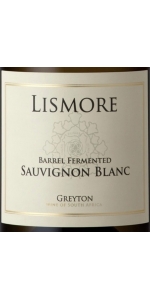
Lismore Barrel Fermented Sauvignon Blanc is made from 100 percent Sauvignon Blanc.
As with all Lismore wines, balance is the key. The bracing acidity that is customary in new world Sauvignons has been brought into balance with a carefully chosen pick date and the barrel and egg fermentation and maturation. A full bodied, balanced wine was the goal.
Barrel fermentation and extended lees contact contribute to this full bodied, elegant and well balanced wine. Floral notes of passion flower and fynbos, granadilla, guava, gooseberry and pear on the palate along with an underlying minerality which gives this unique terroir driven wine its signature.
Wine Made in the Soil
The grapes come from 50% Lismore’s Greyton vineyards which are planted on East/Southeast facing slopes at 320 meters in the foothills of the Sonderend Mountain Range. The soils are deep decomposed shale. The other 50% comes from a vineyard in Stanford which overlooks Walker Bay on sandstone soils.
Jean-Michel Sorbe Quincy Blanc is made from 100 percent Sauvingon Blanc.
The first nose is expressive and opens up to notes of acacia, citrus (lemon, grapefruit). Full on the palate with lovely freshness. This wine boasts nice balance and good length.
The vines are 15 to 20 years old and are located on the left bank of the Cher River, southwest of Quincy. This vineyard enjoys good exposure to the sun and overlies hillocks composed of sandy alluvial deposits and gravel dating back to the Quaternary Period. Each terroir is managed with minimal intervention in an environmentally friendly approach. Vinification: Slow pressing. Fermentation took place under controlled temperatures (18°C).The wine was aged on fine lees for a minimum of 4 months. It was filtered only once before being bottled.
Pair with crustaceans, asparagus, or goat's cheeses.
After pouring, allow the wine to breathe for a few moments in the glass before enjoying so that it may fully release all of its aromas.
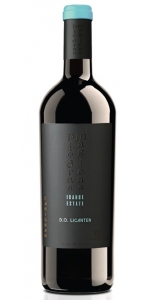
Vina La Ronciere 'Piedras Magicas' Idahue Estate Carignan is made from 100 percent Carignan.
Piedras Mágicas is hand-selected from small blocks in the Idahue vineyard based on specific soil compositions and microclimate characteristics. The final blend is comprised mainly of Carignan and complemented by other varieties in small proportions determined by vintage.
Located 15 miles from the Pacific Ocean, La Ronciere’s ambitious 500 acre Idahue Estate is their vision for the future. Prevailing coastal breezes, abundant sunshine, and rolling hills of ancient soils culminate in a privileged climatic and geological landscape. Years of research and a forward-looking approach drove the successful effort that saw Licanten granted D.O. status in 2018.
This wine displays a deep red color and offers aromas of black- berry, plum and floral notes. A complex palate of black fruits combine with pleasing notes of vanilla. Its volume and silkiness stand out. Juicy tannins and persistent acidity retains balance and elegance.
Review:
This wine displays a deep red color and offers aromas of black-berry, plum and floral notes. A complex palate of black fruits combine with pleasing notes of vanilla. Its volume and silkiness stand out. Juicy tannins and persistent acidity retains balance and elegance
-Tim Atkin MW 94 Points
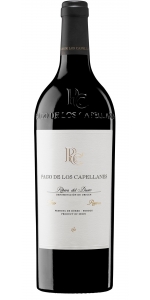
In 2007, production was just less than 5000 kg per hectare. This wine is prepared with Tempranillo 100% grapes from our vineyards.
The grapes are initially subjected to a six-day pre-fermentation cold maceration below 14ºC. They then undergo 30 days of alcoholic fermentation at a controlled temperature of 28ºC, after which the wine is removed from the tanks without pressing the grape skins. The malolactic fermentation is slow and relaxed at a temperature of 20 ºC for 28 days without the addition of bacteria.
The wine is aged for18 months in new French oak barrels and is decanted into new barrels every six months. At the end of this period, the wine is blended and bottled without undergoing any type of filtration, clarification or cold treatment.
Prepared with Tempranillo grapes (100%), this wine has a ruby red colour with very pure, intense garnet tones.
Its bouquet has fine complexity with tones of ripened fruit, especially cherries, blue berries and black currants, which are in harmony with tones of good wood, spices (vanilla and coconut) and a liquorice undertone.
In the mouth, this wine displays great balance, proving pleasing to the taste, sweet due to the maturity of its tannins and exuberant on account of its pleasant level of acidity.
Vineyard:
Pago de los Capellanes, Pedrosa de Duero.
Variety composition:
100% Tempranillo.
Type of soil:
Clayey and chalky.
Aging:
18 months in barrel and remainder on rack.
Type of oak:
100% French oak, medium toast.
Serving:
Uncork and decant one hour before serving at a temperature of 16-18 ºC.
The 2019 Ribera del Duero Reserva is also terrific, with gorgeous aromatics of black and blue fruits supported by Asian spices, lead pencils, cedarwood, and violets. It's beautifully textured, medium to full-bodied, has a concentrated, powerful mouthfeel, and ripe, integrated tannins.
-Jeb Dunnuck 95 Points
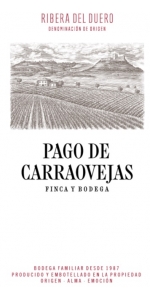
Pago de Carraovejas Ribera Del Duero is made from 90% Tempranillo, 6% Cabernet Sauvignon and 4% Merlot
The most honest interpretation of the Carraovejas Valley.
Body, structure and balance with a vibrant background. Delicacy, harmony and passion for detail are perceived in a wine that reflects the unique character of the valley in an outstanding way.
The 2022 vintage was characterized by cool winter months and extremely low rainfall, reaching limits that had not been observed for years. Due to the good rainfall of the previous year, the vines had good accumulated water reserves, which allowed the vineyard to have a good phenological cycle and normal development. Budding and flowering were perfectly developed in each of the varieties worked, and a homogeneous and balanced development of the plants was achieved. The summer was excessively hot, with several episodes of heat waves, which were mitigated by drip irrigation. Veraison, which was slower than in previous years, and ripening began in early August and the berries developed very uniformly. Harvest began on September 12 and ended on September 28.
Pago de Carraovejas 2022 is the most honest reflection of the valley to which it owes its name. An environment in which the vines climb the slopes to form a unique landscape. On the surface, its tertiary soil of limestone marl, clay and sandstone outcrops force the vines to self-regulate and give their best. Plots that converge in an orography marked by its unique mesoclimate. The vineyards are distributed from the middle zones to the moors that exceed 900 meters in altitude; from the gentle undulation that descends towards the stream, to the plots that exceed 30% slope. South- and north facing slopes, each with its own personality, create the profile of the Carraovejas Valley.
The grapes for Pago de Carraovejas 2022 were harvested by hand after an initial selection of bunches in the vineyard. Subsequently, in the winery, a double selection was made: first by cluster then by berry. Gravity must production allows maximum respect for the raw material. During the fermentation process, indigenous yeasts and lactic bacteria from our own estate were used. The wine was aged in French and American oak barrels for 12 months. The entire process was marked by precision and care in every detail. For greater protection, the wine contains sulfites. Finally it was clarified with natural egg white and bottle in spring of 2024.
Review:
A concentrated, dense Ribera del Duero, but there is a lot to like if you enjoy plushness, with its lush blackberry fruit and dark chocolate. Fine-grained and full-bodied on the palate, but fresh and still pretty tense, with chalky tannins. Drink from 2025.
-James Suckling 93 Points
Marco Capra Langhe Nascetta is made from 100% Nascetta - 15 years old - 1.73 acres
Aged 6 months in stainless steel vats
The name "CONNA" is a sweet nickname after his wife Monica.
Bright straw yellow with greenish hues, with an intense and interesting perfume of grapefruit, apple and aromatic herbs. Floral, fresh, focused, good acidity. Refreshing and bright, full bodied with an aromatic persistence, it is savory and tasty on the palate with a smoothness that enhances the rich character of the wine
Altitude: 400 m above sea level.
Soil composition: lime and sand.
Plant density: 5000 vines / hectare.
Cultivation system: traditional Guyot.
Yield per hectare: 6 tons.
After a short period of maceration on skins, the grapes are soft pressed. The clear must obtained ferments slowly in stainless steel vats at a controlled temperature of 16-17°C. The wine spends a long period of time on the fine lees, with frequent “batonnage”
Ideal with apetizers, shellfish and other fish dishes.
Collemattoni Adone Rosso Toscano is made from 95% Sangiovese and 5% Merlot
ruby red in color, bouquet of violet, cherry and blackberry, pleasant, dry and well balanced mouthfeel.
Coming from a parcel with 5-8 year old vines planted in sandy clay and marl soils.
Harvest is 100% destemmed with a soft pressing, fermentation in stainless steel tanks at controlled temperature of 28-30°C, maceration for 10 days.
Malolactic fermentation completed.
Wine is slightly filtered before bottling.



