" We don't sell the wine without touching the vine "
| Country: | France |
| Regions: | Loire Sancerre |
| Winery: | Michel Thomas |
| Grape Type: | Sauvignon Blanc |
| Vintage: | 2022 |
| Bottle Size: | 750 ml |
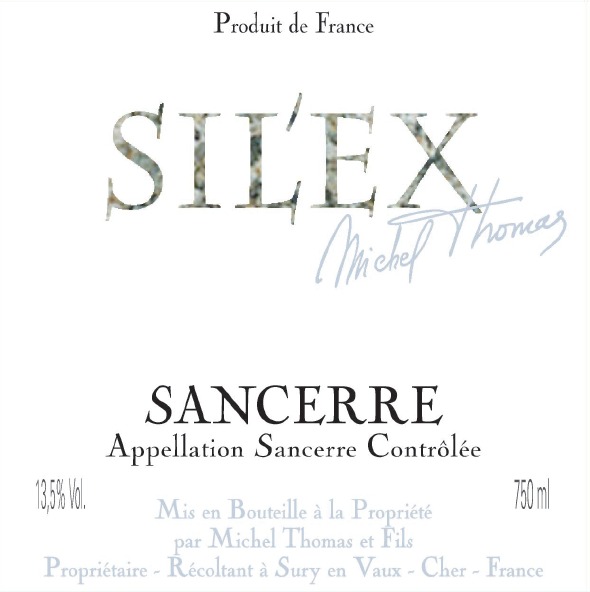
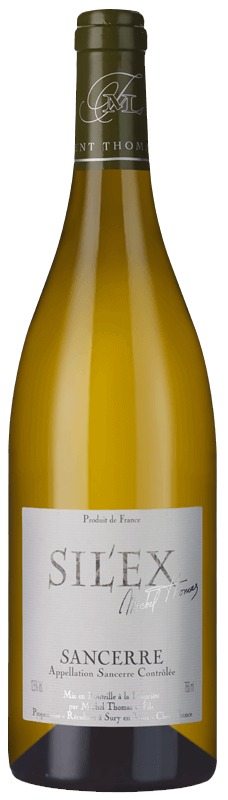
Michel Thomas Sancerre Blanc Silex is 100 percent Sauvignon Blanc.
Intensely aromatic and concentrated Sauvignon from the Silex soils, this is a wine of great concentration and excellent balance. Aromas of fresh herbs, with flavors of citrus, ripe gooseberry, apple and a hint of gunflint. A delicious apéritif and the classic match for goat cheese or asparagus.
The special bottling "Silex" is limited each year to between 400-500 cases. They grow grapes on three soil types: 40% Terre Blanche-Argilo-Calcaire, 40% Caillottes-calcaire, 20% Le Roc-Silex. This wine come from the hardest stone soil on the vineyard giving it pleasant notes of fruit and a very dry flavor: This wine is bottled using traditional methods without filtration, allowing for a authentic and natural taste to the wine.
A delicious apéritif and the classic match for goat cheese or asparagus.
Michel Thomas Sancerre Blanc is 100% Sauvignon Blanc (40% Caillottes, 40% Grosses Terres, 20% Silex)
The wine displays an exotic nose with a touch of smoke and licorice. On the palate, peach and watermelon dominate with citrus zest and chalk notes.
Aged on the lees for a few months (no oak). It goes well with seafood, fish, goats cheese.
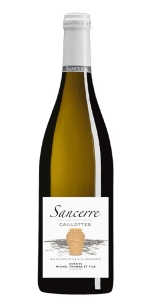
From the caillottes soil type.
A Sancerre fermented and aged in amphorae, straw-colored, with full aromas and a beautiful complexity: grapefruit, honeysuckle, orange blossom and a pinch of curry. A fine sweetness coats an expressive, dynamic and juicy mouth, with a zesty accent. Complete, persistent, its place is at the table, on fish with fennel for example.
A pure expression of Sancerre’s classic terroir. Grown on the appellation’s prized Caillottes soils — shallow, stony limestone mixed with gravel — this Sauvignon Blanc delivers exceptional elegance and vibrancy. The well-draining stones promote deep rooting and early ripening, yielding a wine with bright aromatics of citrus, white peach, fresh herbs, and wet stone. Crisp, lively acidity and a refined, mineral-driven finish make this the quintessential Sancerre — refreshing, aromatic, and perfectly balanced. Ideal as an aperitif or with shellfish, goat cheese, and fresh seafood.
Only 1000 bottles produced.
Thomas Sancerre Rose is made from 100% Pinot Noir.
Vines are 20-55 years old.
Terroir (soil type) is a blend of "Caillottes" and "Terre Blanche".
Everything is machine harvested (which means it is 100% destemmed).
50% Direct press + 50% Saignée (bled) with 12-24 hours of skin contact maceration.
The alcoholic fermentation is done in temperature controlled stainless steel tanks.
Right before bottling, the wine is fined with Bentonite (very light filtration with oenologic clay).
Tasting Notes:
Light, bright pink. Redcurrant, strawberry and chalk on the nose, with a touch of singed orange gaining strength with air. Dusty red fruit and citrus flavors are braced by tangy minerality, which adds lift and cut. Uncompromising in the best way, finishing with excellent clarity and echoes of lemon and orange zest.
Food pairings:
This is a very versatile wine. You can have it on its own in the summer time as an apéritif. But it is also excellent with Hors d'Oeuvres and terrines. It will compliment any white meat dish and poultry. You can also enjoy it with salmon or exotic food (slightly spicy sushi).
Michel Thomas Sancerre Blanc is 100% Sauvignon Blanc (40% Caillottes, 40% Grosses Terres, 20% Silex)
The wine displays an exotic nose with a touch of smoke and licorice. On the palate, peach and watermelon dominate with citrus zest and chalk notes.

All older vintage wines have been purchased from a single collectors cellar. Pictures can be requested before shipment.
Michel Thomas Sancerre Blanc Silex is 100 percent Sauvignon Blanc.
Intensely aromatic and concentrated Sauvignon from the Silex soils, this is a wine of great concentration and excellent balance. Aromas of fresh herbs, with flavors of citrus, ripe gooseberry, apple and a hint of gunflint. A delicious apéritif and the classic match for goat cheese or asparagus.
The special bottling "Silex" is limited each year to between 400-500 cases. They grow grapes on three soil types: 40% Terre Blanche-Argilo-Calcaire, 40% Caillottes-calcaire, 20% Le Roc-Silex. This wine come from the hardest stone soil on the vineyard giving it pleasant notes of fruit and a very dry flavor: This wine is bottled using traditional methods without filtration, allowing for a authentic and natural taste to the wine.
A delicious apéritif and the classic match for goat cheese or asparagus.
The Domaine Michel Thomas Estate
Michel Thomas and his son Laurent took over the estate in 1970 from Michel's father, who started in 1946. The total production is about 10,000-12,000 cases per year. They export 65-70% of their production, mainly to Japan and Russia.
The Domaine Michel Thomas Vineyard
Today they farm 40 parcels located in four villages, totalling 17 hectares (42 acres): 11 hectares Sauvignon, 6 hectares Pinot Noir. The special bottling "Silex" is limited each year to between 400-500 cases. They grow grapes on three soil types: 40% Terre Blanche-Argilo-Calcaire, 40% Caillottes-calcaire, 20% Le Roc-Silex.
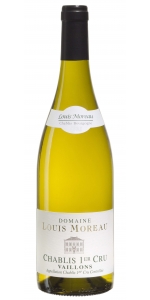
Domaine Louis Moreau Chablis Vaillons Premier Cru is made from 100 percent Chardonnay.
Chablis achieves its highly distinctive mineral character due to its cool northerly climate and its highly calcareous soil. The Domaine Louis Moreau Chablis Vaillons Premier Cru is a generous, fleshy and lively wine that displays a beautiful balance of minerality, fruitiness and elegance.
Chablis, with its steely character and fresh citrus flavor, pairs well with white fish and shellfish and its naturally high acidity can counterbalance cream-based sauces. Unoaked Chablis lends itself well to vegetables, starches, Comté, or fresh goat cheese.
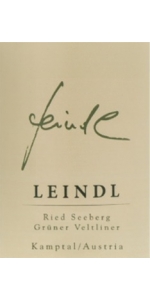
Leindl Gruner Veltliner Seeberg Kamptal is made form 100 percent Gruner Veltiner. Medium yellow green. Fine yellow apple fruit, delicate hint of quince and honey, candied orange zest, highly attractive bouquet. Juicy, good complexity, extract core sweet, silky texture, fine acidity bow, fine and salty minerality, great length, secure aging potential, a very finesse Veltliner-style.
Review:
“Inviting nose, with layers of quince and elegant, aromatic herb leading through to a richly textured palate of opulent fruit and a fine acidity.”
- Decanter World Wine Awards 2023, 96 pts
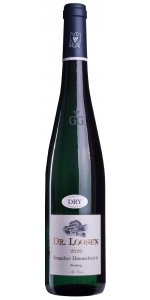
A heavenly, full-bodied dry Riesling with forceful minerality from 100-year-old vines grown in the blue slate soil of Graach.
Graach is a small village in the Mosel valley. It’s steep slate slopes produce wines that combine elegance with rustic strength. Grosses Gewächs (GG) is the designation for an estate’s best dry wine from a Grosse Lage (grand cru) vineyard. This limited-production wine was fermented with indigenous yeasts and kept in the barrel, on the full lees, for a year before bottling. The extended maturation time allows the wine to develop greater texture and a deeper natural harmony. This is a fully ripe wine, with vibrant aromatics and a pronounced acidity that gives it a brilliant structural precision.
Review:
Convincing proof that 2020 is an excellent vintage for dry GG on the Mosel! Cool and stony with delicate white-peach and white-currant aromas. Really takes off at the intensely slatey and racy finish.
-James Suckling 95-96 Points
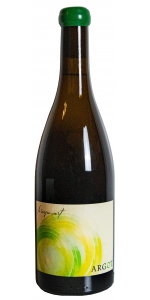
Argot Le Rayon Vert Chardonnay is made from 100 percent Chardonnay.
"Le Rayon Vert", the phenomenon which occurs as the sun dips below the horizon, and a brilliant green flash occurs when sunlight prisms through Earth's atmosphere. Jules Verne wrote "a green which no artist could ever obtain on his palette”, akin to the ethereal, green halo all truly pedigreed Chardonnays radiate from the glass.
Wafting from the glass like a freshly opened stick of Wrigley's gum. Both intense and vibrant, the full-bodied palate delivers Granny Smith apple and stone fruits; confections of custard and sticky vanilla bean; animated by bursts of spearmint and pine forest.
Review:
The 2019 Chardonnay Le Rayon Vert comes from fruit grown on Sonoma Mountain. It slides out of the glass with graceful notes of lemon tart, lime leaves, and fresh grapefruit, leading to suggestions of almond croissant, sea spray, honeysuckle, and aniseed. The medium-bodied palate is fantastically tight-knit with gorgeous tension and layer upon layer of citrus and mineral flavors, finishing very long and chalky. This is amazing.
-The Wine Independent 97 Points
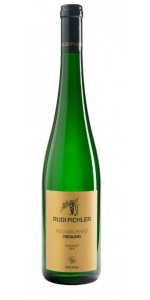
Wachau Riesling is dry and often defined by high levels of dry extract (due to a lengthy ripening period) and a pleasing freshness (due to dramatic temperature swings between day and night). Sedimentary soils of sand and stone give Kirchweg Riesling a dense mineral texture and fine fruity flavors.
Review:
Welcome to the dark side of Wachau dry riesling! Deep and delicately spicy nose that’s full of mystery. Incredible concentration and massive wet stone character on the very precise medium-bodied palate. Radical mineral energy and garden herb freshness at the enormously long and tightly-focused finish.
-James Suckling 98 Points
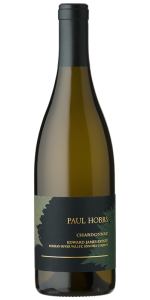
Paul Hobbs Edward James Estate Chardonnay Russian River Valley is made from 100 percent Chardonnay.
This small five-acre estate named after Paul's great-grandfather, Edward James, rewards us with a chardonnay that is pale straw in color with inviting aromas of lemon zest, red apple skin, gardenia, and honeysuckle. A creamy mouthfeel on the palate evolves into poached pear, ginger spice, and brioche that come together with a crunchy acidity and lively finish.
Review:
The 2022 Chardonnay Edward James Estate was named after Paul’s grandparents on his father’s side and originates in a vineyard planted entirely to Hyde Wente clone of Chardonnay. It was raised in French oak for 18 months on the lees. In the glass, it’s highly expressive and layered with aromas of toasted spice, incense, honeysuckle, quince, and preserved citrus. Medium to full-bodied, it has a fantastic, long, supple texture with a linear, crystalline feel, great, evenly fresh acidity, and a salty, mouthwatering finish. This is my favorite of the white wines at this tasting. Drink 2025-2037.
-Jeb Dunnuck 97 Points
Robert Mondavi The Reserve Cabernet Sauvignon To Kalon Vineyard is made from 94% Cabernet Sauvignon, 3% Cabernet Franc, 3% Petit Verdot.
The story of Robert Mondavi Winery begins here, with the To Kalon Reserve. This tier represents the pinnacle of the wines produced by the winery. The 2021 vintage offers fresh black fruit with dark chocolate, dried herbs, and hints of vanilla and violet. Flavors of black plum and blackberry with red fruit and a hint of graphite on the finish. Elegant and plush with sweet, beautifully integrated tannins and a lengthy finish.
Review:
2021 Robert Mondavi The Reserve To Kalon Vineyard Cabernet Sauvignon is a beautifully crafted wine with impressive intensity, depth, and a balanced structure that carries the day. From the To Kalon Vineyard in Oakville, the portion owned by Constellation, comes this blend of 94% Cabernet Sauvignon, 3% Cabernet Franc, and 3% Petit Verdot. Pure blackberry fruit, cassis, graphite, and violet aromas leap from the glass, nuanced by fragrant, toasty new cedar wood. Full-bodied, framed by an array of plush dark black fruit notes, currants, crème de cassis, and polished tannins that are firm and elongated, with ironstone mineral accents. Dynamic in its length and texture, it is utterly intriguing, with a beckoning quality that lingers after each sip. You want to know precisely where this wine is going—demanding your attention.
- Decanter 98 Points
Maltus Lalande de Pomerol is made from 80% Merlot and 20% Cabernet Franc.
This is the newest project from Nicolas Lassagne (Chateau des Landes).
He acquired this 2.5 ha (6.17 acres) parcel in 2015.
Beautiful sustained deep purple color
The Bouquet is rich, generous, complex and reveals notes of black fruits.
The palate is round and powerful with some good integrated tannins. The finish is long and structured.
Origin of the name:
History tells us that the origin of the Château Maltus goes back to the Middle Ages, in the time of the crusades. The Order of Malt, well implanted on the land named Lalande de Pomerol, cultivated for the first time vines on the grounds of the Château Maltus.