" We don't sell the wine without touching the vine "
| Country: | France |
| Region: | Burgundy |
| Winery: | Courtault-Michelet |
| Grape Type: | Chardonnay |
| Organic: | Yes |
| Vintage: | 2018 |
| Bottle Size: | 750 ml |
Michelet Chablis Premier Cru Beauroy is made from 100 percent Chardonnay.
Chablis is the northernmost wine region of Burgundy, renowned for producing some of the world's finest and most mineral-driven Chardonnay. The Premier Cru 'Beauroy' vineyard is located on the right bank of the Serein River on slopes with Kimmeridgian clay and limestone soils rich in fossilized oyster shells.
This wine displays a brilliant pale gold color with green reflections. The nose offers aromas of citrus, white flowers, and characteristic flinty minerality. On the palate, it is precise and elegant with bright acidity, flavors of green apple and lemon, and a long mineral finish.
Pairs excellently with oysters, shellfish, sushi, or simply prepared white fish.
Cellier du Chateau de la Chaume Petit Chablis is made from 100 percent Chablis.
Color: Pale yellow
Bouquet: White flowers, honeysuckle, linden tree and dried fruits.
Palate: Very pleasant, balanced with tension and nice minerality
Drink as an Aperitif or pair with fish, shellfish.
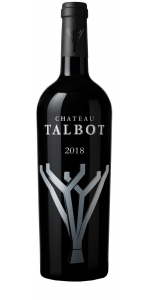
Chateau Talbot Saint-Julien Grand Cru Classe is made from 69 % Cabernet Sauvignon, 26 % Merlot, 5 % Petit Verdot.
The wine presents a delicate and captivating nose of black fruits, fresh tobacco, peppermint and floral nuances. Ripe and juicy fruit flavors of black currants on the palate with well integrated velvety tannins and a beautiful refreshing acidity to the long finish.
For the 2018 vintage, a special packaging with a unique silkscreen printing bottle was created to mark the 100th anniversary of the Cordier Family's acquisition of Chateau Talbot
Pair with red meat, roast pork, game meat, poultry, hard cheeses, poached pear.
"Rich aromas of blackcurrant, blackberry, chocolate, tobacco and licorice. Oyster shell, too. It’s full-bodied with firm, well integrated tannins. Polished, silky layers with a long finish. Gorgeous ripe and bright fruit in the center palate. Best in a long time. Try from 2025."
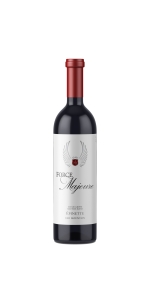
Force Majeure Epinette is made from 79% Merlot, 8% Cabernet Sauvignon, 8% Cabernet Franc, and 5% Petit Verdot .
Epinette is Force Majeure's Right-bank Bordeaux-inspired blend, and was named after an avenue in Libourne (France) that leads to Pomerol and Saint-Émilion, the home of Merlot and Cabernet Franc. Epinette is also the name of a musical instrument akin to a piano, as well as a word for pine tree, which is a fitting nod to their home in Washington state.
The wine itself is a blend of primarily Merlot and Cabernet Franc, with smaller amounts of Cabernet Sauvignon and Petit Verdot, proportions of which change depending on the vintage. The Merlot and Cabernet Franc are grown in lower areas of the vineyard with deep, well-drained soils, much less rocky than the soils of our Rhone varietals.
Review:
The 2018 Epinette is the Merlot-dominated release from this team, and it's 79% Merlot, 8% Cabernet Sauvignon, 8% Cabernet Franc, and 5% Petit Verdot, all from the estate vineyard on Red Mountain. Lots of smoky black cherry and darker currant fruits as well as notes of chocolate, graphite, lead pencil, and chalky minerality emerge from the glass, and this full-bodied beauty is beautifully textured, with a stacked mid-palate, velvety tannins, and a blockbuster finish. It's up with the finest Merlots in the New World and will drink brilliantly for at least a decade, if not longer.
Previously known as Grand Reve, Force Majeure has skyrocketed to the top of the pyramid in Washington State, in no small part due to their talented winemaker, Todd Alexander, who moved from Bryant Family in Napa to Washington State to focus on this estate. While the focus is on their Red Mountain Vineyard, they make a bevy of world-class wines from throughout the Columbia Valley. Anyone doubting the quality coming from Washington State these days owes it to themselves to try these wines.
-Jeb Dunnuck 97 Points
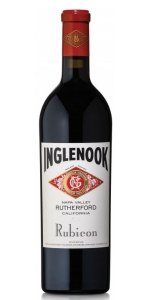
Inglenook Rubicon is made from 88% Cabernet Sauvignon, 8% Merlot, 3% Cabernet Franc, 1% Petit Verdot
Since its inaugural vintage in 1978, Rubicon has been the Estate's premier red wine, reflecting the soul of the property and expressing Francis Coppola's wish to create a Bordeaux-styled grand wine, that is, "a wine that can please contemporary taste, but with a historical aspect [that defines] our vineyards at their zenith."
Rubicon was named after the small river crossed by Julius Caesar in 49 B.C., declaring his intention to gain control of Rome, thereby launching a civil war among opposing factions. Over time the phrase "crossing the Rubicon" has come to signify any irreversible action with revolutionary intent or the outcome of which holds great risk. True to its uncommon depth, Inglenook's Rubicon continues to be a testament to the finely tuned rendering of a risk well-taken.
Strikingly rich in color and extract, the 2018 Rubicon is unquestionably a precocious, hedonistic wine. The exotic, well-knit aromas and flavors include ripe cassis, allspice, star anise, vanilla and black licorice. Upon entry, this full-bodied wine envelops the palate with its luxurious concentration and supple, silky tannins, supported by vibrant freshness from the balanced acidity, and perfectly-integrated French oak. Very long and expansive in the finish, the 2018 Rubicon will be memorable for decades to come.
Review:
Subtle and complex red with blackberry, black truffle, sweet tobacco and mahogany. Highlights of lavender and violets. Full-bodied and very tight with finesse and tension. Very polished, fine tannins. Long finish. Delicious already, but best after 2022.
-James Suckling 97 Points
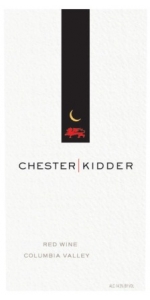
Long Shadows Chester Kidder is made from 60% Cabernet Sauvignon, 25% Syrah and 15% Petit Verdot
Allen Shoup named this wine in honor of his mother, Elizabeth Chester, and his grandmother, Maggie Kidder. He selected Long Shadows' director of winemaking and viticulture, Gilles Nicault, to craft this New World blend of Cabernet Sauvignon, Syrah and other classic Bordeaux varieties.
Select Cabernet Sauvignon lots underwent an extended maceration of 40 days to produce supple yet firm tannins that stand up to 30 months of barrel aging in tight-grained French oak barrels (85% new). The extra time in barrel helped to integrate the fruit, enhance the mid-palate with an extra layer of complexity, and provide an appealing earthiness to the finish.
The 2018 Chester-Kidder Red Wine is based on 64% Cabernet Sauvignon, 28% Syrah, and the rest Petit Verdot that spent 30 months in 85% new French oak. It's another brilliant wine from this team and has vibrant plum and darker, almost blue fruits as well as spicy oak, chocolate, graphite, and scorched earth aromas and flavors. Balanced and medium to full-bodied, with a terrific sense of freshness as well as building tannins, it's going to benefit from 2-4 years of bottle age and have two decades of longevity.
-Jeb Dunnuck 94 Points
Golden color. White flowers, fresh, lime and citrus aromas. Pleasant mouthfeel, supple, crisp, fruity flavors.
Machine harvested at full maturity (around Sep. 25th - lasts 12-18 days); pneumatic press; fermentation in temperature controlled stainless steel tanks for 8-10 days; M.L (2 months after the harvest); aging on the lees until February; racking; fining if necessary; cold stabilization; filtration right before bottling in April.
Ideal as an aperitif, the wine is an excellent companion to seafood.
Domaine Courtault-Michelet Estate
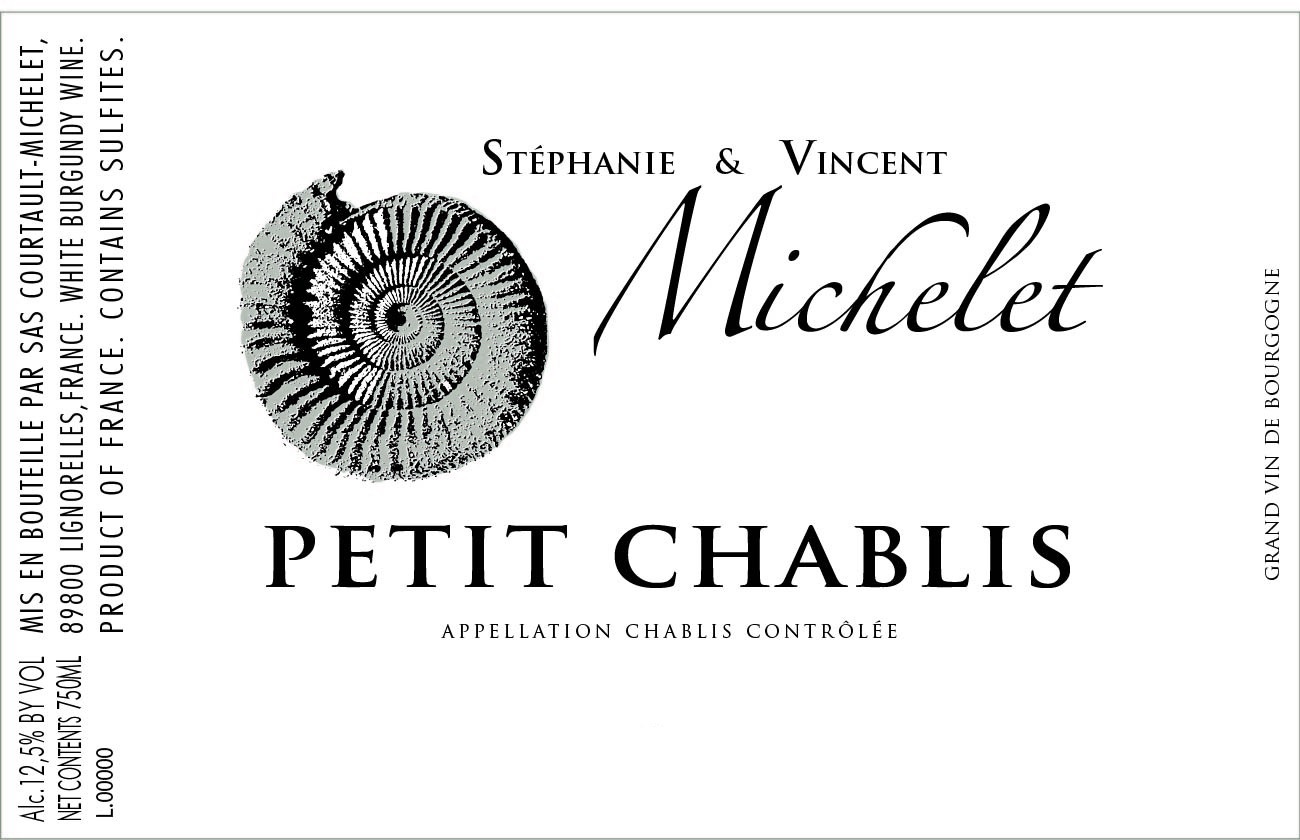
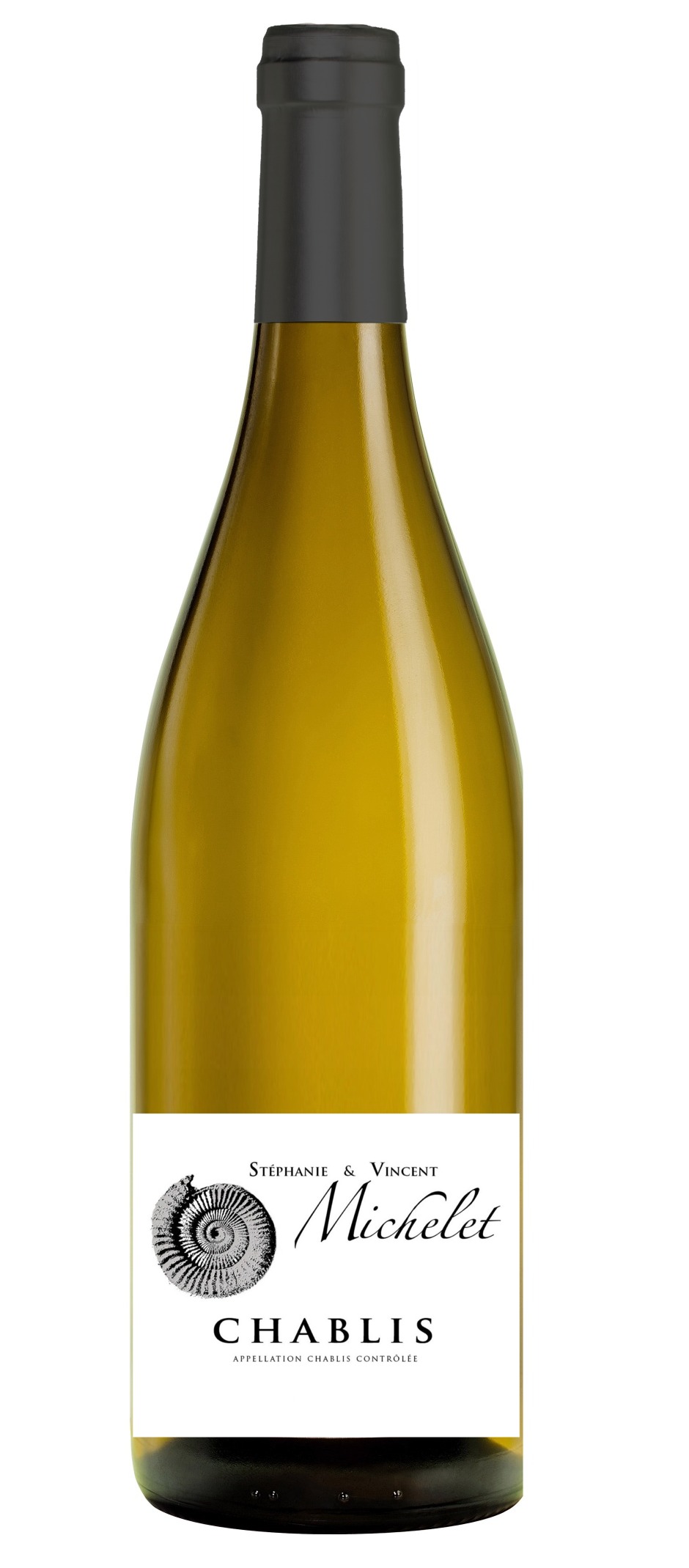
This is a new Estate, founded by Stephanie Courtault and her husband Vincent Michelet.
Stephany is the daughter of Jean Claude Courtault, who runs a family winery founded in 1984. Jean Claude arrived in Lignorelles in 1974 to work as a vineyard manager for one of the village's wine estates. In 1984, JC Courtault purchased 1.5 hectare of 4 year old vines in the Chablis area. Then, he rented a piece of land in the Chablis appellation area that he planted with the help of his wife, Marie-Chantal. This dynamic estate aims to fuse tradition with modernity.
Date Founded: 1984
A native of Touraine, Jean-Claude Courtault arrived at Lignorelles in 1974 to work as Vineyard Manager for one of the village's wine estates.
In 1984, JC Courtault seized the chance to buy 1.5 hectares of 4 year old vines in the Chablis area. Next, he rented a plot of land in the Chablis appellation area, which he then planted up with the help of his wife, Marie-Chantal. And so the Estate Jean-Claude Courtault came into being.
JC Courtault enlarged and worked his vineyard over time, whilst still fulfilling his duties as Vineyard Manager. He began producing wine, and in 1987, the process of bottling and marketing started. That year's wine was rewarded with a gold medal at the "Concours Général des Vins de Paris" competition. This medal was just the first of many awards and prizes that have punctuated JC Courtault's career, a mark of the quality and consistency of his wines.
The 1994 edition of the Guide Hachette gave something of a commercial boost to the Estate Jean-Claude Courtault, after it awarded the 1992 Chablis a favourite buy distinction.
In 1995, with the estate boasting a dozen hectares of Chablis and Petit Chablis, Jean-Claude Courtault decided to devote himself to wine-growing on a full-time basis. He built a wine storehouse that included all the features necessary for optimal operating efficiency.
The estate has continued to develop its vineyard and now boasts a total of 17.60 hectares in production. This development drive is due to continue, with the arrival of Stéphanie, daughter of JC and MC Courtault, and her husband, Vincent Michelet. From now on it will be up to them to take up the challenge of producing Chablis wines.
The estate produces three of the four appellations found in the Chablis wine-growing region : Petit Chablis, Chablis, Chablis 1er Cru and Chablis Grand Cru Valmur
Some 50,000 bottles are sold in France and abroad.
Domaine Courtault-Michelet Vineyards
The wines of the Estate Jean-Claude Courtault are particularly renowned for their strong fruit character, the wine-grower's signature, if you like. These wines are regularly singled out for their quality, as can be seen in the Guide Hachette and various competitions - concours de Paris, Mâcon, Vignerons Indépendants. The Estate Jean-Claude Courtault sells and produces wines that have come from the estate's own vines.
The estate's vines are planted in accordance with the tradition of the Lignorelles area, in other words, every 5 rows, sufficient space is left for a tractor to pass. Planting density is on average around 6000 to 7000 vines per hectare, roughly equivalent to the mean for the Chablis wine-growing region.
This vineyard is sited on relatively hilly ground. Some plots have required considerable work on them before planting, with gradients of up to 1 in 2.5 (40%) possible. The oldest plots have 35 year-old vines.
Grape Harvest generally begins at the end of September and lasts between 12 to 18 days, depending on the year. Our main aim is to harvest the grapes at their optimal ripeness. This allows us to obtain a higher sugar content in the grapes whilst still maintaining pH and acidity at the levels needed to make a well-balanced wine.

All older vintage wines have been purchased from a single collectors cellar. Pictures can be requested before shipment.
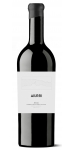
Aiurri Rioja is made from 80% Tempranillo, 15% Grenache, 5% Graciano.
Chalky, mineral and pure, with blood orange and blackberry fruit and scented oak. "Aroma: Complex and intense, where black fruits accompany spicy notes, highlighting black pepper and licorice. In the background, the notes of aging appear, with tones of dry tobacco and leaf litter. Taste: Powerful wine with good structure, but at the same time with notable freshness. It generates very pleasant and elegant tactile sensations. It is a wine where balance, concentration and sensations of fullness prevail. Color: Deep cherry color with a high layer."
Review:
Very well-made, a harmonious melange of fresh, plummy fruit with fine spices, warm bread and minerals. High-grade oak adds a bit of warmth. Medium- to full-bodied with firm tannins. Structured yet long. The wood tannins will integrate in two more years. Drinkable now but better from 2027.
-James Suckling 94 Points