" We don't sell the wine without touching the vine "
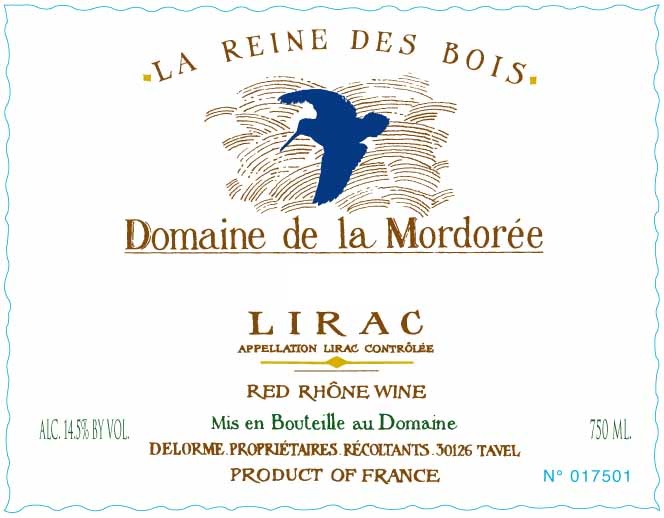
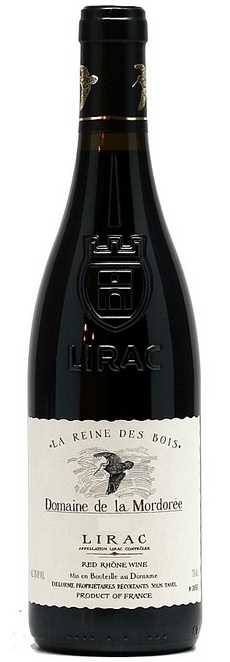
Mordoree Lirac Rouge Reine des Bois equal parts Grenache, Syrah and Mourvedre
Color : deep dark red, with blueish hints.
Aromas : highly fruity ( raspberry, billberry, blackberry ), floral (violet) and intense with a grilled touch ( coffee ).
Palate : melted and concentrated tannins, full bodied, very long fresh finish.
Ageing potential : 8 to 10 years
Grilled meats, sauce meats, game birds, game rabbits and semi-mature cheeses.
- James Suckling (June 2023), 91 pts
Mordoree Lirac Rouge Reine des Bois equal parts Grenache, Syrah and Mourvedre
Color : deep dark red, with blueish hints.
Aromas : highly fruity ( raspberry, billberry, blackberry ), floral (violet) and intense with a grilled touch ( coffee ).
Palate : melted and concentrated tannins, full bodied, very long fresh finish.
Ageing potential : 8 to 10 years
Grilled meats, sauce meats, game birds, game rabbits and semi-mature cheeses.
Review:
"The 2022 Lirac Cuvée De La Reine Des Bois checks in as 40% Syrah and the rest equal parts Grenache and Mourvèdre. It's a killer bottle of wine that has both red and black fruits intermixed with notions of peppery garrigue, flowers, melted licorice, and graphite. With a rare level of purity and precision, it's medium to full-bodied, has a supple, layered mouthfeel, fine tannins, and a great finish."
- Jeb Dunnuck (Import Highlight: Fran Kysela; July 2024), 93 pts
Mordoree Lirac Blanc Reine des Bois is made from Grapes : Grenache 35 % Clairette 25 % Viognier 10 % Roussanne 15 % Marsanne 10 % Picpoul 5%>
Color : green gold
Aromas : white fruits, peach, apricot, pear, violet.
Palate : rounded, long finish, highly flavoured.
Ageing Potential : 4-5 years.
Surface : 4 Ha. Yield : 35 Hl./Ha. Vineyard age : 30 years Terroir : Clay / chalk with pebble stones. Harvest : by hand Vinification : skin maceration and direct pressing with temperature control. Fermentation : oak barrel fermentation for 25% of the total volume
Pairs well with appetizers, fish, seafood.
Review:
"Iconic grapes of 35% Grenache, 25% Clairette, 10% Viognier, 15% Roussanne, 10% Marsanne, and 5% Picpoul from 40-year-old vines make up this organic Southern Rhône white. A floral bouquet of white tea and jasmine make their designs on a defined slate mouthfeel. Lime pops with a tart center, along with notes of peach and gingerbread on a keen, edgy finish."
- The Somm Journal (Feb/March 2022), 94 pts
Mordoree Lirac Blanc Reine des Bois is made from 30% Grenache, 20% Clairette, and 15% each Viognier, Roussanne, and Marsanne, as well as splashes of Picpoul and Bourboulenc.
Color : green gold
Aromas : white fruits, peach, apricot, pear, violet.
Palate : rounded, long finish, highly flavoured.
Ageing Potential : 4-5 years.
Surface : 4 Ha. Yield : 35 Hl./Ha. Vineyard age : 30 years Terroir : Clay / chalk with pebble stones. Harvest : by hand Vinification : skin maceration and direct pressing with temperature control. Fermentation : oak barrel fermentation for 25% of the total volume
Pairs well with appetizers, fish, seafood.
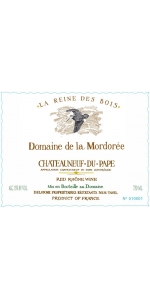
Mordoree Chateauneuf-du-Pape La Reine des Bois is made from Grenache 75 %, Mourvèdre 10%, Syrah 10 % , Counoise 3% & Vaccarese 2%.
This premium cuvee - whose name means "Queen of the Woods" - is from 65-year-old vines, planted on Villafranchian-era terrasses. Yield is 30 hl/ha.
Deep ruby red; opaque. Aromas of red fruits change to wooden touches of leather, black truffles and coffee. Fat, concentrated and full flavored with a very long liquoriced and fruity finish.
Pairs with red meats, sauce dishes, game animals (woodcock, wild boar) and semi mature cheeses.
Review:
"The 2019 Châteauneuf Du Pape Cuvée De La Reine des Bois is a deeper, more masculine wine with gorgeous cassis and blackberry fruits as well as graphite, licorice, crushed stone, violets, and lavender nuances. Rich, full-bodied, and incredibly concentrated, it has a brilliant sense of freshness and purity as well as length on the finish. It's going to require 4-5 years of bottle age, but this straight-up thrilling Châteauneuf du Pape will have 20-25 years of prime drinking."
- Jeb Dunnuck (November 2021), 98+ pts
Mordoree Chateauneuf-du-Pape La Reine des Bois is made from Grenache 75 %, Mourvèdre 10%, Syrah 10 % , Counoise 3% & Vaccarese 2%.
This premium cuvee - whose name means "Queen of the Woods" - is from 65-year-old vines, planted on Villafranchian-era terrasses. Yield is 30 hl/ha.
Deep ruby red; opaque. Aromas of red fruits change to wooden touches of leather, black truffles and coffee. Fat, concentrated and full flavored with a very long liquoriced and fruity finish.
Pairs with red meats, sauce dishes, game animals (woodcock, wild boar) and semi mature cheeses.
Review:
"The 2020 Châteauneuf Du Pape La Reine Des Bois is a bigger, richer, more structured wine, which is normal. A blend of 80% Grenache, 10% Mourvedre, and the rest equal parts Syrah and Vaccarese, its deeper ruby/purple hue is followed by a brilliant perfume of blackberries, black raspberries, ground pepper, violets, and new saddle leather. Medium to full-bodied and concentrated, with building tannins and great overall balance, it's another wine that shows the style of the vintage brilliantly. It has plenty of up-front charm, but this beauty will evolve nicely for 15-20 years."
- Jeb Dunnuck (November 2022), 96 pts
Mordoree Lirac Rouge Reine des Bois equal parts Grenache, Syrah and Mourvedre
Color : deep dark red, with blueish hints.
Aromas : highly fruity ( raspberry, billberry, blackberry ), floral (violet) and intense with a grilled touch ( coffee ).
Palate : melted and concentrated tannins, full bodied, very long fresh finish.
Ageing potential : 8 to 10 years
Grilled meats, sauce meats, game birds, game rabbits and semi-mature cheeses.
Review:
The 2015 Lirac La Reine des Bois continues this estate's mastery of the appellation, combining hints of vanilla with black cherry fruit in a full-bodied, richly textured and tannic wine. The blend is 40% Syrah, 30% Grenache and 30% Mourvèdre, with up to 15% being aged in barriques. Longtime readers will be happy to know that the 2010 (still youthful) and the 2006 (nearing maturity) are drinking well. Based on that, expect this vintage to drink well through at least 2030.-Wine Advocate 93 Points
The Mordoree Estate
This is arguably the top estate in our Portfolio. Domaine de la Mordoree (woodcock), located in the town of Tavel, in the Southern Rhone Valley, is the most consistent producer of top quality wine in my entire selection. In 1986, the brothers Christophe and Fabrice Delorme decided to dedicate themselves to their passion for wine. They started their own estate with the objective to produce the best wines in each appellation while preserving the environment
The Mordoree Vineyard
The vineyard consists of 55 hectares (135 acres), on 38 different parcels, which provide with a rich, wide range of soils and climates. The soil is a mix of clay, chalk and sand with pebble stones. The improvements at the Domaine have been incredible: new pneumatic presses, new stainless steel vats, new destemmer, new vinification and aging plant, and aging in oak barrels for the top wines. All the grapes are raised by culture raisonnée which is very close to organic viticulture (intervention in the vineyard only when necessary). The yield is reduced in the vineyard by ébourgeonnage (de budding in spring) and vendanges vertes in summer (green harvesting). Oak aging for the top wines in special barrels like “jupille” for 10 months. No expense is spared at this Domaine to achieve quality.
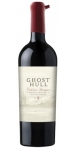
Ghost Hull Cabernet Sauvignon is made of 100 percent Cabernet Sauvignon.
Aromas of blackberry, elderberry and ripe plum are accentuated by notes of mocha, fresh tarragon, vanilla and oak. The palate is full-bodied and offers a lovely balance of acidity and tannins accompanied by rich flavors of dark fruit and black currant, ending with a juicy and lingering finish
Segries Tavel Rose is made from 50% Grenache, 30% Cinsault, 15% Clairette, 5% Syrah.
The age of the vines is 30 years. Traditional vinification at low temperature, "vin de saignée" with a maceration during one night in cement vat.
This is large for a Rose...structured and focused, with the color of dark ruby. The nose is loaded up with fresh fruit. Strawberry, blackcurrant, and raspberry beam from the glass. On the palate, the mouth-feel is ripe and succulent. It has strength, but maintains its fresh and crisp expression. The finish is filled with Asian spice and slight hints of smoke. Drink this juice now or over the next year or two.