" We don't sell the wine without touching the vine "
| Country: | France |
| Region: | Burgundy |
| Winery: | Thierry Mortet |
| Grape Types: | Gamay Pinot Noir |
| Organic: | Yes |
| Vintage: | 2019 |
| Bottle Size: | 750 ml |
Mortet Bourgogne Cote d'Or Rouge is made from 100 percent Pinot Noir.
A parcel of 90 ares, one part is 20 years old and the other part is 55 years old. Its is called Les Pressonniers, in Gevrey-Chambertin.
Bourgogne Rouge Côte d’Or comes from a plot of Gevrey-Chambertin vines, giving delicate fruit and body, as well as the character and complexity of the Gevrey-Chambertin terro
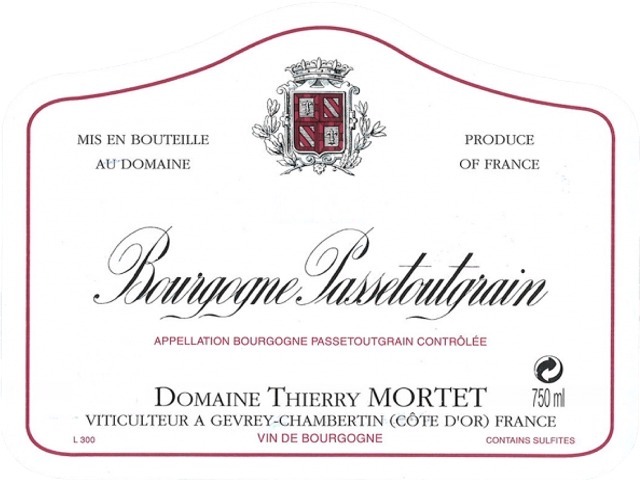
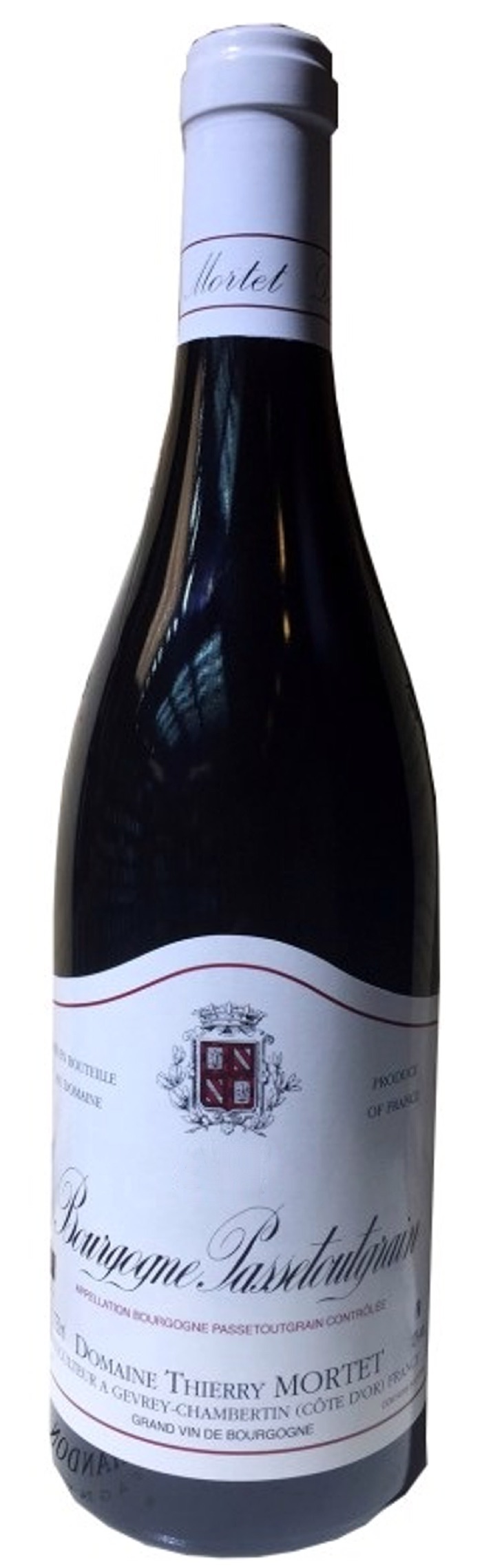
Mortet Bourgogne Passetoutgrain is mae from 60% Gamay and 40% Pinot Noir
Aged 11 months in Neutral French oak barrels.
12% ABV
Malolactic fermentation in barrel.
Slight filtration before bottling.
Bourgogne Passetoutgrains is an Appellation d'origine contrôlée (AOC) for wine from the region of Burgundy.
Most Bourgogne Passetoutgrains is red, although rosé wine may also be produced. Unlike other Burgundy wines, which are
primarily produced from a single grape variety, Bourgogne Passetoutgrains is essentially a cuvée of Gamay and Pinot noir.
This is a quintessential bistro wine. Fresh and fruity, displaying red and black fruit flavors. Well balanced, good structure and silky finish with excellent length. Serve slightly chilled.
Oeufs en Meurette (poached eggs served in a red wine sauce with onions and lardons).
Boeuf Bourguignon (beef cooked in red wine with carrots and patatoes).
Pizza and pasta.
A parcel of 90 ares, one part is 20 years old and the other part is 55 years old. Its is called Les Pressonniers, in Gevrey-Chambertin.
Bourgogne Rouge Côte d’Or comes from a plot of Gevrey-Chambertin vines, giving delicate fruit and body, as well as the character and complexity of the Gevrey-Chambertin terro

Thierry Mortet Chambolle Musigny 1er Cru Beaux Bruns is made from a single vineyard. (0.55 acre). 30 years old vines, planted on clay, limestone and flint based soils.
The wine is produced from a single vineyard (0.55 acres) planted on clay, limestone and flint based soils. It shows a dark color, ripe black fruit and pepper aromas. Long and intense flavors. Smooth tannins, good length and red fruits on the finish. An elegant wine with a delicate, beautiful structure.
Very fine wine, delicate, beautiful structure.
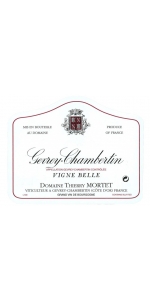
Thierry Mortet Gevrey Chambertin Vigne Belle is made from 100 percent Pinot Noir.
The wine is produced from 20 different parcels (3 hectares total). The soils are a mix of clay and silt.
The age of wines varies between 15 to 60 years.
Yield: 45 hl/ha
Production: 15,000 bottles on average.
Manual harvest with a selection of the grapes; sorting table; 100% destemming; maceration for 15 days, cold stabilization for 4-5 days; M-L.; racking twice a day. Fermentation in stainless steel tanks for 4 months. Aging in oak barrels for 12 months (new and 1 or 2 year old barrels). Kieselguhr filtration before bottling.
The wine offers a subtle and complex nose. It displays a sweet and delicate mouthfeel. Very nice wine with black fruit aromas. Dense, good concentration. Good length and well integrated oak.
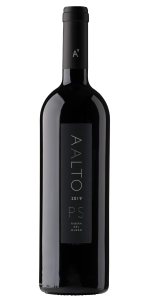
Aalto P.S. Pagos Seleccionados Tinto is made from 100 percent Tempranillo.
Climatic conditions
The farming year began with a mild autumn and little precipitation. A very dry winter started with -9ºC reaching at the end higher temperatures than normal for that time of the year. Spring and summer characterized by little rain, only some rain showers in July and late August avoided the hydric stress of the vines. The vegetative cycle of the vine developed with big variations of temperatures, alternating warm and atypical low temperatures of 4ºC for mid-June. The ripening of the grapes happened under very good conditions and the harvest started on 24th September 2019.
100% Tinto Fino (Tempranillo) primarily from very old vines – 60 to 90 years old – from selected plots in La Horra and La Aguilera. The harvest was done by hand, in small boxes of 15 kilos that are thoroughly inspected, bunch by bunch, on the selection table.
Tasting notes
Review:
Color: dark cherry, Aroma: toasty, spicy, fine cocoa, black fruit, Mouth: tasty, toasty, fine bitterness, ripe tannins
Guia Penin 94 Points
Mortet Bourgogne Passetoutgrain is mae from 60% Gamay and 40% Pinot Noir
Aged 11 months in Neutral French oak barrels.
12% ABV
Malolactic fermentation in barrel.
Slight filtration before bottling.
Bourgogne Passetoutgrains is an Appellation d'origine contrôlée (AOC) for wine from the region of Burgundy.
Most Bourgogne Passetoutgrains is red, although rosé wine may also be produced. Unlike other Burgundy wines, which are
primarily produced from a single grape variety, Bourgogne Passetoutgrains is essentially a cuvée of Gamay and Pinot noir.
This is a quintessential bistro wine. Fresh and fruity, displaying red and black fruit flavors. Well balanced, good structure and silky finish with excellent length. Serve slightly chilled.
Oeufs en Meurette (poached eggs served in a red wine sauce with onions and lardons).
Boeuf Bourguignon (beef cooked in red wine with carrots and patatoes).
Pizza and pasta.
The Domaine Thierry Mortet Estate
The Domaine was officially created in 1992, when Thierry’s father retired and his estate was divided between his two sons. Thierry studied enology and viticulture in Beaune before joining his parents and brother and working at the Domaine
Thierry uses Burgundy barrels from Rousseau et Toutan, one third new each year. Annually, the estate bottles 1,100 cases. Thierry strives for fruit and finesse in his wines. Generally his top wines age well for 10-15 years.
The Domaine Thierry Mortet Vineyard
Thierry started in 1992 with a 4 hectare vineyard. It now measure 7 hectares (17.5 acres) and produces 85% red wine and 15% white wine. The vineyards spread over four villages: Gevrey-Chambertin, Chambolle-Musigny, Couchey and Daix (west of Dijon).
Thierry Mortet uses classic winemaking techniques: pre-fermentation maceration for 3 or 4 days, total fermentation time of 2 weeks. The grapes are harvested by hand, are sorted and are 100% de-stemmed. The result is expressive, full-bodied, generous, pure wines.
Starting with the 2010 vintage, the Estate is now certified Organic !
DuMOL 'Chloe' Chardonnay is made from 100 percent Chardonnay.
Our first vintage of Chloe was 2000, and although the vineyard mix has changed over the years, the wine has always focused on the central Russian River Valley district to represent the richest side of DuMOL Chardonnay. The wine has lower acidity than our coastal wines, making it more approachable in its youth, and the flavors focus more on orchard fruits than citrus. The neighboring El Diablo and Flora Marie vineyards sit overlooking the river on gravelly loam soils and provide the wine's deep fruit generosity. These are the first vineyards we harvest each year as the lean soils really advance their crop’s ripening. We offset this fruit richness with grapes from our Green Valley Bressay Estate, which overflow with tense structure and coastal acidity. It’s a seamless combination that produces a thrilling result, and Chloe is the first of our designate Chardonnays you should open each vintage.
The wine’s aromas and flavors are akin to peach, apricot, oatmeal and anise. Fresh thyme and honey notes combine with tangerine and lemon curd. It’s a deeply textural and expansive wine that gently glides along the palate. Lively acidity and spicy notes of ginger and white pepper provide lift and energy to the finish. A beautiful, layered, and richer style to enjoy soon after release. Drink between late-2024 and 2029 and serve no cooler than 55º F.
Review:
A Central Russian River Blend, the 2022 Chardonnay Chloe is a bright yellow hue and captures a wide spectrum of citrus with notes of orange, Meyer lemon, fresh pineapple, toasted spice, and a hint of almond through the mid-palate as well as a nice lift of citrus on the finish. It’s a beautiful wine offering a richer tone through the range. Drink 2024-2034.
-Jeb Dunnuck 96 Points
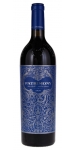
Daou Vineyards Patrimony Cabernet Sauvignon is made from 65% Cabernet Sauvignon, 35% Cabernet Franc.
Dark crimson hues shimmer in the glass. Concentrated aromas of plum, blackberry jam, blueberry, boysenberry and licorice are accentuated by hints of wildflowers, cedarwood, sage and wet stone. Bright tannins and mouthwatering acidity are balanced by sleek oak notes, all seamlessly interwoven into a symphony of blackberry, chocolate, pomegranate, tobacco and graphite. This full-bodied and flawlessly intricate wine will surprise you now with its elegance, and later with its longevity.
Review:
Dark-fruited and toasted aromas of wild blackberries, tobacco, seaweed and orange zest. The palate is full-bodied with finely integrated tannins and bright acidity. It shows notes of bramble berries, leather, graphite and roast meat. Wonderfully balanced and fresh. Drink or hold.
James Suckling 96 Points