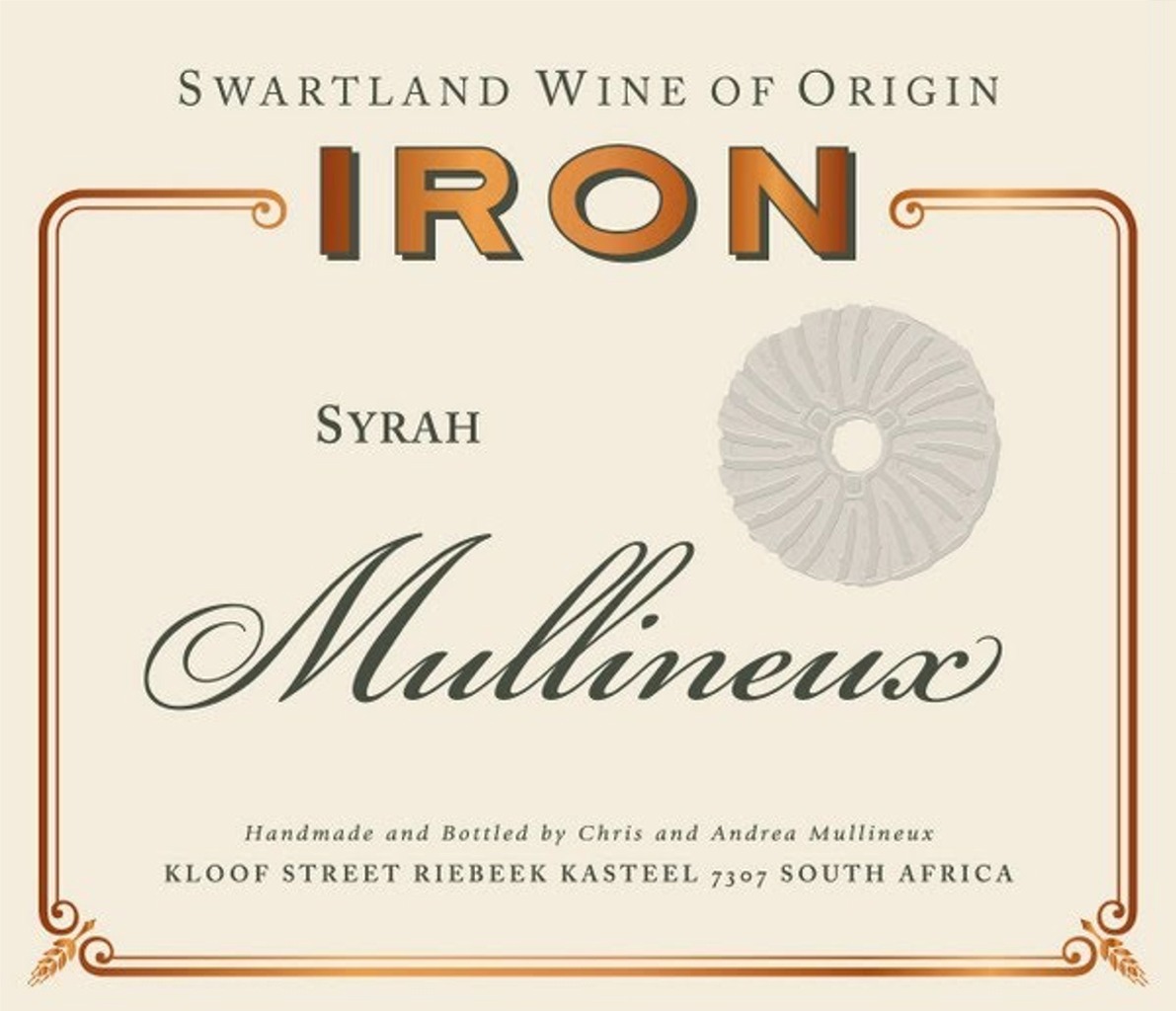
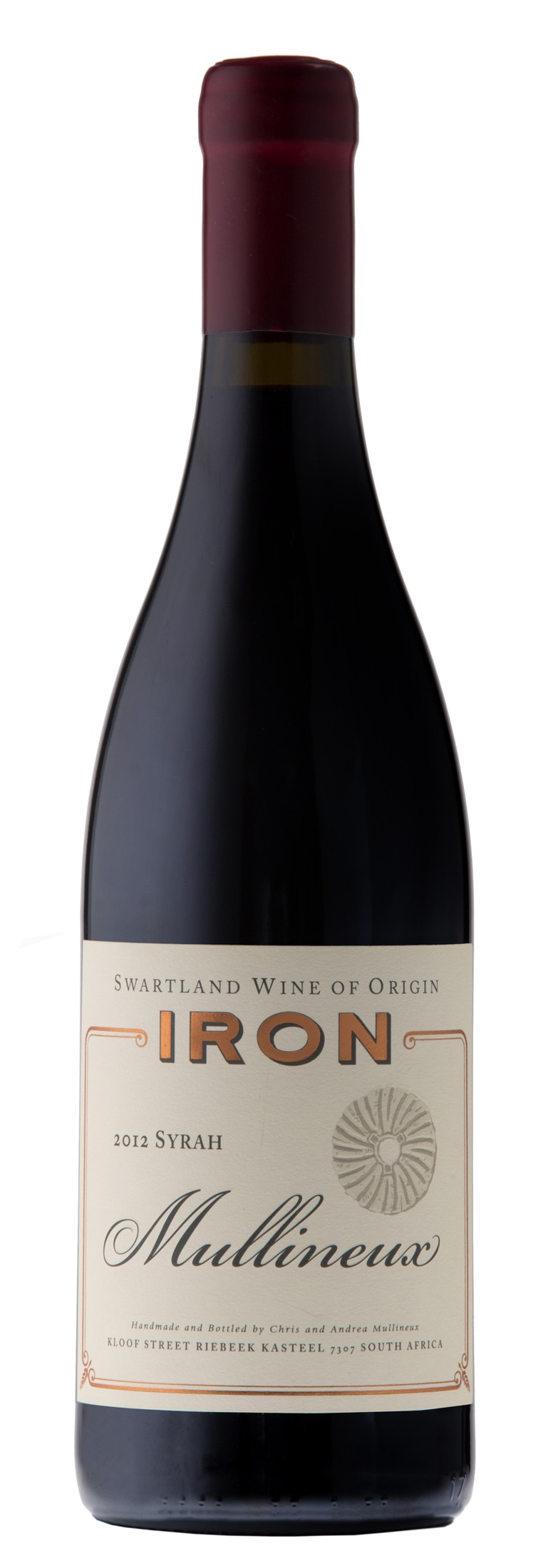
" We don't sell the wine without touching the vine "
| Country: | South Africa |
| Region: | Swartland Region |
| Winery: | Mullineux Family Wines |
| Grape Type: | Syrah |
| Organic: | Yes |
| Vintage: | 2015 |
| Bottle Size: | 750 ml |

No Syrah terroir in Sonoma County compares with Sonoma Mountain’s northwest crown—cool fog-affected mornings, sun-bathed afternoons, cooled by persistent coastal breezes, and temperate evenings. The soils in Steiner’s Syrah blocks — ashy and moondust-like, littered with decomposing sea bed — further contribute to the unique nature of this site. After a 3-vintage hiatus, I am thrilled to be back working with Steiner Vineyard’s Syrah. By its nature, this slow-to-ripen, cool-climate site produces fabulously deep, intense, structured wines. Now, raising a big, brawny Syrah is no rare act of alchemy. It is the wonder of Steiner’s terroir — a magical elegance and beauty, informing the inherent power, depth and intensity — that makes this bottling so special. 2016 produced a classic wine that deftly balances massive flavors and texture, while retaining vital freshness, and a palpable sense of cool. Production was low, so get it while you can. Simply a “WOW” wine, not to be missed.
VINEYARD: Steiner Vineyard. Located at 1,100 ft, on the northwest crown of Sonoma Mountain. CRUSH: Early morning harvest by hand, October 1st, cluster and berry sorted, destemmed and crushed. FERMENT: 5-day cold soaks, followed by 14 day native fermentation in open-top bins. AGING: 20 months, French oak, 100% new, mixture of 300L hogsheads and barrique shapes. Never racked prior to bottling. Bottled unfined, unfiltered.
Review:
-Erin Brooks (Robert Parker) 94 Points

Avennia Arnaut Syrah is made of 100% Syrah
For our taste, no one grows finer Syrah in the state than Dick Boushey. We named this wine after the Provencal Troubadour Arnaut Daniel, who invented the Sestina poem form, thus creating a connection between our two flagship efforts.
"Deep, dark Syrah notes on the nose, with dark blackberry, blueberry reduction, grilled meat, crushed olive, black licorice, camphor, pen ink, and cracked black pepper. The palate is super concentrated and dense, tightly focused, and deeply complex. Savory blueberry, pan drippings, a hint of orange essence, and hand-rubbed sage come through on the extremely long and nuanced finish. A compelling wine that will age for a couple decades at least." - Chris Peterson, Winemaker
We make this wine with minimal manipulation, using native yeasts and bottling unfined and unfiltered, to allow the "place" to shine through.
AVA: Yakima Valley
Blend: 100% Boushey Vineyard Syrah
Winemaking: 15% whole cluster, native yeast, 15% new French oak, aged 16 months, bottled unfined & unfiltered.
Review:
-Sean P. Sullivan 95 Points
-Jeb Dunnuck 94 Points
-James Suckling 93 Points
-Wine Spectator 91 Points

A Northern Rhone-inspired Syrah built from cool-climate Mendocino sites — Valenti Ranch at 2,200 feet, Perli Vineyard and the Drew Estate — fermented with native yeast and about 80% whole cluster, then raised some seventeen months in all-neutral French oak. Sanguine and mineral, with black olive, cracked pepper, fennel and iron.

This is a 6 pack with 2 bottles each from vintages from 2013, 2015, and 2016.
***Tenimenti Angelini Val di Suga Vigna Spuntali Brunello di Montalcino 2016:
The 2016 Vigna Spuntali Brunello di Montalcino is the most brooding of the lineup from Val di Suga and is sourced from the southwest of the region on sandy soils. There are aromatics of black raspberry, licorice, menthol, sage, cinnamon, and iron-rich earth. Its Mediterranean influence is felt on the palate with ripe black cherry, dried herbs, and sun-baked earth. This is the fullest bodied and most savory of the Val di Suga lineup, with more roundness and grip. Its structure will benefit from cellaring for several years and will be great drinking over the next 20 years or more. 2026-2040.
-Jeb Dunnuck 96 Points
***Tenimenti Angelini Val di Suga Vigna Spuntali Brunello di Montalcino 2015:
The 2015 Vigna Spuntali Brunello di Montalcino is more introverted on first opening, with notes of black plum, licorice, dried Mediterranean herb, and sun-baked earth. On the palate, it offers a tart dried fruit character, with a building tannin structure that finishes with tomato leaf, and bitter herbs. The most rustic and burly of the wines in the lineup of the 2015 Val di Suga vintage, it will benefit from allowing some time in cellar to see how this matures and its tarriness develops. Drink 2026-2036
-Jeb Dunnuck 94 Points
***Tenimenti Angelini Val di Suga Vigna Spuntali Brunello di Montalcino 2013:
Plenty of spices and fresh herbs on the nose, such as dried rosemary and nutmeg, to match the underlying dried redcurrants and cranberries. Full-bodied with plenty of concentration, but still shows a very sturdy, tannin backbone and punchy acidity, to drive this through to a long finish. Drink in 2021.
-James Suckling 94 Points
"Funkelndes, sattes Rubin mit feinem Granatschimmer. Sehr klare und duftige Nase, satt nach Brom- und Maulbeere, dazu etwas Leder und Lakritze. Zeigt sich am Gaumen satt und stoffig, öffnet sich mit griffigem Tannin in vielen Schichten, sehr langer Nachhall im Finale, ein Langläufer."
-Falstaff 97 Points

Dominique Piron Beaujolais Morgon Aux Pierres is made from 100% Gamay.
A mineral wine with fine tannins reflecting a perfume of concentrated dark fruits.
A small plot of vines of 85 ares acquired by Dominique Piron's grandfather in 1932. Registered on a place called "Aux Pierres", it is well named due to its blue stones, very typical of the Côte du Py. Year by year, the quality of the harvest has made it an emblematic plot of Piron's family. Elite of the domain, this special cuvee is produce only in case of exceptional vintage. It's a cuvee that can be kept for more than 10 years.
Review:
-Decanter World Wine Awards 93 Points
-James Suckling 92 Points
-Wine Spectator 91 Points

Dominique Piron Morgon Cote du Py is made from 100 percent Gamay.
The Morgon Cru is based in the heart of Northern Beaujolais. Côte du Py is the heart of Morgon, a little hill of very old blue stone rocks - the oldest soils of Beaujolais (around 430 millions years old), with a typical blue color.
Côte du Py has been known for centuries for being the best terroir of the village, producing long lived wines with strong structure and flavors.
Wines of the Côte du Py are very dark, profound and dense. Classic aromas of red berries, cherry, kirsh. Fruity, structured and mineral in the mouth with graphite flavors and spicy notes of black and white pepper. Wine can age up to 10 years.
Hand picked grapes are sorted manually and destemmed for 50 to 70%. Fermentation starts in concrete tanks and lasts for 18-25 days with remontages and pigeages. Then after pressurage starts the aging, for 2/3 in concrete tanks, and 1/3 in recent French oak barrels with batonages on fine lies only. After 10 month we do the blending, keeping only the best cuvees and best barrels, and do the bottling.
Pairs well with red meat like beef, duck and game (Hare, Dear, Wild Pork,…), cheses.
Review:
-James Suckling 91 Points
Tasting Note: This very aromatic Syrah has hints of black pepper, dark berries and herbs and a bloody, earthy character on the nose. The palate is full-bodied with velvety but structured tannins and a balanced natural acidity. The finish is fresh, long and supple. Best served at 16 to 18 °C, this wine will greatly benefit from decanting when drunk within the first 3 to 5 years after bottling.
Andrea Mullineux told me that their debut 2012 Mullineux Iron Syrah has been the hardest cru to fine-tune over the years. Indeed, it has been trialed since 2005 but never bottled...until now. "We have been working hard to perfect the acidity here and it's been important to get life into the soil, getting the vineyard healthy, so that it can be picked with good acidity. Because it is dry farmed, in a space of three days, it can god from 22 to 26 Brix – so picking decision is critical," she said. It has a subtle marine influence coming through on the nose with macerated black cherries, boysenberry jam and touches of iodine. The palate is medium-bodied with fine, quite grainy tannins, very nicely poised with touches of fig and marmalade towards the slightly saline finish. This is a strong debut to form the trio of Syrah single "terroir" offerings.
Review:
-Tim Atkin 96 Points
The Mullineux Family Winery Estate
This is a small, highly focused family winery producing a select family of hand-crafted wines from the granite and shale based terroirs of the Swartland Region of South Africa.
Chris was born in Cape Town, raised in Johannesburg, and introduced to the world of wine while studying accountancy at the University of Stellenbosch. After braving his way through accounting, he enrolled into winemaking for a second degree, and on graduating took a position starting up a boutique organic winery in Tulbagh, where he was in charge of the vineyards and cellar for 5 very enjoyable years. In addition to stints at de Trafford and Rustenberg wineries in South Africa, Chris has also worked harvests at top wineries in Cote Rotie, Bandol, the Languedoc, Roussillon, and California. Over the years Chris has had good exposure to the people, vineyards and wines of the Swartland. This has lead to a growing love for, and firm belief in the region, and he looks forward to many creative and hard working vintages in this region with his family.
Andrea developed her passion for wine at the family dinner table, growing up in San Francisco. After studying Viticulture and Oenology at UC Davis and completing a handful of harvests in the Napa Valley, Andrea decided to broaden her winemaking knowledge overseas. After a harvest in Stellenbosch, she went on to work in Chateauneuf and, on the same trip, met Chris at a wine festival in Champagne! Andrea's love for South African wine (and Chris) brought her back to South Africa where they learnt that their compatibility extended into the vineyards and cellar. When Andrea is not hard at work in the cellar, her creative energies flow into the kitchen where she loves cooking up a storm, glass of wine in hand.
The Mullineux Family Winery Vineyards
Very low summer rainfall coupled with afternoon and evening breezes off the Atlantic Ocean result in low disease pressure. Vineyards are often planted in amongst the natural rhenoster veldt and fynbos, which provide refuge for predators of vineyard pests, and help reduce the spread of disease. Weeds struggle to establish themselves and spread, making it easier to control them without the need of herbicides.
Chris and Andrea have put together a group vineyards in the most interesting parts of the Swartland, which are mostly found around the shale and schist based Riebeek Kasteel Mountain, and the granite based Paardeberg mountain.
Lammershoek - The deep white, granitic soils on Lammershoek produce wines that are exceptionally pure, with a granitic perfume that shines through in red and white varieties.
Kasteelsig - The soils, found on the rolling hills north of Malmesbury, are a deep combination of red gravel and iron, and produce dark, concentrated wines that are the flesh of our blends.
Kloovenburg - The highly varied row directions and aspects bring much complexity to wines, and the high shale content of the soils gives serious structure, and brings an earthy spicy character to syrah planted in them.
Mountain View - The soils are shale based, which drain easily, reducing vigor and providing grapes of perfume, freshness and structure.
The vineyards are planted with grape varieties (which are mostly Mediterranean in origin) that are ideally suited to the environment, and are farmed sustainably and in harmony with their surroundings: Syrah, Chenin Blanc, Grenache Blanc, Clairette, Viognier.

Prager Smaragd Klaus Riesling is made from 100 percent Riesling.
Franz Prager, co-founder of the Vinea Wachau, had already earned a reputation for his wines when Toni Bodenstein married into the family. Bodenstein’s passion for biodiversity and old terraces, coupled with brilliant winemaking, places Prager in the highest echelon of Austrian producers.
Smaragd is a designation of ripeness for dry wines used exclusively by members of the Vinea Wachau. The wines must have minimum alcohol of 12.5%. The grapes are hand-harvested, typically in October and November, and are sent directly to press where they spontaneously ferment in stainless-steel tanks.
Klaus sits adjacent to Achleiten and is one of the Wachau’s most famous vineyards for Riesling. The vineyard is incredibly steep with a gradient of 77% at its steepest point. The southeast-facing terraced vineyard of dark migmatite-amphibolite and paragneiss produces a tightly wound and powerful wine. The parcel belonging to Toni Bodenstein was planted in 1952.
Tasting Notes:
Austrian Riesling is often defined by elevated levels of dry extract thanks to a lengthy ripening period and freshness due to dramatic temperature swings between day and night. “Klaus is not a charming Riesling,” says Toni Bodenstein with a wink. Klaus is Prager’s most assertive and robust Riesling.
Food Pairing
Riesling’s high acidity makes it one of the most versatile wines at the table. Riesling can be used to cut the fattiness of foods such as pork or sausages and can tame some saltiness. Conversely, it can highlight foods such as fish or vegetables in the same way a squeeze of lemon or a vinaigrette might.
Review:
What a stunning example of cool climate riesling. It’s full-bodied and deep, but so cool and delicate, packing in sleek layers of honeysuckle, apricots, lemons and grapefruit married to thyme and crushed rock. So long and seamless, with tension and focus that just keeps going. Sustainable. Try from 2025.
-James Suckling 98 Points

Antonio Camillo Mediterraneo 2025 is made from Ciliegiolo, with Grenache and Carignano. It is the easygoing Maremma red from Antonio Camillo, the grower who left Poggio Argentiera in 2006 to work his own old-vine hectares near Capalbio on the Tuscan coast, farming with a light, low-intervention touch.
A sunny blend of native and Mediterranean varieties, it is all about juicy drinkability: fresh red cherry and berry, a whiff of garrigue and sweet spice, bright acidity and soft tannins. Serve it lightly chilled with everything from pizza to grilled vegetables. A share of every bottle supports sea-rescue work in the Mediterranean.