
" We don't sell the wine without touching the vine "

| Country: | United States |
| Region: | Indiana |
| Winery: | Oliver Winery |
| Grape Type: | Fruit Blend |
| Vintage: | NV |
| Bottle Size: | 750 ml |
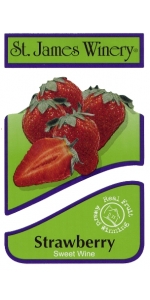
St. James Winery Strawberry is made from blackberries
11.4% Alcohol by Volume
13.4% Residual Sugar
Fresh picked strawberries never tasted this good. Our Strawberry wine, made from sweet vine ripened strawberries, is excellent served cold especially for dessert with pound cake or milk chocolate.
Select Wine Competition Awards:
2012 GOLD San Francisco Chronicle
2011 BEST OF SHOW San Diego
2011 BEST OF CLASS Pacific Rim
2011 GOLD Dallas Morning News
2011 GOLD Grand Harvest
2011 GOLD Winemaker Challenge International
2011 SILVER Monterey
2011 SILVER Florida State Fair International
2011 SILVER Los Angeles International
2011 SILVER Riverside
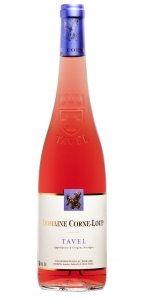
Corne Loup Tavel Rose is made from 60% Grenache, 15% Cinsault, 10% Syrah, 15% mix of Mourvèdre, Clairette & Carignan
Elegant, refreshing, food-friendly and versatile, this Tavel offers mouth-watering aromas of strawberry and berry pie.
Corne Loup Tavel represents the pinnacle of the rose pyramid quality wise that can be achieved in the Southern Rhone. The town of Tavel has been famous for its rose wine since the time of the Popes in Avignon (1300's). Tavel is about 2,300 acres in size and produces about 500,000 cases yearly of 9 liter cases, plus can age for 2-3 years, unlike many other roses. Produced from a blend of Grenache, Cinsualt, Syrah, Mourvedre, Cinsault and Carignan, the wine comes from a famous sub-parcel called the Plateau de Vallongue between Tavel and Lirac AOC's.
The 20 hectare-vineyards are located in the hamlets of Oliver, Campet, Vestides and Vallongue. The Tavel from this producer is a blend of all 3 soils types you can find in the AOC:
Dry and lively, it is an ideal wine for barbecues as it makes a wonderful sipper that's also capable of matching with a wide variety of summer foods, including grilled chicken, seafood and summer salads
Corne Loup Tavel Rose is made from 60% Grenache, 15% Cinsault, 10% Syrah, 15% mix of Mourvèdre, Clairette & Carignan
Elegant, refreshing, food-friendly and versatile, this Tavel offers mouth-watering aromas of strawberry and berry pie.
Corne Loup Tavel represents the pinnacle of the rose pyramid quality wise that can be achieved in the Southern Rhone. The town of Tavel has been famous for its rose wine since the time of the Popes in Avignon (1300's). Tavel is about 2,300 acres in size and produces about 500,000 cases yearly of 9 liter cases, plus can age for 2-3 years, unlike many other roses. Produced from a blend of Grenache, Cinsualt, Syrah, Mourvedre, Cinsault and Carignan, the wine comes from a famous sub-parcel called the Plateau de Vallongue between Tavel and Lirac AOC's.
The 20 hectare-vineyards are located in the hamlets of Oliver, Campet, Vestides and Vallongue. The Tavel from this producer is a blend of all 3 soils types you can find in the AOC:
Dry and lively, it is an ideal wine for barbecues as it makes a wonderful sipper that's also capable of matching with a wide variety of summer foods, including grilled chicken, seafood and summer salads
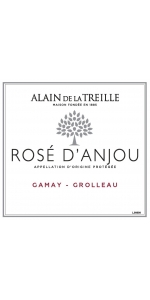
Alain de la Treille Rose d'Anjou is made from 50% Gamay, 50% Grolleau
The Rosé d'Anjou AOC, also known as Anjou Rosé AOC, produces medium-sweet rosés. Wines are made predominantly from Grolleau, with percentages of Cabernet Franc, Cabernet Sauvignon, Gamay, Malbec and Pineau d'Aunis permitted. Anjou soils reflect the geological identity of its border position between Armorican and Parisian basins. The terroirs consist of metamorphic and crystalline rocks (schist, sandstone) known as Anjou Noir, and ‘Terres Blanches’ (white earth) limestone known as Anjou Blanc. The AOC covers 1,890 hectares (4,668 acres).
The Grolleau grape derives its name from the French word ‘grolle’, meaning crow – a reflection of the dark black color of the grapes.
Crisp and refreshing with vibrant aromas of strawberry and raspberry. Juicy and well-balanced with a long finish.
Selective juice extraction to preserve color & aromas. Temperature controlled fermentation is followed by aging on the fine lees. No malolactic fermentation; no oak.
To be served chilled (10°C/50°F) with barbecued meats, salads, any spicy food, poultry dishes and of course appetizers.
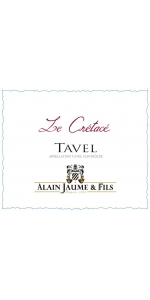
Alain Jaume Tavel Rose Le Cretace is made from 60% Grenache, 30% Syrah and 10% Mourvedre
Rosé de saignée (bleed technique) with a vibrant ruby color, complex and elegant, notes of crushed strawberries and rose petals.
Tavel Le Cretace Rose gives up vibrant wild strawberry, watermelon, crushed flowers and hints of spice to go with a medium-bodied, layered and seamless profile on the palate. A classic rose from this appellation, enjoy this beauty with food over the coming year or two.
Pair with roasted and/or spicy Turkey, sushi, seafood and grilled fish, Asian food.
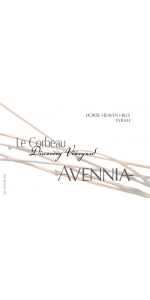
Named after the French word for Crow, or Raven, this Syrah is certainly as dark as the name implies. Hailing from Discovery Vineyard, perched high above the Columbia River in the heart of the Horse Heaven Hills, these grapes were grown in a very unique terroir. Avennia's approach of old-world style, minimalist winemaking allows for full expression of the fruit, showcasing the elegant and savory side of Syrah.
"Leads with a nice balance of dark fruits—blackberry and blueberry—with more savory elements, including blackberry leaf, olive, charcuterie, and a hint of shiitake. The palate features snappy fresh black fruits, a hint of smoked meat, and a lively finish with plenty of savory elements that make this wine quite interesting. Give it a year in the cellar and enjoy over the next eight years or so." - Chris Peterson, Winemaker
Reviews:
"Aromas of blackberry and violet accented by a note of stems. Sweet, supple wine with dark fruit flavors lifted by a black-peppery topnote and accented by cinnamony Red Hots. For all its high notes, this is essentially a creamy wine with no edges. I suspect it will tighten up in bottle and eventually display a more savory aspect. Incidentally, this will be the last vintage for this bottling because, beginning with vintage 2018, Chris Peterson will introduce some new single-vineyard Syrahs from the exciting new WeatherEye vineyard on top of Red Mountain. This steep site, owned by Cameron Myhrvold and farmed by Ryan Johnson, extends over the ridgeline and onto the northern flank of Red Mountain. The project is called Red Mountain Elevated, and Peterson is making the wines. (14.5% alcohol; done mostly in puncheons; vinified with 10% stems) - Stephen Tanzer”
- Antonio Galloni's Vinous (December 2019), 92 pts
"The last vintage for this cuvée, the 2017 Syrah Le Corbeau Discovery Vineyard is similar in style to the Arnaut yet offers slightly more floral notes in its blue fruits, wild strawberry, violets, rose petal, and sappy, forest floor aromas and flavors. Medium-bodied, with bright acidity and good balance, it’s a beautiful Syrah that leans heavily toward the fresh, elegant end of the spectrum while still offering tons of character and pleasure.”
- Jeb Dunnuck (April 2019), 92-94 pts
100% Naturally flavored wine made with light honey and fresh strawberry.
Awarded Gold Medal
Finger Lakes International Wine Competition
The Oliver Estate
Oliver Winery started in the 1960's as a hobby in the basement of Indiana University law professor William Oliver. His enthusiasm for making wine led him to establish a vineyard north west of Bloomington. Soon the flourishing vines produced grapes far in excess of his needs as a hobby winemaker, and he began plans to open a commercial winery.
Professor Oliver was instrumental in passing legislation allowing for the creation of small wineries in Indiana . The Indiana Small Winery Act passed in 1971 and Oliver Winery opened to the public in 1972. Initially sales were modest, but grew quickly after we began making Camelot Mead, a light wine made from honey.
Professor Oliver's son, Bill, took charge of the winery in 1983. He focused on enhancing the visitor experience by increasing wine quality and variety, establishing our gardens, and providing great customer service. Sales grew steadily in the 80's reaching 25,000 cases by 1990.
In 1993 Kathleen Oliver joined the winery as General Manager. This allowed Bill to focus on winemaking and viticulture and Creekbend Vineyard was started in 1994. Retail sales continued to grow and allowed for the construction of a new tasting room in 1997. By 2000 sales had reached 60,000 cases.
While retail sales marked the greatest growth prior to 2000, the years after saw tremendous growth in wine sold through wholesale channels. Major facility expansions occurred in 2002 and 2007 making Oliver Winery one of the largest wineries in the eastern United States. In 2002, interstate expansion began as Kentucky became the first state outside of Indiana to offer Oliver wines. By 2008 we had distribution in 14 states. In 2008 total case sales exceeded 270,000 cases.
The Vineyard
They farm 35 acres of vineyard land called Creekbend Vineyard, located in Monroe County and sitting on a ridge top overlooking the Beanblossom Valley. The site, with moderately sloped, well-drained soil atop limestone bedrock, is part of the geographic region known as the Norman Uplands. The vineyards are a mix of vinifera (Cabernet Sauvignon and Cabernet Franc, as well as small experimental plantings of Merlot, Pinot Noir and Pinot Grigio), Native American varieties and interspecific hybrids (Chardonel, Marechal Foch, Chambourcin and Traminette).

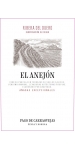
Pago de Carraovejas El Anejon is made from 93%, Cabernet Sauvignon 5% and Merlot 2%.
El Anejon vineyard is a terraced plot on a steep slope, oriented toward the sun and with great views of the Castle of Peñafiel. The soil of the narrow terraces has a compact, loamy limestone texture. The presence of the white-colored limestone calcium salts contributes to a distinctive minerality in this wine. Only made in exceptional vintages.
Review:
"A single-plot wine from the top terraces of the site from an excellent vintage, the 2021 El Anejon is powerful and truly outstanding. Tempranillo is blended with Cabernet Sauvignon and Merlot to an exceptional end, aged 12 months in larger French oak barrels after a triple selection of the grapes. Sharp red fruit has an underbelly of herbal earthiness beneath the fruit, while tight, refreshing acidity accentuates the mineral-driven texture. Bottled in June 2023, this might be the producer’s best wine of the vintage, which is saying a lot, as they’re all of outstanding quality. This will hit a high point in 5-7 years and keep going another 20. - Virginie BOONE"
- Jeb DUNNUCK (August 2°25), 98 pts
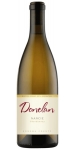
Named after Joe Donelan’s mother, the Nancie Chardonnay is our take on cool-climate, timeless Chardonnay. We love the way Nancie captures the classic qualities of Chardonnay while also exhibiting the unique traits of the unusual sites we source from. This Chardonnay is an emphasis on Old Vines, dry farming, and California heritage clones and selections. Every vintage embodies elegance and class, but no vintage is the same. The assemblage changes every year, so Nancie does not have a recipe. This wine lets us sit shotgun while the cool climate and the terroir do all the navigating, and they never steer us wrong. It is truly an inimitable wine made from a blend of incredible fruit we farm throughout Sonoma County, from the Coast to the Sonoma/Napa border.
On the nose, the Nancie Chardonnay opens with nutmeg, ginger snap, and chai spice leading to high-tone fruit like red apple skin, orange blossom, orchard fruit, and green pineapple. Judicious acidity makes this a great candidate for pairing with food. It’s very fresh on the palate, engaging, and invigorating, and it has quite a finish for Chardonnay. This is a stand-out wine among its peers, with one foot in California, and one foot in the old world.
Nutmeg, ginger snap, chai spice, orange blossom, and red apple skin on the nose. Salinity, minerality, and wonderful acidity on the palate.
Review:
"Named after proprietor Joe Donelan’s mother, the Nancie Chardonnay is crafted from a blend of exceptional vineyard sites across Sonoma. Key sources include Farina Vineyard on Sonoma Mountain, the 45-year-old vines at Lazy W Ranch in the Russian River Valley, along with fruit from Allen Family Ranch and Dehlinger–Garbro Ranch. Winemaker David Milner notes that sites offering mineral tension and naturally high acidity are essential to shaping the blend. The wine is aged for 10 months in 24% new oak. In 2023, the aromatics are superb, with a freshness factor that feels almost unparalleled. Citrus notes and hints of underripe pineapple mingle with ginger spice, flinty minerality and a distinct sea-salt character. Medium-bodied and beautifully precise, the palate is driven by crystalline acidity and candied citrus peel fruit dusted with saline nuance. Citrus, orchard and stone fruit notes build toward an incredibly long, lingering finish, touched by subtle toffee spice. Distinctly saline, complex and expressive, this is a Chardonnay of clarity, energy and sheer deliciousness. - Jonathan CRISTALDI"
Decanter, 96 points



