" We don't sell the wine without touching the vine "
| Country: | Argentina |
| Region: | Mendoza |
| Winery: | Otaviano Bodega & Vinedos |
| Grape Type: | Malbec |
| Vintage: | 2013 |
| Bottle Size: | 750 ml |
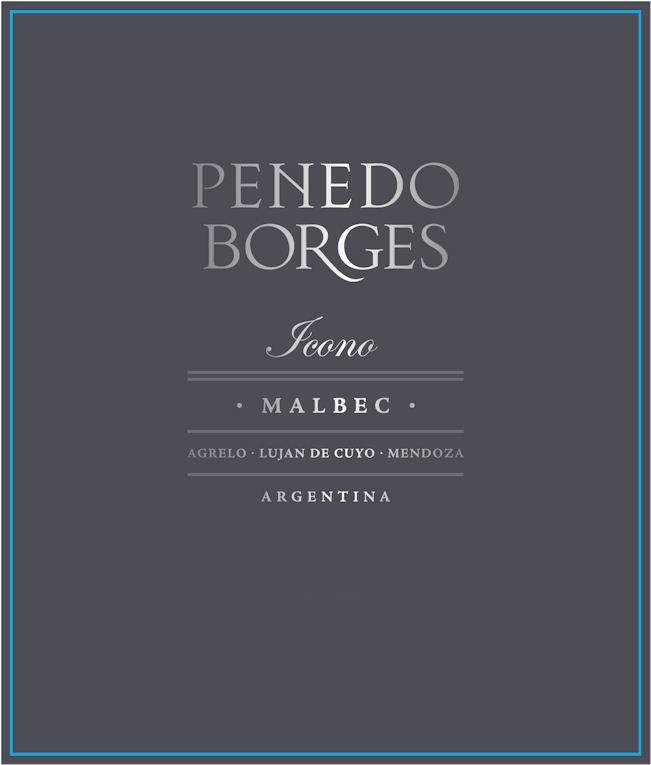
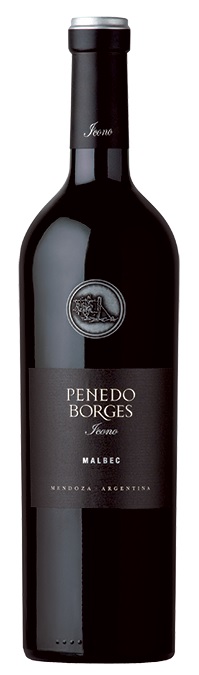
Penedo Borges Icono Malbec is made from 85% Malbec, 10% Cabernet Sauvignon and 5% Petit Verdot
Dark purple color.
Complex aromas of predominent ripe red fruit such as plum, cherry and raspberry with spicy notes.
Chocolate and vanilla flavors from barrel ageing which provide complexity and elegance.
Wine of great lenght.
Red meats, lamb, beef stew, strong cheese.
Review:
Icon is a selection from the winery, that is, of the best barrels of the year, basically with Malbec that occupies 85% of the final blend. The selection is made after a year of aging in barrels. The fruit of this selection is a wine of great depth of flavors, with spicy and herbal touches and with firm, sharp and penetrating tannins. In addition, there are earthy notes that project throughout the palate. An old school wine with an austere structure. One for the Cellar.
-Descorchados 94 Points
"Ripe berry and cassis aromas come with a blast of potent oak, but overall the nose on this Malbec is appealing in a bold manner. Airing is vital to smoothing out the tartaric bite this brings, while flavors of blackberry, dark plum, vanilla and mocha finish long and smoother than the palate. Drink this fully oaked and powerfully built Malbec through 2027. - MICHAEL SCHACHNER"
- Wine Enthusiast (July 2021), 93 pts
Penedo Borges Icono Malbec is made from 85% Malbec, 10% Cabernet Sauvignon and 5% Petit Verdot
Dark purple color.
Complex aromas of predominent ripe red fruit such as plum, cherry and raspberry with spicy notes.
Chocolate and vanilla flavors from barrel ageing which provide complexity and elegance.
Wine of great lenght.
Red meats, lamb, beef stew, strong cheese.
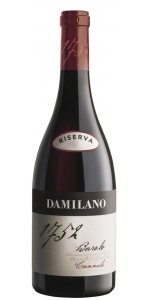
“1752” is the name of the Damilano Barolo Cannubi Riserva, in honor of the year in which the historic bottle was first marked “Cannubi”. It still exists today perfectly conserved by the Manzone family in Bra, close to Barolo. The bottle is clearly marked as being of “1752” vintage, indicating that Cannubi historically precedes Barolo.
About the Vineyard:
The Cannubi Cru is in found within one of the 6 core zones which comprise a UNESCO heritage site in Italy. A mixture of Tortonian and Helvetian calcareous marl gives the grapes intense aromas of cherry, plum and tobacco, rose and violet in sequence. Its low potassium and high calcium/magnesium content offer the wine a fine and polished touch. The vineyard is located at about 270 m. a.s.l. and has a south-east sun exposure. Barolo Riserva Cannubi 1752 It is a small plot of about 2 hectares of Nebbiolo vines, currently between 30 and 50 years of age.
Tasting Notes:
Garnet ruby red in color, the bouquet is intense and balanced, with notes of violet, red fruit, cherry and plum, spices, liquorice, cocoa, leather and tobacco. Dry, robust, full-bodied, very persistent, rich and velvety
Food Pairing:
This wine is excellent with typical piedmontes pasta (tajarin, ravioli); perfect with red meat, braised and roast meat, game and absolutely ideal with all types of cheeses.
Review:
The purity of this wine is pretty phenomenal with blackberries, strawberries, fresh flowers and licorice. Hints of tar. It’s full-bodied, yet composed and compact with ultra fine tannins and a long, flavorful finish. Very structured. Try after 2024.
-James Suckling 97 Points
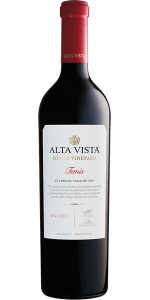
This vineyard is situated at over 3,000 feet in altitude in Valle de Uco, and the vines are over seventy years old. This light soil is sandy with some silt, is very permeable and has boulders and a broken layer of limestone at a depth of 2.5 feet. Traditional irrigation is fed by water from the Andes Mountains. Temis has the coldest climate of all Alta Vista’s terroirs. Nights are quite cool and days are warm and soft, with constant breezes that help to keep the vines and grapes healthy. The grapes have a slow, gradual cycle of ripeness that is balanced and ideal. Planted in 1942, the selection massale vines are characterized by small clusters with small, compact grapes.
Review:
There’s a touch of bark, grilled Mediterranean spice savoriness to the rich but fresh blackberries, salted black plums and graphite notes. Pretty saline and flavorful on the palate. The tannins are powerful yet fine-grained. A structured and characterful malbec from old vines in El Cepillo.
-James Suckling 94 Points
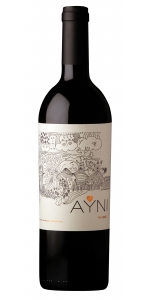
Ayni Malbec Paraje Altamira is made from 100 percent Malbec.
Ayni is the Quechua term for the principle of reciprocity, practiced for centuries by the Andean people - "in order to receive, you first have to give." Chakana's renowned Paraje Altamira vineyard, which sits 3,300 feet above sea level, bears the name Ayni & is the source of the Ayni wines.
Deep ruby-red in color with violet hints. Complex and intense bouquet, featuring blackberries, cherries and plums, with delicate floral notes and spices. Balanced and fresh; full-bodied with good length of spices.
Pairs well with grilled meats and stews.
Review:
"Chakana is an organic and biodynamic producer in Mendoza, that harvests from a vineyard in Paraje Altamira to produce this terroir-focused, minimal intervention Malbec. Aged in a mixture of casks and barrels for 12 months, this is a pure, energetic red in which fresh red fruit aromas combine with spice, herbs and mineral notes. In the mouth, it’s fluid with lively acidity and firm, chalky tannins. A potent, long-lasting wine. Drinking Window: 2023 - 2030"
- Decanter Magazine, 94 pts
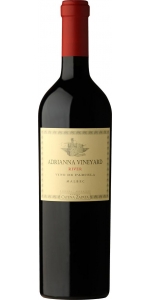
This wine is floral, exuberant, with lengthy smooth tannins, and metallic notes.
This cuvée takes its name from a small parcel of the Adrianna Vineyard that is completely covered with oval white stones and was the site of an ancient riverbed. The abundant stones provide optimal drainage and extreme temperatures. They absorb heat and moderate the nights, but also function like ice cubes after a very cold night. Stony soil Malbecs tend to be extremely aromatic, rich and luxurious, just like the River Malbec from Adrianna. This wine can be enjoyed young or aged for decades.
Pair with grilled meats.
Review:
Wild blackberries, pine cones, bark, chili chocolate, cracked pepper, cloves, iodine and crushed stones on the nose. Full-bodied with firm, creamy tannins. Lovely coolness and minerality to the dark fruit. Powerful, too. Try in 2026.
-James Suckling 98 Points
Made from 85% Malbec, 10% Cabernet Sauvignon and 5% Petit Verdot
Dark purple color.
Complex aromas of predominent ripe red fruit such as plum, cherry and raspberry with spicy notes.
Chocolate and vanilla flavors from barrel ageing which provide complexity and elegance.
Wine of great lenght.
Red meats, lamb, beef stew, strong cheese.
Review:
"Full medium ruby. Brooding aromas of blackberry, bitter chocolate and violet, along with some superripe suggestions leavened by floral lift. Suave, plush and rich, showing attractive oaky complexity and a firm shape to the dark berry, pepper, herb and spice flavors. Classically dry for a wine with such inviting sweetness of fruit. Balanced to give early pleasure but has the stuffing for positive development in bottle. - Stephen Tanzer"
- Antonio Galloni's Vinous (Argentina The Cool Years, March 2016), 90pts
The winery was born in 2004, when 4 friends, passionate about wine and Argentina, decided to enter the wine world by choosing one of the most elegant and distinguished terroirs for red wine in the province Lujan de Cuyo, best known as the land of Malbec.
Winery Acreage: 48 hectares (119 acres)
OTAVIANO WINERY:
The winery has a very modern design and was built with material from the region. It is surrounded by the vineyards and overlooks the Andes Range.
Traditional and cutting-edge techniques are mixed in our production in order to obtain high quality wines.
The winery has stainless steel fermentation and conservation tanks with temperature control, an underground cellar perfectly conditioned for wine aging in oak barrels and a storage room where bottles finish their maturation process.
LOCATION:
Otaviano Winery and Vineyards is located in the highest part of Alto Agrelo, Luján de Cuyo, 300 meters south of the International Route 7 (Km 8)
The estate has 48 hectares of vineyards with the winery in its centre. The place has an incredible view of the Andes Mountain Range and it is ideal to enjoy our sunsets.
ELABORATION:
Our Wines are designed from the vine. There is a thorough work carried out through the different varietal sectors. The vine load is carefully regulated to obtain the perfect balance of the plant and in so doing, get wines that express the maximum potential of our terroir.
In the winery, the grapes are carefully selected with traditional and cutting-edge techniques. By keeping strict control of all the process variables, we are able to preserve and enhance the quality of our wines. These are characterized for being honest, expressive wines with a perfect balance between the fruit of each variety and the ageing in oak.
Our vineyards are located at 1,050 mts above sea level, at the foot of the Andes, where the thermal amplitude and the perfect sunlight give way to a well balanced and high quality harvest. Different grape varieties are selected from the native land, which has deep ground and sandy characteristics. The crops are carefully handled with accurate viticulture techniques and the environment is well taken care of with low impact agrochemicals. The grapes are harvested in 18 kg cases when the vines express their maximum potential.
MALBEC (24 HECTARES)
This variety from the Southwest of France is the one that has experienced the best adaptation to the Argentinean soil, providing exceptional wines of intense aroma, very concentrated purple color and pleasant taste. Without any doubt Argentina produces the best Malbec specimens in the world. Malbec is made as a light young red wine with fresh fruity aromas or as a wine with good body and storage capacity with highlighted ripe berry aromas. It is grown in every viticulture region in the country and provides the best samples in Mendoza, in the regions of Lujan de Cuyo and Maipú. Because Malbec is an emblematic and standard variety, the wineries in Argentina experience an interesting growth in the international market and it is very well positioned among the best wines in the world.
CABERNET SAUVIGNON (12 HECTARES)
Historically associated with the Grand Bordeaux region, it is the most widely recognized red variety in the world. This is due to the particular adaptation of this vine in different winemaking regions, without losing its essence. It produces a wine rich in tannins and color that blends with other less tannic varieties, such as Merlot or Cabernet Franc. These young wines are rough and hard and this is the reason why they are better aged in oak or in the bottle to tame their consistent structure. They are powerful wines, with pleasant aromas and notes that remind us of berries, green peppers and spices.
SYRAH (6 HECTARES)
Of French origin, it is mainly found in the Rodano Valley and is part of great blends, such as L’Hermitage, Chateauneuf du Pape or Cote Rotie. This grape provides very vigorous, solid wines which are rich in tannins and have long conservation. Aging in wooden casks and bottles suits them really well. These wines have intense aromas which remind us of berries, spices and leather. Just like Malbec, Syrah or Shyraz has adapted quite well to the Argentinean soil, giving excellent varietal and blended wines.
PETIT VERDOT (1.5 HECTARES)
It is a high quality red Wine grape, whose origin is unknown. It was first planted in France, mainly in Bordeaux as a complement to the wines of the region. Its late ripeness did not call the attention of the winemakers at first and was eventually left unnoticed by the middle of the XX century. The name comes from the French and means “small green”, referring to its size and the problem this grape endures when the berries fail to develop properly. Not long ago this grape had a comeback and has become more and more popular, especially in Australia, Chile, Argentina, USA and the original region of Bordeaux. These grapes provide very good color and aromas of berries, spices, chocolate and figs. On the palate, the wine is characterized by strong tannins, good volume and acidity.
CABERNET FRANC (1.5 HECTARES)
Cabernet Franc is a red grape From Bordeaux. Its origin goes back to the XVII century where it was mostly grown for blending with Cabernet Sauvignon and Merlot to obtain wines in the Bordeaux style. Genetically speaking, it is the father of Cabernet Sauvignon and this makes them perfectly compatible in winemaking terms.
Cabernet Franc produces intense red wines with more aromatic, herbaceous and complex notes than Cabernet Sauvignon. On the palate, it is also lighter, softer and less acid.
CHARDONNAY (3 HECTARES)
Chardonnay takes its name from the small French town in the Burgundy area, and is certainly one of the most appreciated varietal wines in the world. It is an easy to grow grape because of its remarkable ability to adapt to different climatic conditions. The grape from cool climates provides predominant fruity notes, such as apple and pineapple whereas the grape from warmer climates in characterized by tropical fruit notes. It takes part in the elaboration of the best sparkling wines in the world. Chardonnay wines take good level of fermentation and aging in oak and therefore provide aromas such as vanilla, butter and honey. Due to the versatility of the grape, it can be found in Argentina in many possible ways, being either fresh and light or very complex.
SAUVIGNON BLANC (3 HECTARES)
It is the main white grape from Burdeaux and the Loira Valley in France and the world. It has adapted very well to different viticulture regions in the world, such as the Northeast of Italy, Chile, Argentina, and the coast valleys of California and Australia. However, it is the Sauvignon Blanc from New Zealand which outstands in the world. It offers herbal and citric aromas, sometimes with smoked or wild notes. In Argentina, this grape has gained an important place among the fine white wines and has a very promising future
Round Pond Estate 'Kith & Kin' Cabernet Sauvignon is made with 85% Cabernet Sauvignon, 9% Petit Verdot, 6% Malbec.
Bursting with bright aromatics of cassis and crushed raspberry, they are balanced with an earthy hint of dried sage and clove. The wine offers an energetic play between acid and tannin on the front palate with notes of blackberry and violet with a touch of cocoa on the mid-palate. Fine-grained tannins follow throughout each sip leading to a long, rich, finish.
Review:
Big and rich, this deeply saturated and mouth-filling wine overflows with ripe, plump blueberries, black currants and black cherries accented with mint and dark chocolate. It’s delicious enough to drink young.
-Wine Enthusiast 92 Points
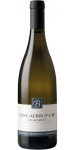
Bachelet Bertrand Saint-Aubin Premier Cru En Remilly is made from 100 percent Chardonnay.
Saint-Aubin is situated in the heart of the Côte des Blancs, between Chassagne-Montrachet and Puligny-Montrachet; both white and red wines are produced here but Chardonnay remains predominant. The Saint-Aubin appellation covers a wide area, with an altitude ranging from 300 to 450 meters, and with very varied expositions and soils, which makes each climat unique.
Saint-Aubin En Remilly is located in the south-east of Gamay, a hamlet near the village of Saint Aubin and next to the Puligny-Montrachet and Chassagne-Montrachet appellations. This area benefits from a south-western exposition.
The wine offers a pale yellow color, with gold nuances; a mineral nose, a dense texture on the palate, bringing together substance and tension.
Perfect as an aperitif, pairs very well with firm-textured fish or with shellfish.